

Mayo Clinic and iSpecimen Partner to Launch Tumor/Normal Serum Biobank to Advance Precision Medicine
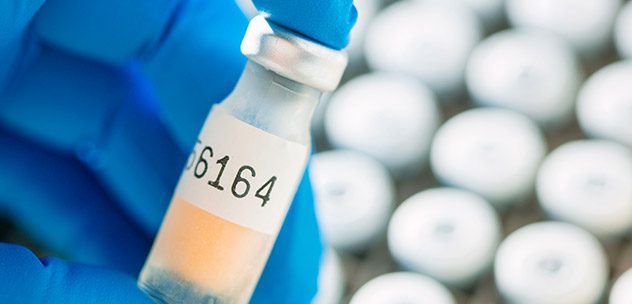
The U.S. National Institutes of Health announced that it will provide the Mayo Clinic with1.42$100 million, as part of the Obama Precision Medicine InitiativePMIRewards for the Project Biobank. Mayo Clinic stated that it plans to use the funds to collect, store, and distribute biospecimens, thereby advancing precision medicine research. Recently, a human biospecimen supplieriSpecimenAnnounced as the Exclusive Channel Partner of Mayo Clinic to Jointly Develop Oncology/Normal Serum Biobank.
Biobanks, also known as biological sample repositories, are databases that collect and store biological samples for research purposes—including tissues, serum, body fluids, and cells—along with associated clinical treatment data. They play a crucial role in medical research. Countries around the world attach great importance to biobanking and are actively developing more influential biobanks. Prominent examples include the UK Biobank and the Partners HealthCare Biobank in the United States.
The Mayo Clinic Tumor/Normal Serum Bank, headquartered in Rochester, Minnesota, holds approximately 130,000 vials of frozen serum and 17,000 special serum samples, all collected with patient consent. The collected samples are from individuals born between 1975 and 1990 and cover 85 different malignant or benign conditions. As a channel partner, iSPecimen will provide life science researchers with annotated biospecimens, manage inventory and related data through cloud technology, and match biospecimen information with research experimental results.
With advances in precision medicine and the success of the Cancer Moonshot Initiative and Parker Institute for Cancer Immunotherapy, the research value of the Mayo Clinic’s tumor/normal serum biobank lies not only in its large volume but also in the longitudinal information associated with the samples. Likewise, the clinical annotation data of the samples hold significant value, including patients’ regional demographic characteristics, blood collection dates, tumor information, treatment details, and tumor status at the time of blood collection, among others. These data can better help researchers understand inter-individual differences and identify approaches for personalized diagnosis and treatment.
By leveraging state-of-the-art technologies and resource-intensive management, the Mayo Clinic Biobank has created and collected a wide variety of human biospecimens. “Although we hold thousands of samples currently in high demand for research, these biospecimens have not been fully utilized by researchers. iSPecimen has offered us a collaboration that can provide higher-quality and more diverse biospecimens along with more comprehensive sample information (such as lifestyle data, health questionnaires, medical history, electronic health records, physical examination results, environmental exposures, and real-time physiological status tracked via mobile health technologies), while saving researchers time and effort to further understand inter-individual differences in disease and health.”
Through this collaboration, Mayo Clinic will establish a more diverse biobank, attract greater participant enrollment, enhance understanding of interindividual variations in health and disease, and advance the development of precision medicine. If 10,000 individuals enroll, the collected data will create an unprecedented repository that better assists researchers in understanding various influencing factors. Greater insight into individual differences enables more tailored adjustments in disease prevention and treatment, thereby improving the quality of precision healthcare.
Ultimately, the biobank will collect more than 350,000 biospecimens and associated data. The Mayo Clinic Florida Biorepository and Core Laboratory will store 20% to 25% of these biospecimens, amounting to approximately 80,000 to 100,000 samples. Dr. Thibodeau will also participate in the project, helping to guide its planning and implementation.
Researchers believe that, through the partnership with iSpecimen, the impact of biobanks will expand from the field of medical research to the broader scientific community. It is estimated that over the next two decades, the annual number of new cancer cases worldwide could rise from 14 million to 22 million. As oncology research continues to advance rapidly, researchers will be able to identify appropriate methodologies more quickly, and high-quality biospecimens will help them grasp the core of emerging challenges, thereby accelerating the diagnosis and treatment of these diseases.
iSpecimen is a supplier of human biospecimens for the life sciences industry, serving pharmaceutical companies, diagnostic firms, and academic researchers. It provides high-quality human biological samples along with associated data to medical researchers. The company offers bodily fluids, tissues, and cell samples, including blood, plasma, serum, urine, fresh or frozen tissues, bone marrow cells, and more.
iSpecimen’s innovative concept originated from a research initiative at an academic hospital, where researchers leveraged clinically discarded specimens to advance their studies while saving time and money. Currently, iSpecimen’s partners include hospitals, commercial laboratories, biobanks, blood centers, health information exchanges, specialty clinics, and academic institutions. In addition to providing discarded specimens for other life science research fields, iSpecimen also offers inventory samples and custom specimen procurement services.
Biobanks in China emerged relatively late, with their origins dating back to the 1990s. The earliest examples include the Chinese National Immortalized Cell Line Repository (established in 1994) and the Tumor Tissue Bank of Peking University Cancer Hospital (established in 1996). Currently, well-known biobanks include the Shandong Cord Blood Hematopoietic Stem Cell Bank, among others. In November 2012, the Chinese Academy of Sciences collaborated with the Sichuan Provincial People’s Government to establish a biobank at Sichuan Provincial People’s Hospital. This initiative enrolled 5,000 residents from the province, collecting regular blood samples to monitor genetic, proteomic, and metabolic profiles between the ages of 35 and 60, while progressively opening the biobank’s services to the general public.
Currently, biobanks in China are in the early stages of development. Construction is fragmented, lacking standardized processes; quality control systems and information management are insufficiently regulated; clinical data are incomplete (particularly treatment and follow-up data); and unified standards and regulations have yet to be established.
However, China possesses the world’s most abundant patient resources, with a richness of biological samples unmatched by any other country. Therefore, leveraging this advantage to seize the initiative and establish a Chinese biobank with international influence is a critical component and guarantee within China’s independent innovation system for the biomedical industry.