

How West China Second Hospital and Tencent Built a Smart Hospital: 440,000 WeChat Appointments and 300,000 Payments
By Zhang Lin, Dean of West China Second University Hospital, Sichuan University
On August 24, West China Second University Hospital of Sichuan University and Tencent’s Internet Plus Cooperation Division signed a strategic cooperation agreement in Chengdu, with both parties committing to jointly advance the development of smart hospitals. This marks the first relatively comprehensive implementation of smart hospital solutions in Southwest China. The collaboration not only significantly helps West China Second University Hospital enhance its medical service capabilities but also holds important demonstrative significance for the development of smart hospitals in China. VCBeat (WeChat ID: vcbeat) has compiled and reported on the relevant information.
Medical professionals are well acquainted with the term “three longs and one short,” which refers to “long queues for registration, long waits for consultations, long lines for medication pickup, and short consultation times with doctors.” For patients eager to receive medical care, this is an undeniable “pain point.”As one of the first batch of national “Grade 3, Class A” specialized hospitals for women and children directly affiliated with or administered by the National Health and Family Planning Commission, this issue is particularly prominent at West China Second University Hospital.
Throughout 2015,West China Second University HospitalOutpatient and emergency visits have exceeded 2 million, inpatient admissions reached 50,000, and deliveries totaled 11,000, making it the hospital with the highest patient volume per unit area in China.
How to further improve patients’ healthcare experience based on existing conditions, while addressing the unequal distribution of medical resources and enhancing the hospital’s own management and operational efficiency? This is a question that Zhang Lin, President of West China Second University Hospital, has been contemplating.
In 2015, the State Council issued the Guiding Opinions on Actively Promoting the “Internet Plus” Action Plan, which explicitly called for promoting the application of the internet in livelihood sectors such as healthcare. Seizing this opportunity, West China Second University Hospital, in collaboration with Tencent, embarked on a series of explorations centered on “Internet Plus Healthcare” and “Internet Plus Smart Hospitals,” achieving notable results particularly in optimizing appointment slot management, providing online medical consultations, and facilitating the sharing of medical big data.
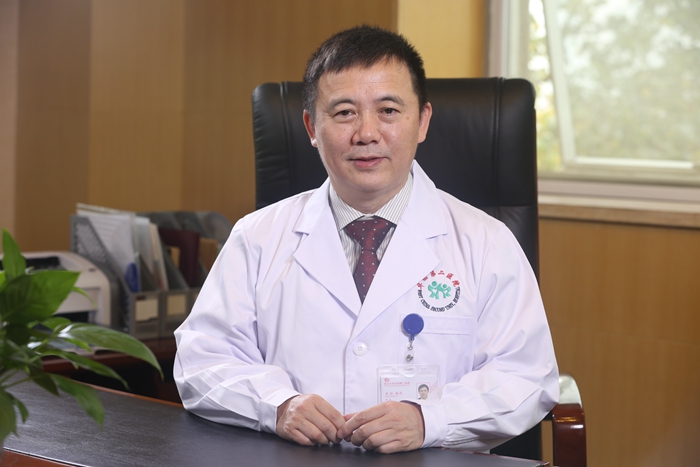
President of West China Second University Hospital, Sichuan University: Zhang Lin
A set of data can provide a more intuitive understanding of smart hospitals. Since last year, West China Second University Hospital has engaged in in-depth collaboration with Tencent’s Internet Plus Cooperation Business Unit, successively launching a patient-friendly medical service platform based on the WeChat Service Account, as well as online consultation and appointment registration services via WeChat City Services.
To date, the “Internet + Smart Hospital” platform at West China Second University Hospital has saved patients an average of more than two hours per visit. The cumulative number of WeChat registrations has reached 440,000, with 300,000 payment transactions. Online WeChat payments now account for 50% of all point-of-care payments at the hospital. At peak times, the volume of online WeChat consultations has reached 800 patients per day.
In fact, whether the difficulty lies in securing appointments or enduring long wait times, the root cause is the relative scarcity of medical resources. By empowering healthcare through “Internet + Smart Hospitals,” the allocation of medical resources can be significantly optimized via online platforms. For instance, with WeChat-based online consultations, doctors are no longer constrained by time and geography, enabling them to provide medical advice to patients anytime and anywhere, while also exploring new approaches for pre- and post-consultation inquiries. Furthermore, integrating online and offline services offers innovative solutions for patients.For exampleWest China Second University HospitalThe adoption of WeChat-based online appointment registration and WeChat Pay for medical expenses has reduced patients’ waiting times, enabling them to receive efficient and convenient medical services.
As a specialized hospital for women and children, West China Second University Hospital has boldly embraced the “Internet+” model, primarily because its patients and their family members are predominantly young and middle-aged adults. This demographic exhibits high acceptance of internet technologies, with the majority being among the 800 million WeChat users. The decision to partner with Tencent on the “Internet+ Smart Hospital” initiative further facilitates the leveraging of the advantages offered by this model.
West China Second University Hospital has gained valuable experience in leveraging “Internet Plus” to enhance internal operational and management efficiency. Traditional hospital management systems are PC-based, yet clinicians rarely have the opportunity to sit at a computer. To address this, the hospital migrated its core administrative systems, inter-physician communication platforms, and online consultation services to WeChat Enterprise Account, enabling physicians to utilize fragmented time during patient care.
All staff members of West China Second University Hospital can access the hospital’s latest rules and policies via WeChat, while leaders at all levels can approve reports, submit medical equipment requests, and reserve conference rooms online through their mobile devices. Mobile internet has fundamentally transformed the hospital’s management model, improved operational efficiency, and doctors have quickly adapted to this new work mode.
While the “Internet+” initiative is unlocking additional medical resources, the persistent difficulty in accessing care further highlights the imbalance in the distribution of healthcare resources across China. This disparity is evident in regional gaps between eastern and western areas, as well as between urban and rural settings. West China Second University Hospital has also witnessed these trends. In particular, since the implementation of the universal two-child policy, a large influx of advanced-age pregnant women from surrounding regions in Southwest China has intensified the hospital’s severe shortage of available beds. This situation has prompted the hospital to consider “supply-side reforms” for its medical resources.
How Can the “Internet + Smart Hospital” Model Further Bridge the Gap in Medical Resources and Alleviate the Difficulty of Accessing Medical Care?
To this end, West China Second University Hospital has implemented a tiered diagnosis and treatment system by establishing collaborations with primary healthcare institutions in neighboring regions, including Yunnan, Guizhou, and Tibet. This initiative effectively promotes the extension of high-quality medical resources to the grassroots level, jointly building the West China Second University Hospital Regional Alliance. Leveraging its smart hospital platform integrated with cloud computing and big data technologies, the hospital provides telemedicine services such as two-way referrals, remote consultations, and personnel exchanges. It also shares clinical data and diagnostic imaging results, including MRI and ultrasound scans, with primary care hospitals, thereby delivering convenient and high-quality medical services to more women and children in Southwest China.
With the support of Tencent’s Internet Plus Cooperation Business Group, West China Second University Hospital has undertaken numerous exploratory initiatives. For instance, hospitals in Ganzi Prefecture have established diagnostic rooms linked to West China Second University Hospital. Patients can schedule appointments with specialists from West China Second University Hospital locally, without needing to travel to Chengdu, while the specialists can conduct consultations, provide treatment plans, or determine whether a referral to West China Second University Hospital is necessary via the platform. Additionally, post-consultation follow-ups and rehabilitation management can also be completed on this platform.
As of September 2016, the regional alliance hospitals contracted with West China Second University Hospital included the Longquanyi District Maternal and Child Health Hospital, Shangjin Branch of West China Hospital, Sichuan University/Chengdu Shangjin Nanfu Hospital, and Guang'an People's Hospital. As a hospital receiving counterpart support from West China Second University Hospital, the People's Hospital of Ganzi Tibetan Autonomous Prefecture became the first designated regional alliance hospital of West China Second University Hospital/West China Women's and Children's Hospital, Sichuan University.
Currently, regional alliance hospitals engaged in discussions regarding cooperation intentions include the Pixian County Maternal and Child Health Hospital, Yanjiang District Maternal and Child Health Hospital of Ziyang City, Mianyang City Maternal and Child Health Hospital, Shuangliu County People’s Hospital, Yibin City Maternal and Child Health Hospital, Qingyang District Maternal and Child Health Hospital, and Panzhihua Maternal and Child Health Hospital. The number of regional alliance hospitals is expected to reach 100 by 2017.
In addition, West China Second University Hospital, together with West China Hospital, has signed telemedicine agreements with more than 580 general hospitals and maternal and child health hospitals. In the future, West China Second University Hospital plans to provide guidance to approximately 100 women’s and children’s hospitals within Sichuan Province, offering professional support to more physicians and delivering more effective, high-quality medical services to patients.
In the process of exploring “Internet Plus Smart Hospitals,” it has been found that the “smartness” of smart hospitals is not only reflected in improving the operational efficiency of medical resources and optimizing their structure, but also in enabling patients to receive medical services with dignity and in a “smart” manner. This transformation is not merely technological, but also ideological. Although smart hospitals have achieved phased results, this new model requires greater participation and reflection from more healthcare professionals to unlock its full potential.