

Yingke Guan Yuming: Leveraging Cutting-Edge 'Black Tech' for Personalized Pharmacy Membership Management

Guan Yuming, Chairman of Beijing Inke Technology Co., Ltd.
In social activities, much of people’s behavior is recorded by the internet. Beyond innate attributes, everyone now has a new identifier known as a “user profile,” which can be subdivided into hundreds of distinct personas—for example, purchasing behaviors within the WeChat ecosystem. Such multidimensional data will serve as a critical foundation for future data mining and analysis.
In Guan Yuming’s view, as the industry enters the “Internet Plus” era, pharmaceutical retail has become a focal point, with numerous new technologies and solutions being adopted. Multidimensional data from physical stores, online platforms, and health management is poised to become the “fourth source of profit” for pharmaceutical retail enterprises.
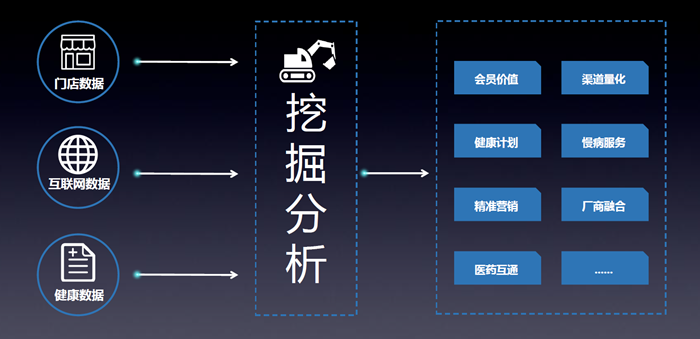
For pharmacies, in addition to providing services to patients, the larger market lies in offering home health management to healthy individuals. Therefore, the adoption of health data, along with its analysis and organization, is more important than patient acquisition.
Returning Commerce to Its Essence: Member Management in Retail Stores Will Be the Core Stronghold of Chain Retail Operations. The customer-centric philosophy has been widely adopted in many advanced countries. In China, member management has already been implemented in services such as those provided by banks to high-net-worth individuals.
However, in the case of pharmacies, neither listed nor unlisted companies have placed sufficient emphasis on customers. The reason why both e-commerce players and platform operators can still survive is that they are committed to delivering superior customer service, offering greater service value than their competitors—a reality dictated by the unique characteristics of the pharmaceutical industry.
Pharmaceutical products and health services are by no means as standardized or casual as clothing, nor are they merely simple platform-based services. They require the extensive application of health management knowledge to address patient-specific personalization. Guan Yuming stated:“Whether in pharmaceutical chain B2B or remote B2B, the core lies in integrating suppliers to truly incorporate health management into pharmacy solutions.”
What is the core essence of the Internet? It is by no means a generalized concept; its primary objective is to meet the growing demand for personalized, customized services. Such services must be delivered through chain retail stores backed by an expert think-tank system, leveraging artificial intelligence to push information from a database of hundreds of millions of data points.
Pharmaceutical retail enterprises can process these data to truly enhance member value, enabling precision marketing in future competitive campaigns. As these data are continuously updated and iterated, the interconnectivity between healthcare services and pharmaceuticals can be re-established. Meanwhile, pharmacies can collaborate with industrial partners to deliver chronic disease management and medication services, thereby fostering deeper integration with manufacturers. All of these insights are derived from real-time, multi-dimensional data sources.
In the future, data mining and analysis will place greater emphasis on the integration of supply and sales. Such integration does not merely refer to the extent of discounts secured or the variety of products obtained; rather, its core lies in collaborating with high-caliber pharmacies to develop personalized, multi-option health solutions for regional patients and health-conscious individuals.
In terms of fission rate, member management is not as simple as sending SMS messages or WeChat messages. The dilemma faced by mass messaging on WeChat is the risk of being blocked. Therefore, to achieve success, it is essential to provide valuable content. What constitutes value? It must be personalized rather than generalized. The cost of acquiring a new user is extremely high. For example, Alibaba’s platform conversion rate is approximately one in a thousand, while WeChat’s conversion rate is even lower.
Through data mining, precise consumer segmentation can be achieved based on spending levels. This precision goes beyond merely connecting to a residential community’s Wi-Fi; it involves accurately forecasting urban demand over the next six to twelve months. The ultimate goal is to enable different pharmacies to deliver tailored services to diverse members across various locations and scenarios, thereby addressing the critical “last mile” challenges in healthcare and truly integrating the internet with the real economy.
2016 will be a year of explosive growth in pharmaceutical industry informatization. With the introduction of multiple policies on pharmaceutical informatization and the continuous deepening of healthcare reform, the lack of informatization management in the pharmaceutical industry has received widespread attention.
As the wave of informatization sweeps across the globe, the vigorous development of big data, cloud computing, and the Internet of Things has propelled the internet era to a new level. Governments are also beginning to fully leverage informatization tools to enhance market regulation, establishing an integrated online-offline regulatory framework. For pharmaceutical companies, a rapid transition from traditional models to “Internet Plus” will inevitably lead the next wave of informatization reform.
In the current pharmaceutical informatics industry, the vast majority of service providers still rely on legacy client/server (C/S) architectures, which are no longer capable of meeting real-time data requirements. To address this, Inker has spent the past five years developing a comprehensive new cloud-based solution. Tailored to diverse customer needs, this offering is available in both public cloud and private cloud configurations and has already been adopted by a large number of clients. Furthermore, Inker has pioneered the establishment of an industry standard by integrating a terminal-oriented system with a three-dimensional F2B2C framework.
Regarding the future development of the pharmaceutical retail industry, Guan Yuming stated: “Currently, the service level in the pharmaceutical retail sector is generally low. Pharmaceutical retail enterprises should advance service evolution in pharmacies and implement a pharmacy tiering system. This will enable them to provide more considerate and comprehensive health management services tailored to different customer segments, thereby facilitating more effective long-term, sustainable, and precise marketing, while laying the groundwork for deeper integration between healthcare and pharmaceuticals.”