Home Medicare Reimbursement Expansion Accelerates Outpatient Adoption of Atrial Fibrillation Ablation, Creating Growth Leverage for Pulsed Field Ablation (PFA)

Medicare Reimbursement Expansion Accelerates Outpatient Adoption of Atrial Fibrillation Ablation, Creating Growth Leverage for Pulsed Field Ablation (PFA)

Nov 25, 2025 16:36 CST Updated 16:36
Boston Scientific

Medical Device Manufacturer

Farapulse

Atrial Fibrillation Treatment Catheter Tool Manufacturer

Medtronic

Chronic Disease Medical Device and Therapy Developer

图片
November 24, 2025Centers for Medicare & Medicaid Services (CMS)(CMS) formally included in the latest released 2026 Hospital Outpatient Payment System (OPPS) and Ambulatory Surgical Center (ASC) Payment System final rule.Atrial Fibrillation (AF) Catheter AblationIncluded in the ASC Covered Procedures List (ASC CPL). The new rule will take effect on January 1, 2026.
This means:Cardiac Ablation Surgery Obtains Payment Pathway for the First Time in ASC Settings
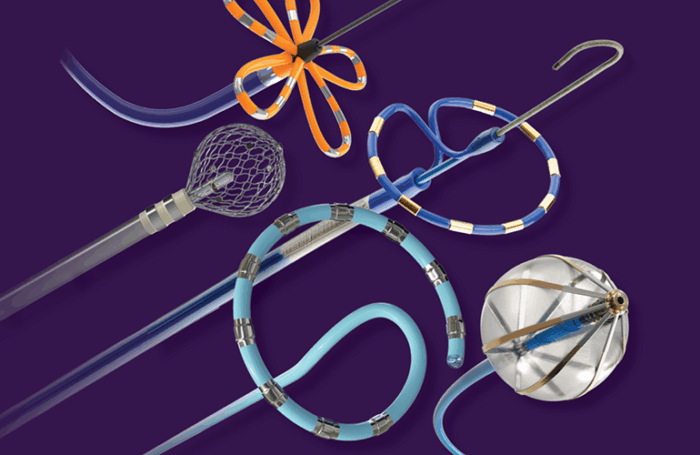
For a long time, cardiac electrophysiology procedures have been primarily performed in hospital catheterization labs, while the ASC (Ambulatory Surgery Center) setting has been restricted by factors such as patient stratification, postoperative monitoring requirements, and payment policies. This adjustment is considered a significant turning point in "payment liberalization" and is highly consistent with the efforts over the past year by the industry chain and clinical community to accelerate the outpatient adoption of PFA (Pulsed Field Ablation).
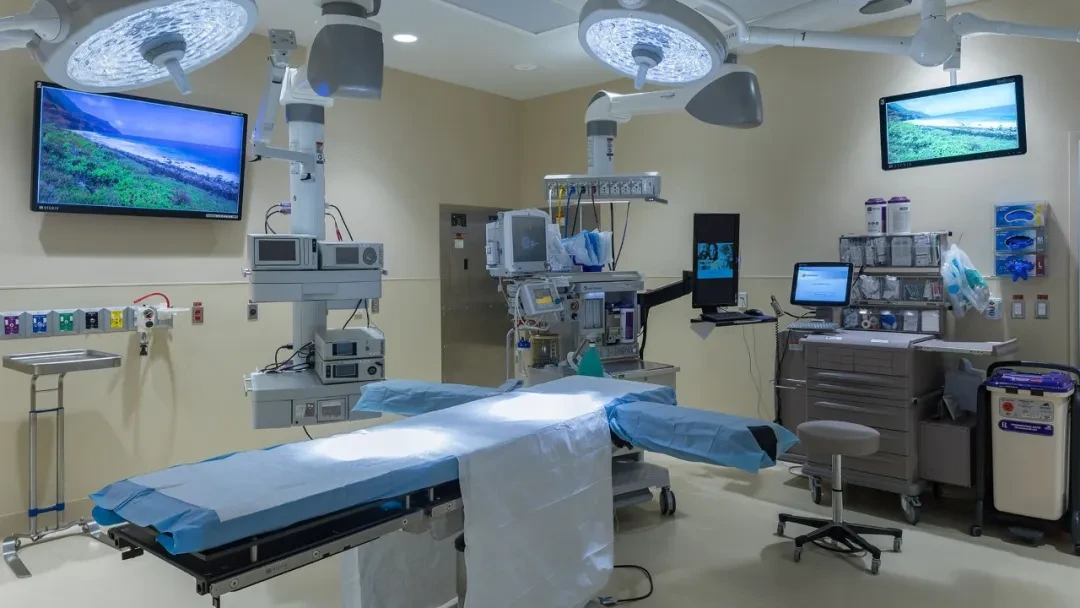
ASC model continues to expand in the United States and is consideredA more efficient, more predictable, and more cost-controllable surgical scenario. The inclusion of this AF ablation in the ASC CPL is considered by the industry as a crucial step towards the outpatient era of cardiac electrophysiology technology.

# The first to benefit will be the PFA trio: Technology and scenarios highly aligned with ASC
Image
This reimbursement rule update is widely interpreted as the official recognition of the maturity of pulsed field ablation (PFA) technology—particularly its advantages in faster operation time, lower risk of complications, and better suitability for outpatient pathways.
In the current industrial landscape, three leading companies in the PFA field——Boston ScientificMedtronic WithJohnson & Johnson MedTech—— will benefit the most directly.
  • Boston Scientific: Farapulse Advances "First Brand" Strategy
BTIG and other institutions recently pointed out in a survey that Boston Scientific is focusing on cardiac electrophysiology (especially PFA) as a key growth engine.
Farapulse is experiencing rapid penetration in multiple markets, and the lifting of ASC payments will further improve its surgical pathways and implementation speed.
  • Medtronic: Affera + PulseSelect Form Growth Portfolio
Medtronic clearly mentioned in the latest quarter:
PFA in the ASC scenario represents "additional market expansion opportunities."
The combination of its Affera system with PulseSelect PFA is driving noticeable revenue growth, and after the ASC reimbursement is implemented, it is expected to become a growth driver for the company's new phase.
  • Johnson & Johnson MedTech: Varipulse Receives Policy Boost
J&J MedTech publicly expressed support for this decision via LinkedIn, emphasizing its goal to "shape the future of cardiac ablation in the ASC setting."
Its IntegrationElectrophysiology Suite (Including Varipulse) Compatible with ASCThe trend is obvious.

# Why Now: The ASC Growth Curve and the "Outpatient Tipping Point" in Cardiac Electrophysiology
Image
CMS Includes Cardiac Ablation in ASC Reimbursement, Widely Regarded by the Industry asWaterline Style(Watershed) Event. Behind this is not a single policy push, but rather the convergence of multiple trends from 2023–2025, creating a time window for cardiac electrophysiology to move towards outpatient care.
ASC Growth Enters the "Equipment and Complex Procedures" Phase
Over the past five years, the penetration of ASC has gradually expanded from the earliest endoscopy, orthopedics, and minor surgery to more complex fields.
The reasons why cardiac electrophysiology has not yet made the list include:
  • Long operation time
  • Higher Risk of Complications
  • Stronger postoperative recovery needs
And as the energy source shifts fromRF/Cryo → PFA, the surgical procedure is compressed, perioperative risks are reduced, and EP (Electrophysiology) meets the clinical and safety conditions for entering ASC for the first time.
PFA Changes the "Safety Boundary"
Image
The key attribute of PFA — selective breakdown of myocardial cell membranes (electroporation), avoiding thermal damage to adjacent tissues, enables:
  • The rate of postoperative complications was significantly reduced.
  • Wider operating window
  • Shorter operation time
  • Decreased Requirements for Operators and Facilities
These elements are highly aligned with the "Safety + High Turnover" logic of ASC.
The payment system is also shifting towards outpatient care.
Since 2021, CMS has repeatedly adjusted its payment policies to open outpatient pathways for high-complexity procedures.
The biggest obstacle in the EP field in the past was the lack of an appropriate DRG/payment structure. After being included in the CPL (Covered Procedure List) this time,
  • Clear Payment Mechanism
  • Risk Pricing Evaluated
  • Outpatient pathways can be scaled and replicated
This means a shift from "whether it can be done" to the stage of "whether to do it and how much to do."
The industry's production capacity layout is entering a new cycle.
Between 2024 and 2025, the three major companies all released dedicated kits, device versions, or workflow adjustments for ASC:
  • Boston Scientific's Farawave Accesses Faster Processes
  • Medtronic Highlights Affera Integrated Platform for Outpatient Use
  • J&J MedTech Launches Full Electrophysiology Portfolio Adapted for ASC
The implementation of the policy has provided a real-world scenario for this round of strategic layout.

# SiyuMedTech Observation:Structural Changes in the Electrophysiology (EP) Market May Be on the Horizon
From the perspective of regulatory logic, CMS's decision is not specifically targeted at a particular company or technology but reflects a trend signaling that the EP industry as a whole is moving into the outpatient phase. This shift may bring about profound impacts in several directions.
"Capacity Ceiling" Raised: More Patients to Be Included in Treatment Pathways
Over the past decade, the demand for AF ablation has grown rapidly, but the supply side has long been constrained by factors such as operating room resources, hospital bed availability, and operator experience.
ASC has:
  • Higher Daytime Turnover Rate
  • More capacity can be added.
  • More flexible scheduling and cost structure
As reimbursement restrictions are lifted, the production capacity bottleneck of EP is expected to be resolved, leading to improved treatment accessibility.
Market competition shifts from "technology leadership" to "scenario leadership"
As the technical gaps among various PFA technologies gradually narrow (with safety becoming consistent, time consumption decreasing, and procedures simplifying), important dimensions of future competition will include:
  • Deployment Speed in ASC
  • Workflow and consumables configuration tailored for outpatient services
  • Economy (price of disposable consumables, turnover efficiency, reuse rate, etc.)
The focus of enterprise competition will shift from "energy source differences" to "comprehensive solutions."
The structure of physician skills and training may be reshaped accordingly.
The ASC environment demands more of "process standardization + quick decision-making" from operators, rather than complex problem-solving abilities.
PFA itself lowers the experience threshold, and combined with the ASC workflow, is expected to bring:
  • New Surgical Group
  • Faster Learning Curve
  • More balanced treatment capabilities at the regional level
This is different from the past pattern where EP was highly concentrated in large cardiothoracic centers.
Business Model Moving Towards an "Outpatient Version"
Companies may accelerate the launch of products targeting ASC:
  • Lightweight Device Kit
  • Simplified Workstation and Consumables Combination
  • Optimization of Tools for Shorter Surgical Time
  • Payment or operational models in collaboration with ASCs (e.g., case-based bundled pricing, subscription services, etc.)
The industry will see differentiated product lines for "hospital versions" and "ASC versions."
The entire industry chain will benefit from the first wave of expansion in the "outpatient era."
Short-term Impact:
  • Existing leaders (BSX/MDT/J&J MedTech)Increase in Installation Volume and Consumables Consumption Growth Rate
Medium and Long-term Impact:
  • New entrants or second-tier companies may seek "scenario breakthroughs"Differentiated Positioning
EP engineering technologies (such as navigation, imaging, and rapid positioning systems) will also see significant demand alongside the penetration of ASC.

# Summary
From the move by CMS to officially include AF ablation in the ASC reimbursement list, the U.S. cardiac electrophysiology industry is transitioning from a "technological breakthrough phase" to a "scenario migration phase."The maturity of PFA, the expansion of ASC, and the clarification of the payment sideThese three forces combined are likely to lead to a structural expansion in the EP market in the coming years.
For enterprises, this means that the focus of competition will furtherFrom "Innovation in a Single Energy Source" to "Reengineering the Entire Process for Efficiency and Accessibility"; For the hospital system, this isThe Redistribution of Capabilities from Large Central Hubs to Regional Institutions; For patients, it meansEarlier, Faster, and Easier Access to AFib Interventional Treatment
It is foreseeable that the reimbursement policy in 2026 will become a significant turning point for the EP industry to "transition from capacity constraints to scale." In the coming years, we may witness the formation of a truly outpatient ablation system, driving the next iteration of the entire cardiovascular intervention industry.


# Siyu MedTech Recommended Articles Collection

Recent Articles

The Era of China-Made Medical Devices Has Arrived!

How Will Ultrasound Intelligence Evolve? SonoScape's Acoustic Analysis AI Ultrasound Large Model Provides Answers

A "Doctor-Savvy" Robotic Arm Unveils a New Era for Orthopedic Robots

In China, how does a company specializing in ophthalmology keep pace with time? | Exclusive Interview with Alcon

From Fragmentation to Symbiosis: Viewing Medtronic's Systems Thinking at the CIIE

Another Medical Company Successfully IPOs, Reflecting the Industry's Booms and Busts

Global Medical Device Watch

▌Capital Radar|Money Flow

Overseas Financing Events |Domestic Financing Events |Overseas Acquisition Cases |Domestic Acquisition Cases

Foreign Enterprise IPO |IPO of Chinese Enterprises |Foreign Enterprise Earnings Reports |Earnings Reports of Domestic Companies

▌New Product Approval|Clearance Tracker
Approved by NMPA | FDA | CE
▌Latest Exhibitions | Expo Watch

Exhibition Preview/Review/Roundup

▌Device BD BD

SIYU Annual Activity Review:The First Global Ophthalmology Conference | The First Global Orthopedics Conference | The First Global Cardiovascular ConferenceThe First Global Medical Aesthetics Technology Conference |The 2nd Global Medical Technology Conference|The 3rd Global Surgical Robotics Conference

Content Declaration:"SiYu MedTech" tracks global medical technology advancements, aiming to convey technical and industry knowledge. All content is for industry exchange and academic discussion only, and does not constitute medical advice or commercial promotion. Information about companies, products, and registrations mentioned in the text is sourced from publicly available materials or verified channels. If there are any errors or omissions, please contact us for corrections. Email: jacky@suribot.com

Copyright Statement:The original article of "Siyu MedTech" is owned by Beijing Siyu Bote Technology Co., Ltd. Unauthorized reproduction, excerpting, or mirroring to other websites, WeChat Official Accounts, or commercial platforms is prohibited; for authorized reproduction, please contact the backend for permission. This platform reserves the right to pursue legal responsibilities for unauthorized full-text reproduction, content rewriting, or paraphrasing.

图片