

MetroHealth System Disrupts Traditional Healthcare with $48 Million 'Bedless Hospital'
Driven by the growing demand for minimally invasive treatments and shorter post-diagnosis and treatment recovery times, a new hospital model has emerged: the bedless hospital. These facilities offer all the functions of traditional hospitals—including operating rooms, infusion wards, and even emergency departments—with the sole exception of overnight inpatient beds. VCBeat (WeChat ID: vcbeat) introduces Metropolitan Health System’s $48 million bedless hospital and analyzes the factors behind its development.
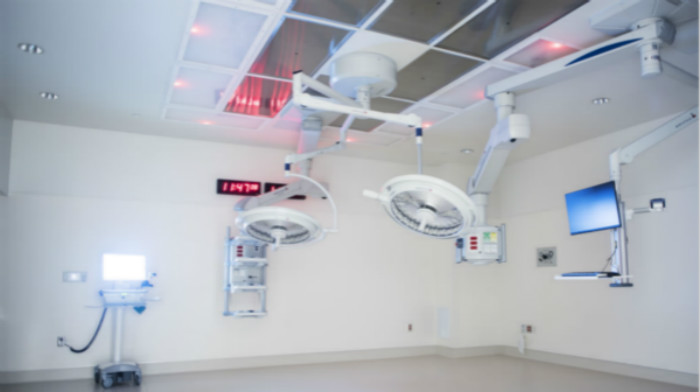
A Bedless Control Room of MetroHealth System
Located in Ohio, USABrecksvilleThe MetroHealth System has just opened a bedless hospital at a cost of $48 million. As is well known, Cleveland is a major healthcare hub, home to three world-renowned hospital systems: Cleveland Clinic, The MetroHealth System, and University Hospitals.
Upon completion, the facility is expected to serve 3,000 patients in its first year. Regarding the benefits of a hospital-without-beds model, Dr. Akram Boutros, CEO of Metropolitan Healthcare System, stated, “It can effectively reduce treatment costs and the risk of infection. Patients can recover more quickly in the low-risk environment of their own homes.”
In the United States, the continuous increase in outpatient visits represents a significant shift and trend. Taking the Metropolitan Health System as an example, its outpatient volume expanded from 850,000 to 1.2 million over the past four years, marking a growth of more than 40%. Furthermore, a portion of taxpayer-funded resources is required to support the large population enrolled in Medicaid, the largest healthcare welfare program in the U.S. Revenue generated from outpatient services is increasingly used to subsidize the higher costs of inpatient hospital care.
One of the driving forces behind the trend of “bedless” hospitals isCost. Under dual pressure from insurance companies and patients, hospital systems have gradually begun shifting toward low-cost outpatient care, which typically yields higher profit margins than inpatient treatment.
Additionally, medical institutions are gradually moving towardsMiniaturizationA More Efficient, Flexible, and Focused Direction for Transformation. The ideal approach to healthcare delivery is for patients to receive the majority of their medical care at small clinics near their homes, eliminating the need to travel between multiple facilities for treatment. Particularly with advancements in technology—such as the widespread adoption of telemedicine and virtual care—patients no longer need to flock to large hospitals for inpatient care at the first sign of illness.
However, some observers worry that the development of hospital-without-beds models is essentially a financial ploy disguised as innovation, aimed at maintaining hospitals’ financial balance. They question whether this decentralization of resources harms patients who still require complex care, potentially undermining their right to receive appropriate treatment.
“The number of patients who still require hospital-based treatment is incalculable. However, if patients pay for hospitalization, can hospitals provide care commensurate with the costs incurred?” questioned Harold Miller, CEO of the Center for Health Care Quality and Payment Reform. “What truly drives the development of hospital-at-home models is that the federal government and private insurers areChanges in Medical Reimbursement。”

Located in BrecksvilleMetroHealth System’s Bedless Hospital: Possessing All the Functions of a Traditional Hospital, with the Only Difference Being the Absence of Inpatient Beds
At the University of California, Los Angeles (UCLA) Medical Center, one of their financial policies is to avoid hospitalizing patients and instead disperse them to smaller community hospitals. In the Los Angeles area, the health system operates 160 clinics, including some outpatient centers. CEO Johnese Spisso stated, “In many cases, these medical facilities are essential because insurance companies do not provide coverage for treatments delivered in traditional hospitals. However, hospitals tend to overtreat, leading to higher treatment costs. Therefore, there is a significant difference in expenditures between inpatient care and general outpatient services.”
The rise of hospital-at-home models is also linked toSimplified Treatment Methodsdevelopment. This brings to mind a little story. A few years ago, physicians at Memorial Sloan Kettering Cancer Center began brainstorming ways to expand their surgical capacity. One of their modest goals was to establish standardized protocols for routine procedures, such as mastectomy, enabling patients to undergo surgery without requiring prolonged hospitalization. It may sound somewhat implausible.
The end result was the construction of the 16-story Josie Robertson Surgery Center on Manhattan’s Upper East Side, designed to facilitate outpatient cancer surgeries. It features 28 short-stay beds, with most patients discharged within hours after their procedures.
Dr. Brett Simon, Chief Physician of the Surgical Center, stated that standardized instruments and antibiotics are used in every procedure, with patients monitored in a designated operating room. This approach eliminates the need for a 2–3 day postoperative hospital stay, helping patients save costs. “Based on our experience, we can manage patients using the most effective methods known to us,” said Dr. Simon. Should any complications arise, patients are promptly transferred to a nearby hospital for inpatient care and stabilization.
For a healthcare system, the greatest challenge is not how much cost it can save, but how much revenue it will generate. Currently, the Josie Robertson Surgery Center’s revenue primarily comes fromMedicare, Medicaid, and Commercial Insurance Companies. In previous years, the situation was entirely the opposite, with most revenue being purely based on the length of hospital stays; a decline in inpatient numbers would quickly lead to financial losses for hospitals. In its first year, the surgical center was projected to perform approximately 7,600 procedures. Five years later, this figure is expected to rise to around 12,000.
But inAffordable Care Act(Under the Affordable Care Act) and other reform policies, reimbursement is directly tied to treatment outcomes, which further implies that healthcare providers can actually earn higher incomes if they deliver better services at lower costs.
For MetroHealth, the construction and acquisition of a bedless hospital also serve a strategic purpose: it is part of its competitive strategy against the Cleveland Clinic and University Hospitals. Although it is equipped to handle medical emergencies, most people choose this facility for its convenience, seeking one-stop access to a full range of medical services, including primary care and specialized treatments, with the key advantage being its proximity to their homes.
“We know that convenient access to medical care is very important for patients,” said Dr. Boutros. “The closer the hospital, the more likely it is to foster a stronger relationship.”
Many healthcare groups are abandoning the traditional hospital expansion model by establishing standalone emergency centers outside of large hospitals to provide surgical and medical imaging services, rather than expanding these capabilities within centralized, full-service hospitals. While these emergency rooms have short-stay observation beds, patients requiring inpatient care are transferred to full-service hospitals. This represents a fully patient-centered process.
A typical example is Montefiore Medical Center in New York, which has shifted many routine surgeries out of the acute care setting, significantly reducing time delays. After all, one would not want a healthy individual undergoing a minor procedure to be treated in the same environment as a patient next door requiring neurosurgery. This improvement in hospital efficiency allows patients to benefit from standardized treatment protocols without the need for inpatient observation or hospitalization, enabling them to return home happily. Such a model of care is what future patients will most eagerly anticipate.
The Detroit Medical Center (DMC) is one of a growing number of hospitals that focus on providing a wide range of medical services but do not offer inpatient beds. Its pediatric outpatient center, spanning 63,000 square feet and built at a cost of $44 million, provides a 24-hour pediatric emergency room and operating rooms for various pediatric surgical conditions. The outpatient center covers multiple disciplines, including cardiology, neurology, and oncology, and does not provide inpatient beds.
Montefiore Medical Center in New York has opened a “bedless hospital” in the Bronx. The $152 million, 12-story facility spans 280,000 square feet and features 12 operating rooms, multiple laboratories, a headache clinic, comprehensive medical imaging equipment, and a full-service pharmacy, but it does not offer inpatient beds.