

Nano Spring: Where Healthy Living Begins at Your Feet and Smart Healthcare Fits in the Palm of Your Hand
The MIT China Innovation and Entrepreneurship Forum (MIT-CHIEF) is the largest innovation and entrepreneurship platform in the eastern United States, bringing together top-tier talent and projects from across the country while integrating advantageous resources from both China and the United States. This past July, sixteen startup teams spanning fields such as healthcare, new energy, education, and finance joined MIT-CHIEF on visits to Beijing, Shanghai, Shenzhen, and Chengdu, as well as their associated entrepreneurial collaboration hubs. The groups engaged in productive cooperation and exchanges with local government officials and representatives from enterprises and public institutions. Synced has covered some of theseEleven teams conducted a series of interviews,VCBeat (WeChat Official Account: vcbeat) onRepost of an interview in the healthcare sector.

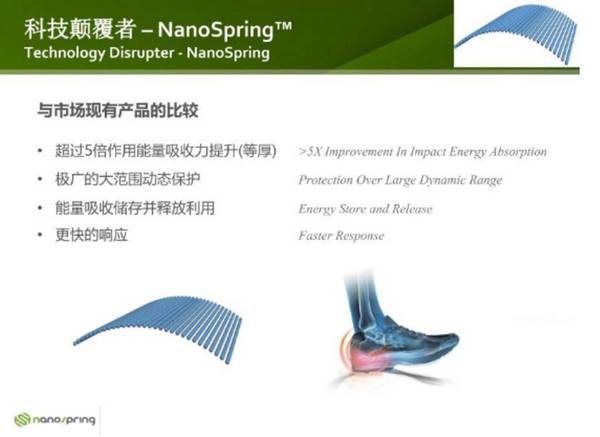
Nano Spring is dedicated to the development and application of new materials. Its nano carbon fiber spring wellness shoes, created in collaboration with fashion and casual footwear designers from the Rhode Island School of Design and New Balance, have been successfully launched in the North American market. The new materials developed by Nano Spring enhance impact energy absorption by fivefold. The nano-spring insoles fully absorb shock with every step, efficiently utilize energy, and provide comfortable protection by effectively cushioning the feet.

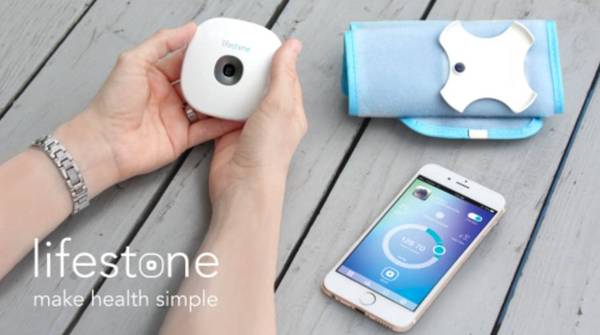
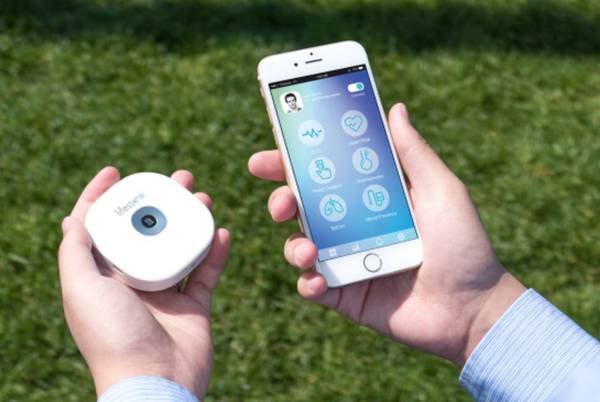
Lifestone is a startup team dedicated to developing mobile healthcare hardware. By leveraging state-of-the-art micro-sensors for vital signs, they have integrated blood pressure, blood oxygen, heart rate, body temperature, ECG, and respiration measurements into a single device. Connected to mobile terminals, this palm-sized instrument allows users to easily perform these common vital sign assessments. The team has completed a seed funding round of RMB 1.2 million and is currently running a crowdfunding campaign on Kickstarter.
This time, we are speaking with someone fromLi Xuesong, COO of Nano Springand fromXie Xin, Co-founder of Lifestone。
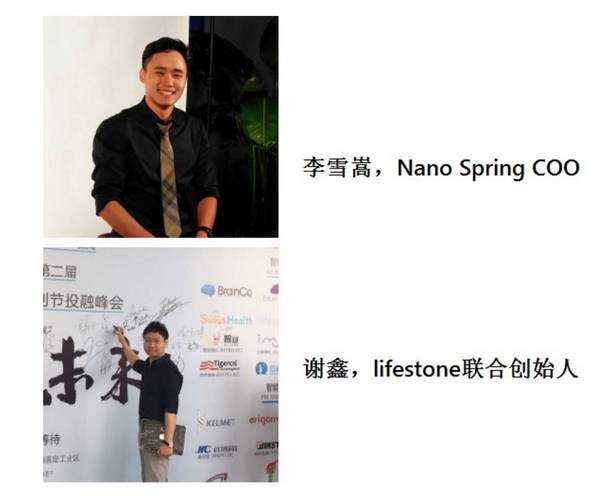
Synced:Hello to you both! First, could you please briefly introduce your respective teams and the key features of your products?
Xie Xin:Hello everyone, I am Xie Xin, co-founder of Lifestone. Lifestone is a Boston-headquartered company in the mobile health sector. The Lifestone Portable Health Management Center is a mobile health hardware device that enables users to accurately monitor their health data anytime, anywhere.
Li Xuesong:Hello everyone, I am Li Xuesong, COO of Nano Spring. Dr. Zhao Jing serves as the team’s CEO and Technical Director. In the endeavor to develop new material markets, Dr. Zhao holds over 30 patents. Our Marketing Director, Kurt Eldracher, is a serial entrepreneur with more than a decade of hands-on experience in marketing and sales within the health and sports product sector. Possessing keen market sensitivity and judgment, he has been instrumental in helping us position and launch our new products effectively. Our products are protected by two independent proprietary patents covering materials and structure. The featured Shujian Shoes utilize cutting-edge nano-carbon fiber composite materials combined with breakthrough revolutionary spring midsole structural technology. This innovation positions the product as a dark horse in applied technology, poised to change the rules of the game and potentially break through the century-old constraints faced by traditional manufacturers.
Synced: What prompted you to initiate R&D or exploration in this area?
Li Xuesong:As awareness of healthy living grows, average incomes rise, and life expectancy extends, the health industry is widely recognized as the next major trillion-dollar market of the 21st century. Health-focused footwear is a product of this emerging wellness market, with an estimated potential market value of $2 billion. Surveys indicate that over 30% of American adults have experienced foot pain, while more than 20% suffer from knee and back pain. Due to inherent weaknesses in human physiological structure, the legs, feet, and knees bear impact forces up to eight times body weight during single-leg strides, directly leading to injury and pain. Currently, there are no particularly effective medical methods to prevent or resolve such pain issues. The health footwear sector encompasses various categories, including pain-relief shoes, injury-prevention shoes, foot-massage shoes, lightweight and comfortable shoes, and high-performance athletic shoes. In light of these considerations, we intend to apply our newly developed aerospace-grade materials to the health industry, with footwear serving as an ideal entry point.
Xie Xin:With my professional background in electronic engineering, specializing in sensors—a component indispensable to modern smart hardware—I began focusing on the development of mobile healthcare alongside a friend about two years ago. In everyday life, key challenges for mobile healthcare include how to record historical health data and how to share existing data. Consequently, we set out to design a smart hardware device that not only records historical health data but also enables users to share this information with family members, friends, or physicians.
Synced:Were there any difficulties encountered during the development process? What was the biggest difficulty or challenge?
Li Xuesong:The greatest challenge we encountered was how to maximize the utilization of specialized materials within certain structural components while simultaneously optimizing the external design. We explored numerous approaches but failed to achieve satisfactory results. Fortunately, we later engaged a footwear designer who graduated from a top-tier global design school and had previously worked at New Balance. Leveraging his professional expertise, experience, and resources, we were able to resolve the relevant issues.
Xie Xin:In the field of electromechanical engineering, developing larger devices is relatively straightforward, whereas miniaturization presents numerous challenges. Our first product integrates six functions—blood pressure, blood oxygen saturation, heart rate, body temperature, electrocardiogram (ECG), and respiration measurement—into a single device. Consider that in a hospital setting, precise measurement of these parameters typically requires bulky equipment; our goal is to iteratively integrate all these functionalities into a handheld hardware unit, which constitutes the most significant technical hurdle. Furthermore, we must ensure high measurement accuracy despite the reduced size, making the development of sophisticated algorithms another key challenge we have overcome.
Synced: There are many mobile medical devices on the market today. What do you consider to be your greatest competitive advantage in this field?
Xie Xin:Continuing from the challenges mentioned earlier, a high-quality product must be both portable and precise. We have made significant improvements to our algorithms. While we cannot claim to match the precision of hospital-grade medical devices, our product likely offers the highest accuracy among similar consumer-grade solutions. Thus, having overcome the algorithmic hurdles, this aspect has become our competitive advantage.
Synced: Understood, thank you. I’d also like to ask NanoSpring: How do you view the development trends in your field? In terms of competition, what do you consider your company’s greatest advantage?
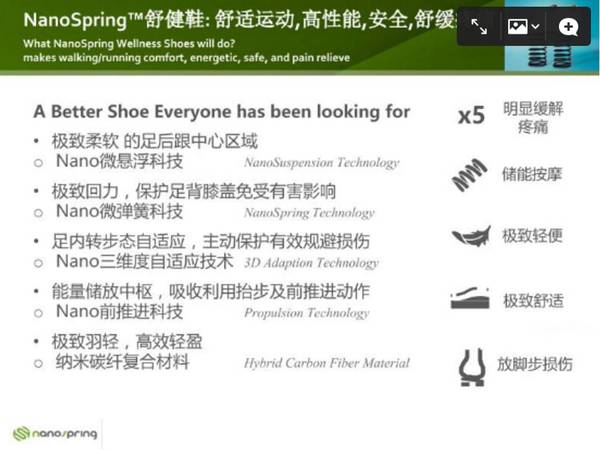
Li Xuesong:As a massive, time-honored traditional industry, the footwear sector often sees breakthroughs in materials science become the key to transforming the industry and providing core competitiveness. For instance, Nike’s Air Jordan sneakers achieved sustained bestseller status thanks to their Air cushioning technology, while Crocs also found great success with its distinctive materials and manufacturing processes. Our greatest competitive advantage lies in the robust technological barriers formed by our two patented material structures and five proprietary technologies: Micro-Suspension Technology, Micro-Spring Technology, Three-Dimensional Adaptive Technology, Forward Propulsion Technology, and Nano-Carbon Fiber Composite Materials. In other words, our products deliver a disruptive experience, offering unprecedented comfort and health benefits, thereby fostering strong user stickiness.
Synced:We understand that both of you participated in the MIT-CHIEF China Tour. Could you please share with us your key takeaways from this event?
Li Xuesong:Throughout the project’s advancement, we received substantial support from MIT alumni, and we were honored to be selected for the MIT-CHIEF China Tour. Our primary objectives for this trip were to secure funding, seek assistance in production processes, and conduct market research in China. In fact, we successfully achieved all these goals. Among the four cities visited, Shenzhen left the deepest impression on me, as it is the forefront of technological innovation and a vanguard for hardware innovation. From my perspective, Shenzhen offers a highly “favorable climate” in terms of the overall environment, private-sector resources, and government policies.
Xie Xin:I believe the most significant takeaway from this trip to China was the opportunity to connect with numerous investors and government innovation partners. I feel that there is currently substantial support and enthusiasm within China for overseas students returning to start businesses. Another key gain was identifying two teams among the sixteen participating in MIT-CHIEF that have expressed potential interest in collaboration. Leveraging their technologies would allow us to optimize our existing devices at the AI and software levels, representing a major breakthrough. Among the four cities we visited, the Chengdu municipal government’s high level of attention left a deep impression on us. Additionally, as one of our other co-founders is a native of Chengdu, we not only discussed innovation and entrepreneurship with the local government but also engaged in in-depth exchanges with other local companies specializing in smart healthcare.
Synced: "Based on your communications with them, do you believe that market demand in this sector is stronger in China compared to the United States, or are there notable differences?"
Xie Xin:In the field of smart healthcare, the Asia-Pacific region (primarily comprising China, Japan, and South Korea) represents the largest market, followed by the United States and Europe. Therefore, another objective of our return is to establish a branch office in China to better leverage resources in this sector. Furthermore, as China is the global manufacturing hub for all smart hardware devices, establishing a base of operations here is essential.
Synced: "Both of you started your entrepreneurial journeys in the United States and have interacted with many U.S. investors. Based on your recent trip to China, do you see any differences between the startup cultures at home and abroad?"
Li Xuesong:I believe there are still significant differences, particularly in the broader entrepreneurial environment, though each has its own advantages and disadvantages. Teams should always choose the target environment that best suits their current stage of development. This varies from case to case; for example, while our R&D and design operations are based in the United States, we may eventually relocate certain functions—including production, supply chain management, and even part of our Asian market operations—back to China.
Xie Xin:Perhaps in response to the Premier’s call for “Mass Entrepreneurship and Innovation,” you can clearly sense that the entrepreneurial atmosphere in China has grown increasingly vibrant in recent years, with a rising number of incubators. Moreover, government support is substantially stronger than that in the United States. I believe that in the coming years, an increasing number of overseas Chinese student-led startup teams will return to China to establish their businesses.
Synced: Understood. Let’s delve deeper into the technical aspects of both teams. First, regarding Nano Spring’s new material, has this material been applied in other areas during your previous R&D efforts?
Li Xuesong:Here is the reality: the carbon fiber nanomaterial we have developed has extremely broad applications. While it can be used in health-focused footwear, its primary applications lie in the aerospace sector. This material features feather-like lightness, diamond-comparable strength, and groundbreaking toughness. Through specialized structural design, it achieves an exceptionally high modulus of elasticity, with energy conversion efficiency more than five times greater than that of traditional materials. We aim to leverage this “elite” material for consumer-grade products. Our assessments indicate significant potential across a range of items, from high-end sports bicycles to luxury women’s handbags. Given its vast and extensive market reach, footwear has become our initial target application area.
Synced:Footwear is a mass-produced, industrialized commodity. What advantages does this new material offer in the context of industrial-scale manufacturing?
Li Xuesong:This area primarily focuses on footwear manufacturing. Conventional shoe materials are mostly plastic or rubber-based, which inevitably cause environmental pollution during production. In contrast, these nanomaterials generate no pollution during the manufacturing process, and we are also exploring new methods to meet green production standards. Notably, our innovative hot-pressing technique can reduce production costs by more than fivefold, which is crucial for industrialization.
Synced: Regarding the product itself, we hope Lifestone can share some insights with the readers of Synced. I noticed that you brought a physical unit today; it appears to be a small, square box, which differs from my understanding of typical wearable devices. Could you please introduce how it is used and detail its specific functions?
Xie Xin:This is the main unit of our first-generation product, which is used in conjunction with an inflatable wrist cuff for blood pressure measurement. Body temperature is measured via infrared technology, while blood oxygen saturation is measured using a dedicated SpO2 sensor. As you can see, there are three electrode pads here for electrocardiogram (ECG) monitoring. Respiration and heart rate are measured simultaneously during ECG or SpO2 monitoring. Therefore, all six basic human physiological parameters can be assessed using this single portable device. It is worth noting that blood pressure is measured directly via the wrist cuff; the device contains a VT pump that performs inflation and deflation to obtain actual measured values. In contrast, although some blood pressure monitors on the market are also compact, they provide estimated values derived from photoplethysmography (PPG). The accuracy of such estimates certainly cannot compare with that of direct measurements.
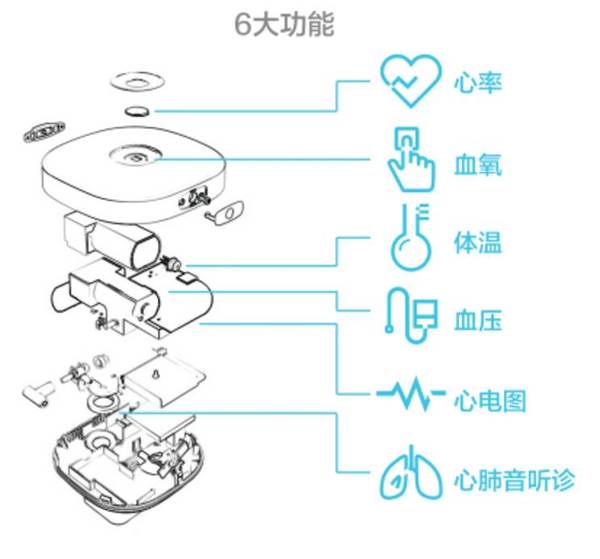
Synced:So, if I want to take a measurement, do I simply touch the sensor pad with my hand?
Xie Xin:Vital sign measurement methods vary slightly. For instance, body temperature is measured by placing the device in front of the forehead, with readings obtained in approximately ten seconds. For electrocardiogram (ECG) monitoring, users need to hold the three upper electrodes with their left and right hands. Blood pressure measurement requires the use of a wrist cuff. Our wrist cuff is designed with ergonomic considerations, for which we have applied for patents covering both its structural design and algorithms. The collected data is then transmitted to a mobile application, where users can view all historical data recorded since the first day of use, accompanied by simple analytical charts. Users may choose to share this data with their family physicians, family members, or other designated recipients.
Synced:What is the format of this push notification?
Xie Xin:Similar to the format of a text message. As long as the other party has installed the same software, they can view the internal push notifications. Synced: So my understanding is that family doctors can collect data on your daily symptomatic changes in real time, meaning these metrics do not need to be re-measured during your next follow-up visit. Do you have corresponding technologies in place to support data management and encryption for this interim period?
Xie Xin:Data security assurance is a significant concern not only in the United States but globally. Currently, all our data is uploaded to the AWS cloud, which provides adequate security at this stage. As previously mentioned, looking toward future development, we may collaborate with another team from this China trip that specializes in artificial intelligence. By integrating their technology, we will be able to provide personalized recommendations to each user in the future.
Synced:When was your first-generation product launched on the market?
Xie Xin:We will launch our crowdfunding campaign on Kickstarter this month (August), initially targeting the U.S. consumer (B2C) market. After gaining insights into user demographics and usage preferences, we will expand into the business-to-business (B2B) market in China. For our second-generation product, we plan to collaborate with domestic hospitals, research institutions, and health authorities.
Synced:You just mentioned the second-generation product, so you must have some ideas about product updates. Could you share with us the differences between the first and second generations?
Xie Xin:Currently, our products are more focused on health-related aspects. For the second generation, we will place greater emphasis on medical applications and incorporate standards such as blood glucose and blood lipid levels.
Synced: Product iteration is inseparable from user feedback. I believe Nano Spring has also made numerous attempts and improvements in fine-tuning the comfort of its health shoes. Could you please share some insights based on your experiments and pilot studies?
Li Xuesong:We conducted over one hundred clinical trials targeting two distinct groups: individuals suffering from leg, foot, and back pain, and regular joggers. For the former group, we collaborated with podiatry clinics in the United States, where users experienced significant relief, improvement, or even complete disappearance of pain. For the latter group, the objective was to evaluate the performance of energy harvesting and reuse, as well as comfort levels. Participants generally reported improved athletic performance, greater endurance, significantly reduced physical burden for the same level of exercise, and a lighter feeling in their feet. This serves as the foundation of our confidence in the product. In fact, during physical activity, both fatigue and pain stem from the impact forces and pressure generated when the calcaneus (heel bone) contacts the ground. Our design optimization addresses this by suspending the heel area, thereby dispersing the pressure across the entire plantar surface for enhanced cushioning.
Synced: However, shoes are consumable items, and the materials will inevitably deform after a period of use. So, what is the approximate service life of these therapeutic shoes?
Li Xuesong:Our core materials boast exceptionally high strength and an extremely long service life. Consequently, the lifespan of the shoes is limited by other traditional component materials. In particular, considering the knit upper material, we recommend a usage cycle of 1–2 years, which is comparable to or slightly longer than that of conventional footwear typically found in consumers’ closets.
Synced: All right, thank you! To conclude the interview, we have our regular quick-fire Q&A segment for Synced Talk. Our theme is Wearables and Smart Healthcare. Here are three questions; please answer them based on your immediate impressions. First, what do you believe will become the primary form factor for next-generation wearable devices after smartwatches?
Xie Xin:I believe it could be contact lenses, as they are the only devices capable of prolonged contact with bodily fluids. I am aware that some companies are currently developing tear-based diagnostic tools for diseases, and I see significant potential in this area for contact lens technology. Furthermore, as I mentioned earlier, all portable devices will continue to become smaller and lighter, which will ultimately transform the methods used for image and text input.
Li Xuesong:The primary platform for next-generation wearable smart healthcare may return to its roots, integrating into everyday clothing. By leveraging ultra-thin and lightweight components, it enables more extensive, diverse, and convenient data collection, analysis, and even feedback, better aligning with people’s most natural and fundamental behavioral habits. We have already engaged with pioneers expanding in this field and are likely to pursue in-depth collaborations with them using our materials in the future.
Synced: Second question: As a consumer or user, what features would you most like to see in the next generation of wearable devices?
Xie Xin:I believe we should first ensure the functionality that meets our basic needs, such as phone calls and text messaging. Ultimately, we should add a feature for precise navigation.
Li Xuesong:I hope wearable devices can achieve more comprehensive and precise data collection, provide more effective behavioral-level data analysis, and, in other words, truly leverage greater intelligence to improve health and enhance the comfort and convenience of daily life.
Synced:It’s certainly worth pondering. One final question: In today’s society, in which field do you believe big data will have the greatest driving force?
Xie Xin:I believe that big data will provide significant support in the political sphere, particularly in areas such as elections. By leveraging data, it is possible to gather extensive information on scandals or public preferences, which are crucial for manipulating public opinion.
Li Xuesong:In terms of timing, big data will first drive the internet economy, intuitively enhancing the next generation’s web-level life experience. In terms of impact, the most powerful driving force will undoubtedly be in the healthcare sector, where it will directly or indirectly become one of the core drivers of healthcare development over the next decade or more.
Synced : Thank you! We also wish you every success in your promotion and implementation in China!