

Arsenal Health Files IPO Prospectus: Leveraging Predictive Analytics to Transform Healthcare Scheduling
What is the current state of processing and mining medical big data, and how will it develop in the future? VCBeat (WeChat: vcbeat) will publish a series of reports on the domestic and international medical big data sector, covering typical case studies, investment and financing trends, and industry landscape, for the reference of investors, entrepreneurs, and healthcare institutions.
In recent years, an increasing number of cutting-edge technologies have been applied in the medical field. These technologies have improved the overall environment of the healthcare industry and enhanced work efficiency from many aspects, including the supply side of medical services and the patient side.
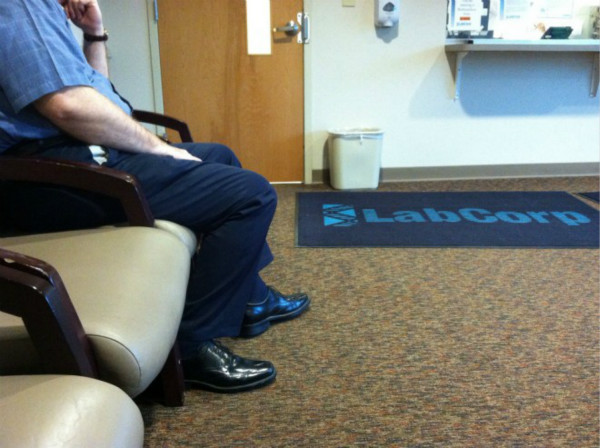
Nevertheless, issues in appointment management appear to remain unresolved. Physicians are consistently overbooked, while patients face frequent rescheduling of their appointments. Waiting rooms may be crowded one day, only to be nearly empty the next. This issue is now being addressed through the use of medical big data,Machine learning and predictive analytics have been addressed. VCBeat (WeChat: vcbeat) provides you with a detailed overview of a company calledArsenal Health's company.
In 2012, Arsenal Health (formerly known as Smart Scheduling) was co-founded by Chris Moses and three other co-founders. The company is registered in Boston, Massachusetts, USA, with Chris Moses serving as its CEO.
In 2012, Chris Moses, then a neuroscience student at the Massachusetts Institute of Technology (MIT), participated in a “hackathon” (an event where many programmers gather to engage in collaborative computer programming). It was then that he resolved to bring about significant change to the healthcare industry. During that event, titled “Hacking Medicine,” a question raised by a physician caught his interest: every time a patient misses or cancels an appointment at short notice, it causes financial losses to healthcare institutions and undermines other patients’ access to appointments. According to the physician, this is a pervasive and particularly thorny problem in the healthcare sector.
Also at that event, another physician proposed that the key to solving this challenge lies inData. This provided Chris Moses with inspiration: if a partnership were established with electronic health record (EHR) companies to accessHistorical Data、Building Predictive Modelsand attempt to identify the reasons for no-shows or last-minute cancellations of appointmentsPattern, wouldn’t that solve the problem? To improve this situation and address the inefficiencies in time and resource utilization, Chris Moses entered the healthcare sector, adopting a business-oriented approach to build a team and conceptualize such a solution, which led to the founding of Arsenal Health.

Chris Moses, Co-founder and CEO of Arsenal Health
In addition to participating in hackathons, Chris Moses and his team undertook numerous other initiatives during the company’s early development stage. They first enrolled in the Entrepreneurship Skills Accelerator program at MIT and subsequently joined the Healthbox accelerator. Meanwhile, they conducted extensive research in the healthcare sector, including visiting various clinical institutions, gaining a thorough understanding of market pain points, and identifying the latent needs of healthcare professionals. Based on these site visits and informal discussions, they optimized the design of every fundamental element of Arsenal Health.
After extensive efforts and substantial preparatory work by multiple parties, Arsenal Health’s products have finally been launched: they primarilyA Predictive Analytics Software Based on Medical Big Data, designed to help healthcare providers identify patients with a higher likelihood of no-shows or last-minute cancellations in advance, allowing medical staff time to prepare ahead of schedule, thereby improving clinical efficiency and reducing associated economic losses.
As of November 2015, Arsenal Health had raised approximately $1.1 million in funding and comprised an eight-member team. Its software is embedded within the athenahealth electronic health record (EHR) system, with 600 healthcare providers from 25 institutions across 12 states currently using its product. Currently, Arsenal Health’s algorithms can accurately predict patients’ likelihood of no-shows and last-minute cancellations, achieving an average prediction accuracy of 79%.
Arsenal Health primarily encountered three major challenges during its establishment: HIPAA compliance, the development of predictive models, and usability.
First, there is the issue of HIPAA compliance.In the early days of the company’s founding, most team members were not even clear on what HIPAA was, nor did they understand the relevant regulations. Admirably, however, they progressed from complete unfamiliarity to gradual mastery, systematically overcoming this challenge. In fact, they achieved not only HIPAA compliance but also HITRUST security certification, demonstrating that Arsenal Health has reached a remarkably high standard in terms of technology, management, and operations. For companies seeking to enter the healthcare sector, various security standards constitute the first barrier to entry; nevertheless, achieving compliance is essential and critically important for corporate development.
The second, more arduous challenge is building predictive models.Building predictive models requires large volumes of data, which electronic health record (EHR) companies do not always provide. Although an increasing number of healthcare institutions are adopting electronic medical records (EMRs), their implementation does not necessarily comply with interoperability standards. Data integration efforts by many EHR vendors are often one-off, customized, and arduous, yielding fragile connections even across different sites within the same healthcare system. Consequently, data acquisition remains highly challenging. Fortunately, athenahealth offers a robust application programming interface (API) that provides Arsenal Health with access to substantial data volumes, thereby enabling the company to develop data integration solutions scalable to athenahealth’s 70,000 clients.
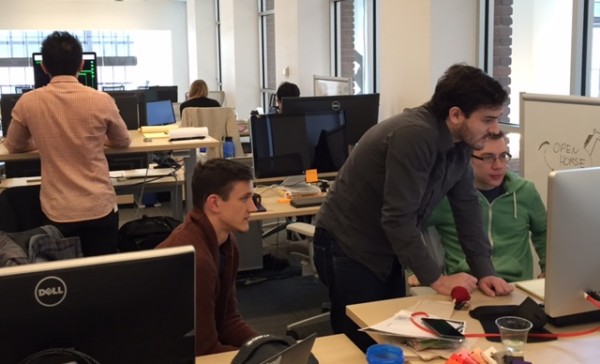
Arsenal Health team members are at work
The final challenge is usability.Healthcare providers bear a heavy workload. The direct users of Arsenal Health’s products are front-desk schedulers at medical institutions, whose workloads are no less demanding than those of physicians. The user interface design of electronic health record (EHR) systems is not sufficiently “user-friendly.” Moreover, given the significant pressure these users already face, it seems somewhat unreasonable to expect EHR companies to devote substantial effort and resources to improving interface designs solely to support third-party applications. So, how can we design a solution that enables users to seamlessly open another window and access third-party applications after exiting the EHR system? This is a challenge that Arsenal Health needs to address, and it is also a shared “design and adoption” issue facing the entire healthcare industry.
How does Arsenal Health’s algorithm work, and what are its advanced features? The answer to this question also comprises three points, which we will introduce one by one below.
First, Arsenal Health will retrieve historical data and conduct a thorough analysis of all accessible data:Clinical data, administrative data, appointment data, etc.Arsenal Health’s algorithms automatically identify common patterns among patients who miss appointments or cancel at the last minute. Based on these insights, the team has developed a predictive model that, after analyzing appointment data against specific criteria, generates predictions such as: “This patient, who has scheduled an appointment with Dr. __ on __/__, is highly likely to cancel.”
Next, the software backend flags this patient within athenahealth’s electronic health record (EHR) system. Upon seeing this, the front-desk scheduler responds as follows: “If I need to select a standby patient to fill potential appointment gaps that may arise today, it would be reasonable to place him in this time slot, as patients scheduled for this period have a higher likelihood of canceling their appointments compared to others.” We refer to this approach as “Smart Open Slots,” which effectively reduces wait times and bursts the “appointment bubble” by optimizing the scheduling workflow. Previously, patients often faced a three-week wait between booking an appointment and receiving care. With Arsenal Health, however, appointments made today can potentially be scheduled for tomorrow or even the same day, without disrupting other patients’ existing appointments.
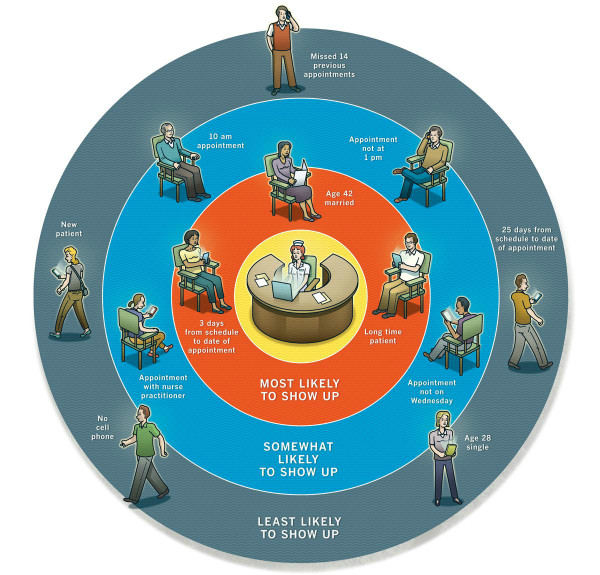
Arsenal Health's Workflow
The second feature of the Arsenal Health algorithm is its ability to identify “high-risk” patients—those highly likely to miss their appointments—and proactively call them to inquire whether they wish to cancel. This approach provides scheduling staff with ample time to make early preparations for rescheduling, while also serving as a reminder for patients to attend their appointments on time.
Some algorithms allocate resources to make phone confirmation calls to all scheduled patients, but this approach is excessively time-consuming. Other algorithms forgo phone confirmations entirely; while this saves time, it prevents healthcare providers from forecasting and monitoring the likelihood of patient attendance in advance. Arsenal Health’s algorithm differs from both approaches. It places calls only to scheduled patients who have not confirmed their appointments via automated voice calls, flagging them as a “high-risk group” prone to no-shows or last-minute cancellations. This design yields multiple benefits: it reduces the volume of outbound calls, significantly saves time, lowers the no-show rate, improves on-time attendance rates, and thereby mitigates the financial losses associated with no-shows and last-minute cancellations.
The third feature of the Arsenal Health algorithm is its “automatic rescheduling” function. In most cases, the 48 hours following a scheduled appointment constitute a “peak period” for last-minute cancellations. To find suitable waitlisted patients to fill these appointment gaps within this brief window, front-desk schedulers would typically need to make numerous phone calls and engage in extensive external coordination—a task often precluded by time constraints.
Arsenal Health’s approach involves continuously monitoring appointments canceled within 48 hours of the scheduled visit time. Once a cancellation is confirmed, the system sends bulk SMS messages to patients who previously missed their appointments without rescheduling. This design aims to enhance care coordination efficiency. Additionally, the system contacts patients on the waitlist, notifying them via SMS about newly available appointment slots and inquiring whether they wish to reschedule. If a patient confirms interest in a specific open slot, Arsenal Health automatically books the appointment for them. As a result, healthcare providers no longer need to make numerous coordination calls, significantly saving time and costs while improving operational efficiency.
On April 14, 2016, athenahealth announced the acquisition of Arsenal Health. As the first startup invested in by athenahealth through its MDP Accelerator program, Arsenal Health will now gain access to athenahealth’s internal resources and technical expertise, as well as entry into athenahealth’s network, which covers more than 75,000 healthcare providers. This enables more physicians to benefit from leading appointment optimization solutions. For athenahealth, the acquisition injects fresh capabilities—including “machine learning” and “predictive analytics”—into its extensive healthcare network, creating a win-win outcome for all parties involved.

Regarding this acquisition, Doran Robinson, VP of athenaCoordinator, stated: “First, it has been proven that appointment optimization solutions can significantly transform the overall landscape of the healthcare industry. They help medical institutions operate smoothly, improve patient consultation efficiency, and ultimately increase revenue for healthcare providers. In short, this is a technology application that benefits multiple stakeholders. Second, through this acquisition, Arsenal Health has injected fresh technologies into athenahealth, such as machine learning, predictive analytics, and artificial intelligence. We hope to build upon athenahealth’s robust technological foundation, integrate with the Arsenal Health platform, and leverage our valuable data resources to jointly strive for a positive impact on the healthcare industry and further extend our healthcare network. Furthermore, through the acquisition of Arsenal Health, we aim to demonstrate our ongoing efforts and the original intention behind establishing the MDP Accelerator Program: athenahealth is willing and actively providing support and resources to create opportunities for young health technology companies to develop and scale.”
Chris Moses stated, “After joining the athenahealth family, we believe we can accelerate our pace of development while effectively testing and upgrading our predictive analytics technology. We”Previous practices primarily involved tracking customer performance.Gain an understanding of the intricacies involved in healthcare suppliers’ operations, devise solutions, and anticipate their needs. We are confident that by joining athenahealth, we canLeverage their extensive data resources to develop an upgraded web-based intelligent service software, enabling the healthcare industry to further benefit from the conveniences brought by data-driven approaches.”
A few months after its establishment, Arsenal Health successfully attracted the attention of Healthbox (Editor’s note: an accelerator program). The accelerator provides $50,000 in funding, free office space, and mentorship to startups with strong growth potential. In a later stage of the company’s development, athenahealth also invested in Arsenal Health, although the investment amount was not disclosed; the funds were primarily used for marketing and sales.
Next, Arsenal Health hopes that an increasing number of healthcare providers will fully leverage all its features and truly integrate the services it offers into their patient appointment workflows.
Of course, improving appointment scheduling efficiency is just the first step for Arsenal Health. Chris Moses stated, “Our next step is to design an algorithm that can identify the most critically ill patients on the waiting list who require priority scheduling, thereby further optimizing the effectiveness and efficiency of appointment-based consultations and providing relevant decision support to healthcare institutions.”
Series Report:
[Medical Big Data] $30 Billion in Sales! SHYFT Analytics Is Expanding Aggressively
[Medical Big Data] Zephyr Health: Market Insight Advisor for Pharmaceutical Companies