

Ruisoft Technologies: A Medical Big Data Company Serving Over 1,000 Hospitals, Just One Step Away from Monetization

The core tasks outlined in the National 12th Five-Year Plan explicitly call for the establishment of nationwide electronic health records, electronic medical records, and population health information systems. Such foundational information and data are currently dispersed across various healthcare institutions, including hospitals, physical examination centers, community health centers, and maternal and child health hospitals. As the pace of informatization in the healthcare sector accelerates, both the types and volume of medical data continue to grow.
If these data are utilized properly, a recent report from the global management consulting firm McKinsey indicates that the healthcare sector could save up to $450 billion by fully and effectively leveraging big data resources, benefiting both healthcare institutions and consumers.
According to VCBeat (WeChat ID: vcbeat), Raysoft Technology, which has been deeply engaged in the big data industry for 11 years and experienced a difficult start with “three years without any business,” now serves six provinces, 30 local Health and Family Planning Commissions, and more than 1,000 hospitals. With over 200 business system data templates from mainstream medical vendors, it has made significant strides in the healthcare industry.
So, how is this big medical data generated? Li Yiqiang, President of RaySoft Technology, told reporters that medical data mainly appears in the following areas:
First, information generated during the patient’s medical care process. From the moment a patient enters the hospital, personal details such as name, age, address, and phone number are fully entered during the registration stage. Subsequently, during the clinical consultation, data on the patient’s physical condition and medical imaging are recorded into the database. After the consultation, when the patient settles the bill, additional information—including cost details, reimbursement data, and health insurance utilization—is added to the hospital’s big data repository. This constitutes the most fundamental yet voluminous source of raw data for medical big data.
Second, clinical medical research and laboratory data. The integration of clinical and laboratory data has led to rapid data growth in healthcare institutions. A standard CT image contains approximately 150 MB of data, while a standard digital pathology slide approaches 5 GB. When these data volumes are multiplied by population size and average life expectancy, the cumulative data stored by a single community hospital can reach trillions of bytes, or even petabytes (PB).
Furthermore, the aggregation of massive clinical trial data, disease diagnosis data, and population behavioral health data has formed medical big data that already exhibits the characteristic features of big data, namely:
For example, a CT image contains approximately 150 MB of data, while a genomic sequence file is about 750 MB in size, and a standard whole-slide pathology image is significantly larger, approaching 5 GB.
Medical data typically encompasses a diverse array of storage formats, including structured tables, unstructured and semi-structured text documents (such as XML and narrative text), and medical images.
On the one hand, healthcare information services involve extensive online or real-time data analysis and processing, such as diagnostic and medication recommendations in clinical decision support, generation of epidemiological analysis reports, and health indicator alerts. On the other hand, thanks to advances in information technology, an increasing amount of medical information is being digitized; therefore, the growth rate of data in the healthcare sector will remain rapid for a considerable period.
In addition to the general characteristics of big data, Li Yiqiang also told reporters that medical big data possesses unique features specific to the healthcare domain, such as polymorphism, incompleteness, temporality, and redundancy.
1. Polymorphic medical big data, encompassing pure data (e.g., physical examination and laboratory test results), signals (e.g., electroencephalogram [EEG] and electrocardiogram [ECG] signals), images (e.g., ultrasound and X-rays), text (e.g., chief complaints, present/past medical history, allergy history, and test reports), as well as multimedia formats such as animations, audio, and videos for health education and consultation, represents the most distinct feature differentiating it from data in other fields.
2. The processes of collecting and processing incomplete medical data are often disjointed, making it impossible for medical databases to comprehensively reflect information on any disease. A large volume of data originates from manual records, leading to biases and gaps in data recording. Furthermore, the expression and documentation of many data points are inherently uncertain, a problem particularly pronounced in case histories and medical records. All these factors contribute to the incompleteness of big medical data.
3. Temporality: Patient visits and the progression of disease onset unfold over time, while waveforms and images from medical diagnostics are functions of time; all these elements exhibit inherent temporal characteristics.
In Li Yiqiang’s view, although redundant medical data are voluminous and generate a massive amount of information daily—potentially including duplicate, irrelevant, or even contradictory records—there is no doubt that data are oil, a resource, and an asset. Medical big data are not only closely linked to each individual’s personal life, but their effective utilization also bears on the capacity for disease prevention and control, new drug development, and the conquest of intractable diseases at both national and global levels.
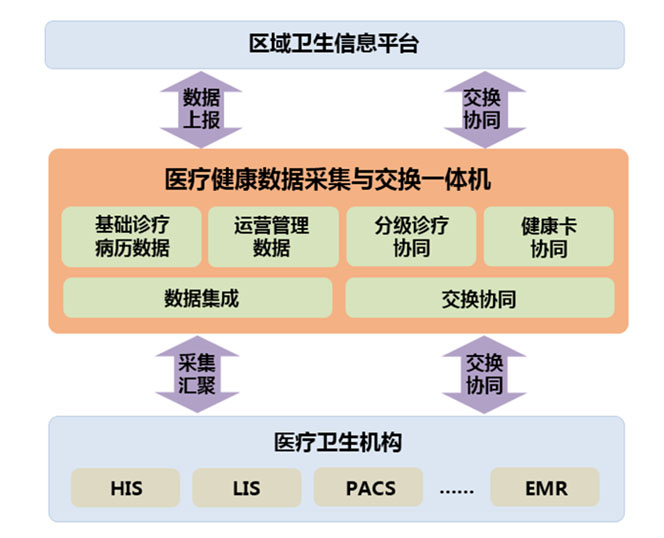
To this end, after 12 years of development, RaySoft has undertaken data aggregation, cleansing, and integration for more than 30 provincial and municipal health commissions—including the National Health and Family Planning Commission, as well as those in Henan, Hainan, Jiangsu, and Liaoning—and over 1,000 healthcare institutions. Li Yiqiang stated, “We rely on our medical health data processing platform, medical health big data storage and computing platform, medical health big data analytics and service platform, and a medical health big data governance platform that spans the entire lifecycle of big data platform construction to complete the processing of these medical big data.”
“Over years of practice, RaySoft Technology has developed its solutions based on customer needs and the specific characteristics of medical big data processing. ‘Therefore, these advantages are not something any vendor can replicate in a short time with heavy investment; RaySoft has reached where it is today through steady, step-by-step progress.’”
Among the four major platforms described by Li Yiqiang, the Healthcare Data Processing Platform boasts leading data integration capabilities, featuring shorter processing cycles, lower costs, and higher efficiency. To some extent, it serves as a critical hub connecting Hospital Information Systems (HIS) with the National Health and Family Planning Commission’s (NHFPC) regional health information platforms. It enables the comprehensive upload of medical data from healthcare institutions to public health regulatory bodies such as the NHFPC, thereby meeting the needs of national medical regulators to deeply mine the vast amounts of data accumulated across healthcare institutions at all levels. This addresses the issue of insufficient information in regulatory oversight and lays the foundation for enhanced tracking of drug procurement, sharing of patient diagnosis and treatment information, and improved efficiency in the allocation of medical resources.
The massive scale, diversity, and rapid growth of medical big data pose significant challenges to data storage and governance. The high performance and scalability of RaySoft’s Healthcare Big Data Storage and Computing Platform effectively address these issues. Leveraging big data storage and analytics processing technologies, RaySoft has developed regional healthcare integrated auxiliary management decision-support applications. It has established a comprehensive information evaluation system spanning provinces, cities, districts, and hospitals, featuring a hierarchical management statistics model that includes 9 categories of indicator systems, 45 business indicators, and 137 statistical points. This provides healthcare institutions at all levels with multi-perspective business views and multi-dimensional monitoring, promoting continuous improvement and optimization of regional medical service quality. With keen insight and a comprehensive perspective, RaySoft focuses on big data applications in clinical decision support, health and chronic disease management, medical payment, and pharmaceutical R&D and management. Drawing on years of industry experience and exceptional capabilities in full-lifecycle big data management and governance, RaySoft supports the successful implementation of livelihood-focused initiatives.
Big Data Analytics and Service Platform for HealthcareThis comprehensive analytics service platform is built around healthcare big data, with the goals of leveraging data to benefit the public and enhance government services. It aims to unlock the application potential and value of big data in regional healthcare and decision support, making medical data more open and transparent, while effectively improving regional healthcare regulation and the quality of public services. Relying on cutting-edge industry data analytics algorithms and models, the platform uses data analytics and service management as its core support infrastructure. This solution adheres to healthcare industry standards and performs unified analysis and processing of acquired healthcare big data. Based on this foundation, it carries out business processes such as data filtering, cleaning, de-identification, analysis, and storage, thereby providing various public-benefit and government-supportive healthcare-related services to both the government and citizens.
Medical and Health Big Data Governance PlatformThe Medical and Health Big Data Governance Platform standardizes and regulates vast amounts of medical and health data collected and shared by data processing platforms through specialized governance frameworks, transforming it into valuable data assets ready for platform analysis and services. It establishes a comprehensive set of technical solutions and implementation management protocols that span the entire lifecycle of the medical and health big data platform construction. By employing various management measures—including governance policies, metadata management, standards management, data quality management, ticketing system management, and monitoring management—the platform achieves unified management of regional medical data standards, aligns medical data standards with national standards, and enhances the quality of medical and health data. Furthermore, it ensures centralized control over all data nodes within the big data platform and establishes a long-term implementation and control mechanism to guarantee an optimal operational environment for medical and health big data.
The three major platforms—healthcare data processing, healthcare big data storage and computing, and healthcare big data analytics and services—can each leverage their respective strengths independently or work in synergy, as needed by clients. With the support of the healthcare big data governance platform, they enable optimal processing and application of healthcare big data.
Former Premier of the State Council, Li Keqiang, explicitly stated that “the development and effective application of health and medical big data is a major livelihood project, which not only meets public needs but also promotes the cultivation of new business models and fosters new economic growth drivers.” While solidifying the foundation of health and medical big data, applications that benefit the public and enhance governance have also witnessed explosive growth.
Dr. Li Yiqiang stated, “The application of big data in healthcare is reflected across multiple dimensions, including clinical decision support, health and chronic disease management, healthcare service administration, and payment settlement. The successful implementation of all these services relies on the control and governance of the entire big data lifecycle, as well as full-process participation from data generation to application. Fully unlocking the value of big data and translating it into tangible benefits is an effective means of leveraging big data to enhance the quality and standard of healthcare services.”
Building on this foundation, Ruiruan Technology has developed personal health management and family doctor contracting services. Guided by healthcare service demands, it integrates various links across the medical service workflow, including preventive care, online consultations, convenient medical access, and post-diagnosis self-assessment. The company establishes a comprehensive, scenario-based medical interaction model, enriches dual-thread inquiry and registration processes for medical diagnosis and treatment, and enhances proactive participation and bidirectional engagement in health management. Furthermore, it fosters a long-term communication mechanism between patients and physicians.
Leveraging big data analytics, mining, and statistical techniques to expand capabilities in public health monitoring and evaluation, infectious disease outbreak early warning, and data rationality analysis, Raysoft Technology has built an intelligent supervision and management service system for regional healthcare administrative agencies. By adopting a data-driven approach, the system eliminates the drawbacks of traditional management models and enhances governmental efficiency through improved services.
“We will further explore and unlock the value of big data on the existing foundation, with greater room for future growth,” said Li Yiqiang, noting that the company’s next inflection point has already emerged.