97% of Biopharma Firms See Digital Tools as Key to Accelerating Drug Development, Validic Survey Reveals

Drug development is an arduous process, with only one in ten drugs making it to market from Phase I clinical trials. This high attrition rate is a major contributor to the exorbitant costs associated with drug development. The Center for the Study of Drug Development at Tufts University has estimated that bringing a single drug from the laboratory to the market costs approximately $2.6 billion.
In the overall cost of drug development, clinical trial expenses account for the largest proportion during the mid-to-late stages. This is because clinical trials involve a large number of patients and span extended periods, making patient recovery and retention, as well as the collection of high-quality data, critically important.
In clinical trials, patients are carefully screened to meet specific criteria and monitored for medication adherence and treatment compliance. However, in real-world practice, diverse lifestyles and individual variability—such as missed doses and other potential factors—can exacerbate disease progression.
Due to these variables, actual outcomes may deviate somewhat and fail to be fully reflected. In light of this issue, regulatory authorities, consumers, and suppliers seek access to daily real-time data to effectively demonstrate drug efficacy.
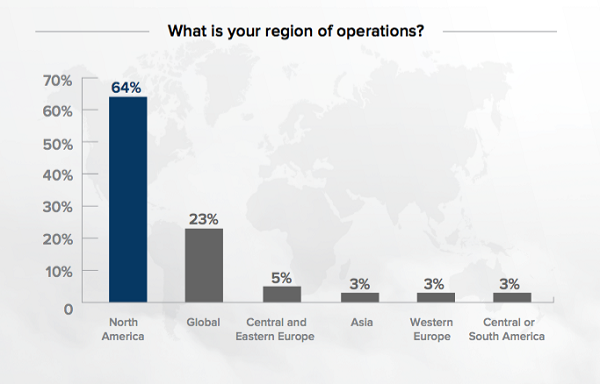
Against this backdrop, the digital health platform Validic conducted a survey. A total of 166 researchers, experts, and technical professors from the biopharmaceutical and life sciences industries participated in discussions on innovative trends in the application of digital health data and devices to clinical trials. VCBeat (WeChat Official Account: vbresearch2016) compiled the report. The survey involved 166 participants, with over 43% from pharmaceutical and biotechnology companies and 57% from CROs, technology service providers, and other organizations.
Because specialized expertise is required for data acquisition and analysis, many companies outsource the data acquisition process in drug development. According to VBInsight’s 2015 frontier information survey, 70% of companies outsourced data acquisition, while half also outsourced data analysis.
Key Information
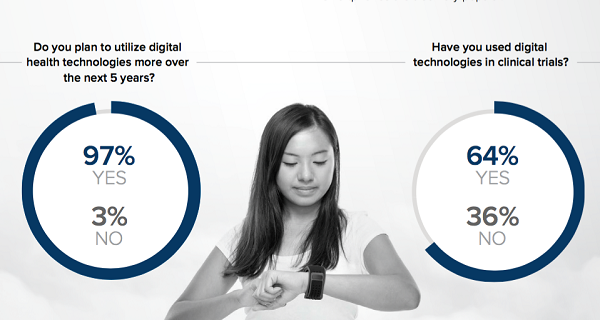
1. Increased Adoption of Digital Technologies. More than 60% of respondents reported using digital health technologies in clinical trials, and 97.4% plan to adopt digital technologies in clinical trials within the next five years.
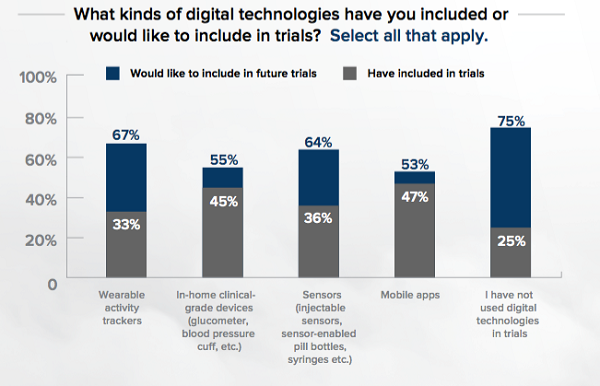
2. Migration of Mobile Apps to Smart Wearable Devices. Mobile apps and home-level clinical devices are the most frequently used in clinical trials, with a greater adoption of wearable devices and sensors for data tracking anticipated in the future. Fewer than 3% of respondents stated that they would not use smart devices and data in the future.
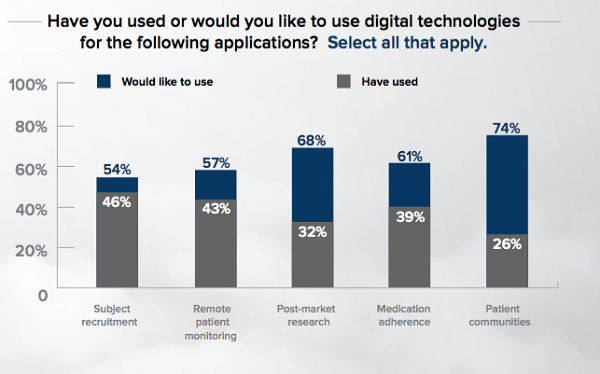
3. Key Applications Are Evolving. Currently, the use of digital health devices is primarily focused on remote patient monitoring and trial recruitment. AndPatient Communities Expected to Become the Largest Growth Area in the Future。
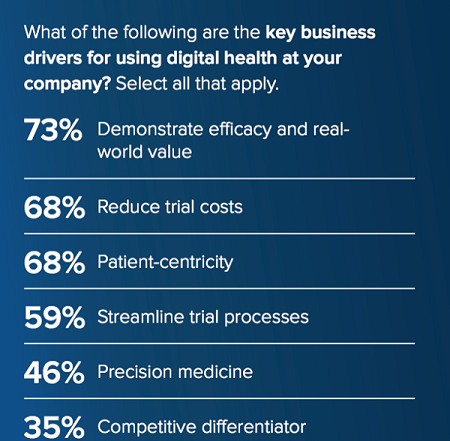
4. The three biggest drivers are reducing clinical costs, improving clinical efficiency, and facilitating the demonstration of real-world effectiveness. Reducing drug development costs can ensure sufficient return on investment. A patient-centric approach with a greater focus on patient experience is also a key driver.
5. Improving Challenging Medication Adherence. More than two-thirds of respondents believe that improving medication adherence is one of the most important outcomes for drug development, as patient recruitment and retention are the most challenging issues in clinical development.
6. Acquisition of real-time data is a significant benefit. More than half of the respondents consider real-time data acquisition to be the greatest advantage of digital information, as it facilitates early decision-making in drug development. This will alleviate the pressures of drug development and enable pharmaceutical companies to monitor patient responses more closely.
7. Valued for its application in chronic diseases. Chronic diseases, particularly cardiovascular diseases and metabolic disorders, are a key focus for numerous pharmaceutical and biotechnology companies due to the large market size and the trend of population aging. Seven out of ten respondents believe that digital health data can bring about significant transformation in the management of chronic diseases.
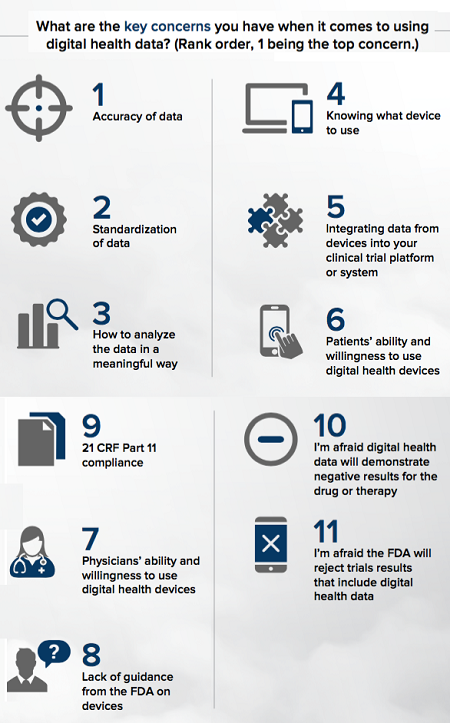
8. Challenges Remain. The use of digital information and devices in clinical trials remains in its early stages.Respondents are most concerned about the accuracy of data generated by digital health devices.。
Digital health data is considered increasingly important in clinical trials. According to Bloomberg data, as of September 2015, at least 299 clinical trials had utilized data provided by wearable devices. The survey indicated that two-thirds of respondents were already using digital health technologies in clinical trials, and nearly all stated they would adopt these technologies within the next five years.
Data provided by mobile apps and clinical-grade home devices are predominantly used in clinical trials, followed closely by data from wearable trackers and sensors. Clinical-grade home devices, such as those for monitoring heart rate, blood pressure, and blood glucose, can provide accurate and reliable data for clinical trials. If these devices are connected via Wi-Fi or Bluetooth, the data can be accessed in real time.
However, a large number of clinical devices currently lack Bluetooth functionality. Leveraging new optical recognition technologies, such as Validic’s Vitalsnap product, can help overcome this challenge. It enables users to capture data from medical devices not connected via Bluetooth using their smartphone cameras and automatically transmit the data to clinicians. This technology empowers researchers to obtain digital health data from clinical devices that are not connected to Wi-Fi or Bluetooth.
Data from wearable activity trackers, ranging from consumer-grade devices to complex FDA Class II medical devices, have been used by one-fifth of respondents. Wearable devices are becoming increasingly compact; for instance, the adoption of flexible circuits has reduced their size to the point where they are virtually imperceptible during wear. Such trackers can also trigger alerts to remind patients to take their medications.
To enhance effectiveness and ensure continued adoption, any digital device must be easy to learn and use. This is particularly important for older adults, especially those with chronic conditions. Therefore, careful consideration must be given to font size and color, button size and shape, and screen dimensions. This also includes integrating technology into familiar items such as watches, clothing, and contact lenses. It is crucial not to make arbitrary assumptions about the elderly market or their use of technology. In 2015, among Americans aged 65 and older, 30% owned smartphones, 55% owned computers, and 32% owned tablets. This demonstrates that the market for older adults is substantial.
Providing useful assistance to users is of paramount importance. Delivering timely feedback on patients’ disease symptoms and reminding them to take their medications also serves as an educational approach to impart knowledge about medications and diseases. This can boost the adoption of digital health devices, thereby creating a positive feedback loop in the market.
Currently, the use of digital health technologies is primarily focused on clinical patient recruitment, remote care, and medication adherence. Some applications are also employed in post-marketing surveillance and the cultivation of patient communities.
Patient recruitment for clinical trials is challenging, particularly due to the small patient populations associated with rare diseases. Leveraging digital communication technologies and analyzing digital health data enables researchers to identify individual candidates for clinical trials and expand the geographic scope of studies. Contract Research Organizations (CROs) maintain their own patient databases, which include records from past clinical trials and individuals who may be willing to participate again. This approach accelerates patient recruitment and allows for pre-screening based on specific inclusion and exclusion criteria.
The escalating costs of drug development mean that the market prices for innovative medicines, particularly biologics, will be exceedingly high. Consequently, taxpayers, payers, and consumers all seek to determine whether new drugs offer good value for money, and whether such high prices are justified in terms of clinical trials and real-world use. Therefore, the need to confirm efficacy and value has become a key driver behind healthcare.
Clinical trials are extremely costly. To ensure a return on investment and maintain the capacity to fund future R&D, companies are striving to reduce trial costs and streamline trial processes. Interviewees believe this is also a driving force behind the advancement of digital health.
By automatically collecting data from digital health devices and apps, researchers can rapidly access more accurate and granular data. This enables companies to focus their clinical trial resources on critical areas such as patient support and data analysis. Enhancing data collection capabilities and streamlining the clinical trial process ultimately help these companies bring new drugs to market.
Remote data acquisition from digital health devices can reduce the number of hospital visits for patients, while also alleviating the burden on clinical trial participants by eliminating the substantial costs associated with traveling between home and the hospital. This will help foster patient-centric research.
Patient-centered clinical research can also be conducted through digital communication with patients, ranging from patient forums to Twitter and Facebook. However, analyzing such unstructured text data remains a challenging task. Digital health technologies can help companies understand patients' unarticulated needs, thereby helping patients maintain medication adherence. Data mining and analytics companies can monitor and analyze these communications.
Personalized medicine, or precision medicine, is increasingly becoming part of individuals’ routine care in the future; therefore, more targeted drugs will be brought to market through clinical trials.
Digital health data is helping pharmaceutical companies develop targeted therapies by enhancing their understanding of target patients and facilitating access to this specific patient subset. Digital health devices also enable researchers to determine what works in clinical trials by aggregating data from multiple treatments to identify potential therapeutic options. Virtually all respondents believe that digital health technologies can improve the cost-efficiency of clinical trials.
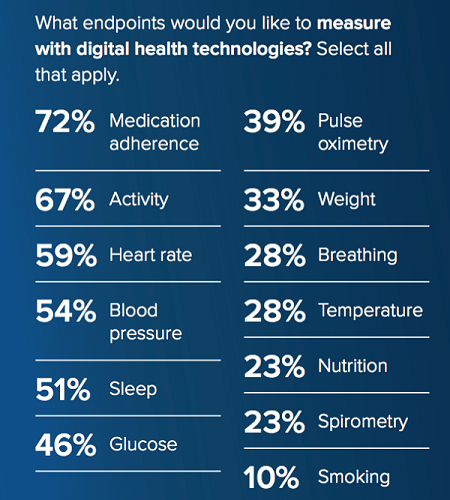
Digital health devices and sensors can collect various types of data. In traditional healthcare, the greatest challenge in clinical trials is ensuring patient adherence to the trial protocol, such as taking medication at the correct times (morning, noon, and evening), under appropriate conditions (before or after meals), and with proper intervals and dosages. In practice, medication adherence is cited by respondents as the primary issue that digital health devices can address.
Consumer-grade activity trackers, such as Fitbit and Garmin, are widely used by individuals seeking to monitor their health and physical activity behaviors. Meanwhile, these consumer-level devices are also being utilized in clinical medical settings. As of June 2016, there were 104 completed, ongoing, or pending Fitbit-related studies listed on the ClinicalTrials.gov website, including research on obesity, diabetes, and cancer.
Driven by user-friendly designs and features, including paired mobile apps, activity trackers are striving to become more appealing to consumers by offering extended battery life and enabling appointment scheduling through the devices. Many activity trackers can also monitor sleep and heart rate, with some capable of monitoring blood pressure as well. Consequently, 51% to 59% of respondents identified these capabilities as key directions for future development.
Blood glucose is a critical metric for both type 1 and type 2 diabetes, and the trajectory of blood glucose levels holds significant research value for treatment and prevention. Numerous digital health devices are available on the market to record blood glucose data for both home and clinical use. These devices enable physicians to obtain feedback on patients’ responses following insulin administration. Additionally, some respondents expressed interest in the development of digital devices for monitoring respiration, lung function, nutrition, and body weight.
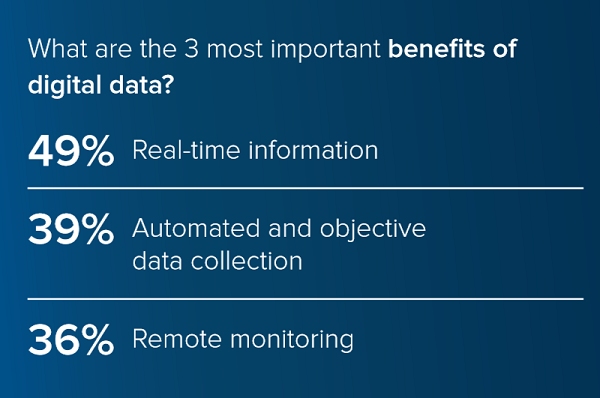
Approximately half of the respondents considered real-time data to be the most significant benefit of digital health data. Since real-time data can provide immediate visibility into any issues arising during clinical trials, it enables physicians to implement early interventions.
Fewer than 25% of respondents believed that digital information could identify early disease symptoms. Repeated and adaptive clinical trials allow for the modification of study parameters within the observational scope, such as adjusting dosage and timing, monitoring recovery across different populations, or pausing early-phase trials.
Real-time data can assist researchers in making various types of decisions. Knowing when to stop a trial early is particularly important for traditional randomized controlled trials, as this approach can reduce risks to patients. Such data also enables companies to make rapid decisions on whether to continue drug development, thereby reducing R&D costs and allowing resources to be redirected toward selecting new alternative drug candidates. Early decision-making was considered by 10 respondents to offer the greatest benefits.
Digital health devices can provide real-world data and enable the collection of previously inaccessible information, thereby supporting the development of pragmatic clinical trials. Nearly 40% of respondents considered automated data collection to be the most significant benefit, as digital health devices can automatically capture data and continuously reduce transmission errors, thus lowering the workload for both clinical trial staff and patients.
Automated data collection helps reduce the need for manual result recording. Since these steps are costly in both real-world settings and clinical trials, digital health data can help save on these expenses.
Remote monitoring can also open clinical trials to patients who are otherwise unable to participate, such as those living far from clinical centers or those with mobility, visual, or cognitive impairments that make travel difficult. This was reflected in the survey, where one-quarter of respondents indicated that “reducing the number of hospital visits” is a benefit they could gain from digital health.
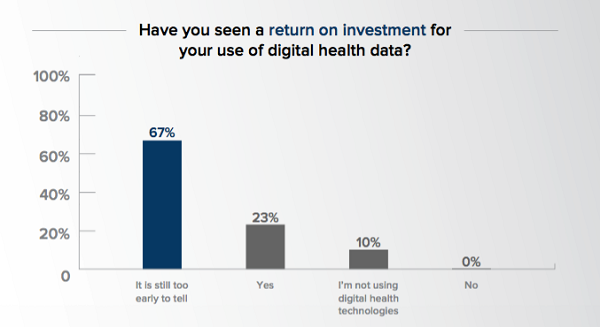
Despite these apparent benefits, digital health remains in its early stages for many companies, with returns not yet materializing. Only one-quarter of respondents believe there will be a return on investment (ROI). Two-thirds consider it too early to tell, as digital health technologies cannot yet be used long-term in trials, and the average drug development cycle takes ten years. On a more positive note, no respondents believed that digital health offers no returns at all. So, do you see potential ROI in investing in digital healthcare?
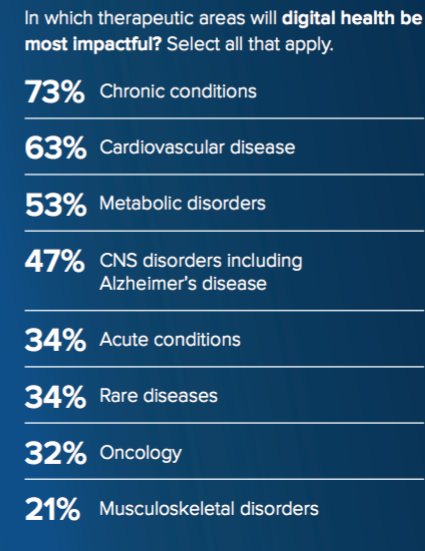
Digital health devices play a significant role in the management of chronic diseases within clinical trials by enabling long-term monitoring. This is reflected in survey results, where approximately three-quarters of respondents identified chronic diseases as the area most significantly impacted by digital health. Two-thirds of respondents believed that cardiovascular diseases have also been transformed by digital health, while half noted improvements in the management of metabolic disorders. Diseases of the central nervous system were also recognized as a key therapeutic area. Additionally, one-third of respondents indicated that oncology treatment has been improved by digital health.
Population aging implies a future increase in cognitive disorders, such as Alzheimer’s disease and other forms of dementia. Consequently, more companies are shifting their clinical trials toward therapies targeting cognitive conditions. Wearable devices and mobile monitoring will provide researchers with data from elderly individuals who face difficulties participating in trials due to cognitive impairments.
Digital health devices are also playing a role in clinical prevention research for chronic diseases, such as investigating the adverse effects of lifestyle factors, including diet and exercise, on obesity, diabetes, and cancer.
On the other hand, one-third of respondents believe that digital health devices can also deliver benefits in the management of acute conditions, as prolonged monitoring can aid in identifying effective treatments for severe infections. For instance, a hepatitis C medication manufactured by Gilead Sciences was approved by the U.S. Food and Drug Administration (FDA) with a list price of $84,000 and a cure rate of 90%.
The use of digital devices and data in clinical trials remains in its early stages, and drug development involves many challenges posed by new technologies. Most respondents are concerned about data accuracy. This is the most frequent concern when new technologies emerge, but these concerns will be alleviated as the technology advances.
Once data are collected, it is critical to determine whether they meet the required standards and can be integrated into the clinical trial platform; otherwise, the data may be unusable or too difficult to analyze.
Physicians are hesitant to adopt digital health devices, as different studies require the use of different devices. This hinders the scalability of digital technologies.
Furthermore, digital health tools need to be more user-friendly, ensuring a positive user experience for both physicians and patients when using digital health devices.
Compiled by He Da
By VCBeat. Please credit the WeChat Official Account when reposting:VBResearch2016
↓↓↓