

2016 Internet Innovation and Entrepreneurship White Paper: Five-Dimensional Analysis of the Future of Startups
On the morning of September 22, themed “Openness · Sharing”2016 Tencent Global Partner ConferenceOpened at the Fuzhou Strait International Conference Center,Tencent Research Institute released the “2016 White Paper on Innovation and Entrepreneurship” at the conference.Zhang Junkuo, Deputy Director of the Development Research Center of the State Council; Lin Songtao, Vice President of Tencent; and Si Xiao, Dean of Tencent Research Institute, jointly unveiled the white paper.
This 160-page white paper, comprising nearly 100,000 words, draws on authoritative industry data and Tencent’s internal materials, compiled by the Tencent Research Institute fromEntrepreneurial Economy, Global Entrepreneurship Landscape, China’s “Mass Entrepreneurship and Innovation” Initiative, Tencent’s 2016 Open Strategy and Developer Ecosystem, and Internet-Driven Entrepreneurship MechanismsFive dimensions provide a comprehensive analysis of the current state and future landscape of global entrepreneurship and innovation, as well as the progress made in China’s “Mass Entrepreneurship and Innovation” initiative. The White Paper predicts,By the end of 2016, the number of mass innovation spaces in China was expected to exceed 4,000, and a map showing the distribution of the top 50 most entrepreneurial cities in China was released, with Beijing, Shanghai, and Shenzhen ranking among the “first tier.”
Excerpt from the report,To download the full white paper, follow VCBeat (WeChat: vcbeat) and reply with “white paper”.。
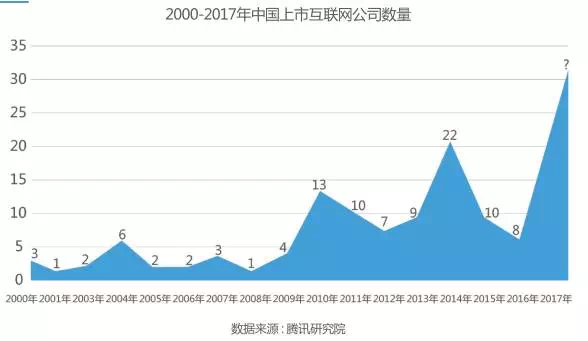
The wave of internet entrepreneurship has been ongoing for over two decades. An analysis of initial public offerings (IPOs) by startups reveals five peaks since 2000, occurring approximately every three years. Following each IPO peak, venture capital funds have largely exited the stock market to reinvest in new startup ventures. Over time, the scale of venture capital has continued to expand, driving entrepreneurial activity with increasing momentum. Based on more than a decade of IPO trends, we predict that a new IPO peak will emerge in 2017, followed by an unprecedented surge in large-scale entrepreneurial activity in 2018.
From 2000 to 2004, China’s internet sector gradually emerged from the downturn and ushered in a small peak in initial public offerings (IPOs). After substantial capital exited the stock market, it flowed into startup ventures, sparking a larger-scale entrepreneurial boom. In 2010, a total of 13 internet companies went public, setting a new historical record for China. After 2011, the number of internet companies listing each year began to surge. Over the following five years, 58 companies went public, surpassing the combined total of the previous decade, and reaching an unprecedented high in 2014.
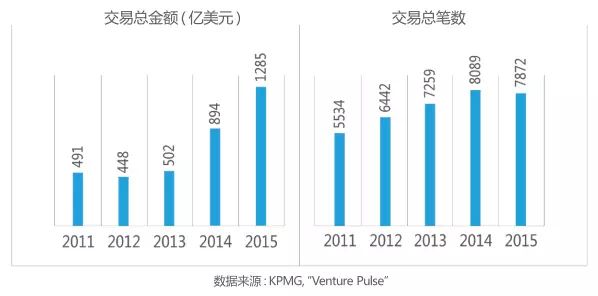
Since 2015, the industry has witnessed its fourth wave of entrepreneurship. Investment data from that year shows that global venture capital investment in innovation and startups reached a record high. According to KPMG statistics, venture-backed startups worldwide received a total of 7,872 investments in 2015, amounting to $128.5 billion. Concurrently with the surge in investment amounts, there was a significant emergence of “unicorns”—startups valued at over $1 billion. In 2015, 72 startups globally joined the ranks of “unicorns.”
Based on historical patterns, 2017 will witness the fifth wave of IPOs among internet companies. The capital scale involved in this IPO surge may surpass the record set in 2014. As capital exits from the stock market, it will flow back into the startup ecosystem. Therefore, if the macroeconomic trend remains stable and the international environment stays favorable over the next two years, China’s venture capital and private equity activities will reach new heights in 2018. We have reason to be more optimistic about future entrepreneurial activities.
Innovation and entrepreneurship hold universal appeal worldwide, serving as an indispensable strategy for economic hubs seeking new growth drivers, as well as a key engine for job creation and enhanced international competitiveness. Many countries have established multiple highly competitive innovation and entrepreneurship hubs, tailored to their unique socio-historical contexts and current development realities. From Silicon Valley and New York in the United States, to London in the UK, Berlin and Paris in continental Europe, Tel Aviv in the Middle East, Bangalore in South Asia, Singapore in Southeast Asia, Seoul in East Asia, and São Paulo in South America, these entrepreneurial centers have developed distinct characteristics aligned with their regional development strategies and advantageous industries, earning international acclaim.
A new round of industrial revolution is also brewing and emerging globally. Worldwide, technological innovations are becoming increasingly vibrant, with new industries, technologies, business formats, and models emerging in endless streams. Information technology, manufacturing technology, energy technology, and materials technology are cross-integrating, deeply penetrating, and rising as a group, bringing many industrial fields—including traditional manufacturing, energy, and transportation—to the tipping point of major breakthroughs. The new generation of information technology, with the internet, mobile internet, and the Internet of Things (IoT) as its backbone, serves as critical infrastructure that links and integrates these significant technological innovations. It is becoming a high ground for innovation, a hotspot for investment, and a key focus of supportive policies by governments around the world.
Global Innovation and Entrepreneurship Investment Reaches New High in 2015According to KPMG statistics, venture-backed startups worldwide secured a total of 7,872 investments, amounting to $128.5 billion. Compared with 2014, although the number of transactions decreased slightly by 3%, the investment volume surged by 44%. Corresponding to this dramatic increase in investment was the prolific emergence of “unicorns”—startups valued at over $1 billion. In 2015, a total of 72 startups joined the ranks of unicorns globally.
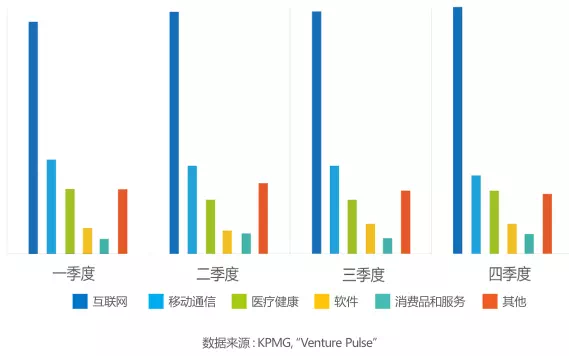
In terms of investment direction, the Internet remains the most favored sector for startups, accounting for nearly half of all venture capital transactions. It is followed by Mobile & Telecommunication and Healthcare.Healthcare. The sum of the three accounts for all transactions.more than three-quarters.
▌ China's Developer Ecosystem and Population
On the Tencent Open Platform, there are approximately 3.4 million mobile-focused developers, with 73% under the age of 30. The mobile developer community remains predominantly male. Developers with higher education accounts for 70%, among those holding a bachelor’s degree represent the largest group at 64.5%. As the primary programming language for the Android operating system, Java has become the most preferred development language among mobile developers. Nearly half of the developers earn a monthly income exceeding RMB 10,000. The most active developers are located in first-tier cities and coastal provinces, such as Beijing, Guangdong, Shanghai, Zhejiang, and Jiangsu. In addition to first-tier regions like Beijing, Shanghai, Guangzhou, Shenzhen, and Hangzhou, second-tier regions also maintain high levels of interaction and engagement with the platform.
Amid the grand wave of innovation and entrepreneurship, many founders from traditional industries have also embarked on mobile development, with representative sectors including education, traditional media, real estate, and wholesale and retail. Overall, however, 59% of mobile developers still come from the IT and internet sectors.
Number of Mobile Developers
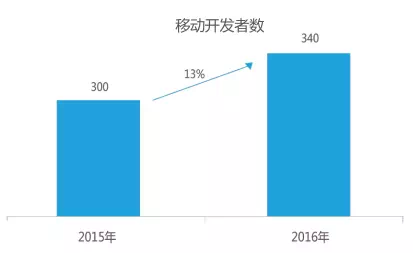
Tencent Open Platform has registered 6 million developers, of whom approximately 3.4 million are focused on the mobile sector, representing a year-on-year increase of about 13%.
Age Distribution of Developers
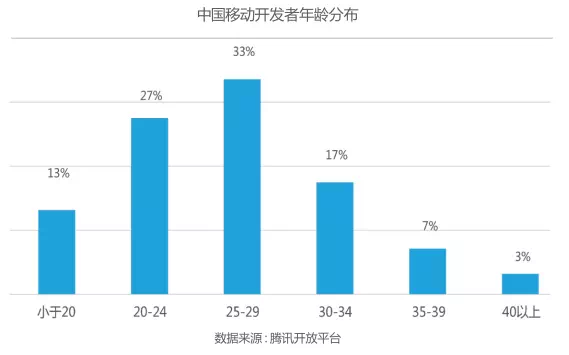
Developers under the age of 30 account for 73% of the total, with those born after 1985 having become the new mainstay in the field of mobile development. Among them, the 25–29 age group represents the largest proportion at 33%. This age range also serves as a watershed in the age distribution, while the number of developers aged 20 and below has shown a gradual upward trend.
Gender Distribution of Developers
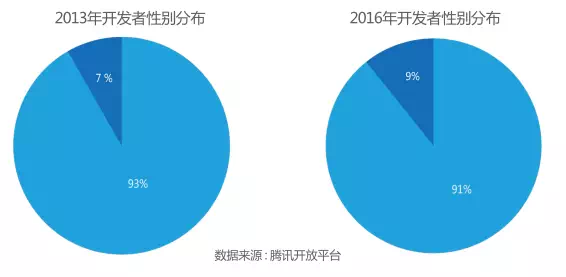
Male developers continue to dominate the mobile development sector. In 2013, female developers accounted for 7% of the total; by 2016, this proportion had risen to approximately 9%, with the growth rate of female developers still lagging behind that of their male counterparts.
Developer Programming Language
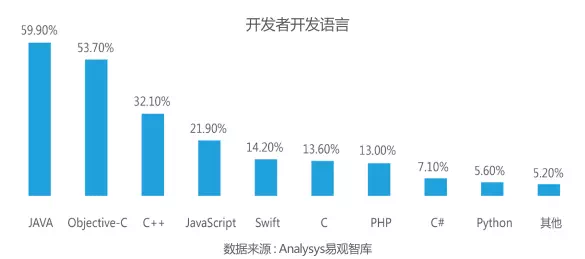
Regarding the programming languages chosen by developers, Java, as the primary language for the Android operating system, has become the most favored language among mobile developers. Following closely, Objective-C, the most widely used language in the iOS ecosystem, is utilized by 53.7% of developers. In addition to these two major languages, C++, JavaScript, and Swift are also frequently employed by mobile developers for app development.
Developer Revenue
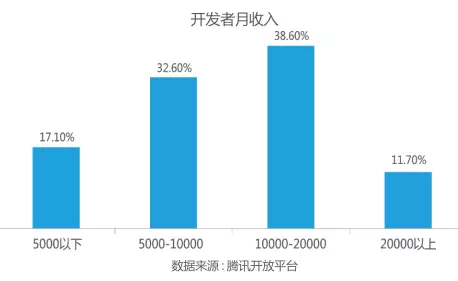
Nearly half of developers earn a monthly income exceeding RMB 10,000. According to data from the open platform, income is closely correlated with educational background, geographic location, and job position within the company.
Developer Activity
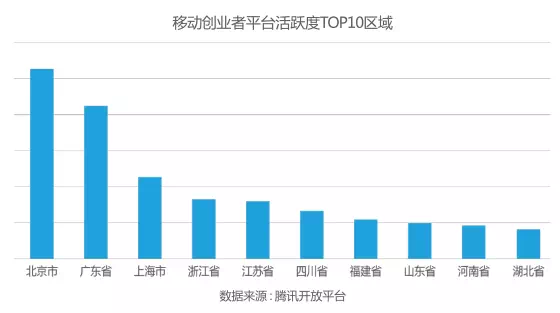
From the perspectives of geographic concentration, version updates, and platform engagement, the most active developers on the platform are located in first-tier cities and coastal provinces and municipalities, such as Beijing, Guangdong, Shanghai, Zhejiang, and Jiangsu. Beyond first-tier regions like Beijing, Shanghai, Guangzhou, Shenzhen, and Hangzhou, second-tier regions also maintain high levels of interaction and stickiness with the platform, including provinces such as Sichuan, Fujian, Shandong, Henan, and Hubei. The mobile sector is also beginning to show a trend toward localized entrepreneurship.
In May 2016, the Central Committee of the Communist Party of China and the State Council issued the Outline of the National Innovation-Driven Development Strategy, proposing a “three-step” objective: first, to join the ranks of innovative countries by 2020; second, to rank among the forefront of innovative countries by 2030; and third, to become a world power in science and technology innovation by 2050.
To comprehensively promote the flourishing development of innovation activities, central and local governments have successively introduced a series of preferential policies and support programs for entrepreneurship, creating a favorable political environment for the thriving development of “mass entrepreneurship and innovation.”
Spurred by these favorable policies, the number of entrepreneurs has steadily grown, leading to a surge in both entrepreneurs and innovative companies. According to statistics from Tencent’s Open Platform, the number of new developers exceeded one million over the past two years. In terms of newly registered enterprises, 5.5026 million new businesses were established from 2015 through the first quarter of 2016, with the tertiary sector accounting for more than 80% of this total; approximately 481,500 of these enterprises belonged to the “Internet Plus” sector. It is projected that the full-year total of newly registered enterprises will reach 5.5715 million by the end of 2016.
In terms of the number of unicorn companies, there has been an explosive growth in hot sectors, with over 95% belonging to industries related to "Internet Plus." They are mainly distributed across four major fields: internet finance, e-commerce, automotive and transportation, and O2O services.
From the perspective of the investment climate, China currently boasts a favorable environment for innovation and entrepreneurship. The scale of angel funds and venture capital is continuing to grow, entering a period of explosive expansion that provides fertile financial ground for innovative startups.
Amid the wave of entrepreneurship, mass innovation spaces have emerged in response to the trend, experiencing an explosive growth in number and reaching over 2,300 within just two years.
The mission of mass innovation spaces is to serve entrepreneurs in every aspect. Therefore, their capacity to provide services to entrepreneurs is particularly critical. During the brief two-year development period of mass innovation spaces, their service capabilities have gradually improved, evolving from a “one body, two wings” model toward a multi-integrated approach, with the aim of establishing an all-factor, multi-dimensional entrepreneurial service ecosystem. However, this development process has also given rise to several urgent issues, such as the transformation of innovation spaces into mere rental properties, perfunctory service delivery, and low occupancy rates.
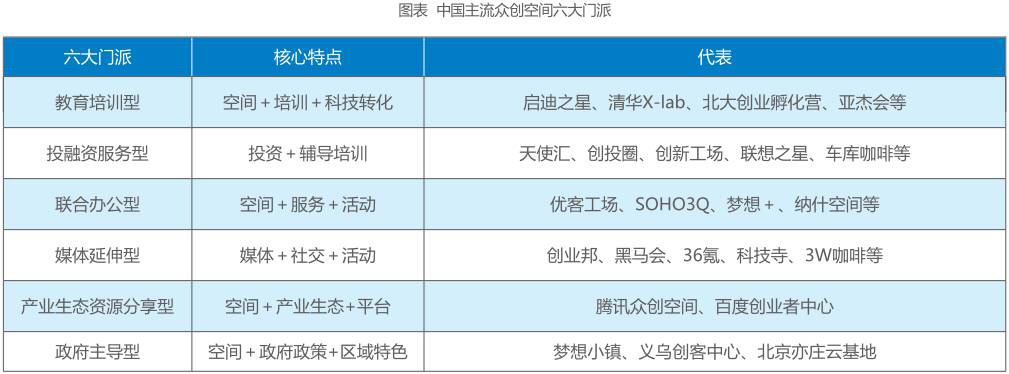
In terms of the current development of mass innovation spaces, mainstream entities have developed distinct characteristics based on their operating bodies and core service capabilities, forming six major schools: education and training-oriented, investment and financing service-oriented, new real estate-oriented, media extension-oriented, industrial ecosystem resource-sharing, and government-led. Each type has its own strengths in service capabilities, and a certain pattern has already taken shape.
From the perspective of regional distribution in the development of mass innovation spaces, first-tier cities remain at the forefront. However, it is important to note that the gap between second-tier and first-tier cities is gradually narrowing, indicating significant growth potential. Each city has developed its own distinct characteristics based on its economic foundation and current regional development status.
▌ China’s Innovation and Entrepreneurship Enthusiasm Surges
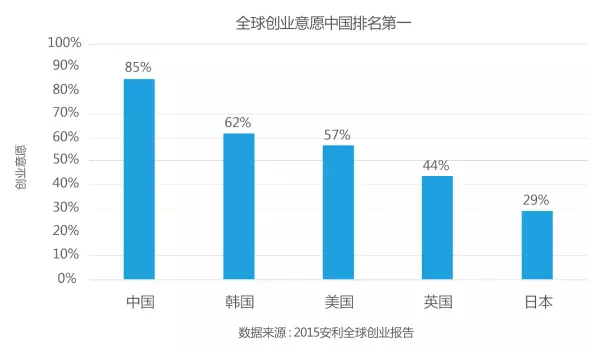
Two years after the launch of the “Mass Entrepreneurship and Innovation” initiative, the entrepreneurial fervor has continued to intensify, as evidenced by the following three aspects:
First, 85% of the Chinese public demonstrate a strong willingness to start businesses, ranking first globally.
Second, the number of new entrepreneurs and newly established companies continues to grow. According to statistics from Tencent Open Platform, the number of new developers has exceeded one million. In terms of newly registered enterprises across China, the daily average stands at 12,000, with an annual average growth rate of 33.74%. It is projected that the number of newly registered enterprises in 2016 will reach 5.5715 million.
Third, in terms of industry distribution, approximately 80% of newly registered enterprises are concentrated in the tertiary sector, with “Internet Plus”-related industries emerging as hotspots for entrepreneurship. Over 95% of unicorn companies are distributed across these high-growth sectors, with particularly rapid growth observed in internet finance, e-commerce, automotive and transportation, and O2O (Online-to-Offline) services.
▌ China Venture Capital: Poised to Enter the $100 Billion Era in 2016
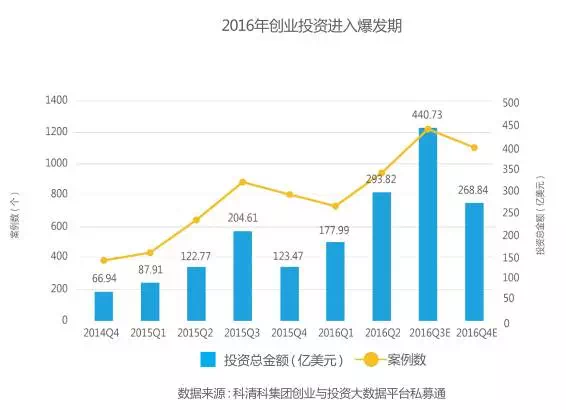
In the first half of 2016, Chinese venture capital firms recorded a total of 1,658 deals, with disclosed investment amounts reaching $47.181 billion; the full-year investment volume for 2016 is projected to reach $118.138 billion.
▌ Pioneer City for Innovation and Entrepreneurship in China
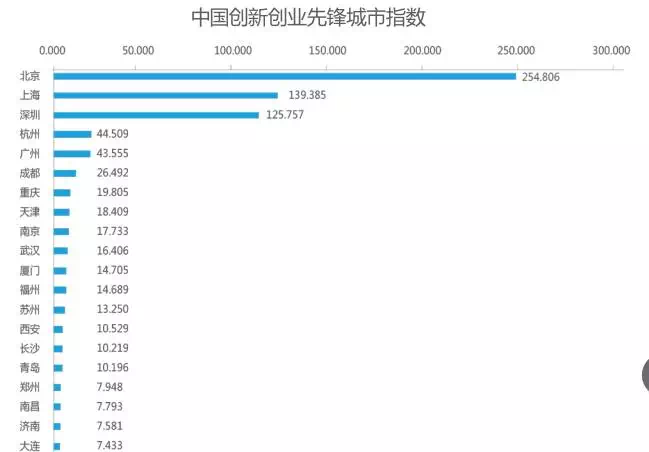
Based on the magnitude of score differences between adjacent cities in the rankings, the Top 50 cities can be divided into three major tiers:
First Tier: Beijing, Shanghai, Shenzhen.Shenzhen exhibits the largest score gap compared to the city immediately following it, indicating that the top three cities have relatively small internal disparities in development level and potential, while maintaining a significant lead over other cities, thereby solidifying their status as undisputed leaders.
Second Tier: Guangzhou, Hangzhou, Chengdu, Chongqing, Tianjin, Nanjing, Wuhan.These seven cities, together with those in the first tier, constitute the top 10 cities by score and encompass all cities scoring above the average. Although these cities did not rank among the top three, they possess significant development potential and have each carved out distinctive development paths tailored to their local characteristics and advantageous resources.
Tier 3: Cities ranked 11th and below are classified as Tier 3 cities.Their level of innovation and entrepreneurship development is relatively low. Compared with cities in the first and second tiers, they have a weaker economic foundation and fewer resource advantages. They are still in the exploratory phase of “mass entrepreneurship and innovation,” and need to further identify breakthrough points and growth drivers that offer unique competitiveness.
Meanwhile, it is important to note that distinctive “dark horse cities” have emerged within the third tier. By making in-depth strategic investments in specific industries, these cities are poised to become unique hubs for entrepreneurship in the future—for example, Fuzhou’s vigorous development of virtual reality (VR) and Guiyang’s strong push into big data.
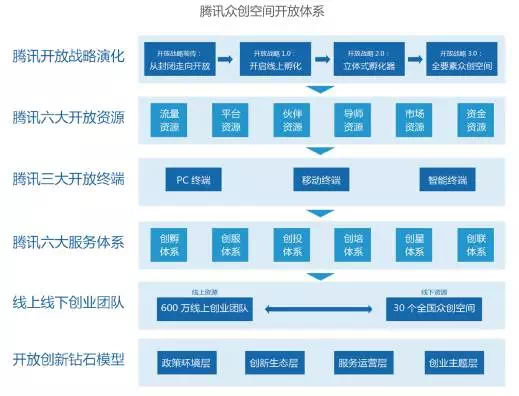
▌ Tencent Open Strategy 3.0
Tencent’s Open Strategy is fundamentally rooted in the development of an open ecosystem, aiming to support internet entrepreneurs, promote win-win cooperation across the industry chain, and foster a prosperous internet ecosystem. Seizing the opportunity presented by the national initiative of “Mass Entrepreneurship and Innovation,” Tencent has opened up its core resources to entrepreneurs. The company has now established its Open Strategy 3.0.
Open Strategy 3.0:All-Factor Mass Innovation Space. In 2016, the number of startups on Tencent’s online open platform reached 6 million, with 20 portfolio companies successfully listed. The total valuation of partners in Tencent’s Open Platform exceeded RMB 300 billion, and the total revenue generated for third parties surpassed RMB 10 billion. By the end of 2015, a total of 30 mass innovation spaces had been established across China. It is estimated that since its inception, Tencent’s Open Platform has driven nearly RMB 50 billion in economic growth and created employment opportunities for approximately 11 million people.
Going forward, Tencent’s offline physical co-creation spaces will continue to be deployed and established across China, facilitating the aggregation of high-end regional talent and the operation of outstanding projects, thereby driving industrial transformation and upgrading and stimulating regional economic growth.
Tencent’s Open Strategy 3.0 Focuses on Three Areas:
First, foster an innovation ecosystem to facilitate industrial upgrading;
Second, open up core resources to support enterprise development;
Third, drive continuous innovation to build a new Tencent.
▌ Tencent Open Resources
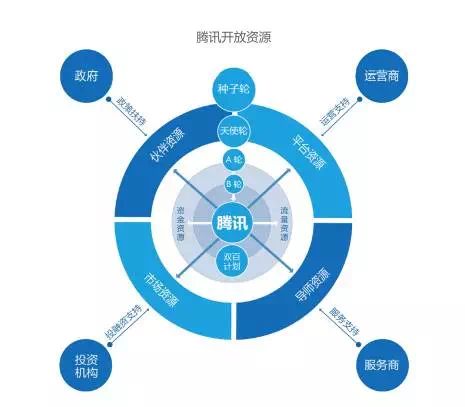
Traffic Resources
Yingyongbao provides app distribution services for entrepreneurs. Yingyongbao’s distribution volume leads in China, with access to QQ users and mobile
Leveraging highly active mobile internet user bases, such as Tencent News users, we have launched the “App+” initiative to support entrepreneurship, helping founders precisely reach their target audiences through content and services.
Capital Resources
Tencent has joined forces with renowned venture capital firms and angel investors to establish a Venture Capital Alliance, which recommends projects online and provides offline services such as on-site investment support and investment roadshows to offer financial backing to entrepreneurs. The total capital of the Venture Capital Alliance amounts to RMB 100 billion.
Platform Resources
Platform Integration. Entrepreneurs leverage the open APIs provided by the platform to access high-quality resources, including a vast user base, comprehensive API and hardware support, enabling seamless integration across multiple capabilities such as account management, payment processing, debugging, publishing, security verification, and promotional marketing.
Underlying Platform. It provides core capabilities, such as the QQ account system and social graph, as well as the QQ messaging channel, to entrepreneurs in fields including wearable devices, smart home, intelligent in-vehicle systems, and traditional hardware.
Cloud Service Platform. Tencent Cloud provides entrepreneurs with exclusive commercial privileges and business opportunity benefits. During the initial startup phase, it offers six months of free cloud resource services, along with corresponding traffic support and training services.
Partner Resources
The operator manages 30 offline co-working space bases across China, well-known venture capital and private equity firms in China, training institutions such as Cheung Kong Graduate School of Business, and entrepreneurial service companies specializing in human resources, finance, legal consulting, and tax services.
Mentor Resources
Establish a training alliance. Build an online entrepreneurial coaching platform, while providing offline thematic entrepreneurship services and one-on-one mentorship. Launch the Qingteng Entrepreneurship Camp for companies post-Series A financing, with exclusive access to Tencent’s full suite of premium content resources.
Market Resources
Tencent’s marketing resources include GDT (Guangdiantong), roadshow opportunities, startup competitions, media coverage, and more. Through GDT, entrepreneurs can place advertisements across multiple platforms—such as QQ Instant Messaging, Qzone, WeChat, QQ Music, and Tencent News—on both desktop and mobile devices, enabling diversified and precise product promotion.
▌ Decoding Tencent Open Platform (2016)
■ Number and Distribution of Developers on the Tencent Open Platform
1. Number of Developers
● Nearly 6 million registered developers
2. Developer Type
● Individual and Enterprise Developers
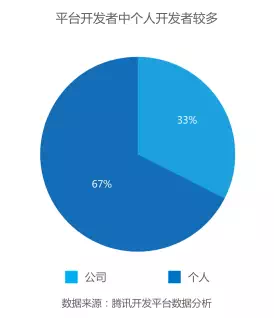
Among platform developers, individual developers constitute the majority, accounting for 67% of the total number of developers on the platform.
● Mobile Developer
The wave of mass entrepreneurship ignited by mobile internet developers continues to gain momentum, with the number of individual developers surpassing that of corporate developers; individual developers now account for 66% of the total mobile developer population.
● Non-Game Developers
Among mobile developers, the high cost of mobile game development means that most developers are engaged in non-game development. Currently, non-game developers account for 81% of all mobile developers on the platform.
● Distribution of the Number of Applications by Developers
Most mobile internet developers submit no more than 50 apps, with over 70% submitting just one app to the platform and more than 20% submitting between 2 and 10 apps.
● Ranking of Cities for Developer Startups
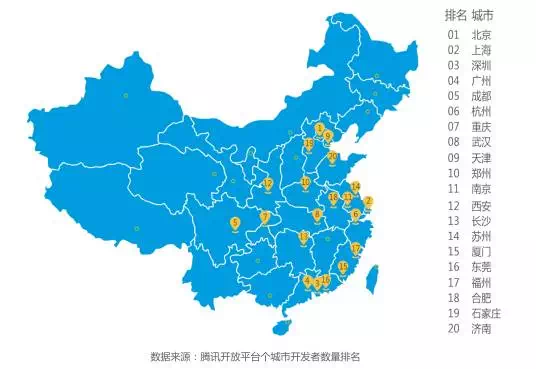
As can be seen from the ranking of the top 20 cities with the largest number of developers on the Tencent Open Platform:
As the government places increasing emphasis on the “Internet Plus” initiative, municipal governments in second-tier cities are also providing strong support for internet-based startups. First-tier cities—Beijing, Shanghai, Guangzhou, and Shenzhen—remain the top choices for developers, with their developer population continuing to grow; 58% of all developers are concentrated in these four cities. The number of developers in second-tier cities is also rising, including in Chengdu, Hangzhou, Chongqing, Wuhan, Tianjin, and Zhengzhou. Influenced by the holding of the Tencent Global Developer Conference in Chongqing in 2015, the city saw a particularly notable increase in entrepreneurs this year.
■ Number and Types of Applications on Tencent Open Platform
● Platform applications are predominantly mobile apps.
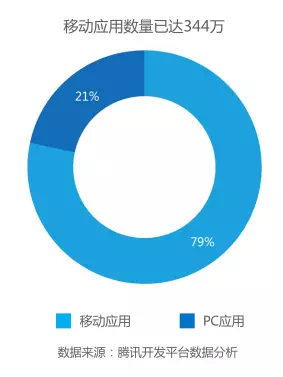
The majority of applications on the Tencent Open Platform are mobile apps, with a total of 3.44 million, accounting for 79% of the platform's total application count.
● New applications are predominantly mobile apps.
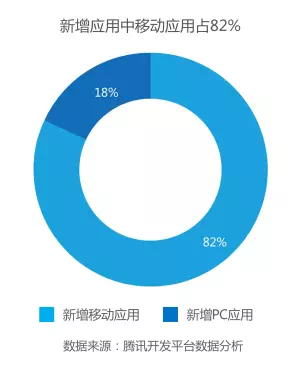
Over the past year, mobile applications have continued to dominate on Tencent’s Open Platform, accounting for 80% of newly added applications.
● Mobile App Type
Among mobile app categories, non-gaming apps still constitute the majority, accounting for 65% of the total number of mobile applications.
● Distribution of Mobile Game Genres
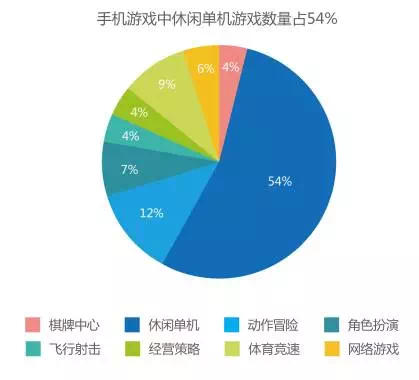
Among all categories of mobile games, casual single-player titles still account for the largest share, representing 54% of the total. Other genres, including action-adventure, sports and racing, and role-playing games, account for 12%, 9%, and 7%, respectively.
● Distribution of Non-Gaming Application Categories
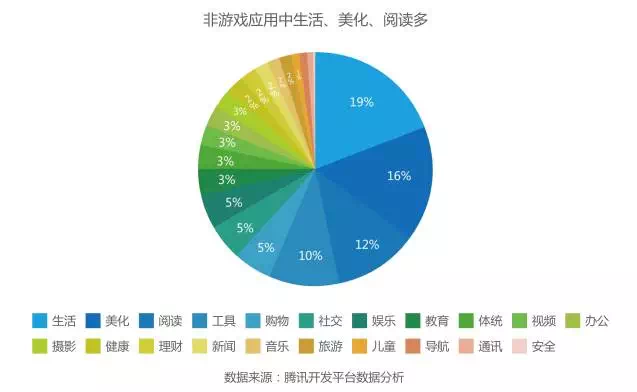
Among non-gaming applications, the three major categories—lifestyle, personalization, and reading apps—still account for 47% of the total number of mobile applications, while other utility, shopping, social networking, and entertainment apps collectively make up 25%.
● Distribution of Mobile App Download Types
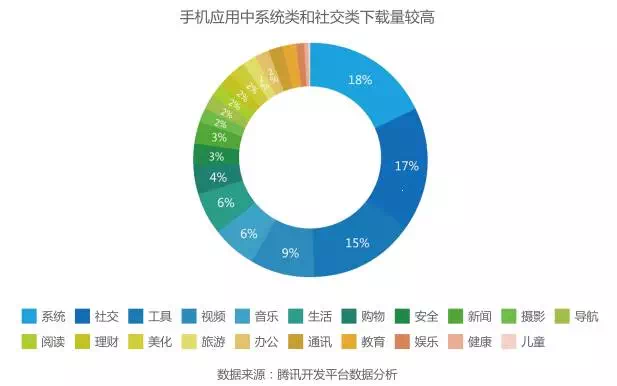
In mobile apps, users most prefer to download system, social, and utility applications, which account for 50% of the total downloads. Video, music, and lifestyle apps each exceed 20%, and are also popular among users.。
Report Source: Tencent Research Institute