

Tencent Unveils Tang Doctor Gen 2: Four Key Highlights and the Evolving TengAI Healthcare Strategy
Twenty months after the launch of its first-generation product, Tencent’s second-generation Tangdaifu blood glucose meter has finally been released. A year and a half may seem somewhat slow given the pace of hardware iteration in this era. VCBeat (WeChat ID: vcbeat) has reviewed this period and found that Tangdaifu primarily focused on three key initiatives:
First: In November 2015, Tencent, DXY, and ZhongAn Insurance held a press conference in Shanghai to announce their business partnership under the innovative “Internet + Healthcare Finance” collaboration model. As part of this partnership, Tencent launched its first smart hardware device—the Teng Ai Tang Daifu (Tencent Care Glucose Doctor) Version 2.0.
Second: From November to March of this year, Tencent and Guizhou Bailing successively launched pilot programs in multiple locations, including Suiyang County in Guizhou Province. A total of six cities and counties in Guizhou Province have introduced these pilots, covering nearly 10,000 diabetes patients in the region.
Third: In August 2016, Tang Daifu launched its “Renowned Doctors Online” service for the first time, introducing the concept of an “Intelligent Blood Glucose Doctor” into the daily blood glucose management of individuals with diabetes.
Looking back at the newly released version from Tencent, this “second-generation sugar” product, named the “Gold Edition,” features two significant upgrades:
First, carbon electrode test strips have been replaced by gold electrode test strips. Owing to the superior electrical conductivity and corrosion resistance of gold, these test strips offer stability, accuracy, lot-to-lot consistency, and resistance to drug interference that are currently among the best in class.
Second, the shift from a single-bevel to a cross-bevel blood collection technique has resulted in faster needle withdrawal and improved stability. The needle design has also evolved from a two-facet to a three-facet configuration, minimizing the wound area and thereby reducing patient pain.
In addition to hardware upgrades, the device also features notable innovations in its service model. First is the “Renowned Doctors Online Initiative,” jointly developed by Tencent and DXY. This service enables Tang Daifu users to engage directly with distinguished physicians from leading medical institutions such as Tsinghua University and Peking Union Medical College Hospital. Furthermore, Tang Daifu has established a chronic disease management partnership with Peking University International Hospital. These two initiatives signify that Tang Daifu will delve more deeply into enhancing communication between patients and doctors.
Therefore, over the past year and more, Tang Daifu has integrated physician resources from DXY and renowned hospitals, as well as insurance resources from ZhongAn Insurance, validated the offline business model for its glucose meters, and completed hardware upgrades for its products.
As the world’s first smart blood glucose meter, Tang Daifu has emerged as a transformative force. The rationale is straightforward: traditional blood glucose meters have significant drawbacks and fail to meet evolving public needs. In the era of mobile internet, there is a demand for more user-friendly product designs.
Traditional glucometers merely display data, lacking human-computer interaction, data storage, and monitoring capabilities. From the patient’s perspective, these devices involve nothing more than repeated, impersonal mechanical operations. Without ongoing encouragement from healthcare providers, patients gradually lose their initial patience. Ultimately, in the journey of glycemic control, the true adversary for patients is often not diabetes itself, but rather their own adherence to treatment.
Patient adherence encompasses two aspects: diet and medication. Since blood glucose management is a lifelong commitment, patients are highly prone to lax dietary control and unauthorized changes to their medication regimen, including switching, reducing, or even discontinuing drugs. Moreover, this aspect is disconnected from the monitoring phase; glucometers cannot intervene, leaving all management entirely to patient self-regulation.
Another step is the blood glucose testing process: wash and dry your hands, take out the lancing device, insert a lancet, and after a brief moment of slight pain, remove a test strip, bring your finger close to the sample absorption port, then insert the test strip into the glucometer to obtain the blood glucose reading. These are roughly the most common steps for diabetic patients when using a glucometer.
For patients, this process is not a one-off or occasional event, but a protracted daily battle that persists day after day and year after year. Ultimately, patient adherence boils down to a tug-of-war between the fear and pain associated with the disease on one hand, and inertia on the other.
What Is Subtraction? The ultimate form of subtraction is eliminating all intermediate links and steps that affect patient adherence. Through big data analytics and continuous glucose monitoring (CGM), glucose monitoring devices can provide patients with uninterrupted 24/7 alerts. Moreover, upon detecting abnormal glucose levels—such as persistent hyperglycemia, sudden hypoglycemia, or persistent hypoglycemia—the system immediately notifies patients and offers optimal solution guidance. This enables patients to move beyond self-management toward real-time glucose control, thereby thoroughly resolving adherence issues.
Can existing technologies achieve this? It is difficult, as it involves two technical aspects.
The first component is real-time dynamic monitoring, which is relatively easier to implement. For instance, continuous glucose monitors (CGMs) have already been developed and put into clinical use. These devices measure blood glucose levels using techniques such as near-infrared spectroscopy and analysis of subcutaneous interstitial fluid. A well-known domestic manufacturer in this field is Kailian Medical Technology. The underlying principle involves implanting a hair-thin biosensor under the skin, which pairs with a portable data system or smartphone to function as a wearable medical device that continuously monitors patients’ blood glucose levels 24 hours a day.
Whether for prediabetes management or dietary control, if the device can provide users with real-time alerts and reminders, thereby eliminating the need for patients to consciously remember to perform scheduled tests, compliance will be significantly improved.
This technology may become the mainstream for blood glucose monitoring in the future, but it is not yet feasible at the current stage. Taking non-invasive glucose meters as an example, countries such as Israel and the United States have spent 30 years on research, yet these devices have still not gained widespread adoption. Why? Because compared to traditional blood sampling methods, non-invasive devices offer significantly lower accuracy, let alone dynamic glucose monitoring. To date, no non-invasive glucose meter or method introduced by any institution has truly met the clinical precision requirement of 5 mg/dL (0.28 mmol/L), falling substantially short of the standards set by the CFDA and FDA.
The second phase involves big data analytics, a strength of internet companies like Tencent. For instance, Tang Daifu utilizes the Tencare OS, which leverages backend data analytics systems integrated with patients’ blood glucose data to provide intelligent and precise medication management, thereby assisting users in decision-making and improving adherence. However, if real-time dynamic data collection is not achieved, the conclusions drawn by the big data analytics system cannot be considered absolutely accurate. Fragmented data fails to comprehensively reflect a patient’s blood glucose status.
To truly streamline the process, dynamic monitoring and big data analytics must work in tandem. Only when both areas overcome their respective bottlenecks can genuine intelligent glucose management be achieved, thereby alleviating the burden of self-discipline on patients.
Returning to reality, as various technologies are not yet mature, Tang Daifu opted for an additive approach—namely, establishing a closed-loop service model—to address patient compliance management when subtractive methods proved unfeasible.
In addition to the traditional blood sampling process, Tencent has integrated services such as WeChat communication, personalized insurance, and physician-led glucose control guidance into its new-generation Tang Daifu device.
WeChat Communication: Leveraging WeChat and Tencent Ai Doctor’s physician tools, it integrates medical resources from DXY and renowned tertiary hospitals to provide patient management solutions for doctors and facilitate doctor-patient communication.
Meanwhile, health incentives offered by insurance companies use gamified engagement to encourage users to actively manage their blood sugar levels; upon meeting glycemic control targets, users are rewarded with an increase in their insured amount.
In terms of physician services, the new-generation Tang Daifu integrates care services provided by DXY’s Diabetes Care Center. DXY has established a comprehensive closed-loop process—ranging from initial information reception and patient education, to asking questions and consulting with physicians, and finally to scheduling appointments and receiving treatment—to enhance the doctor-patient relationship and foster a continuum from communication to interaction, thereby helping users address issues of treatment adherence.
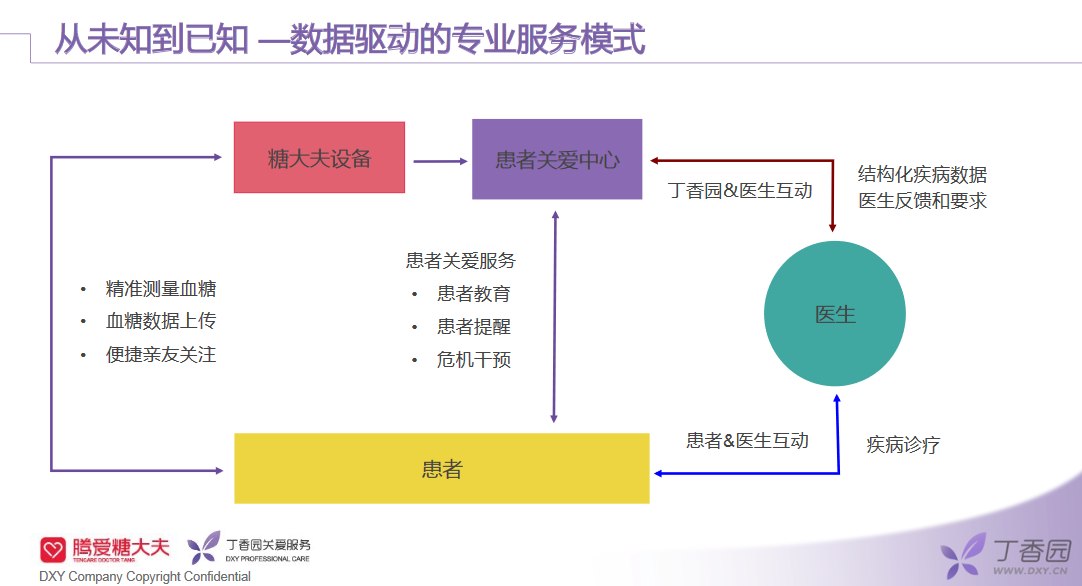
However, as services expand, the cost burden on patients will inevitably rise. Similar to blood glucose monitoring, which is also a long-term maintenance service, an excessive number of services or overly intensive interventions are bound to trigger dual or even multiple adherence issues among patients. For Tencent and Tang Da Fu, how to strike a balance in building various blood glucose management services while avoiding additional usage costs for users may also be a consideration.
The Arithmetic of Glucose Meters: A Selective Game of Physician Engagement. This is not a binary opposition, as a fundamental principle remains that diabetes cannot yet be fully cured by medication. Physicians rely on glucose meter data for decision-making, while glucose meters depend on physicians to provide professional diagnostic and treatment recommendations. Therefore, patient treatment and glycemic control management must inevitably proceed in parallel. What enterprises need to consider for the future is how to effectively integrate these two elements.
Within Tencent’s “Addition Strategy,” also known as the “Internet + Chronic Disease Management” strategy, DXY’s positioning is clear: it focuses on physicians and offline resources. In official terms, DXY handles physician-related matters, while Tencent manages internet-related initiatives.
Public data shows that as of July this year, DXY’s registered user base has surpassed 4.5 million, including more than 2 million physician users. A significant portion of DXY’s high valuation stems from the market position it has secured through years of engagement with the professional physician community—a stronghold that competing products find difficult to challenge.
Recall that at the 2016 China “Internet + Healthcare” Summit Forum hosted by Tencent this June, Dingxiang founder Li Tiantian delivered a keynote speech titled “Breaking Ice with Ice,” which featured a particularly interesting inverted triangle. At the launch event for the second-generation Tang Daifu, Li Tiantian referenced it once again:
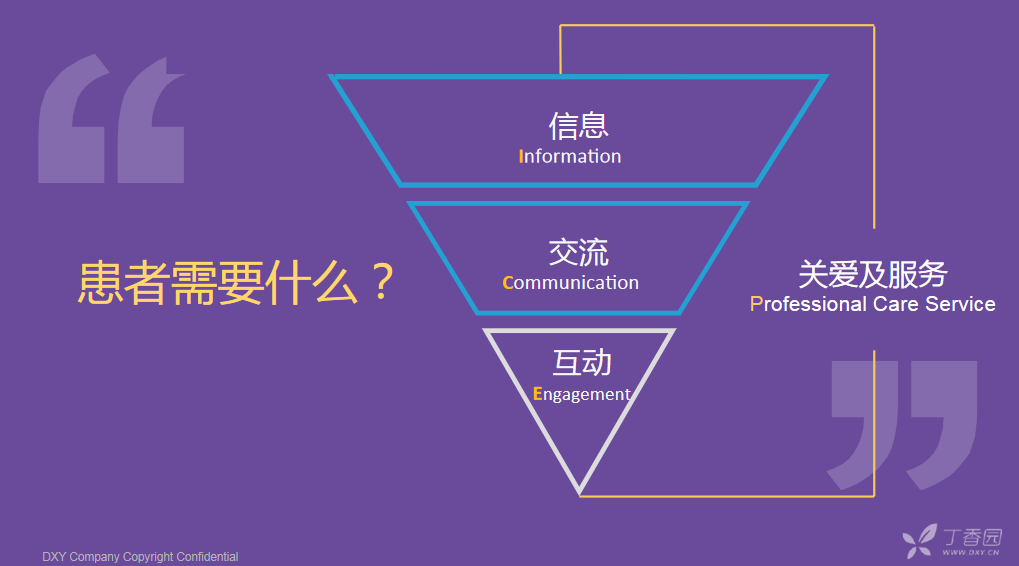
This inverted triangle represents the three tiers of DXY’s services: the top tier addresses the information search needs of the vast majority of users; the middle tier facilitates communication between doctors and patients; and the bottom tier focuses on interaction between doctors and patients. Together, these three elements form “ICE,” serving as an “icebreaker.”
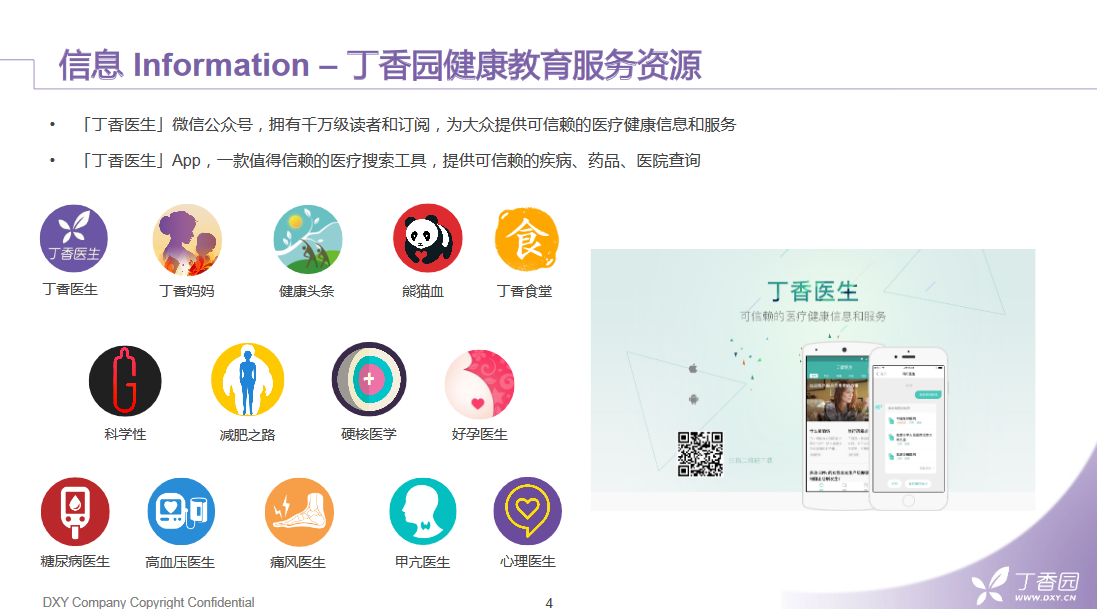
These three slides clearly illustrate the services encompassed by DXY’s information, communication, and interaction platforms:
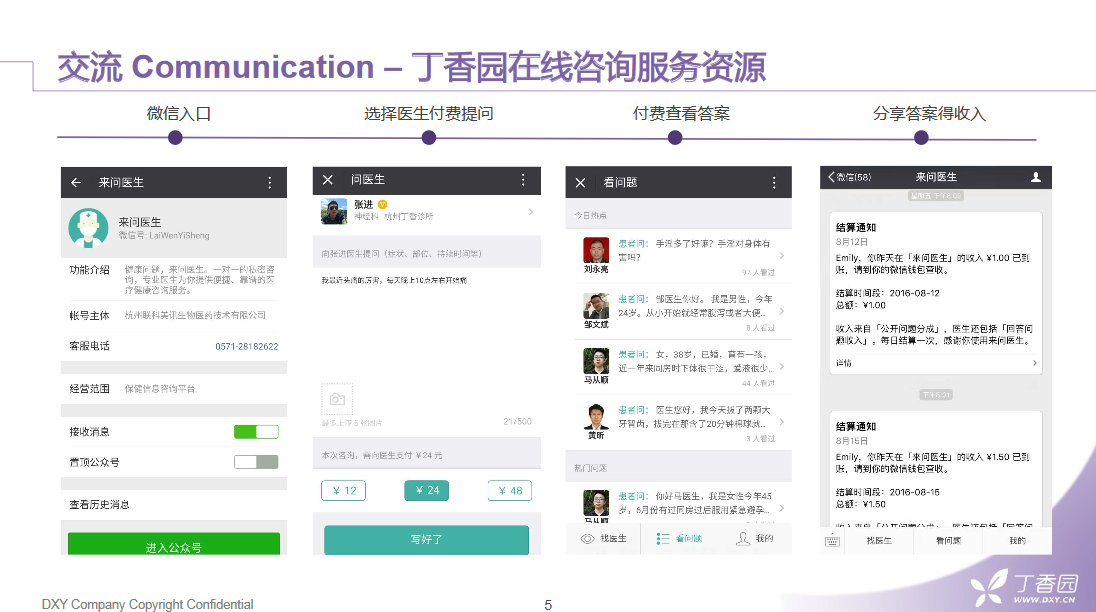
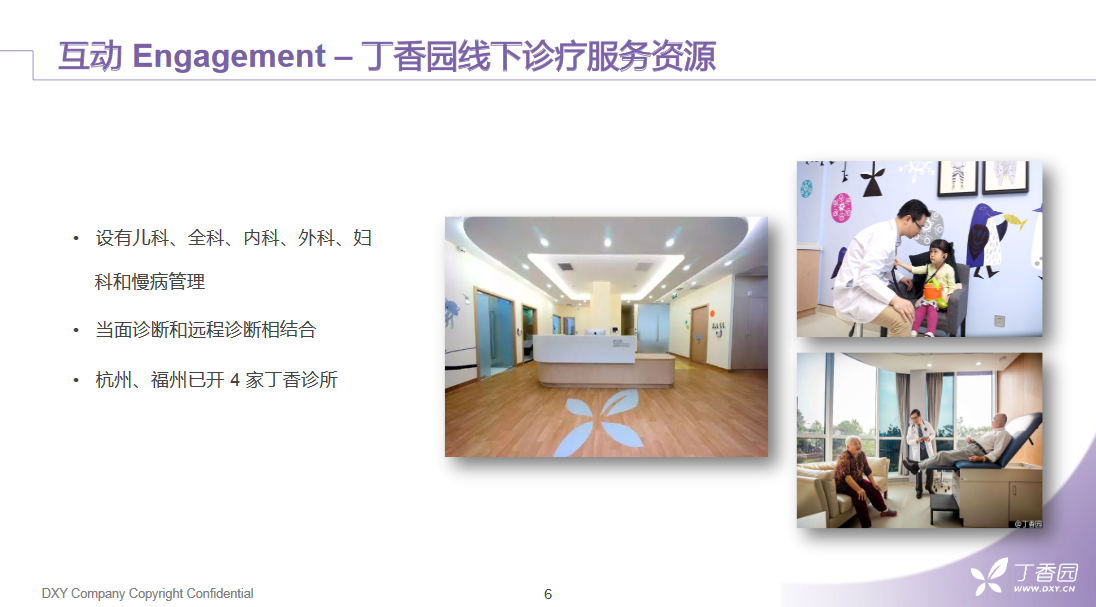
Well-versed in the “art of breaking the ice,” Li Tiantian and DXY have strategically facilitated the mutual conversion of internal resources, connecting doctors and patients through a suite of services that provide physicians with channels for monetizing their expertise and building their personal brands.
If Tencent truly aims to integrate the pharmaceutical industry, rehabilitation and elderly care, and health management in the future, its current positioning as a mere “connector” will prove insufficient. WeChat is a strong platform; its user base of nearly 600 million is large enough to secure it a seat at the table with other industry leaders. However, this is not the optimal approach. High barriers across industries and the exclusivity inherent in cross-sector operations will inevitably hinder outside players.
If healthcare services are viewed as a precision instrument, with Tencent serving as the core connector, this central component requires the support of various secondary connectors to achieve overall systemic dominance; otherwise, even the most powerful core cannot function as an independent system to ensure the instrument’s proper operation.
Many platforms pride themselves on being large and all-encompassing, but this approach is often unwelcome. What Tencent needs is not another version of itself, but rather precisely positioned entities capable of serving as core voices and connectors.
DXY is exceptionally well-suited to undertake this initiative. Over the past 16 years since its establishment, DXY has consistently focused on community building, with its research efforts centered on the relational structures among individuals within its community, thereby optimizing the physician-patient community to the highest degree. It is precisely because of DXY’s dedicated focus that Tencent clearly understands its strategic intentions and capabilities.
Once positioning is accurate, functions become clear, and senior management will know where best to place you. Therefore, as DXY assumes the role of a second-tier connector, it will inevitably maximize its utility. It has established a solid foundation for doctor-patient relationships without disrupting others’ ecosystems. Consequently, future collaborations and integrations with offline clinics, medical institutions, pharmaceutical retail, commercial insurance, and chronic disease management sectors will follow naturally.
The first collaboration between Tencent and ZhongAn Insurance was last year'sNovember 19,In the event titled"Internet + Healthcare Finance"ofPress ConferenceUp,Tencent ReleasedTengAi·Tang Daifu Version 2.0,DXY AnnouncesPatients using the Tang Daifu blood glucose meter are provided with free medical diagnosis andhealth management plans, while ZhongAn Insurance launched its first chronic disease insurance product, “Tang Xiaobei 1.0.”
In stark contrast to the high-profile nature of its previous launch, insurance appeared to go unmentioned at the recent Tang Daifu (Glucose Doctor) press conference. A review of the official website’s introduction to the second-generation Tang Daifu device also revealed no trace of any insurance-related offerings, creating the impression that insurance was being deliberately sidelined or excluded. However, this is not the case; Tencent has merely made minor strategic adjustments.
Analyzing this point is straightforward. Pure internet insurance companies, such as ZhongAn Insurance, can rapidly tap into incremental markets driven by innovative products, leveraging their speed of innovation and high valuations in primary market financing. However, the new business of these insurers is heavily reliant on external traffic and scenarios.
Chen Jin, CEO of ZhongAn Insurance, previously stated in a media interview that “in the internet era, the insurance industry’s ‘channel is king’ paradigm is shifting to ‘scenario is king,’ with fragmented scenarios becoming valuable once integrated. This is the primary distinction between internet-based insurance and traditional insurance.” I believe this is also an application of the Long Tail Theory.
However, unlike short-term, low-premium scenarios such as screen-breakage insurance, flight-delay insurance, and shipping-return insurance, chronic diseases like diabetes involve long-term, continuous, and often lifelong insurance coverage. This aligns more closely with the domain of traditional health insurance, where the advantages that internet-based insurance excels in—speed, short duration, and low cost—are difficult to leverage.
Of course, application scenarios are only one aspect; the other involves the equity structure of ZhongAn Insurance.
In June this year, ZhongAn Insurance completed a round of capital increase and share expansion, introducing external investors such as Morgan Stanley and CICC, professional financial investment institutions, in preparation for its IPO. Although Tencent still holds a 15% equity stake, sharing the second-largest shareholder position with Ping An and others, Alibaba remains the largest single shareholder. Given that these two giants are locked in fierce competition for the top market valuation in China, it is unlikely that Tencent would tolerate being constrained by its rival in the critical sector of insurance.
Taking chronic disease management in the United States as an example, the therapeutic effects for conditions such as diabetes are not immediate and require multiple interventions; therefore, a sustainable payer mechanism is essential, as ordinary households would otherwise struggle to afford ongoing care. Consequently, the optimal solution is to leverage commercial health insurance to drive the development of chronic disease management services.
Currently, although the domestic commercial health insurance market has just entered a phase of rapid expansion and market grab, there are already more than 50 licenses for specialized health insurance awaiting approval from the China Insurance Regulatory Commission (CIRC). Notably, among the three health insurance companies approved in August this year was Hetai Life Insurance, in which a Tencent subsidiary participated as an investor. The strategic implications behind this move are indeed thought-provoking.
Of course, the above is merely my personal speculation, and I have digressed somewhat. Let us return to Tang Daifu. Given Tang Daifu’s current development plans, it would be quite challenging for the burgeoning commercial health insurance sector to enter the system as a payer. If Tang Daifu and commercial insurance were to operate in parallel, the user education costs would be prohibitively high.
However, this does not preclude its existence as an additional service offering.Therefore, with a service-centric approach, it is not impossible for Tencent to reintroduce insurance products in the future. The current temporary decline in the strategic priority of insurance is, ultimately, merely a step-by-step strategic adjustment by Tencent.