

Deloitte Executive Discusses Home-Based Digital Healthcare: Consumers Are Optimistic and Shifting Toward Tech-Enabled Care
As high-tech solutions become increasingly cost-effective, affordable, and interconnected, various medical services can theoretically be shifted from hospitals or outpatient clinics to the home setting, ushering home healthcare into a new era of advanced technology.
In April 2016, tech giant Apple officially launched its latest care software, CareKit. This marked the third healthcare-focused mobile application platform released by Apple within less than two years, following HealthKit and ResearchKit. CareKit enables users to collect medical data and share it with their physicians, thereby facilitating telemedicine. Currently, key concerns in the healthcare industry include how to balance the practical application of technology with consumer demands in technology-driven home digital healthcare, and how to address the impact of technological advancements on the doctor-patient relationship.
Harry Greenspun, M.D., is the Managing Director of Deloitte’s Center for Health Solutions, dedicated to providing clients in healthcare, life sciences, and government with translational services from innovation to clinical application. He has been named one of the “50 Most Influential Physician Executives in Healthcare” by Modern Healthcare and has served on advisory boards for the World Economic Forum, Wellpoint (now Elevance Health), the Healthcare Information and Management Systems Society (HIMSS), Georgetown University, and others. Prior to joining Deloitte, Dr. Greenspun served as Chief Medical Officer at Dell Inc. VCBeat (WeChat ID: vcbeat) has compiled Deloitte’s and Dr. Greenspun’s research and insights on home-based digital health to help you understand the current developments in this field.
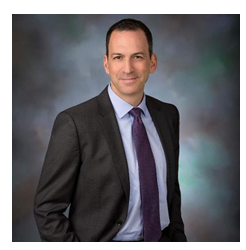
Harry Greenspun, Managing Director of the Deloitte Center for Health Solutions
The 2016 research study conducted by the Deloitte Center for Health Solutions explored consumers’ acceptance of high-tech healthcare services, as well as their expectations and preferences in this area. The findings include:
1.Consumers show strong interest in high-tech medical care services.Seventy percent of respondents stated that they are highly likely to use technologies such as telemedicine, remote patient monitoring (RPM), robotics, or drones in the future.
2.Telemedicine has become the most popular technology among consumers.Half of consumers say they are likely to use telemedicine, particularly for postoperative care and chronic disease monitoring.
3.Certain subgroups are particularly enthusiastic about high technology.such as patients with chronic diseases, Millennials (Americans born from the early 1980s to the early 2000s) who are accustomed to using telemedicine, and elderly individuals currently using RPM.
4.Caregivers play a critical role.An increasing number of consumers report that they are more inclined to use technologies such as sensors when caring for others rather than for themselves. Compared with non-caregivers, professional caregivers are also more willing to adopt telemedicine and remote patient monitoring (RPM) technologies.
5.Consumers seek high-quality, personalized services and expect to ensure the security of their personal information.Approximately one-third of respondents expressed concerns about the security of their personal information or the potential for its misuse. Forty percent of respondents believed that the quality of high-tech medical services might be lower than that of in-person care (43% for telemedicine and 35% for RPM).
6.Despite the growing adoption of high-tech healthcare, the application of self-care technologies remains in its early stages.The most widely adopted technology is consumer-initiated e-prescribing (58%), while the utilization rates of other medical technologies are one-third or lower (e.g., online payment of medical expenses, health issue monitoring, etc.).
Although this research report is not directly linked to CareKit, as previously mentioned, it reflects consumers’ acceptance of high-tech medical care services. As a health management platform, CareKit facilitates disease tracking and remote monitoring of chronic conditions by enabling the remote sharing of medical information and providing tools and apps for both patients and physicians, with the aim of managing and improving people’s lifestyles. But are people truly willing to integrate data-monitoring technologies into their daily lives? Dr. Greenspun elaborates on his perspective:
In terms of the application of new technologies, the healthcare industry often lags behind other sectors.As various high-tech tools and apps in sectors such as retail, tourism, and finance become increasingly integrated into consumers’ daily lives, these experiences may drive up consumer expectations for, or acceptance of, high-tech healthcare. The biggest surprise from the 2016 report was that people,Especially for the elderly, the full embrace of high technology。
Overall,Consumers Are Optimistic About Home Digital HealthcareThey believe that the benefits to be gained far outweigh the risks, and are therefore willing to give it a try. For patients, home healthcare technologies can help them manage their conditions and slow disease progression; for caregivers, they provide peace of mind; and for healthy individuals, they offer various tools and support to maintain healthy lifestyle behaviors.
On the other hand, the report points out that high-tech solutions also face certain resistance. Some argue that such technologies, such as sensor technology for monitoring family members' sleep quality or exercise patterns, may infringe on people's privacy. Indeed,Privacy is an enduring major issue in technology applications. Although people have grown accustomed to sharing their daily lives, food, and health or fitness data on various social media platforms, they tend to hesitate when such sharing is categorized under “medical care.”
Regarding the research report onRemote MonitoringThere are also some interesting findings. For instance, consumers place significant value on the ability to exercise “control” and make “choices”—specifically, the capacity to expand or reduce the scale of monitoring in their physical environment and the level of biological monitoring. This indicates that people are generally concerned about privacy and desire the ability to adjust the extent of monitoring as needed. Consumers wish to have influence and control over their medical care and health information. As patients or caregivers, they want to understand how new technologies work, know which data will be disclosed and shared, actively participate in the process, and retain the autonomy to decide which technologies may be used.
For technologies that are more “intrusive” to privacy, such as wearable devices, implantable devices, or home monitoring systems, people tend to be more cautious. Of course, if individuals can derive substantial benefits from sharing their data, they are likely willing to compromise on certain privacy concerns. Therefore, public education in this area is crucial; it is essential to effectively communicate the benefits of monitoring to consumers, enabling them to evaluate and weigh the pros and cons based on their individual circumstances.
Some consumers insist that technology is turning society into a cold, impersonal machine, with ubiquitous automation and surveillance gradually eroding our humanity. However, Greenspun disagrees with slowing the pace of technological progress for this reason. It is true that consumers highly value personal interactions between doctors and patients, worrying that the use of technology will further reduce such interactions, making the already precarious doctor-patient relationship even more tenuous and fragile. As a physician, Greenspun is well aware of the importance of humanizing medical services. He believes that,“Care” is the best bond for maintaining the doctor-patient relationship, and the existence of technology is not to replace doctors, but rather to become a bridge of "care," strengthening and promoting the doctor-patient relationship.
According to the report’s findings, acceptance of digital home healthcare varies across age groups. As in other sectors, Millennials, who grew up alongside the internet, are generally more receptive to new medical technologies. For their parents or grandparents—namely, Baby Boomers (born between 1946 and 1964), who may already be experiencing a range of health issues—the demand for technology is more varied due to physical conditions.
The report shows that,Older respondents (aged 45–65) demonstrated the highest acceptance of home-based digital health technologies with video functionality., which also means that the development of telemedicine has a solid public foundation. Although some respondents still expressed concerns about telemedicine, such as the lack of face-to-face authenticity, impersonality, and privacy breaches, Greenspun believes that the obstacles to the promotion of telemedicine lie less in technology and more inGovernment Incentive Policies. If healthcare providers vigorously adopt and promote telemedicine due to incentives, consumers will naturally recognize the convenience and practicality of this technology, thereby accelerating the adoption of telemedicine.
The overall conclusion of the report indicates that consumers are willing to adopt new technologies if home care standards can be improved, with all other concerns posing no insurmountable barriers. Therefore, suppliers and developers should focus on addressing functional needs. As mentioned above, once people perceive a need for something, they are willing to make significant efforts to obtain it, including making certain sacrifices in some areas. Conversely, merely piling on features that consumers do not need or find unnecessary will only create confusion and hinder their acceptance of new technologies.
On the other hand, from the perspective of technology developers and healthcare providers,The Main Stumbling Block on the Path to Growth in Home Digital Healthcare Remains Interoperability Issues. Recently, the FDA has strongly encouraged app developers to create interoperable devices; similarly, the Department of Health and Human Services (HHS) has required major electronic health record (EHR) vendors to enable more open data sharing, which has long been a focal point of most interoperability challenges. However, these two policies alone are far from sufficient to truly improve the interoperability of medical devices. As consumers gain direct access to a wider range of devices, they will begin to demand seamless data connectivity.
Interoperability must extend to hospitals, homes, and even wearable or implantable medical devices. Governments and EHR vendors are striving toward this goal, vigorously promoting it through organizations such as Health Information Exchanges (HIEs). Some argue that current technologies are plagued by numerous data silos operating in isolation, which disrupt clinicians’ workflows and overwhelm patients, thereby diminishing their engagement. However, Greenspun considers the “silo” metaphor somewhat overstated. In reality, agricultural silos are massive structures capable of storing large quantities of grain. In this sense, many existing technologies are merely small cereal bowls; there is no need to obsess over breaking down all silos. Moreover, under current technological conditions, if vendors blindly migrate from one system to another in pursuit of data interoperability, they are likely to suffer significant setbacks.
A major driver for the adoption of home-based digital health technologies isThe Industry-Wide Shift Toward Value-Based HealthcareConsequently, the healthcare industry will focus on population health, prevention, and wellness, necessitating information sharing, care coordination, and consumer engagement, along with profound data analytics in novel ways. All of these present tremendous opportunities for innovation. Greenspun predicts that the adoption rate of home-based digital health technologies will continue to rise over the next five to ten years. This is driven by two factors: first, governments, healthcare providers, and developers are making sustained collaborative efforts; second, demographic shifts are inevitable over time. As younger generations—who are more technologically savvy and open to adopting new technologies—age, they will be more willing to embrace various innovations in healthcare, whether as patients, physicians, or caregivers.
Finally, for companies in the healthcare sector, whether industry newcomers or traditional giants, developing home-based digital health technologies must address the following challenges:
1. Address interoperability challenges and establish unified patient records. This requires collaboration among multiple stakeholders, such as healthcare providers, health plans, patients, health technology vendors, home healthcare agencies, and social service organizations.
2. When redesigning healthcare provider workflows, full consideration should be given to the evolving roles and responsibilities of professional care team members, team turnover, and the cultural shift from a provider-centric to a patient-centric model. Solutions that are most acceptable to consumers should integrate the care team, as consumers generally trust their care providers and wish to maintain ongoing collaboration with them.
3. New technological solutions will serve diverse user groups, including patients, caregivers, physicians, and professional healthcare teams. The actual needs, requirements for technology platforms, and levels of technology acceptance vary among these groups, while factors such as health status, disease stage, culture, income, and education level all influence the effectiveness of the solutions. For example, a solution well-suited for diabetic patients who are highly engaged and open to adopting new technologies may not be appropriate for caregivers of patients with dementia.
4. Maintaining the active engagement of consumers and suppliers represents another major challenge in the application of home-based digital health technologies. To tailor consumer engagement strategies for each technology, developers must earn users’ trust and conduct in-depth research into their needs, limitations, and preferences. By involving potential users in the design and testing of solutions, developers can not only gather substantial valuable information during the early stages of development but also become well-versed in various approaches to consumer engagement, thereby ensuring the sustained use of these solutions.