

Ji Linong: Mobile Health Innovations Bridge Patients and Physicians, Advancing Diabetes Diagnosis, Treatment, and Management
On the afternoon of September 20, Tencent officially launched the second-generation Tang Daifu smart blood glucose meter in Beijing and announced a series of in-depth collaborations with renowned domestic internet healthcare companies such as DXY, as well as prominent medical institutions including Peking University International Hospital. At the event, Professor Ji Linong, Director of the Department of Endocrinology at Peking University International Hospital, shared key insights on the management of chronic diseases such as diabetes. VCBeat (WeChat ID: vcbeat) has compiled and shared these highlights for you.
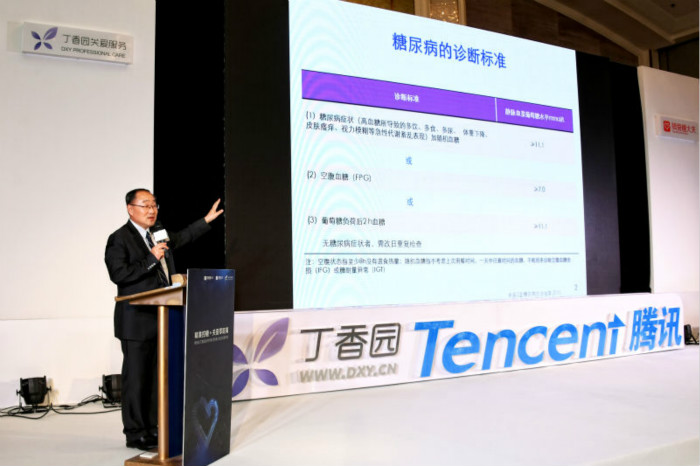
Diabetes is, in essence, a "numerical disease." For instance, in the diagnosis of diabetes, when venous plasma glucose levels are ≥11.1 mmol/L, clinical manifestations include thirst, polydipsia, polyuria, and weight loss; in severe cases of type 1 diabetes, polyphagia may also occur. At this stage, numerical data are relied upon to verify whether these symptoms are caused by hyperglycemia. When blood glucose reaches such risky levels, the risk of developing retinopathy increases. If this threshold is exceeded, a diagnosis of diabetes is confirmed. The underlying etiology of diabetes is not considered in the diagnostic process; the sole criterion is whether blood glucose levels are elevated.
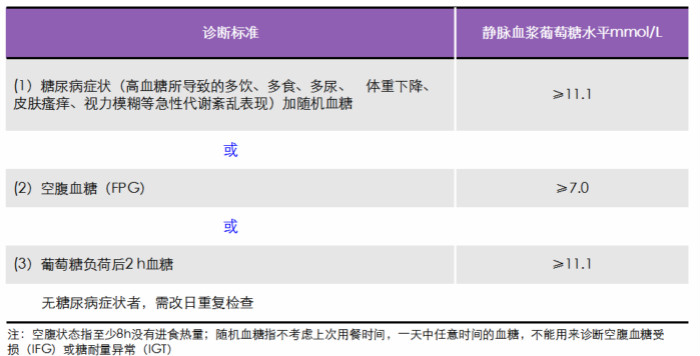
Diagnostic Criteria for Diabetes
The control targets for diabetes are also associated with specific numerical values. These targets have been established through clinical trials and epidemiological studies. If fasting blood glucose levels range between 4.4 and 7.0 mmol/L, and non-fasting blood glucose levels remain below 10.0 mmol/L, it can be generally inferred that the individual’s glycated hemoglobin (HbA1c) level is below 7%. Blood pressure and lipid profiles—including total cholesterol, triglycerides, high-density lipoprotein (HDL), and low-density lipoprotein (LDL)—as well as key indicators of active aerobic exercise, are all quantifiable metrics. Therefore, the management of diabetes revolves entirely around these numerical parameters.
If targets are not met, corrections must be made. For uncontrolled blood pressure, nutritional counseling, exercise, and medication can be employed to bring readings within the range of 140/80 mmHg. For uncontrolled blood glucose, nutritional counseling, exercise, and hypoglycemic agents can reduce levels to below 7 mmol/L, which is considered a safe range. Therefore, endocrinologists employ abstract thinking centered on numerical data. By integrating these parameters—age, duration of diabetes, glycated hemoglobin (HbA1c) levels, smoking status, and blood pressure values—it is possible to estimate the risk of developing specific diseases over the next ten years.
Certainly, treatment choices are also based on numerical values. If the glycated hemoglobin (HbA1c) level is within 6.5%, medication may not be necessary. However, if it exceeds 7% and cannot be well controlled through diet and exercise, medication becomes necessary. These numbers directly trigger clinical actions and decisions. Finally, efficacy is also evaluated using numerical indicators. If a patient fails to meet the target, additional measures are taken to bring the values within the desired control range.
Because these figures are derived from prospective epidemiological studies, which are ultimately summarized based on long-term observations within populations, they effectively serve to predict the future using currently available data—much like a fortune teller using a crystal ball—thereby facilitating patient education and even triggering medical interventions.
Although the Internet has enhanced interpersonal connectivity, improved the flow and effectiveness of information, and increased information richness, it cannot replace the traditional doctor-patient relationship; rather, it merely makes this relationship more seamless.
The relationship between physicians and patients is one of guidance, monitoring, and follow-up. Internet-based management tools can empower patients to better manage their own health, which means that patients need access to personalized information. Traditionally, diabetes education has been comprehensive, covering everything from A to Z; for instance, patients newly diagnosed with diabetes were immediately instructed on how to inject insulin and what precautions to take. In reality, patients only need knowledge about insulin when they actually require it. Therefore, if management tools are more structured, systematic, and capable of precisely identifying individual needs, they can deliver timely information to patients, enabling them to achieve better health outcomes. This requires establishing a new physician-patient relationship on mobile platforms.
Furthermore, patients also need peer interaction, which not only provides peer support but also generates peer pressure. If other patients have better glycated hemoglobin (HbA1c) levels than you do, this creates pressure and motivates you to improve your own management. How can this be achieved through internet-based tools? For instance, in a cohort of 10,000 patients, their daily average blood glucose levels could be ranked, allowing each individual to understand their relative standing within the group. This approach can effectively foster peer pressure.
Mobile health platforms that currently utilize various apps to help patients adjust their treatment and monitor blood glucose can significantly reduce the frequency of glycemic issues. These outcomes can be substantially improved through internet- and smartphone-based intervention models.
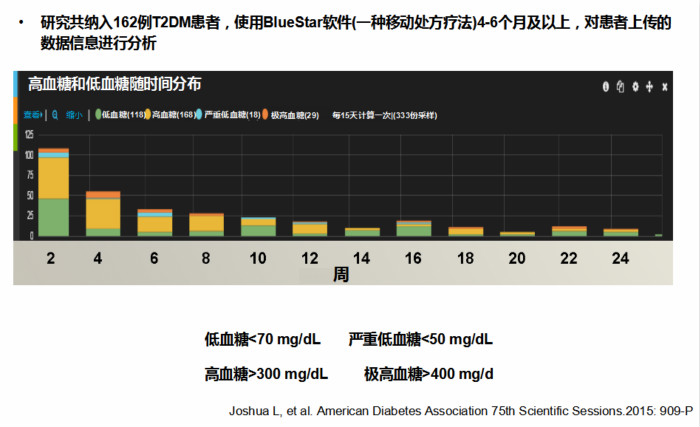
The Frequency of Hyperglycemia and Hypoglycemia Decreases with the Use of the App
Here, we propose the "Track Walker Theory." Until now, railway tracks have been constructed in this manner: sleepers are placed underneath to distribute pressure, and the rails are secured in place. These spikes may loosen over time, which could potentially lead to derailments. Therefore, track walkers are assigned specific sections of track each day—for example, 10 or 20 kilometers—and inspect whether the spikes have loosened by riding a small handcar, tapping with a hammer, and visually examining the tracks.
Currently, physicians effectively serve as track inspectors, responsible for examining patients to determine whether issues exist and assessing their severity. However, what constitutes a more efficient approach? Imagine installing a sensor on each railroad spike; such a sensor could indicate whether a spike is loose or tight. This would allow daily identification of spikes requiring maintenance based on sensor signals, thereby preventing major catastrophic accidents. Similarly, glucose meters used by patients, or future wearable monitoring devices, essentially function as sensors implanted on or attached to the patient. Through big data analytics, we can stratify patients. Some patients may not require three to four daily check-ups; twice daily may suffice, as these individuals are relatively stable and robust. The highest priority should be given to those at the top tier—patients whose “spikes” have become loose and who need timely reinforcement.
Therefore, only by leveraging our large-scale, long-term, and particularly longitudinal internet-based data accumulation can we retrospectively match patients with their characteristics, stratify them, and implement tiered management. This approach can significantly save manpower while making services more personalized and efficient. However, without large-scale, large-sample data collection efforts like those currently undertaken by Tencent’s Tang Daifu, this goal cannot be achieved; thus, we are still in the foundational stage.
Regarding the application of big data, here is a vivid example from a city in the United States. The green dots represent locations where surveys and examinations have shown that people are less likely to develop diabetes. These locations are often gyms and healthier restaurants. The red and purple dots indicate fast-food outlets. In China, children often go to McDonald’s for their birthdays, whereas in the U.S., McDonald’s is primarily patronized by low-income individuals, a demographic that is more prone to diabetes.
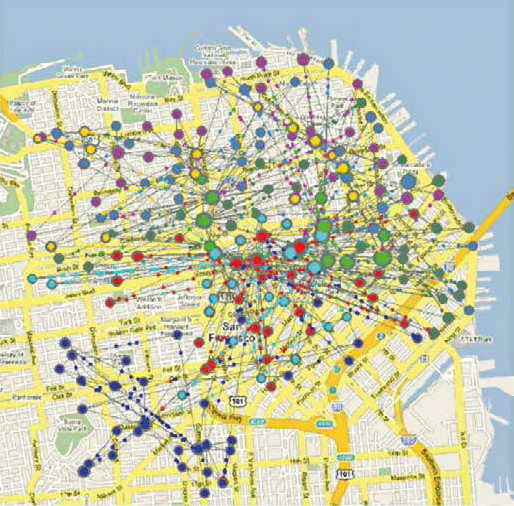
Big Data-Based Identification Method for High-Risk Populations
An analysis of the above case reveals that cumbersome screening for individuals at high risk of diabetes is no longer necessary. Instead, health education can be conducted in areas where high-risk populations are concentrated, with targeted health promotion materials pushed to their mobile devices. These individuals can even be gathered for direct intervention. This exemplifies the current power of big data, which can provide assistance in numerous scenarios; however, realizing its full potential requires imagination and innovative application.
Why is Peking University International Hospital willing to collaborate with Tencent? Because Tang Daifu (Sugar Doctor) has set an excellent precedent. Although every app on the market claims it can receive data transmitted from blood glucose meters, the process is often cumbersome. It typically requires first establishing a connection between the smartphone and the glucose meter; while some meters are compatible, others are not. Tencent’s Tang Daifu integrates these components seamlessly, linking the glucose meter to physicians and connecting smartphones to doctors, rather than merely pairing the glucose meter with a smartphone. Furthermore, it provides comprehensive illustrated instructions, making it truly user-friendly for both the elderly and children—akin to a “foolproof” device. Its data can be uploaded automatically, and thanks to its integration with WeChat, users can form various groups with doctors, their children, and relatives or friends, thereby facilitating diverse communication and mutual support.
This is a clinical observation conducted by my student using the first-generation Tencent blood glucose meter. It can be seen that if patients have good compliance, the more frequent their blood glucose monitoring, the more significant the improvement in blood glucose levels within a certain period. We also presented these findings at last year’s American Diabetes Association Scientific Sessions. With peer support and communication, regular blood glucose monitoring, and attention from healthcare professionals at critical time points, blood glucose control can be significantly improved in both type 1 and type 2 diabetes.
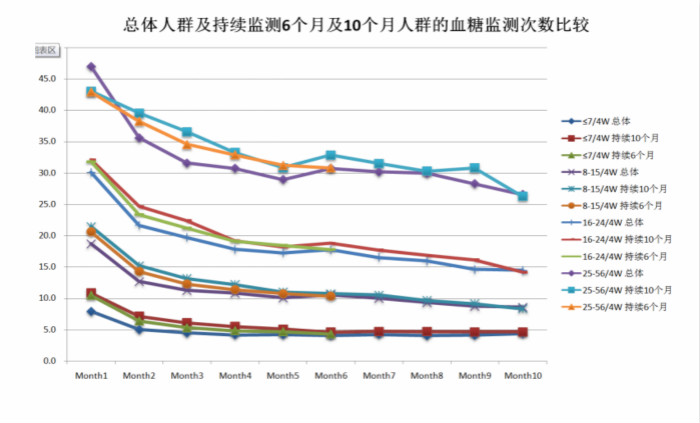
Declining Trend in the Frequency of Self-Monitoring of Blood Glucose
With the internet and modern technologies, we can leverage considerable imagination to make these technologies beneficial for patients. For example, current medications are often packaged in aluminum foil blister packs. By employing pressure, weight, or sensor technologies, it should be possible to detect when a single tablet is removed from its foil packaging. This digitizes medication adherence, allowing for monitoring of whether patients take their medications daily as prescribed by their physicians. Consider insulin prescribed by doctors: do patients actually administer injections one minute or half an hour before meals as instructed? In reality, this is rarely the case. If we had devices capable of recording the time and dosage of insulin injections and uploading this data in real-time to physicians and backend processors for behavioral analysis, medication adherence could be fully monitored and managed.
On an exceptional internet platform like Tencent, which boasts a vast user base, integrating monitoring technologies that connect doctors with patients—particularly those enabling patient stratification, personalized diagnosis and treatment, and analytical capabilities—will undoubtedly empower physicians to manage their patients more effectively in the future. China currently faces a significant imbalance: a large patient population coupled with a shortage of physicians. Whoever successfully develops such technology and demonstrates its value will attract investment not only from venture capital firms but also procurement from enterprises, government agencies, and insurance companies, thereby fostering a sustainable and healthy ecosystem for development.