

Breaking the Ice in Chronic Disease Management: Li Tiantian and DXY’s Strategic Approach
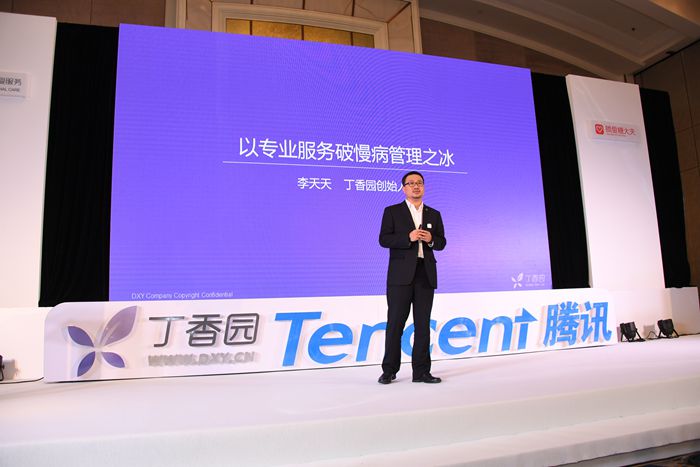
Li Tiantian, founder of DXY, who has a 10-year history of hypertension, has a profound understanding of chronic disease management, as not only he but also many entrepreneurs and investors around him are hypertensive patients. In his view, managing chronic diseases requires overcoming inertia in daily life.
Taking himself as an example, Li Tiantian finds even measuring blood pressure to be troublesome. He admits that he would find it even harder to endure the daily finger pricks required of diabetes patients. Therefore, DXY has been continuously exploring the field of chronic disease management. What insights and lessons have they gained along the way? Li Tiantian shared his detailed experiences, as reported by VCBeat (WeChat ID: vcbeat).
For patients with chronic diseases, managing blood pressure and blood glucose levels is more about adopting lifestyle changes. Once the disease enters a stable phase, regular and continuous medication can be maintained. However, reaching this stage requires many adjustments, particularly changing established lifestyle habits, which is extremely challenging.
In China, the experience of receiving medical services is far from satisfactory. The internet is flooded with information, yet there is a scarcity of reliable sources. The difficulty in accessing medical care remains a persistent issue: patients may travel vast distances to seek treatment, wait three weeks for an appointment, queue for three hours, and then receive only a three-minute consultation, ultimately leaving them dissatisfied. This dissatisfaction is not limited to patients; doctors are equally frustrated. Physicians would certainly prefer to spend more time communicating with and assisting their patients, but they are constrained by the reality of dozens of individuals waiting outside their doors.
In light of this current healthcare landscape, what actions can we take? First, we must understand patients’ needs, as disease is merely the outcome at the final stage. By tracing back from this endpoint, we find that patients’ needs actually emerge much earlier; they either go unnoticed by the patient or are acknowledged but dismissed, only prompting consultation with a physician at the point of disease onset. Therefore, focusing solely on the final outcome severely limits our ability to intervene. However, by adopting a longer-term perspective and engaging patients from the early stages of their condition, there is significantly more we can do.
Broadly speaking, patients with chronic diseases have three needs: information, communication, and interaction. These three needs form a funnel shape, deepening step by step.
In the uppermost information layer, many individuals are either not yet ill or are only in the early or prodromal stages of disease. Currently, services targeting this population are virtually nonexistent, and online information is extremely limited. Taking diabetes management as an example, a search engine query yields numerous claims of curing diabetes, offering a wide variety of methods—including those that involve no injections, no medication, and various unproven folk remedies. Such information is misleading; however, given the substantial and genuine demand among patients in the preclinical stages, this gap presents a significant opportunity.
Second is communication. Patients have accessed a wealth of information, yet such content tends to be overly general and fails to align with their individualized needs. Take, for example, an article on dietary recommendations for patients with diabetes: the patient may not be concerned with broad guidance on what foods to eat, but rather with whether they can have another piece of watermelon at this very moment—a question directly relevant to personalized treatment.
The final aspect is interaction, specifically the interaction with physicians. Online consultations and diagnoses can never replace in-person clinical visits; healthcare delivery is not always amenable to digital displacement. Medical quality and patient safety must always remain the top priorities in the healthcare industry, as they are irreplaceable. While high efficiency, affordability, and convenience are desirable, the core imperative is to ensure professionalism, service quality, and patient safety.
From an informational perspective, DXY’s content production model and workflow are already quite mature. However, DXY adopts a distinct approach to content creation by employing the “peer review” process commonly used in academic journals. Content authored by physicians cannot be published without undergoing review by other physicians, thereby ensuring that the evidence is sufficient and the conclusions are reliable. Beyond content production, DXY also aims to help patients address common health-related questions. With extensive clinical experience, physicians often recognize that many questions posed by patients are similar, if not identical.
Based on this understanding, DXY has proposed a hypothesis that the common questions associated with many prevalent clinical diseases can theoretically be exhaustively cataloged. By producing content of this nature, it is possible to address the majority of frequently asked questions for most diseases. If this hypothesis holds true, such a question-and-answer format would be highly valuable. Therefore, over a month ago, DXY launched the “Ask a Doctor” column on WeChat. This product aims to answer common questions and address typical symptoms encountered by patients. For instance, even after reviewing health education materials, patients with diabetes often have numerous remaining questions that are more closely related to their individual circumstances. In such cases, professional physicians are needed to provide answers, and “Ask a Doctor” offers this type of online, brief consultation.
In addition to its online services, DXY has also begun preparing for and establishing offline medical institutions. In China, primary healthcare services remain relatively underdeveloped, with most public hospitals primarily focused on diagnosis and treatment, making it difficult to provide comprehensive, multi-dimensional care. Such comprehensive, multi-dimensional care encompasses patient education, early diagnosis, as well as post-discharge nursing, health management, elderly care, and chronic disease management. These services should not be borne by large tertiary hospitals but rather delivered primarily by primary healthcare institutions.
Therefore, DXY began establishing clinics last year and has since opened four facilities, focusing on chronic, common, and frequently occurring diseases, with services covering general practice, pediatrics, geriatrics, and gynecology. Among these, particular attention is given to diabetes, as its management is complex and requires long-term care.
The Three Core Needs of Patients with Chronic Diseases: Information, Communication, and Interaction Are Inextricably Linked. From patient education at the initial stage, through doctor-patient communication in the intermediate phase, to face-to-face clinical consultations, and then back to education, intervention, and guidance after treatment completion, a closed-loop process is formed, delivering a comprehensive experience. Therefore, chronic disease management is not merely a final clinical step, but a continuous, real-time, long-term intervention and guidance practice grounded in professional expertise.
Throughout this process, DXY collects patient data, such as direct blood glucose measurements, which are highly valuable for assessing disease status. In addition to blood glucose data, DXY gathers a wide range of other patient-generated data, including search queries, reading history, bookmarks, likes, and shares. By integrating these behavioral data with clinical information, DXY can gain deeper insights into patient behaviors and needs, even anticipating unexpressed needs. From this perspective, DXY aims to provide data-driven, precision chronic disease management services.
Dingxiang Yuan has established a Diabetes Care Center, engaging professional nurses, health nutritionists, health educators, and physicians to collaborate in helping patients manage their blood glucose levels through intervention and guidance. In this process, patient behavioral data are collected, analyzed, and integrated to deliver real-time, precise, and continuous care services. This service is bundled with the Teng Ai Tang Daifu blood glucose meter for promotion and outreach to patients with diabetes.
Behind the promoted services lies a rigorous management mechanism. The training of service personnel, the collection and organization of content, and the collection, analysis, and storage of patient data constitute a vast system, which has been built by the DXY team.
Data security and patient privacy are managed by DXY, allowing physicians to focus solely on delivering care. Training for healthcare professionals, whether nurses or dietitians, will entail a shift in work practices—from direct patient care to data-driven assessment and decision-making. The development of these competencies requires robust system support and assistance.
The entire process encompasses numerous steps, beginning with initial information intake and patient education, progressing through inquiries and consultations with physicians, and culminating in clinical visits. This constitutes a complete closed-loop workflow. However, relying solely on DXY’s own clinics is insufficient; therefore, DXY has established collaborations with local hospitals and physicians to assist patients in identifying appropriate healthcare providers and facilities in their vicinity. For instance, managing diabetes requires regular monitoring of glycated hemoglobin (HbA1c) and periodic assessment of microvascular complications in the lower extremities, both of which necessitate professional medical support. DXY aims to engage a cohort of physicians to deliver integrated online-and-offline chronic disease management services for patients.
Finally, Li Tiantian emphasized that there are three "cornerstones" in the healthcare system that must always be kept in mind.
First is professionalism. In the healthcare services industry, the importance of professionalism cannot be overstated, as the medical sector concerns human life, health, safety, and quality—principles that must be kept in mind at all times. DXY’s pursuit of professionalism is reflected in its training of professionals, optimization of data algorithms, patient intervention and guidance, and strict requirements for content.
Second is precision—data-driven precision services. Behind the simple data of patients lie many unknown pieces of information, requiring very detailed and comprehensive interpretation. In particular, it is essential to integrate this with data from the patient’s prior behaviors. Once any issues or early signs of deterioration are detected, timely decisions must be made at specific points in time to ensure that patients see local physicians as soon as possible for medication adjustments and the implementation of new treatment plans. All of these actions rely on precise data to drive decision-making;
The final step is openness, as DXY cannot handle all aspects of the work. The healthcare industry is an ecosystem comprising various sectors, including pharmaceutical companies, insurance providers, and medical device manufacturers. Each enterprise has its own areas of expertise; DXY excels in services and is committed to delivering high-quality service offerings. We open our services to partner enterprises, which includes deep integration with Tencent’s Tang Dafu (Sugar Doctor) in terms of both medical data and healthcare services. It also encompasses DXY’s ongoing explorations of collaborations with insurance companies and pharmaceutical firms.
Only by building upon these three “cornerstones” to achieve true professionalism, precision, and openness can we provide a chronic disease management service that earns patients’ trust.