

160 Health Highlights Data Silos as Key Barrier to Healthcare Big Data Monetization
On September 22, the 2016 Shenzhen International BT Leaders Summit grandly opened at the Shenzhen Convention and Exhibition Center. Distinguished representatives from national ministries, research institutions, pharmaceutical manufacturers, biotechnology companies, financial investment firms, and policy research organizations all attended, attracting nearly one hundred outstanding enterprises from across China to exhibit.
Tian Fu, a member of the Standing Committee of the Shenzhen Municipal Party Committee and a member of the Party Leadership Group of the Shenzhen Municipal People’s Government, visited the JiuYi160 booth to learn about its services. As a leading internet healthcare service platform in China, JiuYi160 was successfully listed on the National Equities Exchange and Quotations (NEEQ) in 2015 and has been hailed as “the first stock in mobile healthcare.” Liu Kanglin, Senior Vice President of JiuYi160, provided a detailed overview of the company’s achievements in recent years and its strategic plans for the future.
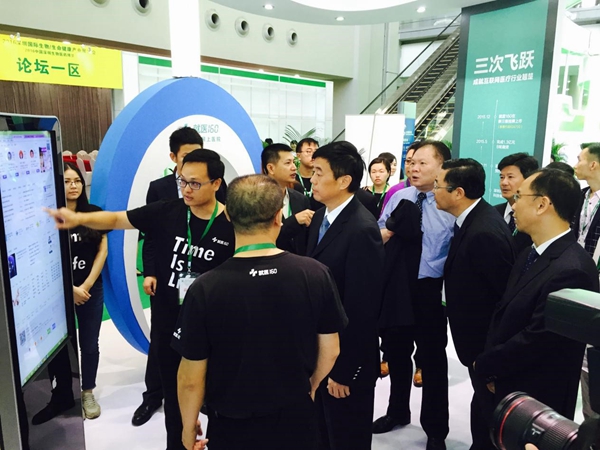
Shenzhen Municipal Standing Committee Member Tian Fu and His Delegation Visit the JiuYi160 Booth
Jiuyi160 envisions “building an online hospital for the Chinese people” by creating an internet platform that connects individuals with medical and health services. It provides patients with services such as appointment registration, medical guidance consultation, online payment, queue management and number calling, delivery of test reports, post-discharge follow-up, tiered diagnosis and treatment, doctor-patient communities, and health management.
As of September 2016, JiuYi 160 had connected with more than 3,000 large hospitals across China, covering over 200 cities. The platform boasted nearly 500,000 affiliated physicians, served more than 1 million users daily, and had provided a cumulative total of 250 million online medical services to patients nationwide. The number of real-name registered users had exceeded 100 million.
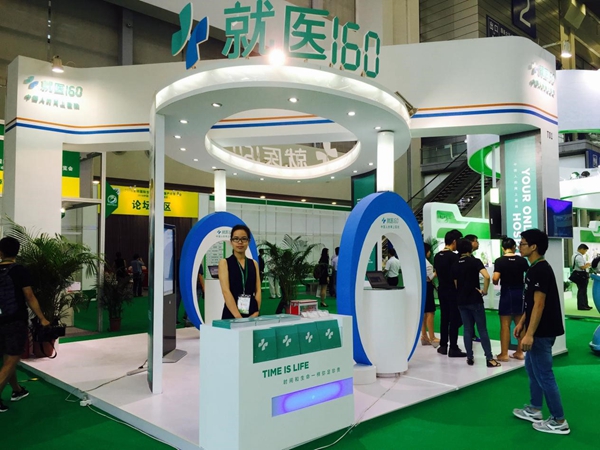
Jiuyi160 Booth
Jiuyi 160 Aims to Build Smart Hospitals to Lead Healthy China
The sub-forum themed “Smart Healthcare in the Era of Big Data,” co-organized by 91160, Shenzhen Institutes of Advanced Technology of the Chinese Academy of Sciences, and Shenzhen Zhongke Jinzheng Technology Co., Ltd., was also held as scheduled that afternoon.
Sun Daning, Chief Strategy Officer of 91160.com, delivered a keynote address titled “Building Smart Hospitals to Lead Healthy China.” In his speech, he provided an in-depth analysis of the challenges facing the development of smart healthcare in the era of big data, highlighted the immense potential of big data in the medical industry, and pointed out that the current application of big data in healthcare is prone to constraining issues such as data silos and industry fragmentation.
According to reports, medical big data is categorized into four types within the healthcare process: clinical diagnosis and treatment data, research and development (R&D) data, scientific research data, and payment data. Each data type holds distinct value in smart healthcare. For instance, clinical diagnosis and treatment data can provide public institutions and hospitals with an evidence base for improving the quality of medical services, thereby facilitating effective disease management and public health infrastructure development. Meanwhile, such data also assists individuals in disease prevention and chronic disease management. The full utilization of these data within the healthcare industry would generate substantial economic value. Despite the promising prospects of smart healthcare, its current development still faces challenges such as data silos and industry fragmentation.
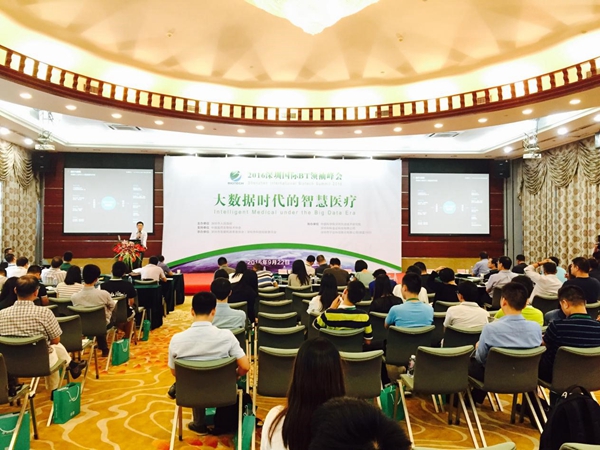
Sun Daning, Chief Strategy Officer of 9160.com, Shares Insights on Smart Healthcare
Sun Daning stated that data silos are the primary factor currently limiting the monetization of medical big data, while industry fragmentation further exacerbates this issue. Due to the lack of a unified medical information platform, data remains fragmented across different medical institutions and regional healthcare IT platforms. Even personal health data is scattered across various apps due to the use of different wearable devices, leading to further data fragmentation. The problems of data silos and industry fragmentation not only hinder the effectiveness of big data in smart healthcare but also impede efforts to improve the efficiency of medical resource utilization and realize the monetary value of big data.
To address data silos and industry fragmentation in the application of big medical data, 9160.com has proposed a “Medical Internet+” ecosystem solution. By integrating medical service platforms, health management platforms, the health industry chain, and big data platforms, it promotes the convergence of healthcare, pharmaceuticals, and insurance. By connecting hospitals, patients, and doctors, it aims to build an online hospital for the Chinese population, achieving mutual benefits for all stakeholders. This approach seeks to break down data barriers and shorten the monetization cycle of medical big data.
The 2016 Shenzhen International BT Leaders Summit, hosted by the Shenzhen Municipal Government, continued to adopt the theme “Developing a Green Economy, Creating a Better Life.” The event featured a combination of keynote speeches, high-level dialogues, and professional forums to jointly discuss hot topics in industrial development. In addition to the sub-forum on “Smart Healthcare in the Era of Big Data,” a series of other sub-forums were held, including “Cell Therapy Leading the Medical Technology Revolution,” “Development and Future Strategy of the Medical Robot Industry,” and “The Resurgence of Xenotransplantation.”