

Siri Pharmacy Cloud Hospital Files IPO Prospectus Amid Rapid Growth in E-Prescriptions
In 2016, with the implementation and promotion of new healthcare reform policies and retail prescription drug policies, chain pharmacies witnessed a small wave of internet hospitals entering pharmacies to achieve the integration of medical services and pharmaceuticals.
SirePharmacy Cloud Hospital, the team currently has100Multiple individuals, hailing from internet companies and medical product companies, Large pharmaceutical chain institutions and media professionals.By partnering with Wuzhen Internet Hospital on one hand and chain pharmacies on the other, electronic prescriptions have been introduced. According to VCBeat (WeChat ID: vcbeat), the 76 chain pharmacies currently collaborating with Sirui Pharmacy Cloud Hospital are experiencing a monthly growth rate of 200% in the volume of electronic prescription drugs dispensed. Among them, a single large chain pharmacy has already surpassed an average daily volume of 1,500 electronic prescriptions.

Lin Dong, Founder of Sirui Pharmacy Cloud Hospital
According toSiruiLin Dong, founder of Pharmacy Cloud Hospital, introduced,After the patient enters the clinic and initiates a consultation, the doctor is atPatients are seen within 3 minutes, with diagnosis completed and an electronic prescription issued in 4–6 minutes. Platform pharmacists immediately review and generate a standardized electronic prescription, enabling pharmacy staff to dispense medications accordingly. With the efficient response of cloud hospital physicians and ongoing optimization of platform technology, the electronic prescription workflow has become increasingly mature. Cloud hospitals are expanding the reach of pharmacy services and increasing retail capacity.
Lin Dong, after graduating from university, worked for two years as aPhotographer, finding that the photography industry has too many limitations.LaterRe-postedDo3 years of pharmaceutical experience.In addition, the family has always beenInvolvingPharmaceuticals, in collaboration with pharmacies. This has also laid the foundation for establishing a cloud hospital for pharmacies, and many pharmacies are willing to cooperate.
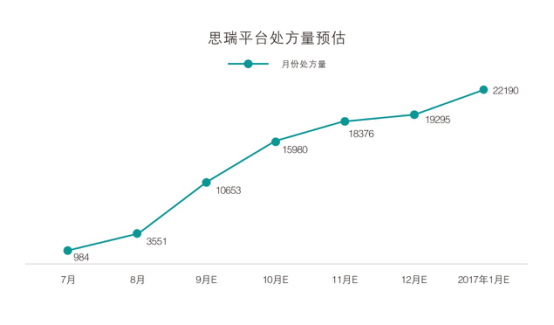
The most typical chain pharmacies are fromAugust 2016Collaboration, according to SiruiData shows that the volume of electronic prescriptions has demonstrated a monthly198% growth, with continued expansion; prescription volume rapidly increased from 1,600 to 4,773 within half a month.
By late September, the daily number of consultations had exceeded 2,000, with an average of more than 1,500 prescriptions issued per day. As the volume of electronic prescriptions increased, sales of prescription drugs also showed a rapid growth trend.
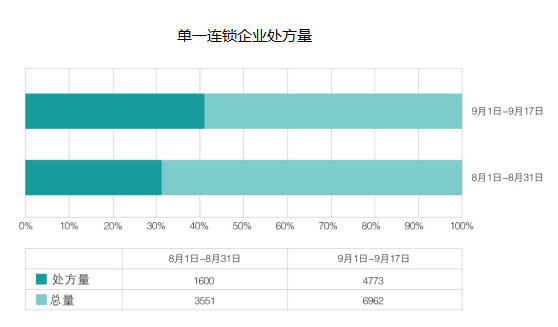
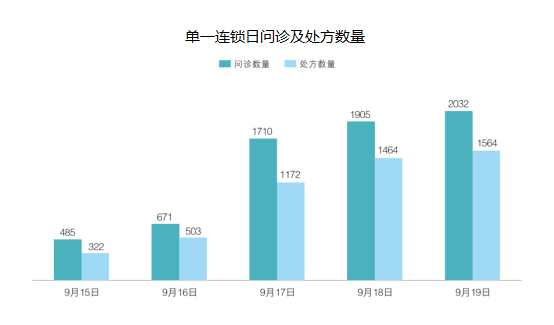
The legalization of e-prescriptions has fully activated daily organic prescription sales in pharmacies, thereby empowering pharmacy staff to drive incremental growth. By overcoming the bottleneck of insufficient prescription sources for prescription drugs in retail channels, e-prescriptions enable patients to consult with physicians and purchase prescription medications directly at nearby pharmacies. This creates a new pathway for expanding prescription drug sales in pharmacies, establishing a "third market" for prescription drug retail based on e-prescriptions—distinct from hospital-issued prescriptions and prescriptions dispensed at pharmacies affiliated with hospital outflow programs.
The scarcity of medical resources is a long-standing, fundamental issue. However, the emergence of internet hospitals can significantly improve the utilization efficiency and equitable distribution of these resources. Internet hospitals can manage common minor ailments, thereby effectively reducing the strain on medical resources caused by overcrowded registration queues at physical hospitals. Furthermore, they address the critical shortage of medical services in remote areas—where patients lack access to care—thus tackling the root cause of the difficulty in seeking medical attention.
According to the research and analysis conducted by Sirui Pharmacy Cloud Hospital, the customer base of internet hospitals can be primarily categorized into the following four major groups:
1. Patients for follow-up visits;
2. Patients with chronic diseases (hypertension, diabetes);
3. Patients with a small number of complex and refractory conditions who are unsuitable for long-distance transfer and require telemedicine intervention;
4. Patients with minor respiratory and other conditions.
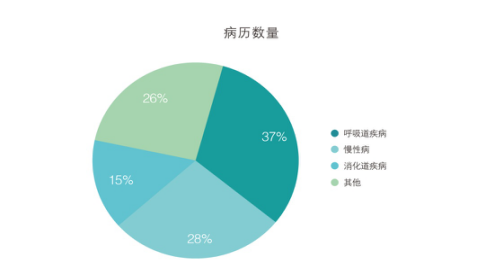
Based on an analysis of 6,000 selected patient prescription records, 37% of prescriptions were for respiratory diseases (with 18% being follow-up prescriptions). Among patients with chronic diseases, who accounted for 28% of the total (with follow-up prescriptions comprising as high as 40%), internet hospitals play a significant role in facilitating the flow of prescriptions from hospitals to pharmacies.
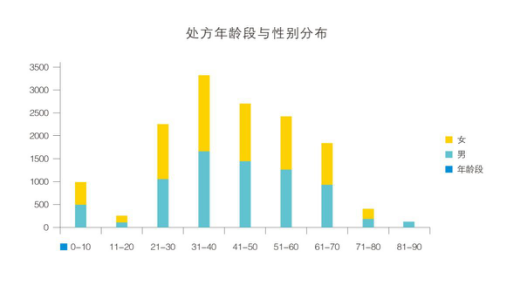
In terms of age and gender, the patient population is predominantly aged 30 to 50 years, followed by those aged 50 to 70 years. The overall male-to-female ratio is approximately 1:1; however, among patients aged 30 to 40 years and 50 to 60 years, females outnumber males.
Internet hospitals will generate substantial demand for distributed care delivery points. The big data derived from online consultations will gradually drive a transformation in the dynamics of the pharmaceutical supply and demand market, leading to a development model in which retail pharmacy chains propel the growth of prescription drug manufacturers.
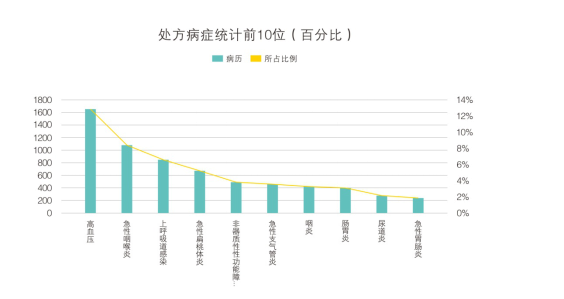
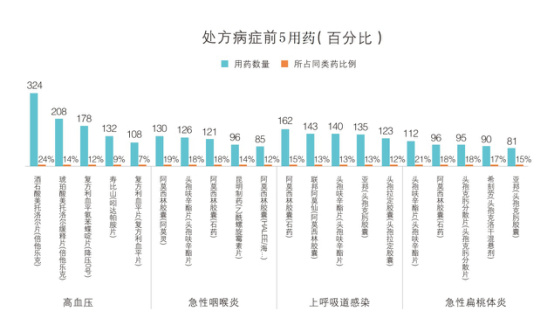
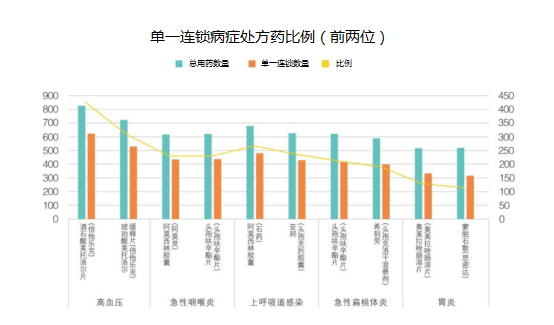
Analysis of 13,500 electronic prescriptions from a single chain pharmacy revealed that the most prevalent conditions were hypertension and respiratory infections. Hypertension accounted for 13% of cases, while acute pharyngitis and upper respiratory tract infections (URTIs) accounted for 8% and 7%, respectively, with the prevalence of other conditions decreasing sequentially. Among the top five medications used to treat hypertension, metoprolol tartrate tablets (Betaloc) were the most predominant, representing 24% of the medications prescribed for this condition. For acute pharyngitis and URTIs, amoxicillin capsules were the primary treatment, accounting for 19% and 15% of the medications prescribed for these respective conditions. Cefuroxime axetil was the main medication for acute tonsillitis, comprising 21% of the treatments for this condition. In summary, antihypertensive and anti-infective drugs collectively held the largest share of the prescription drug market. As shown in the figure below:
As the volume of electronic prescriptions continues to grow, they can also be applied to chronic disease management. For instance, by leveraging data analytics technologies to study chronic non-communicable diseases (NCDs) such as cerebrovascular diseases, heart diseases, and diabetes, it is possible to identify patterns in the incidence and medication usage of common chronic conditions, scientifically evaluate the efficacy of various treatment regimens, and establish predictive models for these diseases. This will gradually enable pharmacies to directly drive pharmaceutical production volumes. By combining comprehensive analysis of existing detailed data, timely insights into both new and established drugs can be obtained. Early warning systems for adverse drug reactions can be implemented, which significantly aids pharmaceutical companies in drug research and development as well as in improving certain drug ingredients.
Since Sirui and Wuzhen Internet Hospital jointly launched their pharmacy promotion partnership, the volume of electronic prescriptions has been increasing at a monthly rate of 200%. It is projected that as Sirui expands its network coverage across pharmacies in China, the daily average growth rate of electronic prescriptions is expected to exceed 260%.
The large-scale aggregation of electronic prescription data offers multifaceted benefits. For patients, it facilitates a clearer understanding of their health status and treatment medication processes. For pharmacies, the transparency regarding medications and corresponding indications enables better oversight of medical sales, more rational procurement planning, and improved patient guidance and pharmaceutical care services. For pharmaceutical companies, clear sales information from terminal retail channels supports data-driven analysis of the retail market.
As the third market for prescription drugs takes shape in the future, Sirui, serving as a conduit between chain pharmacies and internet healthcare providers, will control the inflow of electronic prescriptions. This position will enable comprehensive mastery of prescription big data, allowing Sirui to provide data support and services to both pharmaceutical manufacturers and chain pharmacies.
(At the interviewer’s request, “Single Chain Pharmacy” appearing in the article is a pseudonym.)