E-Health Kangtai: Pioneering Ambulatory Blood Pressure Monitoring and Personalized Hypertension-Specific Insurance to Fill Market Gaps
In September 2016, at the “2016 Chinese Hypertension Annual Conference and the 18th International Symposium on Hypertension and Related Diseases” held in Guangzhou, Yijia Kangtai and Yiyun Kangtai launched a personalized medical service financial solution targeted at hospitals and hypertensive patients. In collaboration with ZhongAn Insurance and China Merchants Haida, they introduced their second hypertension-specific insurance product, “Wenyawuyou (Worry-Free Edition).” This policy covers complications arising from hypertension, such as sequelae of stroke, end-stage renal disease (also known as uremic stage of chronic renal failure), and acute myocardial infarction. It also provides 24-hour medical-grade monitoring for hypertension, offering coverage of up to RMB 100,000 for individuals aged up to 65. By allowing older hypertensive patients to obtain coverage, this product fills a gap in China’s personalized insurance market for hypertension.
Yiyun Kangtai & Yijia Kangtai, established in 2014 in Qianhai, Shenzhen, is committed to becoming a comprehensive health service provider, promoting the development of health big data to serve everyone’s healthy lifestyle. Its current products and services include remote monitoring, analysis, and diagnostic services for vital signs (such as ambulatory blood pressure, ambulatory ECG, and blood lipids), gene sequencing services, appointment and triage services, and commercial medical insurance. Its medical products have served clients across various industries, including hospitals, insurance, telecommunications, securities, and banking.
Gao Xingde, the company’s founder, graduated from South China University of Technology. He previously served as Assistant to the General Manager at 160.com, where he oversaw product, operations, and marketing. The core members of the company’s team come from industries such as traditional medical devices, internet, telecommunications carriers, and insurance.After securing RMB 1 million in angel funding in 2015, “Wenya Wuyou” was launched. The company is currently undergoing a new round of financing, with specific details undisclosed.
According to statistics, there are 310 million patients with hypertension in China, and each patient should have their blood pressure measured at least once a year. A survey found that approximately 40% of people measure their blood pressure at home. The public mainly has the following three misconceptions regarding home blood pressure measurement:
First, the blood pressure monitors used are inaccurate. Studies have found that upper-arm electronic blood pressure monitors offer the highest accuracy; however, a significant portion of the population uses wrist-type or mercury sphygmomanometers. Mercury sphygmomanometers require high technical proficiency for proper operation, making it difficult for the general public to achieve accurate measurements at home.
Second, incorrect measurement techniques. Many individuals are unclear about the optimal frequency (e.g., how many times per week), the best time of day for measurement, and key precautions to observe, which compromises the effectiveness and clinical significance of blood pressure monitoring.
Third, blood pressure readings are inaccurately reported. Statistics show that approximately 80% of patients rely on memory to report their blood pressure values to physicians, which is highly likely to lead to errors.
Meanwhile, office-based blood pressure measurements are subject to the “white-coat effect,” some cases of hypertension are masked, the misdiagnosis rate reaches 35%, and timely documentation is often lacking. These factors impede physicians from making accurate diagnoses.

Ambulatory Blood Pressure Monitor
One of the core services offered by Yiplus Kangtai is medical-grade 24-hour ambulatory blood pressure monitoring (ABPM) with professional guidance. This service plays a critical role in diagnosing white-coat hypertension, masked hypertension, resistant hypertension, and paroxysmal hypertension or hypotension, while also assessing the severity of elevated blood pressure. It enables a comprehensive understanding of patients’ blood pressure fluctuations, thereby facilitating more targeted pharmacological treatment.
Ambulatory blood pressure monitoring (ABPM) has numerous indications, including cases where office blood pressure measurements are disproportionate to target organ damage, symptoms suggesting significant blood pressure variability, labile hypertension making it difficult for physicians to determine the need for treatment, symptoms potentially strongly associated with elevated blood pressure, and participants in clinical research. Additionally, ABPM is suitable for patients exhibiting marked blood pressure variability within or across days, those with low cardiovascular risk among clinic-diagnosed hypertensive patients, individuals presenting symptoms suggestive of hypotension, and patients with resistant hypertension.
The advantages of ambulatory blood pressure monitoring (ABPM) are mainly threefold: First, blood pressure is inherently variable, fluctuating not only from day to day but also continuously throughout the day. Second, blood pressure measurements taken by physicians in clinical settings often trigger an "alertness response," leading to elevated readings known as the "white-coat effect"; ABPM can avoid this phenomenon. Third, the duration of elevated blood pressure contributes more significantly to target organ damage than the absolute level of blood pressure elevation, and ABPM can provide data on the duration of such elevations.
Unlike other blood pressure monitors, ambulatory blood pressure monitoring (ABPM) does not require the patient to remain supine during measurement. Patients should maintain their normal daily activities while avoiding strenuous exercise. ABPM is not a real-time measurement; instead, it operates on preset time intervals. Typically, measurements are taken every 30 minutes, but the interval can be adjusted as needed, such as every 15 minutes during the day and every 30 minutes at night.
Following the measurement, a trend graph depicting 24-hour blood pressure variations over time is presented to the user. This graph divides the day into 24 one-hour intervals, calculates the mean systolic and diastolic blood pressure for each interval, and plots these values to illustrate the temporal trends in blood pressure over the 24-hour period. This provides valuable auxiliary evidence for clinical diagnosis.
Gao Xingde, founder of Yijia Kangtai, told VCBeat (WeChat ID: vcbeat) that the company’s partner is Japan’s A&D Company, a world-class manufacturer of diagnostic products. The signals collected by A&D’s sensor equipment are highly accurate, and the measurement data are reliable. Therefore, Gao Xingde expressed strong confidence in their ambulatory blood pressure monitors.
Generally, commercial insurance imposes inherent restrictions on medical and critical illness coverage. Specifically, there are customer eligibility criteria; for clients over the age of 50, premiums are prohibitively high, restrictions are numerous, and pass rates for medical examinations remain low. Consequently, medical and critical illness insurance products tailored to older adults are scarce in the market.
Yijia Kangtai has launched its second hypertension-specific insurance product, “Stable Pressure Worry-Free (Worry-Free Edition),” which is also underpinned by confidence in ambulatory blood pressure monitors. After purchasing the policy, users are required to undergo 24-hour medical-grade ambulatory blood pressure monitoring at designated hospitals to establish a hypertension metric profile. Meanwhile, Yijia Kangtai also provides genetic testing services to predict the likelihood of complications from a genetic perspective.
Physicians provide health guidance based on patients’ blood pressure readings. Patients engage in self-management of their health by leveraging the medical resources and services offered through the platform, which integrates prevention, diagnosis, and treatment to help reduce the likelihood of complications. With real-time monitoring of users’ blood pressure, insurance companies can confidently provide insurance services.
Yijia Kangtai provides equipment leasing services to hospitals, with revenue from each test shared between Yijia Kangtai and the hospital. Additionally, each purchase of commercial insurance requires the user to undergo a 24-hour ambulatory blood pressure monitoring at a hospital, with the resulting revenue distributed among Yijia Kangtai, the insurance company, and the hospital. Meanwhile, Yijia Kangtai operates its own remote ambulatory blood pressure management cloud platform, which houses blood pressure data for all users; this extensive dataset, in turn, provides foundational support for the company’s business operations.
When discussing core competitiveness, founder Gao Xingde told VCBeat that in addition to the 24-hour ambulatory blood pressure monitor, the company has also established a substantial partner ecosystem. Yijia Kangtai collaborates with medical device manufacturers, and its equipment is currently deployed in 150 large hospitals, serving approximately one million users. The company provides ambulatory blood pressure monitoring data to these hospitals and physicians, while offering chronic disease management services to patients. Alongside these medical services, Yijia Kangtai partners with insurance companies to provide users with customized commercial health insurance products.
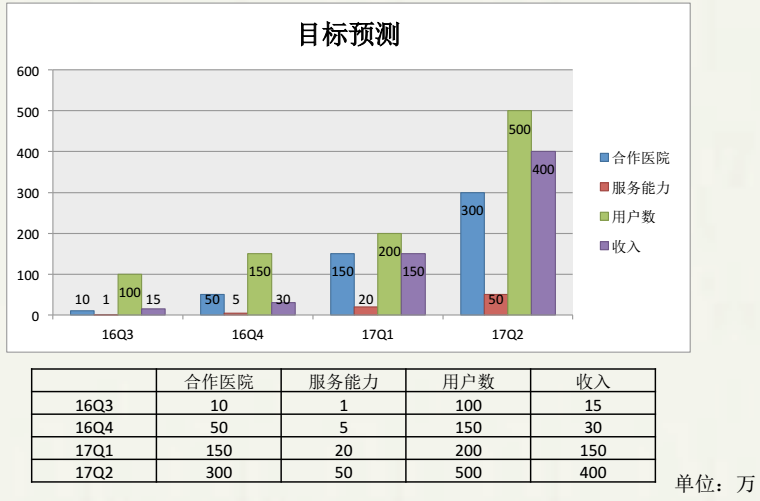
Regarding future development, Gao Xingde projects that their user base will reach 1.5 million by the end of 2016, with business coverage extending to provinces and cities including Guangzhou, Guizhou, Shanghai, Shaanxi, and Anhui. The figure below outlines their future plans: