

Ruihua Xinkang: Pioneering China's Cardiac Rehabilitation Market with Backing from Legend Capital
Data show that the number of cardiac surgeries performed nationwide in China was 90,812 in 2004 and has risen steadily each year since, reaching 207,881 cases in 2013. However, a considerable number of hospitals remain in the early stages of developing their cardiac surgery programs or suffer from low patient volumes. Meanwhile, eight hospitals across the country perform more than 3,000 cardiac surgeries annually, with Beijing Fuwai Hospital and Beijing Anzhen Hospital each exceeding 10,000 procedures per year. The severe overcapacity at these top-tier hospitals conceals a vast market for cardiac rehabilitation—this is precisely the starting point for Ruihua XinKang’s business. Its flagship project, China’s first international cardiac rehabilitation center, is scheduled to officially open in Beijing this October.
A research report published in 2015 in the authoritative medical journal Journal of the American College of Cardiology stated that three-quarters of Chinese people have poor cardiovascular health. The report was based on cardiovascular health data from more than 96,000 Chinese adults aged 20 years and older.
Clinical studies organized and implemented by the National Center for Cardiovascular Diseases in collaboration with Fuwai Hospital have shown that, in China, the number of hospitalized patients with cardiovascular disease increased more than fourfold over the decade from 2001 to 2010.
The high incidence of cardiovascular disease is also reflected in the year-on-year increase in the number of cardiac surgeries performed in China. According to data published in 2014 by the Chinese Journal of Extracorporeal Circulation, the national volume of cardiac surgeries rose from 90,812 cases in 2004 to 201,881 cases in 2013, representing an average annual growth rate of 9.64%, with a growth rate of 21.33% recorded in 2008 (Note: The number of hospitals participating in the data analysis was 484 in 2004, and stabilized at approximately 750 from 2011 onward).
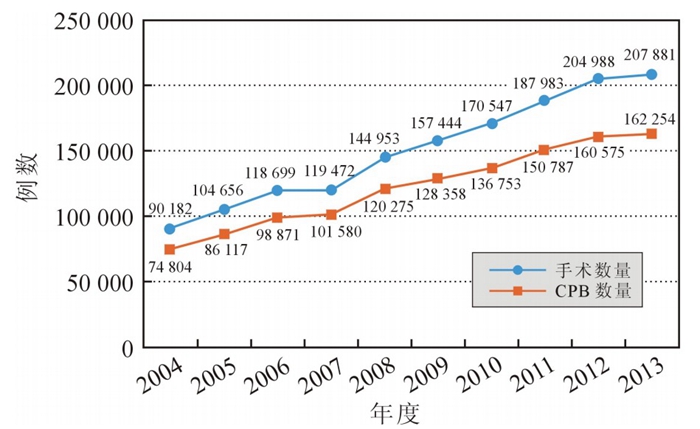
However, the number of hospitals in China capable of performing cardiac surgery remains limited. Among the 750 hospitals included in the statistics, two-thirds perform fewer than 200 cardiac surgeries annually, and more than half perform fewer than 50 congenital heart disease surgeries.
However, on the other hand, a few top-tier hospitals are severely overburdened; for instance, Beijing Fuwai Hospital and Beijing Anzhen Hospital each perform more than 10,000 cardiac surgeries annually.
According to Lu Ji’en, founder of Ruihua Xinkang, major hospitals such as Fuwai Hospital and Anzhen Hospital have a clear need for patient triage. They strongly hope that professional institutions can take on pre- and post-operative rehabilitation services, thereby shortening patients’ hospital stays at these large medical centers. This approach would not only enhance patients’ rehabilitation experience and reduce their costs but also help large hospitals improve the utilization efficiency of their medical resources.
It is worth noting that data show the average length of hospital stay in China was 9.6 days in 2014, nearly three days longer than the average for countries in the Organisation for Economic Co-operation and Development (OECD). One contributing factor is the lack of specialized ancillary rehabilitation institutions in China, which has led major hospitals to assume excessive responsibilities for all aspects of patient care, thereby resulting in prolonged hospital stays.
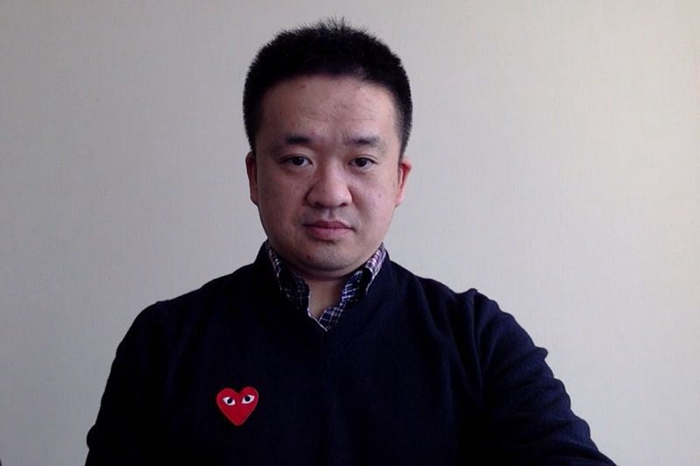
Lu Jien, Founder of Ruihua Xinkang
Lu Jien stated that his core team has been introducing the most advanced overseas cardiac rehabilitation knowledge and related devices into China since 2009, with their clients being the cardiovascular departments of domestic hospitals.
Through years of professional engagement with these hospitals and experts, Lu Ji’en clearly recognized the potential for optimizing cardiac surgery practices in China. In particular, given the near-total absence of a post-cardiac surgery rehabilitation market domestically, he and his team began planning a specialized cardiac rehabilitation center in 2013, focusing on addressing rehabilitation needs for Chinese cardiovascular patients during the preoperative phase, after hospital discharge, and throughout chronic disease management.
In fact, cardiac rehabilitation has become a fairly mature industry in developed countries. It has been developing for over 60 years in Europe and the United States, and for more than 50 years in Japan; it is covered by national health insurance systems in these regions, and basic education on cardiac rehabilitation has achieved widespread popularity.
The target population for cardiac rehabilitation includes not only patients with heart disease and special groups (such as military personnel and athletes) but also healthy individuals. For cardiac patients, postoperative cardiac rehabilitation can reduce postoperative mortality by 26%. In China, there are 1,000 sudden cardiac deaths every day (some of whom have no history of heart disease and are considered healthy by the general public), averaging one case every eight minutes. If individuals proactively engage in preventive cardiac rehabilitation—for example, Ruihua Xin Kang offers cardiac function assessments and provides appropriate recommendations—the incidence rate can be reduced by 20%.
However, given the current realities in China, the market for preventive cardiac rehabilitation among healthy individuals may require more time to cultivate. Ruihua Cardiac Rehabilitation has already established the country’s first specialized cardiac rehabilitation center—the Beijing Ruihua Cardiac Rehabilitation Clinic—with over 90% of its patients expected to be post-cardiac surgery cases.
Cardiac surgery is highly complex and challenging; therefore, the rehabilitation services associated with it are also technically demanding.
According to Lu Ji’en, during the previous process of introducing advanced foreign medical diagnostic and treatment technologies and concepts, he also translated over one hundred academic papers on cardiac rehabilitation from abroad, participated in more than 20 international cardiac rehabilitation academic conferences, and established close collaborations with renowned cardiac rehabilitation institutions, cardiac rehabilitation societies, and distinguished experts and scholars from Germany, Sweden, Japan, and other countries. These partnerships facilitated multiple specialized exchanges and visits for medical technologies. The “Ruihua International Cardiac Rehabilitation Research Center,” currently in its preparatory phase, will introduce and absorb internationally advanced concepts and medical technologies. By integrating China’s national conditions and ethnic characteristics, it aims to research and develop cardiac rehabilitation medical technologies specifically tailored for the Chinese population, and to establish China’s own cardiac rehabilitation standards based on data analysis. In terms of software, a customized development process spanning nearly two years resulted in the creation of the first personal cardiac rehabilitation management system (including an APP) and the first hospital-based cardiac rehabilitation management system in China.
For instance, Ruihua Xinkang develops comprehensive rehabilitation plans for patients, encompassing five key components: medication prescriptions, exercise prescriptions, nutritional prescriptions, psychological prescriptions, and lifestyle prescriptions. Taking the exercise prescription as an example, many patients or their families believe that extensive rest is necessary; however, this approach is not scientifically supported. Generally, patients are encouraged to get out of bed and engage in mobility activities within 3 to 5 days after surgery.
Furthermore, some individuals have hereditary or congenital heart disease due to genetic factors, while others develop it due to acquired factors, such as diet. Therefore, a scientific diet is also crucial for cardiac rehabilitation.
Looking ahead, Lu Ji’en stated that the company has already secured investment from Legend Capital and plans to establish a chain of cardiac rehabilitation centers in first-tier cities within five years, with an expected scale of approximately 10 facilities.
Furthermore, the company will also embark on the research and development of medical products by establishing China’s first International Cardiac Rehabilitation R&D Center. It will focus on developing intelligent cardiac rehabilitation system products and personal cardiac rehabilitation system products, thereby creating a comprehensive, automated implementation process for cardiac rehabilitation that spans from assessment and evaluation to exercise prescription and rehabilitation training.
Meanwhile, Ruihua Xinkang will also venture into medical education by establishing China’s first cardiac rehabilitation training institute, building its own professional medical training and teaching center, and collaborating with other healthcare institutions to set up medical training and teaching bases.
Furthermore, Ruihua Xinkang also plans to enter the fields of medical tourism, convalescent rehabilitation, and geriatric rehabilitation at an opportune time, launching businesses such as international cardiac rehabilitation resource sharing (medical tourism, international consultations) and convalescent rehabilitation in distinctive scenic areas.