2016 Artificial Intelligence + Healthcare Innovation Trends Report I: AI Strategies of Tech Giants
A Historic Moment in the AI World: The Five Major U.S. Tech Giants Establish the World’s Most Powerful AI Organization
On the afternoon of September 28, the most significant news from the artificial intelligence (AI) community came from the United States: Google, Facebook, Amazon, IBM, and Microsoft officially announced the establishment of a non-profit organization named the Partnership on AI.
The organization’s full name is the Partnership on Artificial Intelligence to Benefit People and Society, abbreviated as the Partnership on AI. It aims to research and establish best technical practices in the field of artificial intelligence, promote public understanding of AI, and serve as an open platform for discussion and engagement regarding AI itself and its impacts, thereby ensuring that artificial intelligence develops in a safe, transparent, and responsible manner in the future.
This marks an unprecedented collaboration among tech giants! In addition to the resident representatives from these five major companies, the Partnership on AI will invite academics, other non-profit organizations, and policy and ethics experts to serve on its council, participating jointly in discussions. As the founding members of the organization, the five companies will convene regularly to discuss the development of artificial intelligence, akin to the “Five Permanent Members” of the AI world.
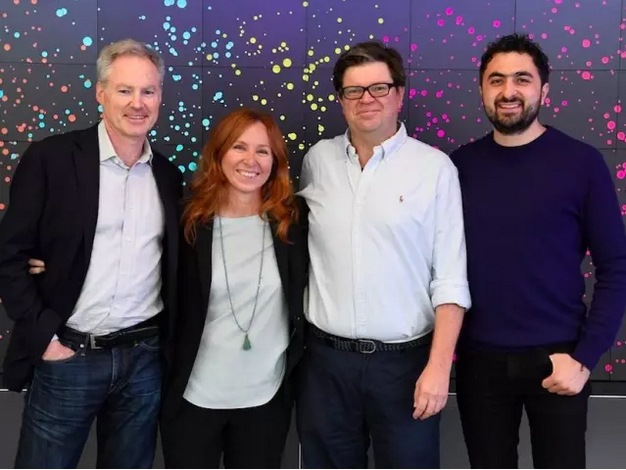
Some of the members attending the first AI Partnership meeting were Eric Horvitz, Director of Microsoft Research Redmond; Francesca Rossi, an ethics researcher at IBM; Yann LeCun, head of Facebook’s AI Lab; and Mustafa Suleyman, co-founder of Google DeepMind.
Following the conference, AI leaders from various companies took to Twitter to share this significant announcement. They stated that this collaboration would facilitate advancements in AI research and provide valuable reference information for other stakeholders in the field, helping them better develop their own systems.
Mustafa Suleyman, co-founder of DeepMind—the Google AI lab behind AlphaGo—stated on Twitter that tech companies should begin to increase public engagement in AI research and development to foster a more comprehensive understanding of artificial intelligence. “All our efforts in AI are driven by our belief in its power to change the world, and the extent of AI’s positive impact largely depends on whether the public can participate.”
Yann LeCun, head of Facebook’s AI Lab, and Ralf Herbrich, head of machine learning at Amazon, stated that AI has the potential to improve the living standards of millions of people and emphasized its critical significance for the future of human society.
“As researchers in this field, we take the public’s trust in us very seriously and are striving to ensure that AI research and development are grounded in the maximization of human values,” said LeCun. “We hope that by collaborating with other companies in the industry and sharing our latest findings, we can achieve new breakthroughs and progress every day—efforts that extend beyond Facebook’s internal operations to benefit the entire AI research community. We believe that by working together with other leading companies in this direction and exchanging our perspectives, we can drive the entire AI field toward more responsible development.”
Francesca Rossi, an ethics researcher at IBM, stated: “For enterprises, AI means greater capabilities. For society to benefit from AI, it must first trust AI.”
From healthcare, education, and manufacturing to smart homes and transportation, the development of artificial intelligence has improved human living standards in various aspects. However, numerous theories regarding the threats posed by AI have emerged among the public today. Prominent figures such as renowned scientist Stephen Hawking and tech mogul Elon Musk have warned that AI could ultimately lead to the demise of humanity. Although whether AI will indeed end human existence remains speculative, incidents such as Microsoft’s AI chatbot Tay—whose online presence lasted less than 24 hours before it was manipulated into spouting profanities and racist remarks—have heightened concerns. Such events have led a growing number of people to worry about potential hidden dangers and adverse impacts AI may pose to human society. In response, companies like Microsoft and IBM have established AI ethics advisory committees. One of the key future priorities of the “Partnership on AI” is to address and change the prevailing public perception of AI as a threat.
Through the AI Partnership, these U.S. tech giants will conduct AI research in the following areas:
Ethical Standards, Fairness, and Inclusivity;
Transparency, Personal Privacy, and Interoperability;
Collaboration between humans and AI systems;
AI’s Trustworthiness, Reliability, and Activity Level.
The AI Collaboration Organization has established the following principles:
We will strive to ensure that AI technology benefits more people.
We will conduct public science education while actively soliciting feedback from the general public and engaged stakeholders, promptly reporting our research progress to them, and addressing their concerns.
We will commit to open research on the ethical, social, economic, and legal dimensions of AI.
We believe that the research and development of AI cannot be achieved without the participation and contributions of various stakeholders.
We will incorporate stakeholders from the business sector into the organization to ensure that concerns and opportunities in specific areas are understood and addressed.
We are committed to maximizing the benefits of AI while addressing potential threats and challenges.
Given the current fervor surrounding artificial intelligence (AI) and the strategic initiatives undertaken by industry giants, we urgently recognize that AI is poised to exert a distinctive impact on healthcare. Therefore, VCBeat Research has decided to take action, aiming to clarify the global development and evolution of AI in order to prepare for the impending “New Era.”
Over the past year or so, VCBeat has reported on dozens of pioneering artificial intelligence companies.You may have already encountered information on “AI + Healthcare” through various channels, such as the VCBeat website, its WeChat account, and presentations at certain forums. However, this marks the first truly systematic release of such information.
This may be the most comprehensive industry report on artificial intelligence in the healthcare and medical sector.
VCBeat’s “2016 AI Healthcare Innovation Trends Report” primarily focuses on artificial intelligence startups in the global healthcare sector. A total of 74 startups are included in this report’s statistics (continuously updated). These startups are distributed across 11 fields: health management, wearable devices, medical imaging, risk management, nutrition, emergency room/hospital management, biotechnology, drug discovery, mental health, pathology, and virtual assistants.
This report is divided into five sections, analyzing eight key domains. To provide a comprehensive understanding of the industry landscape, the scope of research also covers the artificial intelligence strategies of major internet companies, including Google, Facebook, IBM, Microsoft, Intel, Yahoo, Salesforce, Amazon, Alibaba, Baidu, and Tencent (excluding the field of medical robotics).
The research process placed equal emphasis on statistical data analysis and interviews. The former was primarily based on the VCBeat database, while interviewees included domestic AI startups in the healthcare sector, venture capital firms, university research institutes, hospitals, as well as Baidu, Tencent, and Alibaba.
The structure of the public version of the report is as follows:
Article 1: Tech Giants' AI Strategic Layout
Article 2: A Detailed Analysis of IBM Watson’s AI Applications in Healthcare
Part III: Data Analysis of Global AI Venture Capital Investment in Healthcare, 2011–2016
Part IV: What Can AI Achieve in Healthcare? (Part 1)
Part 5: What Can AI Do for Healthcare? (Part II)
Here is the first article:
As deep learning technology matures, artificial intelligence (AI) is gradually transitioning from a cutting-edge innovation to a widely adopted tool. The public’s most profound encounter with AI this year has been the Go match between AlphaGo and Lee Sedol in early 2016; Lee Sedol’s decisive defeat offered the general public an initial glimpse into the power of artificial intelligence. Some may ask: Is a computer capable of playing Go truly artificial intelligence? The answer is no. For instance, existing computers and smartphones have long featured games that allow users to compete against them in board games, and these products are often marketed with the label “Smart.” However, this so-called “smart” capability does not constitute genuine intelligence. True intelligence—“Intelligent”—refers to a computer’s ability to perform complex tasks that previously relied solely on human wisdom, automating activities associated with human cognition, such as decision-making, problem-solving, and learning.
The match between AlphaGo and humans is not what we traditionally understand as a video game,The level of video games will never improve,AlphaGo possesses the most critical artificial intelligence capability: “deep learning.” It incorporates two deep neural networks: the Value Network and the Policy Network. The Value Network evaluates board positions, while the Policy Network selects moves. These neural network models are trained using a novel approach that combines move sequences learned from human expert games with reinforcement learning through self-play. In other words, the integration of artificial intelligence enables AlphaGo to continuously improve its Go-playing strength through learning.
The technical applications of artificial intelligence are mainly in the following areas:
Natural language processing (including speech and semantic recognition, and machine translation), computer vision (image recognition), knowledge representation, automated reasoning (including planning and decision-making), machine learning, and robotics. Categorized by technology type, these can be divided into two groups: perceptual input, and learning and training. Computers acquire audio-visual perceptual input through methods such as speech recognition, image recognition, knowledge base retrieval, human-computer interaction, and physical sensing. They then learn from big data to develop a “brain” capable of decision-making and creativity.
From the PC era of the 1980s and 1990s to the internet age, we have witnessed an explosion of information and the decentralization of information carriers. As online information access shifted from PCs to mobile devices, the Internet of Everything became a trend; however, technological limitations hindered the mobile internet from spawning more new applications and business models. Today, artificial intelligence has emerged as the most exciting and anticipated technology of our time, poised to become the focal point of IT industry development over the next decade and beyond.
The concept of artificial intelligence actually gained significant traction in the 1980s, but technological limitations in both hardware and software led to a prolonged period of stagnation. Today, advances in four key catalysts—massive parallel computing, big data, deep learning algorithms, and neuromorphic chips—coupled with reduced computational costs, have propelled AI technology forward at an unprecedented pace.
Internet of Things—The Internet of Things (IoT) provides the interfaces and means for computers to perceive and control the physical world, responsible for data acquisition, storage, analysis, transmission, interaction, control, and more. Cameras capture vast amounts of images and videos of the world, microphones record speech and sounds, and various sensors digitize the phenomena they detect. These sensors, akin to human sensory organs, serve as the data input for intelligent systems and the mechanism by which they perceive the world. The proliferation of smart devices has further accelerated the flourishing of the sensor industry. These extensions into various domains of the real world form the foundation for machine perception, which is one of the prerequisites for achieving intelligence.
Massive Parallel Computing——The human brain contains hundreds of billions of neurons, each connected to other neurons through thousands of synapses, forming an extremely complex and vast neural network that transmits signals in a distributed and concurrent manner. This ultra-large-scale parallel computing architecture enables the human brain to far surpass computers, making it the most powerful information processing system in the world. In recent years, large-scale parallel computing based on GPUs (Graphics Processing Units) has emerged rapidly, offering parallel computing capabilities far exceeding those of CPUs.
From the perspective of processor computation methods, CPU computing employs a serial architecture based on the x86 instruction set, which is suitable for completing a computational task as quickly as possible.GPUs were originally designed to process millions of pixels in 3D images, featuring a greater number of cores to handle more computational tasks. Consequently, GPUs inherently possess the capability to perform large-scale parallel computing. The emergence of cloud computing and the widespread adoption of GPUs have made centralized data processing capabilities more powerful than ever before.
Big Data—According to statistics, the total volume of global data generated in 2015 was more than 20 times that of a decade earlier. This massive amount of data has provided an excellent foundation for the learning and development of artificial intelligence. Machine learning is the cornerstone of artificial intelligence; data and historical experience serve as the textbooks from which AI learns, thereby optimizing computer processing performance.
Deep Learning Algorithms—Finally, this is the most critical condition for the advancement of artificial intelligence, as well as the most advanced and widely applied core technology in current AI: deep neural networks (deep learning algorithms). In 2006, Professor Geoffrey Hinton published his paper “A Fast Learning Algorithm for Deep Belief Nets.” The efficient layer-by-layer training algorithm for deep neural networks proposed in this paper made it possible to train neural network models under the computational constraints of that time. Meanwhile, the excellent experimental results achieved through deep neural network models prompted renewed interest in artificial intelligence. Subsequently, deep neural network models became a key frontier in the field of AI, and deep learning algorithm models underwent a period of rapid iteration. Various new algorithmic models were continuously proposed, including Deep Belief Networks, Sparse Coding, Recursive Neural Networks, and Convolutional Neural Networks. Among these, Convolutional Neural Networks (CNNs) have become the most prominent algorithmic model for image recognition.
Technological advancements have significantly accelerated the development of artificial intelligence in recent years. IT giants have markedly increased their investments in AI, both by recruiting top-tier talent and by intensifying investment activities through frequent mergers and acquisitions, signaling that the springtime of AI has arrived.
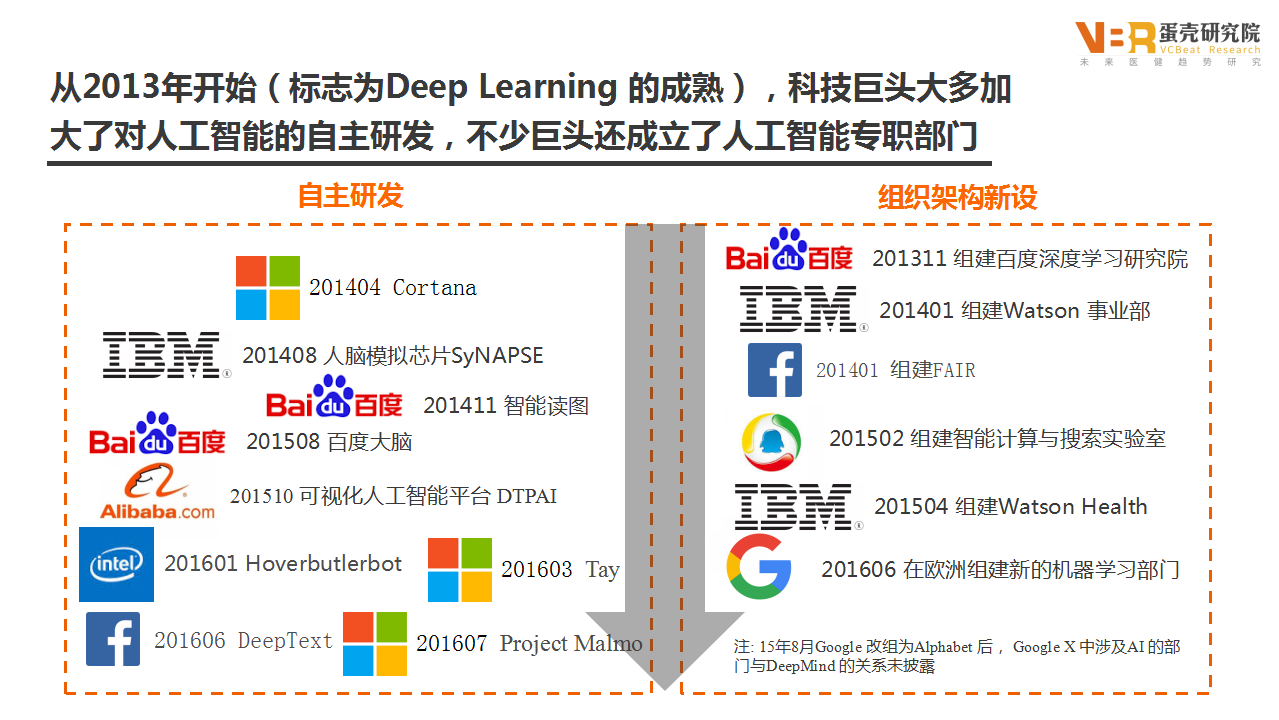
In recent years, tech giants have intensified their strategic investments in artificial intelligence. Through substantial R&D spending, organizational restructuring, continuous mergers and acquisitions, and extensive open-source initiatives, these industry leaders are building their respective AI ecosystems. In the future, AI will no longer be a cutting-edge technology but will become ubiquitous infrastructure. For AI startups, it is essential to identify areas of synergy with these giants while avoiding direct confrontation.
IBM
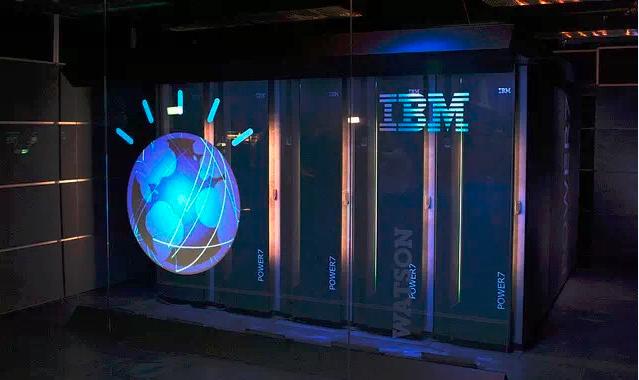
IBM Watson is a computer system composed of 90 IBM servers and 360 processor chips, with a volume equivalent to ten standard refrigerators. It features 15 TB of memory, 2,880 processors, and a computing speed of 80 trillion operations per second. The system has since been miniaturized to the size of four pizza boxes, with its performance improved by 240%. Watson stores millions of documents, including books, news articles, film scripts, dictionaries, literary anthologies, and the World Book Encyclopedia. Developed based on IBM’s “DeepQA” (Deep Open-Domain Question Answering System Engineering) technology, Watson leverages this framework to read millions of pages of text data, generate candidate answers using advanced natural language processing techniques, and evaluate these candidates against multiple criteria. The IBM R&D team has developed over 100 algorithms for Watson that can parse questions, retrieve millions of pieces of information, and filter and synthesize the results into “answers” expressed in human language—all within three seconds.
Industrial Layout: IBM began developing Watson in 2006 and rose to prominence in February 2011 by competing on the quiz show *Jeopardy!*. Initially, IBM aimed to position Watson as a supercharged version of Siri, primarily to drive hardware sales. However, it later pivoted to become a cognitive computing platform for business, with applications in the healthcare sector launching in August 2011. In oncology, for instance, Watson has incorporated data from 42 medical journals in cancer research, over 600,000 pieces of clinical evidence from trials, and two million pages of text. Within seconds, Watson can sift through 1.5 million patient records spanning decades of cancer treatment history—including medical histories and treatment outcomes—to provide physicians with evidence-based treatment options. Currently, the top three hospitals in cancer care are utilizing Watson, which officially entered the Chinese market in August this year.
In March 2012, Watson was first applied in the financial sector, with Citigroup becoming its inaugural financial client. Watson assisted Citigroup in analyzing user needs, processing financial, economic, and customer data, and enabling personalization for digital banking. It also helped financial institutions identify risks, returns, and customer demands that industry experts might otherwise overlook.
Hardware: SyNAPSE Neuromorphic Chip

The SyNAPSE (Systems of Neuromorphic Adaptive Plastic Scalable Electronics) chip contains 1 million programmable neurons and 256 million programmable synapses, capable of performing 46 billion synaptic operations per joule of energy consumed. During real-time biological computations, the chip’s power consumption is as low as 70 milliwatts (mW), which is several orders of magnitude lower than that of modern microprocessors.
Google-Alphabet

Google has benefited from a series of AI-related acquisitions. In March 2013, Google secured Professor Geoffrey Hinton, the pioneer of deep learning technology, by acquiring DNNresearch at a substantial premium. In early 2014, Google acquired DeepMind, a deep learning algorithm company known for developing AlphaGo, in a deal valued at $400 million. DeepMind’s founder, Demis Hassabis, is a polymath with expertise spanning game development, neuroscience, and artificial intelligence.
Cloud Platform: TensorFlow Database. The core of machine learning is enabling machines to comprehend data and make decisions based on it. When data scales are massive and highly complex, machine learning can enhance machine intelligence. TensorFlow delivers remarkable precision and speed in both data input and output, and it is precisely defined as an artificial intelligence tool.
Industrial Layout: Google self-driving cars, various app applications and plugins based on Android smartphones, smart home (based on the acquired NEST), VR ecosystem, and image recognition (based on the acquired Jetpac).
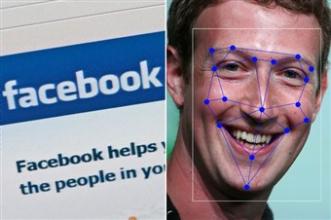
In December 2013, Facebook established its Artificial Intelligence Laboratory and appointed Yann LeCun, a tenured professor at New York University and the most renowned researcher in convolutional neural networks (CNNs), as its director. As a leading proponent of CNNs, LeCun has driven advancements in this field, whose primary applications include image recognition and natural language processing—areas closely aligned with Facebook’s needs and its accumulated data types. With LeCun’s assistance, Facebook’s DeepFace technology received high acclaim in peer-reviewed publications in 2014, achieving a facial recognition accuracy rate of 97%. Furthermore, algorithms developed by the Facebook AI Lab under his leadership have become capable of analyzing users’ entire behavioral patterns on the platform, thereby curating content tailored to their interests.
AI Technologies: DeepFace visual recognition technology (acquired from Face.com), speech recognition (acquired from Mobile Technologies), natural language understanding (acquired from Wit.ai), neural network training, and machine learning.
Cloud Platform: Parse Developer Platform, Torch Open-Source Deep Learning Module
Hardware: Big Sur (an open-source hardware system based on GPUs for training neural networks)
Industry Layout: Voice assistant Moneypenny, VR ecosystem (acquisitions of Oculus Rift and Surround 360 panoramic cameras to promote content development)
Baidu
In May 2014, Andrew Ng, known as the “father of Google Brain,” joined Baidu as Chief Scientist to lead the “Baidu Brain” initiative. Big data serves as the foundation of artificial intelligence; as a native big data enterprise, Baidu possesses robust capabilities in data acquisition and data mining. On July 14, 2014, leveraging its big data technologies, Baidu achieved a perfect record in predicting the outcomes of all 14 World Cup matches, outperforming Microsoft and Goldman Sachs. In September 2014, Baidu officially launched its Smart Business Platform, which integrates big data with Baidu Maps’ location-based services (LBS), aiming to provide enhanced big data solutions for various industries in the mobile internet era.
AI Technologies: Deep Speech for speech recognition, “Intelligent Image Reading” for visual recognition, natural language processing and intelligent semantics, autonomous driving, and deep learning
Solution: Smartphone-Based Voice Service System (Dumi)
Developer Cloud Platform: Baidu Cloud
Industrial Layout: Autonomous driving in the automotive sector, and various app applications and plugins based on smartphones.
Microsoft
AI Technologies: Speech, Vision, Natural Language, Distributed Machine Learning
Cloud Platform: Microsoft Azure (storage, computing, databases, live streaming, and media capabilities), Distributed Machine Learning Toolkit (DMTK) (natural language processing, recommendation engines, pattern recognition, computer vision, and predictive modeling), and the artificial intelligence platform Project Malmo.
Industry Layout: Language Assistants (Microsoft Xiaoice, Cortana, Tay), VR (HoloLens)
Apple
AI Technology: Natural Language (acquisition of Vocal IQ), acquisition of visualization mapping company Mapsense, GPS company Coherent Navigation
Industry Layout: Autonomous Driving in the Automotive Sector, Siri Voice Assistant
Amazon
Cloud Platform: Amazon Web Services (storage, computing, pattern recognition, and prediction; the video recognition API was acquired from Orbeus)
Ali
Cloud Platform (Alibaba Cloud IaaS, DTPAI Visual AI Platform)
Industrial Layout: Smart Furniture, Internet of Things
Tencent
AI Technologies: Vision, Intelligent Computing, and Search Laboratory
Industrial Layout: Smart Hardware
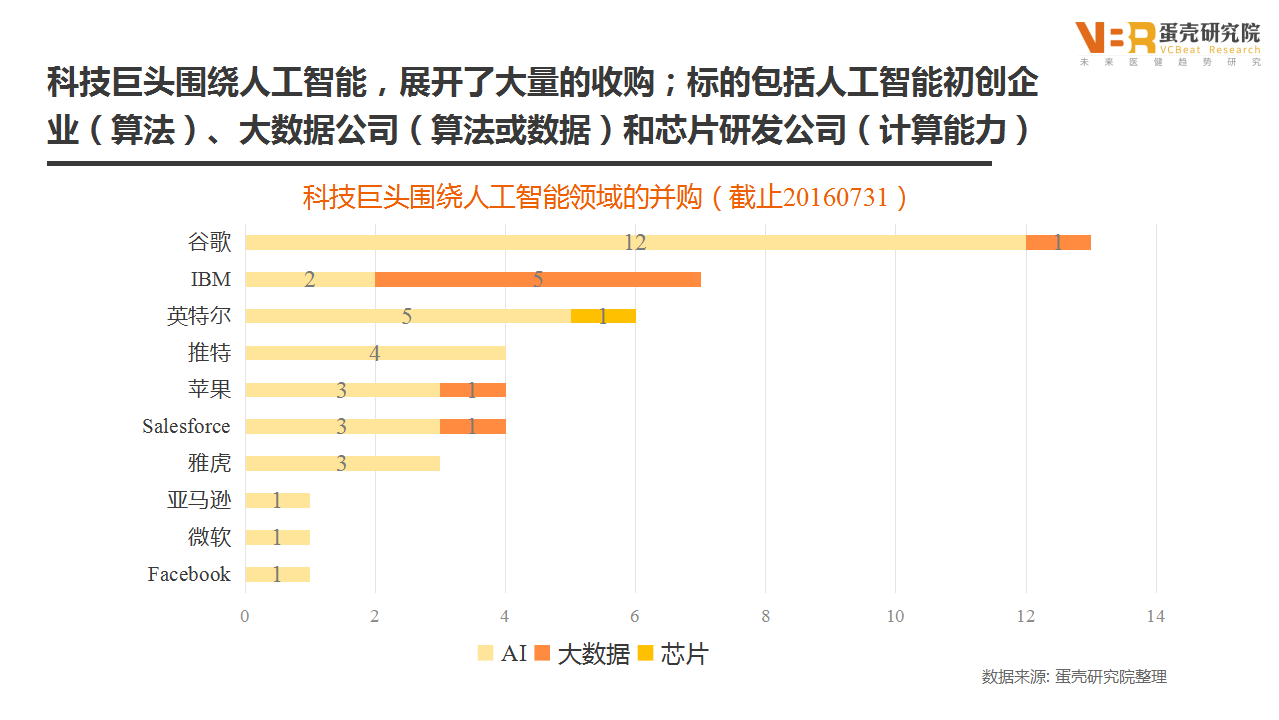
Tech giants have carried out extensive acquisitions in the artificial intelligence (AI) industry, targeting AI startups (algorithms), big data companies (algorithms or data), and chip R&D firms (computing power). As of the end of July 2016, Google had made the most acquisitions in this space, totaling 13 deals. Mergers and acquisitions by these tech giants in the AI sector exhibit two key characteristics: first, they involve multiple consecutive purchases; second, the target companies are relatively small in scale.
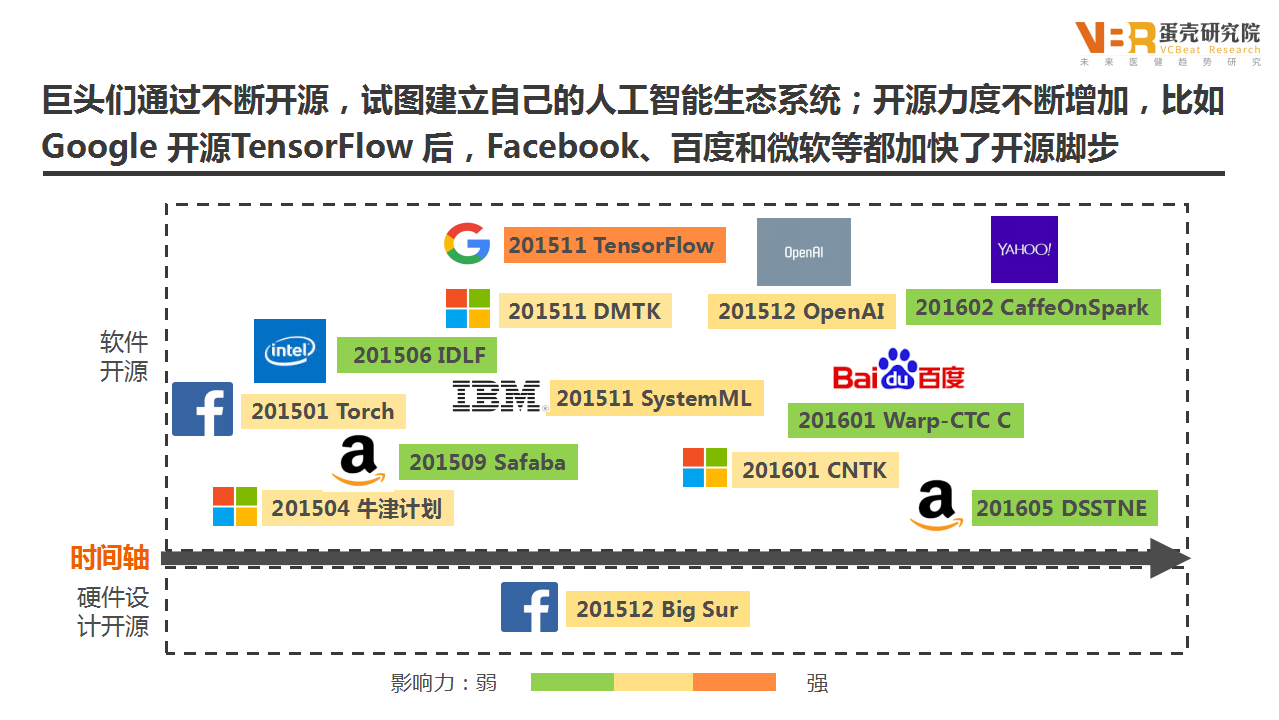
Since 2013, tech giants have largely intensified their independent research and development in artificial intelligence (AI), while simultaneously striving to build their own AI ecosystems through continuous open-sourcing efforts, with increasing momentum. For instance, after Google open-sourced TensorFlow, companies such as Facebook, Baidu, and Microsoft accelerated their own open-source initiatives. Social media giant Facebook was the earliest to embrace open-sourcing of AI tools, announcing last January that it would release several deep learning AI tools as open source. Nearly simultaneously last November, Google, IBM, and Microsoft also announced open-source releases. Google launched its new machine learning platform, TensorFlow, enabling all users to leverage this powerful platform for research; it has been hailed as the “Android of the AI world.” IBM announced that it would provide the source code for its System ML AI tool free of charge to external developers through the Apache Software Foundation. Microsoft open-sourced its Distributed Machine Learning Toolkit (DMTK), which enables efficient training of large-scale data models on relatively small clusters. In July of this year, Microsoft further launched the open-source Project Malmo for AI training.
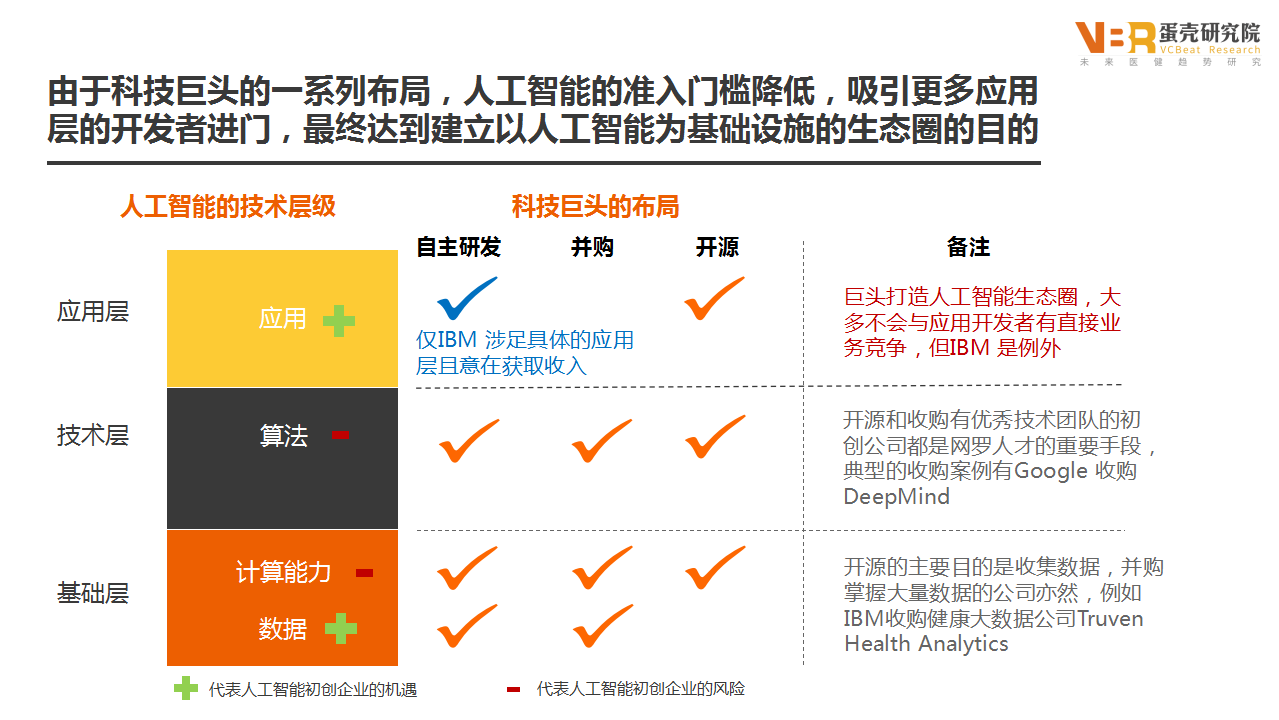
Artificial intelligence has gradually established its own ecosystem. Due to the strategic initiatives of tech giants and the open-sourcing of various platforms, the barrier to entry for AI is progressively lowering. In the coming years, intelligent applications in specialized fields will become the primary direction of AI development. Across both specialized and general domains, corporate AI strategies will revolve around a fundamental three-tier architecture comprising the infrastructure layer, the technology layer, and the application layer.
The foundational layer serves as the root system of a large tree, providing essential resource support and consisting of a computing platform and a data factory. The middle layer is the technical layer, which establishes models through various types of algorithms to form effective, application-ready technologies. Acting like a tree trunk, it connects the underlying data layer with the top-level application layer. The application layer leveragesProvide users with specific services and products using output artificial intelligence technology.
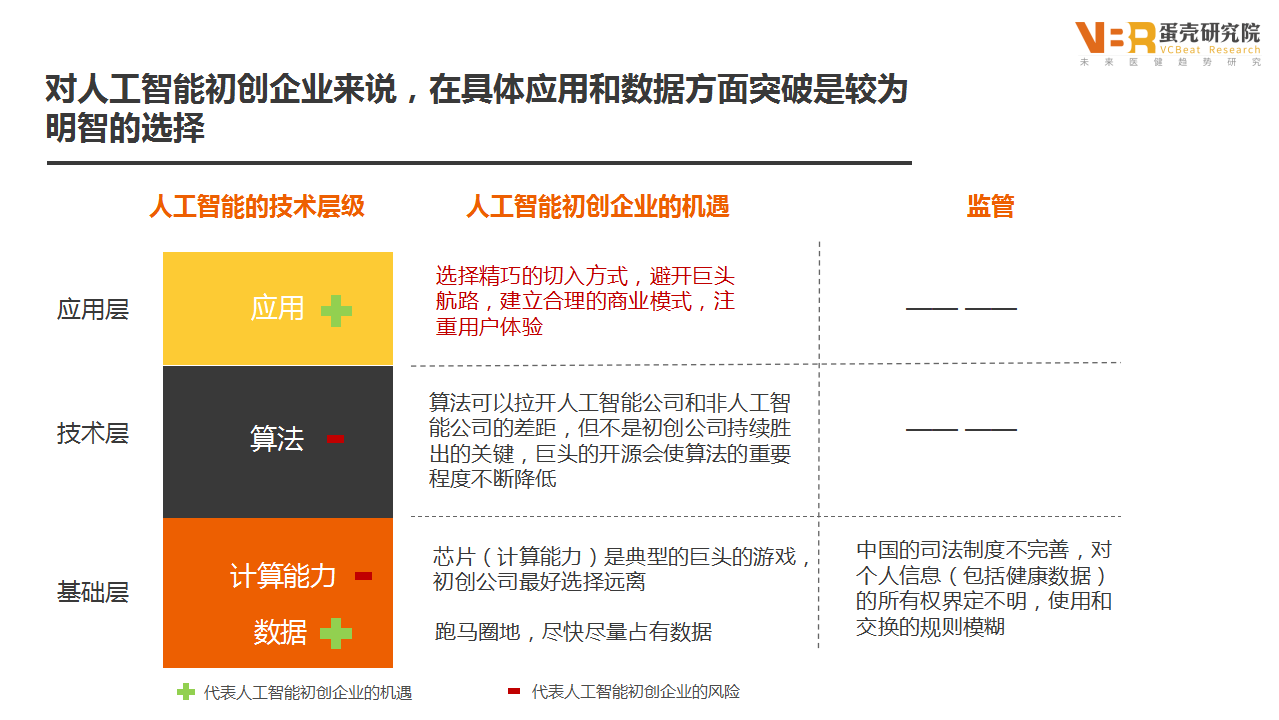
Companies at the infrastructure layer are typically IT giants with chip-level computing capabilities. They build cloud computing platforms by deploying large-scale GPU and CPU parallel computing systems to meet the extreme computational power and storage demands of artificial intelligence, creating barriers that prevent startups from entering this space. While algorithms at the technology layer can differentiate AI companies from non-AI ones, the gradual open-sourcing of these algorithms by tech giants has been diminishing their strategic importance. The application layer presents the best opportunity for AI startups, where they can adopt suitable business models, avoid direct competition with tech giants, and achieve success more easily.
In the future, robots with ultra-high intelligence will collaborate with human experts to solve all complex problems. Whether it involves cancer, climate change, energy, chromosomes, macroeconomics, financial systems, or physics, the systems we need to master are becoming increasingly complex. Among these industrial applications, healthcare is a key area where artificial intelligence (AI) can make a significant impact. AI has become the most critical technology influencing the development of the healthcare industry, contributing to human health and well-being. Among the AI products offered by tech giants, IBM Watson has been most closely integrated with healthcare. After investing $1 billion in 2014 to establish the Watson Group, IBM formed Watson Health the following year, specifically dedicated to providing cognitive solutions for the healthcare and medical industry.
Part I ends here.In the next chapter, we will examine how IBM’s artificial intelligence is involved in the healthcare sector and explore its strategic layout.Stay tuned for the subsequent reports:
Article 1: Tech Giants’ AI Strategic Layout
Part II: A Detailed Analysis of IBM Watson’s AI Applications in Healthcare
Part III: Analysis of Global AI Venture Capital Data in Healthcare (2011–2016)
Part 4: What Can Healthcare Achieve with Artificial Intelligence? (Part I)
Part 5: What Can Artificial Intelligence Achieve in Healthcare? (Part II)
If you can’t wait, you can also view the full report in advance by clicking the link below to purchase:
2016 Report on Innovation Trends in AI for Healthcare

By VCBeat. Please credit the WeChat Official Account when reposting:VBResearch2016
↓↓↓