

PHC Capital's Healthcare Fund Files Prospectus for $7.5B Investment Drive Targeting Oncology and Traditional Chinese Medicine
Since this spring, an unfamiliar yet familiar name has occasionally appeared in financing news within the healthcare sector: Puhua Medical Investment. To date, this relatively young healthcare industry fund has invested in dozens of companies, including Remebot, a neurosurgical robotic system; Agitakon, a gene capture technology company; and Yiliu Zhushou, a patient education and management platform for oncology. Its investment portfolio spans multiple fields, including precision medicine, artificial intelligence, and mobile health.
In fact, as early as 2011, when mobile healthcare was just emerging, Puhua Capital, founded in 2004, had already been quietly building its presence in the healthcare sector. During this period, it invested in Huatong Medicine, which is listed on the main board, and Quanyuantang, which was quoted on the New Third Board, among others.
Zhou Mi, a partner at Puhua Capital, stated that the Puhua-Jingxin Guzhou Health Industry Fund, established this year, marks the beginning and initial step of Puhua’s medical investments. Their goal is to achieve an assets-under-management (AUM) scale of RMB 5–6 billion within three years. Behind this seemingly extensive and broad investment layout, Puhua Capital has already begun “hunting” in two major sectors—oncology and traditional Chinese medicine—with related funds currently being launched.Puhua Medical Investment has invested in four companies in the oncology sector, including Yiliu Assistant, Cognitive Care, Yimei Hezhong, and Baoguanjia.
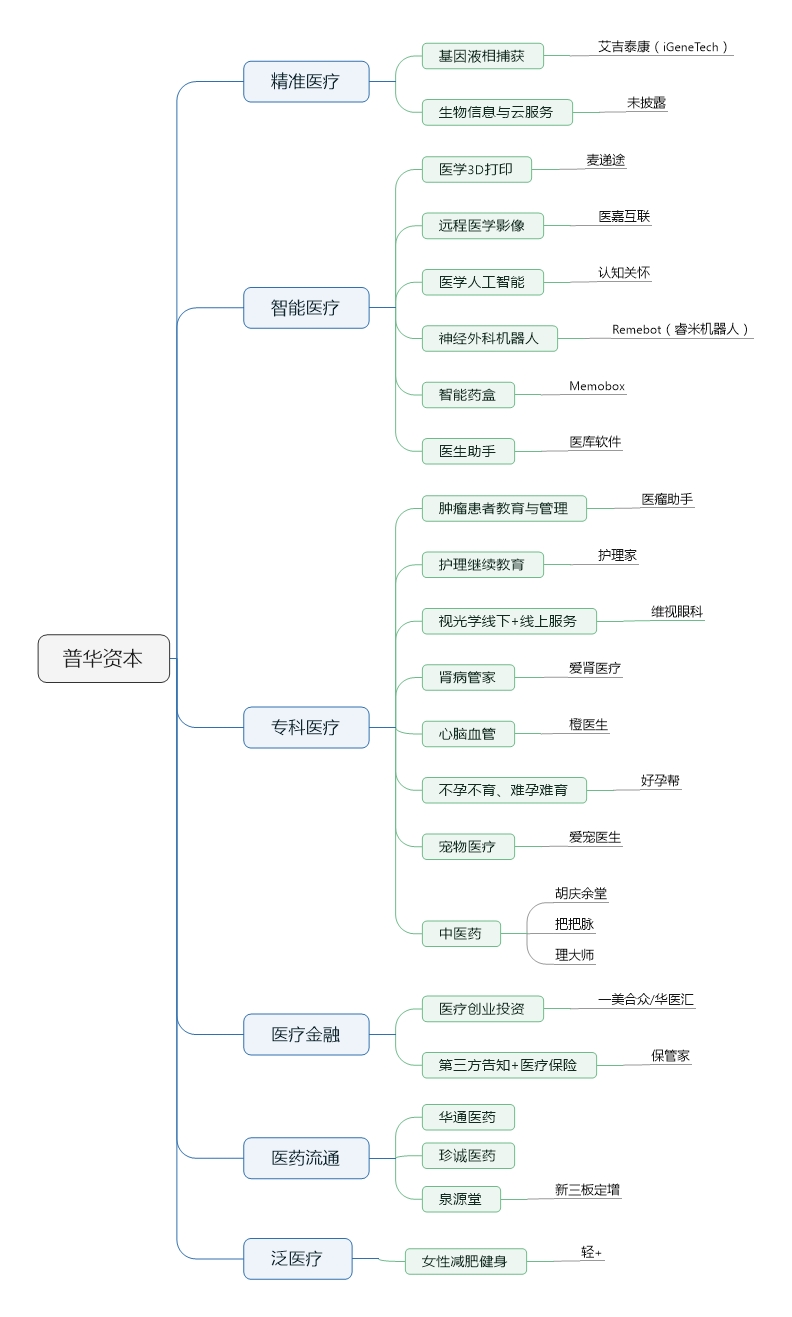
Puhua Capital's Healthcare Industry Layout Map
Q:We have observed that Puhua Medical has executed its strategic layout with remarkable speed, having already invested in numerous high-impact cases within the industry. Compared to other investment institutions, what are Puhua Medical’s distinctive characteristics?
Zhou Mi, Partner at Puhua Capital:The investment rationale for Puhua Medical can be summarized in the following points:Dual-wheel drive by industry and capital, balanced hedging within the investment layout, and an open, win-win mindset to build an industry ecosystem.
First, it is driven by the dual engines of industry and capital. Our positioning is that of an industrial fund.,Not merely financial investments, but target selection based on industrial chain layout and the needs of listed companies., thereby enabling the invested projects to achieve significant strategic synergy, or to foster positive interaction with the listed company in subsequent financing and exit stages.
Puhua Medical Fund I was established through a collaboration between Puhua Capital and Jingxin Holdings, which has a pharmaceutical industry background., the experience and resources of both teams are highly complementary, forming a unique investment style and culture for the industrial fund.
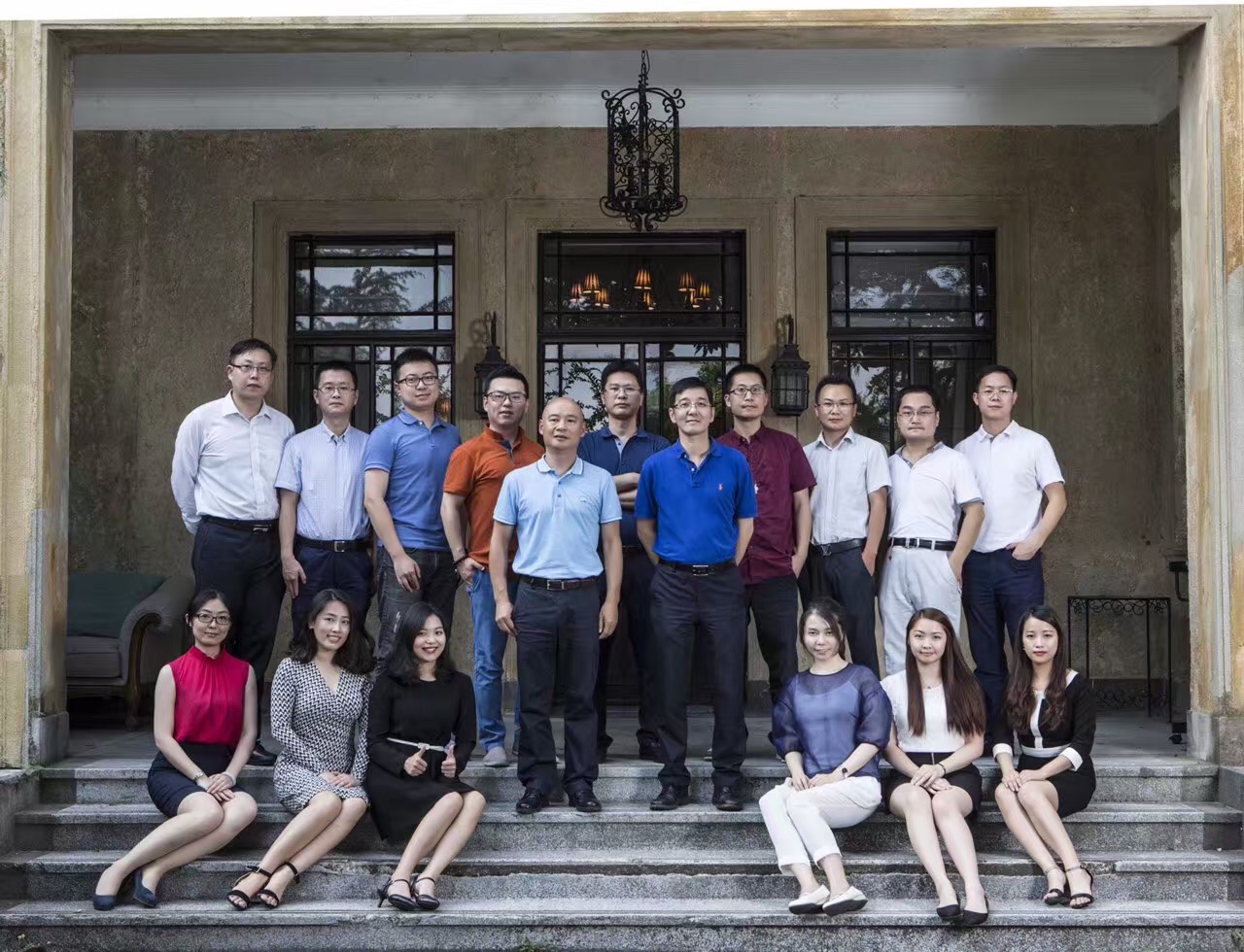
Puhua Medical Investment Team Group Photo
When selecting investment targets, the logic behind pure financial investments differs from that of industrial investments. Previously, when engaging in financial investments and evaluating numerous deals, we might have chosen to pass on a project due to insufficient returns. However, when strategically positioning along the industry chain, decision-making criteria shift accordingly.
If a project holds strategic significance for our industrial layout, we are willing to selectively invest in it, even if other funds may overlook it due to concerns about return multiples. There are two scenarios: first, the project is exceptionally small and nascent; second, the project is excessively expensive. Both scenarios would impact the rate of return.
However, given our comprehensive industrial ecosystem, if this project is not yet perfect, we can leverage support from the underlying industrial companies, as it holds strategic significance for them.
Additionally, for certain high-cost projects with significant strategic importance, we must secure them even if the return on investment is only twofold. In other words, regardless of how high the valuation may be, we need to occupy this position, as failing to do so could compromise the completeness of our industry-wide layout.
Second, the investment portfolio achieves internal balance and hedging.We will prioritize large-scale projects to ensure stable financial returns, using these anchor investments to establish the core of our industrial strategy. This foundation will enable us to further invest in early- and mid-stage projects along the upstream and downstream segments of the industry chain, aiming for higher returns. For instance, we allocate 50% of our capital to the early stage (Angel to Series A), 30% to the growth stage (Series B to Series C), and 20% to the late stage (Pre-IPO).
Third, foster an open and win-win mindset to build an industry ecosystem.We have established extensive collaborations with listed pharmaceutical and healthcare companies, universities and research institutes, relevant government agencies, professional societies and associations, various media outlets, and service providers such as legal, financial, and human resources firms. Leveraging our portfolio companies and the integrated industry chains as linkages, we have built an industry ecosystem that generates mutual benefits for all stakeholders, particularly enhancing the success rate of our invested projects.
Q:Regarding “building an industry ecosystem with an open and win-win mindset,” Puhua Medical has engaged in extensive collaborations with various listed companies, research institutes, and government entities. Does this imply that Puhua Capital possesses distinct platform-oriented characteristics?
Zhou Mi:We are indeed committed to building our platform. In managing our healthcare fund, we collaborate with a wide range of strategic partners. For instance, Topchoice Medical has established distinctive strengths in medical services, particularly in dentistry, ophthalmology, and reproductive medicine. Through our collaboration with them, we have achieved bidirectional acquisition of capabilities, experience, resources, and networks.
Our partners are becoming increasingly diverse, encompassing not only the healthcare services sector but also the pharmaceutical and real estate industries, as well as local resources.
On the basis of a broad framework, we can provide semi-customized investment services for LPs., which means adhering to our principles while maintaining flexibility. For instance, some limited partners (LPs) focus more on precision medicine, while others prioritize healthcare services. This integrated approach creates the advantages of platformization and cross-complementarity.
"Semi-customization" refers to a scenario where a medical fund offers a standard package, akin to a menu. However, recognizing that each client has unique preferences or specific requirements, the fund can conduct targeted searches for additional items tailored to their individual needs.
For instance, if we have a mature, high-quality pre-market medical device project, we can combine capital from our fund with the proprietary funds of listed companies to make investments and significantly increase leverage. To illustrate, suppose the maximum investment amount per project for our fund is RMB 30 million; to execute a deal worth RMB 200–300 million, we must mobilize capital from the listed company limited partners (LPs). Of course, not every LP will participate in such projects; typically, an LP with specific interest in the project will proactively engage. Meanwhile, this approach does not affect the main fund’s participation in the investment, as LPs choose to participate based on their own interests.
Q:Most of Puhua Medical's LPs are industrial capital. What are the advantages of industrial capital?
Zhou Mi:Industrial capital enjoys relatively ample funding and strong downside protection capabilities. After investing in projects, limited partners (LPs) may directly absorb or acquire them, making this a significant exit channel. Currently, apart from IPOs, mergers and acquisitions (M&A) represent the primary exit route, with listed companies serving as the main drivers of M&A activity. Therefore, it is imperative for us to establish close ties with listed companies.
This is the core strategy of Puhua Medical: dual-wheel drive by industry and capital. The industrial capital behind us maintains a synergistic and complementary relationship, where each party obtains what it needs and achieves its desired outcomes.
Q:Recently, there has been widespread discussion about the "capital winter," and the healthcare sector, particularly internet healthcare, appears to have been significantly impacted. How does Puhua Medical view this capital winter?
Wang Jun, Partner at Puhua Capital:First, I have some personal insights regarding the term “Internet Healthcare.” When we first examined this sector, we deliberated on what it should truly be called: Internet Healthcare, Mobile Health, Healthcare Informatics, or Digital Health. Eventually, the investment community and media generally adopted the terms “Internet Healthcare” and “Mobile Health.” Although related projects in China appear to have encountered bottlenecks in recent times, the internet remains a critical component among the various elements of healthcare.
In fact, a wave of healthcare informatization also swept through foreign countries, preceding the trend in China. Currently, there are many publicly listed companies in China’s healthcare informatization sector, with several more queuing for initial public offerings (IPOs). Among those already listed, both business profits and market capitalizations are growing rapidly, underscoring the substantial size of this market. This segment primarily focuses on internal hospital applications; once sufficient data has been accumulated, it can be further mined and applied. Extending these capabilities outward gives rise to internet-based healthcare services.
In short, the underlying infrastructure of the healthcare ecosystem differs; China’s healthcare informatization is less developed, and the analytical capabilities and big data infrastructure for smart and digital healthcare have not yet been established. From a regulatory standpoint, practices such as appointment registration, consultation services, and even the contracting or trusteeship of hospital departments are prohibited.
Regarding the so-called “winter of internet healthcare,” I believe this is not a “capital winter,” but rather an industry winter.Initially, there was great confidence in internet healthcare, with even the term “disruption” being used in the belief that the internet could disrupt the medical industry. However, it later became apparent that appointment registration alone could not be directly monetized; light consultations were not recognized by directors of mainstream hospitals; and the contracting-out of hospital departments led to incidents such as the Wei Zexi case, which also adversely affected the development of precision medicine.
The so-called “winter” is more a reflection of policy constraints and bottlenecks in ecosystem development. At this juncture, it is essential to pool collective efforts to break through this thick ice. Thus, the “winter” signifies industry-wide challenges; precisely at such times, representative figures and companies are needed to lead the way in overcoming these difficulties. I therefore look forward to the emergence of such leaders, working together with all stakeholders.
Overall, companies in the internet healthcare sector are more likely to advance to the next funding round than those in the pure TMT sector. A friend told me that,"30% of internet healthcare projects are bound to fail, but I consider this a compliment, as the survival landscape for TMT (Technology, Media, and Telecom) is even more challenging, with over 90% of their projects failing."Having previously invested in the TMT sector, I am more than satisfied with the data indicating that internet healthcare is entering its next growth phase. To borrow Fu Yuanhui’s words: “I’m already very pleased!”
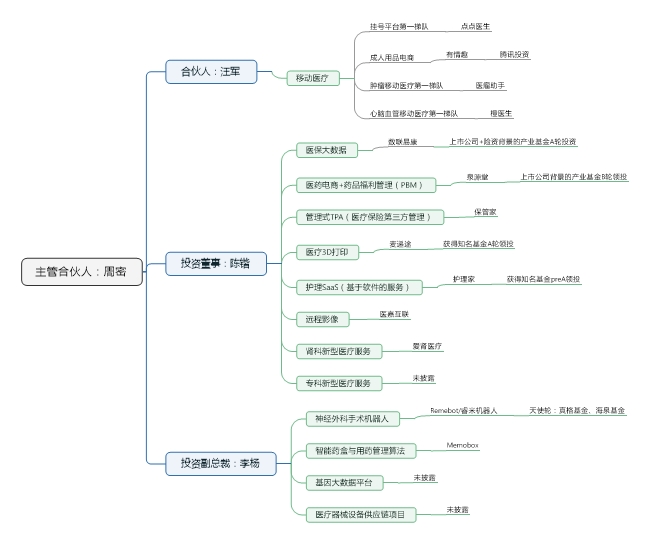
PuHua Medical Investment Team Performance Chart
Question:Puhua Medical has established a presence in more than 10 niche segments. What is the systematic strategy behind this?
Zhou Mi:Currently, we are primarily bullish on the two major sectors of oncology and traditional Chinese medicine (TCM).In the future, there may even be specialized oncology industry funds and traditional Chinese medicine (TCM) industry funds.
In the field of Traditional Chinese Medicine (TCM), industry research reports indicate that China’s planting area for TCM medicinal materials reaches 21 million mu, with 430 bases dedicated to commonly used varieties, and an annual output approaching 9 million metric tons. The TCM medicinal materials trading markets possess significant resource attributes, as over 70% of the nationwide purchase and sales of TCM medicinal materials are concentrated in 17 specialized medicinal materials markets.
As one of the key industries prioritized for development under China’s 12th Five-Year Plan for the pharmaceutical sector, traditional Chinese medicine (TCM) has been highlighted by both the new healthcare reforms and the national “Guiding Opinions,” which clarify the industry’s development direction and outline corresponding supportive policies. Consequently, capital from various sources is expected to increasingly flow into the TCM sector. According to data from the National Bureau of Statistics, the transaction volume of Chinese herbal materials reached RMB 150.7 billion in 2014. By 2015, procurement transactions for Chinese herbal materials were projected to exceed RMB 200 billion, the total industrial output value of the TCM industry was expected to reach RMB 559 billion, and the health industry related to TCM was anticipated to attain a scale of RMB 1.5 trillion. Small and medium-sized pharmaceutical enterprises exhibit substantial demand for the collection and strategic procurement of Chinese herbal materials, yet implementation remains limited. Currently, Puhua Medical is seeking enterprises that have established standardized and large-scale operations directly in production regions, as well as online information aggregation and trading platforms.
In terms of oncology, China currently has relatively high overall cancer incidence and mortality rates, with a five-year survival rate for cancer patients of only around 30%, compared to 66% in the United States. Conservatively estimating the treatment cost per patient at approximately RMB 100,000, the total market size for oncology will exceed RMB 400 billion.
In China, the current oncology care delivery process is lengthy and remains hospital-centric. Hospital-based channels, which account for approximately 80% of pharmaceutical consumption, hold a dominant non-market position, exerting bilateral monopoly power over upstream and downstream stakeholders and controlling bargaining power across the supply chain.The market for mobile health in oncology is still in its early stages, and precision oncology will play a significant role, indicating substantial future market potential.Currently, Puhua Medical has established a presence across the upstream and downstream segments of the oncology healthcare service industry chain, investing in multiple related companies including “Aiji Taikang,” “Yiliu Zhushou,” “Cognitive Care,” and “Baoguanjia.”
Text | Brad Pi Dan
Source: BeiKe She (WeChat ID: iBio4P)