

From Losses to $1.57M Revenue in 12 Days: CallDoctor Founder Lin Sir Reveals Profitability Strategy in IPO Filing
This month, VCBeat (WeChat ID: vcbeat) released the “Internet Healthcare Survival Report” series, which highlighted that healthcare professionals have a significantly higher survival rate than internet industry professionals when launching startups. We have been closely monitoring the development trajectories of different types of entrepreneurs, aiming to derive more patterns and practical insights from their experiences.
Readers may already be familiar with the entrepreneur featured in this report: Mr. Lin, founder of “Call a Doctor.” A healthcare professional with a background in hospital management, Mr. Lin has previously been covered twice by VCBeat (WeChat ID: vcbeat). Over the past year or more, Call a Doctor has undergone numerous changes, particularly in its business model, shifting from reliance on traditional medical resources to fully embracing the internet. Its integration with “Mommy Knows” even generated a remarkable performance boost, increasing revenue by RMB 1.061 million in just 12 days. Mr. Lin has traversed a path that was both arduous and exhilarating.
Previously, with the "Call a Doctor" service, Mr. Lin aimed to simply develop a multi-site practice platform for physicians that connects users, hospitals, and specialists. Mr. Lin’s business logic is as follows: Users place orders through the "Call a Doctor" platform specifying their needs, and the platform automatically matches them with appropriate medical specialties, physician seniority levels, locations, and available time slots, prioritizing user convenience.
That year, Mr. Lin spent his days either communicating with hospitals or on his way to them. In his view, the core of his business lay in liaising with Grade 3A hospitals to recruit more experts for the doctor-on-call platform, a typical B2C platform operating model. “This approach was implemented for nearly six months, but the company’s revenue growth remained sluggish, while operational costs and corporate management issues became increasingly prominent.”
How to leverage the Internet to more rapidly and efficiently address patient flow challenges? This is a common issue faced by healthcare entrepreneurs, and it is also the primary challenge confronting Mr. Lin.
In June this year, Call Doctor began to seek transformation and reshape its business model. In early July, the company released its new corporate strategy: “Integration + Fission.” This transformation has fundamentally changed Call Doctor. The successive launch of corporate medical service packages, VIP cards, and partnerships with Mommy Knows (Mami Zhidao) helped increase the company’s revenue by more than 2 million yuan in September. In an exclusive interview with VCBeat (WeChat ID: vcbeat), Mr. Lin revealed the secrets behind his profitability.

On September 24, 2016, the reporter met with Mr. Lin again; the anxiety that once plagued him had dissipated. “After deducting the company’s operating costs, there is still a surplus in our corporate account this month.”
This transformation stems from Call Doctor’s deep integration with the internet. In September this year, Call Doctor partnered with Mommy Knows, generating an additional revenue of RMB 1.061 million within just 12 days. The two parties promptly embarked on a second round of in-depth product development, aiming to achieve greater commercial conversion.
Mommy Knows is a maternal and infant health mobile application developed by Shenzhen Yixin Technology Co., Ltd. Backed by investment from top-tier international venture capital firms, it provides thoughtful, end-to-end services covering preconception care, pregnancy, and childcare, along with various free online consultation and Q&A features. Its core team comprises product and technical experts from leading internet companies such as Tencent and Alibaba, senior executives from Fortune 500 companies with in-depth knowledge of China’s healthcare industry, and physician specialists from large Grade A tertiary hospitals who serve on the front lines of clinical practice.
Over the past period, Mommy Knows founder Liang Liang repeatedly proposed a collaboration with Call a Doctor, but Sir Lin consistently declined, as Call a Doctor’s B-side users at the time were hospitals, not vertical mobile app companies in the maternal and infant sector.
Faced with pressures such as customer traffic issues, Mr. Lin decided to collaborate with Mommy Knows. After all, this was a new path, and he was curious about what lay ahead.
The collaboration between the two parties operates on two fronts. On one hand, the "Mami Zhidao" app opens all access points to "Hujiao Yisheng" (Call a Doctor), enabling Mami Zhidao users to place orders directly within the app and receive medical services provided by Hujiao Yisheng. On the other hand, Hujiao Yisheng has launched the "Mom Card" specifically for Mami Zhidao users, which covers the entire journey from prenatal checkups to delivery, including comprehensive booking services for appointments with physicians and hospital beds at Grade 3A hospitals.
According to Mr. Lin, “In Shenzhen, it is virtually impossible to secure appointments with specialists at top-tier (Grade 3A) hospitals such as the Maternal and Child Health Hospital without access to special channels. On Taobao, a single specialist appointment can cost up to RMB 2,000. Pregnant women typically need to schedule 12–13 prenatal visits throughout their pregnancy. The introduction of the ‘Mom Card’ has significantly saved both time and money for expectant mothers. As a result, more than 60 cards were sold within the first week of its launch.”
“This collaboration has deeply resonated with Mr. Lin. ‘Mommy Knows’ boasts a user base of 3.6 million; by integrating its platform, Call-a-Doctor effectively gains access to an additional 3.6 million users. Accumulating such a large follower base independently would entail substantial marketing and promotional expenses, as well as significant human and material resources. For a startup, these costs would be prohibitively high.”
Building on the successful trial with "Mommy Knows," Mr. Lin expanded his horizons beyond the medical sector and swiftly secured a partnership with the oncology community. The product is scheduled to launch in mid-October, further penetrating B2B platforms across various disease categories.
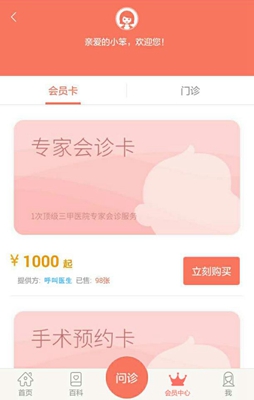
However, Sir Lin’s collaborations extend beyond companies within the healthcare industry to include B-side clients such as banks and enterprises. How exactly do these partnerships work?
According to Mr. Lin’s vision, this is a process of integration followed by fission. For example, in its collaboration with banks targeting VIP clients, Call Doctor provides comprehensive services throughout the year, including specialist appointment scheduling, diagnosis and treatment, and hospitalization, with fees ranging from 100,000 to 1 million RMB. In partnerships with enterprises, products are customized for employee benefits, allowing corporate staff to access all medical services offered by Call Doctor.
“Actually, the model I am currently studying is China Mobile,” said Mr. Lin. “It offers only two services—voice calls and mobile data—yet it can customize numerous plans for different individuals. The principle is the same as that of our ‘Call a Doctor’ medical service product,” Mr. Lin told the reporter.
If the initial integration of Doctor On Call, Mommy Knows, and the Anti-Cancer Community represents one successful monetization model for healthcare startups, then collaborating with banks and enterprises across various industries reflects Lin Sir’s broader vision—connectivity.
For Mr. Lin, an entrepreneur within the healthcare system, his initial approach merely involved migrating offline medical transactions to online platforms. He continuously recruited physicians from Grade A tertiary hospitals, aiming to drive consumer (C-end) user growth through business-side (B-end) engagement, without realizing that B-end clients encompass far more than just hospitals.
In fact, as Call a Doctor collaborates with more B-side clients, it will evolve into a larger platform with stronger platform attributes. “The previous strategy was to build the platform first and then expand into vertical segments of the healthcare industry; now, the approach is to penetrate various vertical segments of healthcare first before building the platform.”
“To truly understand, turn things upside down.” This maxim, devoutly adhered to throughout his life by Niu Gensheng, founder of Mengniu Dairy, took him five years to fully interpret. However, after more than a year of arduous entrepreneurship, Mr. Lin has gained an entirely new perspective.
After integration brought about a significant boost in efficiency, the next issue Mr. Lin needed to address was how to substantially improve the company’s management efficiency, as the customer base had grown too rapidly.
For related articles mentioned in the text, click to view:
Call for Doctors: The Path to Monetization in Internet Healthcare Is Here