

The Evolution and Implications of Telemedicine in the U.S.: From Clinical Necessity to Global Digital Health Innovation
The integration of healthcare and technology has unlocked infinite possibilities for the advancement of medicine. Telemedicine, as a prime representative of this convergence, has long remained a term that is both familiar and unfamiliar to us.
Familiarity stems from the fact that the concept itself is not new. As early as the 1970s, NASA began using telemedicine to provide services for astronauts in space. Its unfamiliarity arises because the current healthcare market and scientific technologies are evolving rapidly, and the telemedicine industry is undergoing revolutionary changes.
So, how is telemedicine faring in the rapidly evolving U.S. healthcare market? Which telemedicine stakeholders deserve our attention? This article will provide a detailed analysis for you.
The Past and Present of Telemedicine
The early telemedicine we are familiar with was primarily driven by actual clinical needs.
For example, in the United States, after the FDA first approved tPA, a revolutionary drug for the treatment of acute ischemic stroke, many hospitals faced challenges related to the timeliness of treatment: many patients in remote areas missed the optimal window for medication due to the lack of timely diagnosis by neurologists. In response to this pressing clinical need, TeleStroke services, based on basic audio and video hardware technologies, emerged, enabling neurologists to provide timely medical care to patients in remote areas remotely.
In recent years, with the rapid evolution of policy frameworks in the U.S. healthcare market and significant advancements in related technologies, telemedicine has gradually transitioned from its early model—reliant on hospital-based hardware and limited to clinical consultations—to a diversified development paradigm emphasizing software and multi-platform integration. Meanwhile, the market drivers for telemedicine have become increasingly diverse and complex, moving beyond the initial singular focus on clinical needs.
Market Drivers of Telemedicine in the United States: Cost–Quality
First, let us analyze the current market background of telemedicine in the United States.
The Affordable Care Act, introduced in 2010, elevated the multi-party strategic interactions among consumers, the government, insurance companies, and healthcare enterprises within the U.S. healthcare system to new heights. Amid the push for universal health coverage, the demands of various stakeholders for lower-cost and higher-quality medical services became particularly pronounced. This demand has laid a solid market foundation for the development of telemedicine in the United States.
First, the Affordable Care Act prohibits group health insurance from denying coverage based on applicants’ pre-existing conditions. In response, insurers need to introduce high-quality disease management services to mitigate the impact of high-risk populations on existing premium structures. Efficient telemedicine products are an indispensable component of such high-quality disease management services.
Through remote intervention, diagnosis, and treatment of users, the risk of disease in healthy individuals and the risk of misdiagnosis in patients are effectively controlled within an objective range.
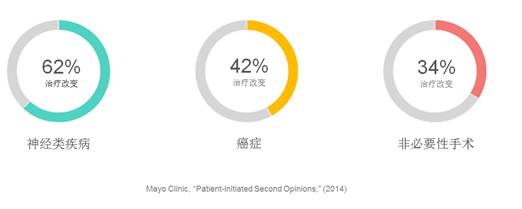
**As shown in the figure above, the rate of change in initial diagnostic opinions can be as high as 62%, and the rate of unnecessary surgeries reaches 34%.**
On the other hand, to further reduce premiums and control costs under the pressure of universal health insurance, U.S. health insurance companies have been continuously narrowing their medical networks eligible for policyholder reimbursements in recent years. While this approach has effectively controlled the cost of medical services, it has also raised concerns about potential compromises in the quality of care delivered at lower costs.
In the short term, users are unable to access high-quality physicians for consultation and reimbursement due to cost constraints, leading to dissatisfaction with the entire healthcare network. In the long term, high-risk patients who could benefit from early intervention may experience delayed treatment and disease progression due to misdiagnosis or inappropriate management by some lower-quality providers, thereby causing a sharp increase in the long-term costs and risks of the overall healthcare system.
Therefore, independent third-party telemedicine platforms with high-quality medical networks can open up previously inaccessible healthcare resources—due to cost constraints—to high-risk populations in need, thereby assisting policyholders and insurers in long-term risk management and cost control.
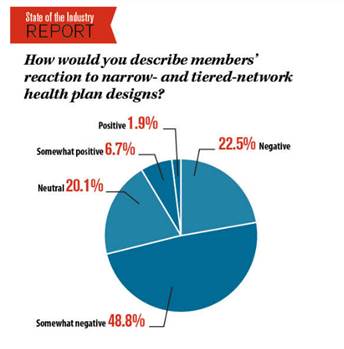
**Managed Healthcare Executive** primary research indicates that over 70% of users are dissatisfied with narrower or tiered healthcare network models.
Let us further illustrate this from the government’s perspective. In the United States, individuals aged 65 and older, as well as certain patients with acute or chronic disabilities, are eligible for Medicare. More than 80% of the funding supporting this insurance program comes from taxation and other government fiscal revenues.
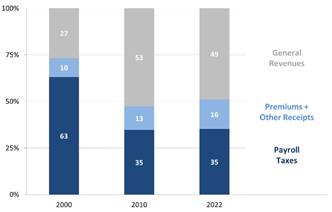
*According to data from the U.S. Congressional Budget Office, more than 80% of Medicare’s funding comes from taxes and fiscal appropriations.
Meanwhile, medical expenditures for these high-risk populations are growing at a geometric rate. The 2015 Medicare Trustees Report further predicts that, under the current revenue and expenditure structure, Medicare will face insolvency by 2030.
In response, efficient telemedicine solutions—such as remote monitoring and intervention products for elderly patients with chronic diseases, or remote diagnostic services for individuals at high potential risk of severe illnesses—have become a powerful tool for the government to urgently strengthen healthcare cost control and mitigate fiscal risks.
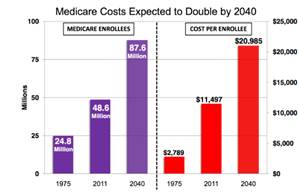
**Data from the Congressional Budget Office and the Medicare Trustees’ Report show that Medicare costs have grown exponentially in recent years, and by 2030, the program will run a deficit under current revenue and expenditure projections.**
Technological Advancements Bring Endless Possibilities to the Development of Telemedicine
Undoubtedly, the internet and mobile phones are transforming people’s lives. According to the GSMA analysis report, mobile internet usage has experienced explosive growth since 2008, rising from 2.3 billion users in 2008 to 3.4 billion in 2013, and is projected to reach 3.9 billion users by 2017.
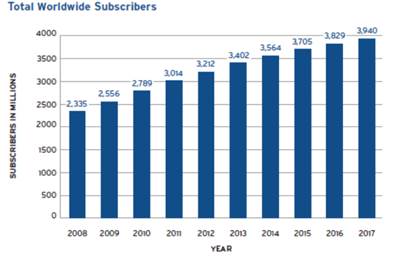
**Source: McKinsey analysis report, “GSMA The Mobile Economy,” London, United Kingdom, 2013, p. 4.
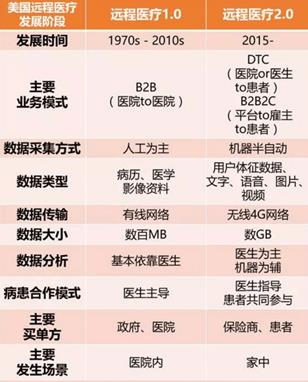
Description: What Does Telemedicine 2.0 Look Like? A Detailed Explanation of the U.S. DTC Model
**Source: VCBeat Research, 2016**
Benefiting from the widespread adoption of the internet and smartphones, telemedicine services in the United States have evolved from the text- and voice-based Telemedicine 1.0 era to a more diversified Telemedicine 2.0 era. The data exchanged among telemedicine stakeholders has expanded to include various types of medical information, such as real-time vital signs, electronic health records (EHRs), and medical imaging data. The core of this phase is the shift toward patient-centered healthcare delivery.
Various information technologies have “given wings” to medical services, enabling them to extend beyond hospital walls and reach patients in need. This marks the current Telemedicine 2.0 era in the United States—a transformation of historic significance in the evolution of the healthcare industry. Hospitals and physicians, long perceived by many as “set in their ways,” are for the first time treating consumers as paramount, much like other traditional industries, and sparing no effort to meet users’ growing demands through diverse approaches.
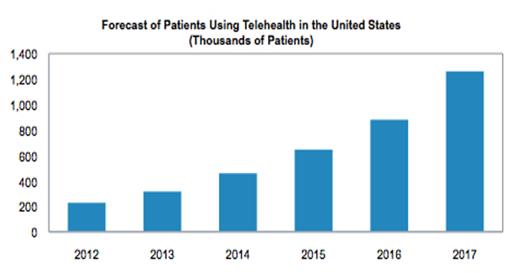
According to IHS lnMedica’s 2015 survey on patient satisfaction with telemedicine among a subset of U.S. patients, 67% of respondents believed that telemedicine improved their consultation satisfaction (see Figure). We have reason to believe that as internet technology continues to advance, the user experience of telemedicine will correspondingly improve. Taking the U.S. market as an example, it is projected that there will be over 1.2 million telemedicine users by 2018 (see Figure).
Description: Impact of Telemedicine on Patient Satisfaction
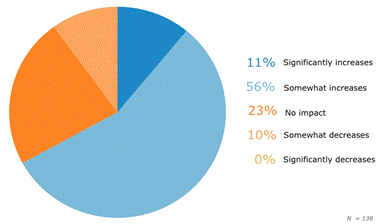
67% of patients believe that telemedicine has improved their satisfaction with medical visits.
**Source: IHS lnMedica, 2015
Overview of the U.S. Telemedicine Market
In light of the aforementioned objective drivers, telemedicine companies in the United States are currently proliferating at a remarkable pace. Many corporations and healthcare groups have long since begun to strategize within the telemedicine sector and capture market share, providing patients with comprehensive, holistic remote health solutions.
Borderless Telemedicine
MORE Health is a healthcare service provider and internet hospital offering cross-border medical services, dedicated to integrating high-end physician and pharmaceutical resources in the United States to provide international users with rapid, authoritative, and high-quality diagnostic and treatment solutions.
The company’s independently developed cloud-based international expert consultation platform strictly complies with the U.S. Health Insurance Portability and Accountability Act (HIPAA), enabling seamless communication and collaboration among multiple medical experts across different countries to provide users with international remote consultations. The platform consists of a physician portal and a patient user portal, allowing doctors and patients to conveniently access the platform and efficiently retrieve and exchange relevant medical information.
Physicians can securely exchange messages via the platform, conduct face-to-face consultations with patients through embedded video conferencing software, diagnose diseases, formulate treatment plans, and issue prescriptions. The FDA-cleared, browser-based medical image transmission and viewing system enables physicians to easily access medical imaging data, such as CT, PET, and MRI scans, without downloading any software.
MORE Health maintains a directly contracted network of U.S. specialists, enabling it to identify the most suitable U.S. physicians or multidisciplinary expert panels to provide diagnostic opinions and treatment plans for international patients within five business days. Based on patient needs, its contracted physicians can also prescribe the latest FDA-approved prescription medications.
Telemedicine Service Comprehensive Solution
Major corporations such as Cisco are providing comprehensive solutions for electronic health records (EHR), healthcare networks, and clinical workflows in medical institutions like hospitals and clinics. Cisco’s latest telemedicine technology platform, called HealthPresence, facilitates connections between patients and doctors or clinicians, enabling physicians to deliver primary care consultations and provide family physician guidance.
HealthPresence creates a completely new clinical consultation process by integrating two innovative technologies: Cisco TelePresence™ and Cisco® Unified Communications. Leveraging high-definition video, audio, and interconnected medical devices, Cisco HealthPresence enables collaboration and personalization that are difficult to achieve in traditional face-to-face consultations. Patients participating in HealthPresence consultations can actively engage with clinicians by viewing images and listening to sounds captured through various diagnostic devices, such as digital stethoscopes.
Online Ward Monitoring
Mercy Virtual is the world’s first and only virtual care center. This four-story facility in Missouri leverages cutting-edge technology to deliver telehealth services, including 24/7 remote nursing, virtual sitting, emergency care, home monitoring, intensive care, and stroke management.
In the tele-ICU area, intensivists sit in front of large video monitors to collect detailed data on each ICU patient and capture critical symptoms of critically ill patients. If a patient requires attention, Mercy physicians can zoom in using dual-track cameras to better observe subtle details on intravenous infusion bags. Experts at the Mercy Virtual Care Center report that the average length of stay for monitored ICU patients has decreased by 35%, and mortality rates are 30% lower than expected.
Remote Repair
RespondWell is an internet healthcare company dedicated to the field of remote rehabilitation services. RespondWell enables internists, physical therapists, and healthcare providers to deliver a richer tele-rehabilitation experience to patients. Its remote services can be deployed in various settings, including physician offices, senior living communities, outpatient rehabilitation facilities, and private residences. Furthermore, RespondWell integrates gamification techniques into physical therapy, aiming to usher in a new era of care services. RespondWell’s intuitive remote rehabilitation platform (featuring video-based instruction) targets physical therapy services, striving to reduce costs while enhancing treatment outcomes.
Medical Big Data
Lumiata leverages its unique Medical Graph and robust analytical capabilities to analyze users from pathological and epidemiological perspectives, providing health status predictions based on a six-month horizon. The prediction results are presented intuitively to users in the form of scores through Lumiata’s Risk Matrix Report. This powerful data analysis and predictive capability not only helps payers mitigate and reduce long-term risks but also assists medical teams in implementing timely early interventions to effectively prevent disease progression. Additionally, Lumiata’s platform features strong compatibility, enabling seamless integration with various telemedicine platforms.
Challenges Facing Telemedicine in the United States
Can patients receive high-quality medical care while enjoying convenient services?
Critics worry that telemedicine services may compromise the quality of care, offering merely convenience. Investigations have revealed that such services may entail minor issues. For instance, without auscultating heart sounds or examining the throat and swollen lymph nodes, physicians may find it difficult to accurately diagnose conditions such as upper respiratory tract infections.
Certainly, some telemedicine physicians have failed to provide attentive care, and some institutions even lack the necessary business licenses. There have also been cases of serious misdiagnosis, primarily due to physicians’ failure to ask essential basic questions.
However, Dr. Jack Resneck, a dermatologist at the University of California, stated, “Telemedicine does hold tremendous potential, particularly in the treatment of skin conditions, but some telemedicine clinics are not yet adequately prepared.”
The American Telemedicine Association and other relevant organizations have begun launching licensure programs to provide patients with high-quality telehealth clinics. Meanwhile, the association has also cautioned patients to be wary of clinics that sell products.
Who pays for this service?
Employers and health plan sponsors have long sought to include virtual emergency care in their insurance coverage; however, insurers have remained reluctant to reimburse for telemedicine services. Currently, approximately 32 U.S. states have enacted “parity” laws that require private insurers to reimburse physicians for telemedicine consultations at the same rate as in-person visits, provided such services are covered for their enrollees. In fact, current Medicare coverage lags significantly behind: the federal program for seniors covers only a limited range of telemedicine services, restricted exclusively to beneficiaries in rural areas, and these services must be delivered from specific originating sites such as hospitals, physician offices, or clinics.
Bipartisan support has emerged in the U.S. Congress for legislation expanding the scope of telehealth insurance coverage. While opponents worry that such expansion could increase costs for taxpayers, proponents argue that it would yield long-term savings, estimating a reduction of $2 billion in costs over the next decade.
Are State Regulatory Policies Outdated?
Historically, medical regulatory policies have varied across U.S. states. However, some industry professionals argue that maintaining 50 different sets of rules, licensing fees, and even definitions of medical practice holds little significance in the field of telemedicine and may even hinder its development.
Currently, in some states, a valid license is required to provide medical services to patients, which means that telehealth companies can only partner with locally authorized clinics. This has created operational barriers for some world-class medical centers.
For example, physicians at some world-class telemedicine institutions can provide medical services via telephone, email, or online chat to patients who have been discharged from hospitals and returned home in regions outside their own state; however, they are only permitted to discuss conditions that were previously diagnosed in person.
Insights from Telemedicine
Driven by market forces and technological advancements, the era of Telemedicine 2.0 has arrived. These innovative technologies have not only enhanced the efficiency and cost-effectiveness of healthcare systems but also, through revolutionary technologies and products, transcended geographical barriers to deliver world-class medical expertise to patients in need around the globe.
Typical Case: U.S. Expert Team Provides Cross-Border Consultations, Delivering Precision Telemedicine Services to Chinese Patients
MORE Health is a healthcare service provider and internet hospital offering cross-border medical services. Since its inception, it has delivered precise diagnostic and treatment services to hundreds of patients with complex and critical illnesses worldwide, leveraging its advanced and efficient cloud-based consultation platform and a network of top U.S. specialists. Mr. Huang, a lung cancer patient from China, is one of the beneficiaries.
Mr. Huang, a 60-year-old resident of Beijing, sought medical attention at Peking University Third Hospital in February 2015 due to persistent coughing for two weeks accompanied by severe dyspnea. Following blood tests and imaging studies, he was preliminarily diagnosed with lung cancer with multiple bilateral pulmonary metastases. Upon receiving the cancer diagnosis, Mr. Huang and his family decided to admit him immediately for aggressive treatment. Physicians at Peking University Third Hospital administered oxygen therapy and targeted drug therapy, which successfully controlled the lesions within one month. In March 2015, Mr. Huang was discharged smoothly and continued targeted drug therapy.
However, life is unpredictable. Four months later, in July 2016, Mr. Huang developed progressive motor dysfunction and frequently fell while walking. Consequently, he returned to Peking University Third Hospital for consultation. This time, the diagnosis was lung adenocarcinoma with a disease course of 1 year and 6 months, accompanied by brain metastases for 1 year and progressive motor dysfunction for 2 months. Chest CT examination revealed multiple metastatic tumors in both lungs, showing progression compared to previous findings. Brain MRI demonstrated multiple punctate areas of abnormal high signal intensity in the bilateral frontal, parietal, and temporal lobes, cerebellar hemispheres, and pons, with some lesions enlarged compared to those observed six months earlier.
Recurrence and metastasis of cancer have long posed significant challenges in oncology treatment, leaving the physicians at Peking University Third Hospital grappling with Mr. Huang’s complex case. Given that Mr. Huang had previously undergone treatment at Peking University Third Hospital with suboptimal outcomes, integrating diverse resources into his treatment plan would serve as a valuable complement. The specialists at Peking University Third Hospital had attended an academic symposium on the diagnosis and treatment of metastatic lung cancer during the “Remote Advanced Medical Academic Exchange” hosted by MORE Health, and were well aware of the professional influence of MORE Health’s contracted cancer experts. Consequently, they strongly recommended MORE Health’s International Expert Consultation Service to Mr. Huang and his family, providing a much-needed boost of confidence in his diagnosis and treatment.
Considering the complexity of Mr. Huang’s condition and the fact that his cancer had metastasized, the MORE Health Case Management Department recommended a multidisciplinary tumor board consultation. Within just three days, they assembled a team of top-tier specialists comparable to the medical team that treated former U.S. President Jimmy Carter. This team included Dr. Pierre Theodore, a lung cancer specialist from UCSF Medical Center; medical oncologists Dr. Marc Shuman and Dr. Victoria Wang; palliative care specialist Dr. Marcia Glass; and Stanford Health Care radiologists Dr. Max Wintermark and Dr. Henry Guo, who jointly conducted a multidisciplinary tumor board consultation for him.
Through the MORE Health cloud-based physician collaboration platform, six specialists from various fields reviewed all of Mr. Huang’s medical records, including imaging data, pathology reports, laboratory results, and previous treatment and medication history. Within five days of receiving the case materials, the experts engaged in thorough discussion and communication, providing diagnostic assessments and treatment recommendations for Mr. Huang’s condition from multiple perspectives. Physicians from Peking University Third Hospital also discussed certain technical details of the treatment with the international experts and ultimately decided to follow their recommendations in preparation for the next phase of care. Thanks to the combined efforts of this U.S.-based expert team and the physicians at Peking University Third Hospital, Mr. Huang ultimately received authoritative, rapid, and effective diagnosis and treatment.
Borderless Telemedicine: By leveraging a highly efficient and secure cloud-based platform, this model rapidly integrates the expertise of leading authorities from China and the United States, delivering high-quality medical services directly to patients and securing valuable time for treatment. Mr. Huang’s case is just one of many; the growth of MORE Health Internet Hospital has sparked boundless imagination regarding the potential of telemedicine.
How will this field develop in the future? We shall wait and see.
By Xiao Fei
Source: China.com