IBM Watson in Healthcare: Detailed Analysis of AI Applications in Medical Innovation Trends Report 2016 (Part II)
In the article “Tech Giants’ AI Strategies,” Part I of the 2016 Report on Innovation Trends in AI + Healthcare, VCBeat’s VBInsight provided an in-depth analysis of the strategic deployments and ecosystems established by IT tech giants in the field of artificial intelligence.The integration of artificial intelligence and healthcare falls within the scope of the topmost application layer of the AI ecosystem.The research achievements of IT giants are primarily concentrated in the bottom two layers of the three-tier artificial intelligence ecosystem—the infrastructure layer and the technology layer.
IBM is an exception. It is the only tech giant among these companies to have ventured into the topmost application layer, with the aim of generating revenue. The earliest commercial application of IBM Watson was its integration with healthcare. Today, the role of artificial intelligence in the healthcare sector can no longer be overlooked; it has become the most critical technology influencing the development of the medical industry.In this article, we will focus on the detailed applications of IBM Watson artificial intelligence in the healthcare sector.
The structure of the public version of this report is as follows:
Article 1: AI Strategies of Tech Giants
Part II: A Detailed Analysis of IBM Watson’s AI Applications in Healthcare
Part III: Data Analysis of Global AI Venture Capital Investments in Healthcare (2011–2016)
Part 4: What Can AI Do for Healthcare? (Part 1)
Part 5: What Can Healthcare Achieve with AI? (Part II)
Here is the second article:
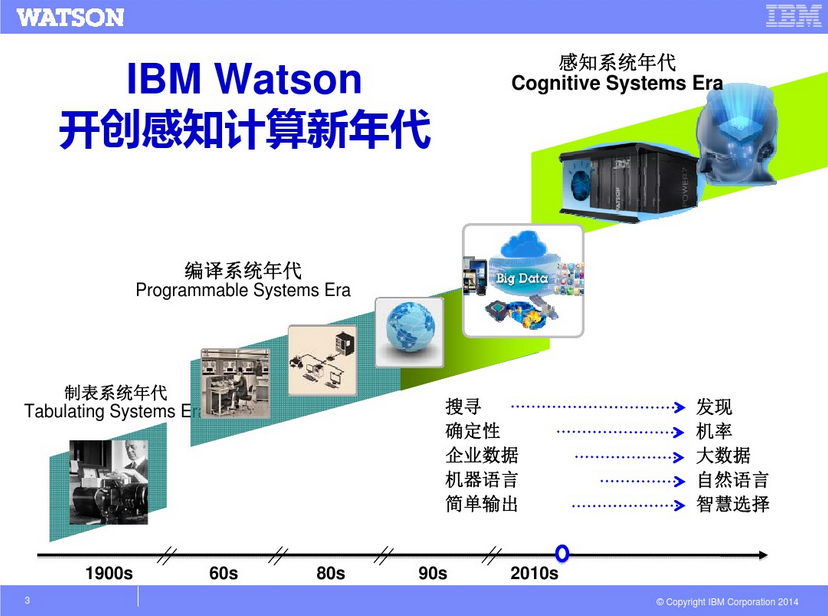
IBM divides the era of electronic computing into three stages. The first stage was the era of tabulating systems, which began in the early 20th century. In 1886, American statistician Herman Hollerith drew on the punched card principle of the Jacquard loom to store data using punched cards. He employed electromechanical technology to replace purely mechanical devices, creating the first tabulating machine capable of automatically performing addition, subtraction, multiplication, and division, as well as accumulating records and generating reports. This tabulating machine was used in the 1890 U.S. Census, reducing the projected ten-year statistical workload to just one year and seven months. This marked the first large-scale data processing using a computer-like device in human history. Hollerith founded the Tabulating Machine Company (TMC) in 1896. In 1911, TMC merged with two other companies to form the Computing-Tabulating-Recording Company (CTR). In 1924, CTR was renamed International Business Machines Corporation, known today as IBM.
The second phase was the era of compiler systems, spanning from the 1960s to 2010. Computer hardware advanced from transistors to large-scale integrated circuits. Meanwhile, the languages understood by computers gradually transitioned from machine code composed of binary digits (0s and 1s) to assembly language and high-level programming languages, enabling data exchange between computers and leading to the proliferation of various computer programs.
The third phase is the era of cognitive systems, which began after 2010. This period is exemplified by the emergence of artificial intelligence, such as Watson with its “cognitive computing” capabilities. IBM initiated the development of Watson in 2006, invested $1 billion to establish the Watson Group in 2014, and formed Watson Health the following year to provide AI-driven cognitive solutions specifically for the healthcare industry.
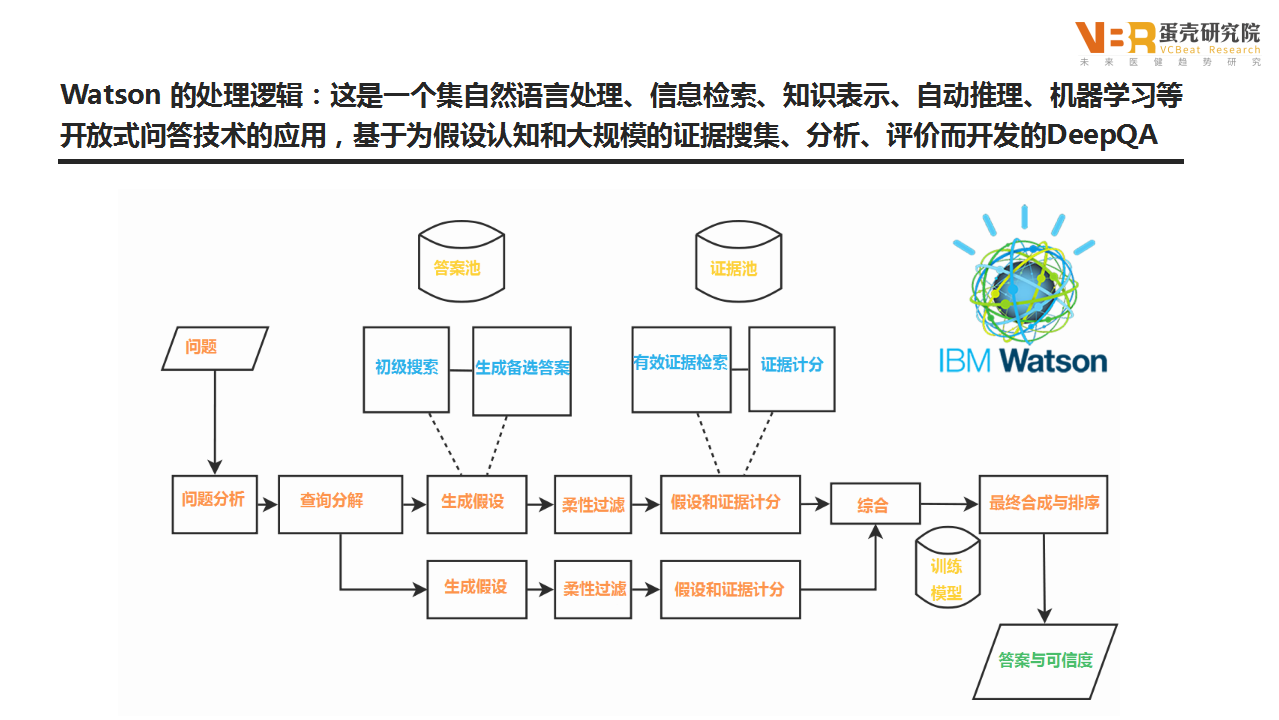
IBM Watson rose to prominence in 2011 when it competed on the American quiz show *Jeopardy!*. During the program, Watson defeated two human champions of the show, an achievement regarded as a milestone in the history of artificial intelligence. At its core, Watson is powered by the DeepQA deep question-answering system, which integrates open-domain question-answering technologies such as natural language processing, information retrieval, knowledge representation, automated reasoning, and machine learning. The system was developed for hypothesis generation and large-scale evidence collection, analysis, and evaluation. The goal of DeepQA extends far beyond answering specific, simple questions; instead, it leverages computational power to establish a large-scale parallel architecture based on probabilistic evidence. It comprehensively employs thousands of algorithms for natural language processing, information retrieval, machine learning, and reasoning to generate multiple hypotheses, then collects, evaluates, and weighs various types of evidence to ultimately provide the best possible answer.
Watson’s capabilities encompass three aspects: comprehension, reasoning, and learning.
First, the ability to “understand” human questions is the first step for Watson to engage in cognitive collaboration, primarily leveraging the computational system’s capability to process structured and unstructured data. Next comes reasoning, where Watson mainly employs an algorithm known as “hypothesis generation” to sift through data and uncover correlations among various elements. Finally, there is learning, wherein Watson extracts key information from big data and learns on an evidence-based foundation.
Watson’s first commercial initiative was in the healthcare sector. By collaborating with Memorial Sloan Kettering Cancer Center, it gained access to extensive clinical oncology knowledge, molecular and genomic data, and historical cancer case records. After undergoing “training” at the center, Watson provided evidence-based treatment recommendations to clinicians. The system was subsequently deployed by Watson Health at numerous leading medical institutions, such as the Cleveland Clinic and MD Anderson Cancer Center, to deliver evidence-based medical decision-support systems.
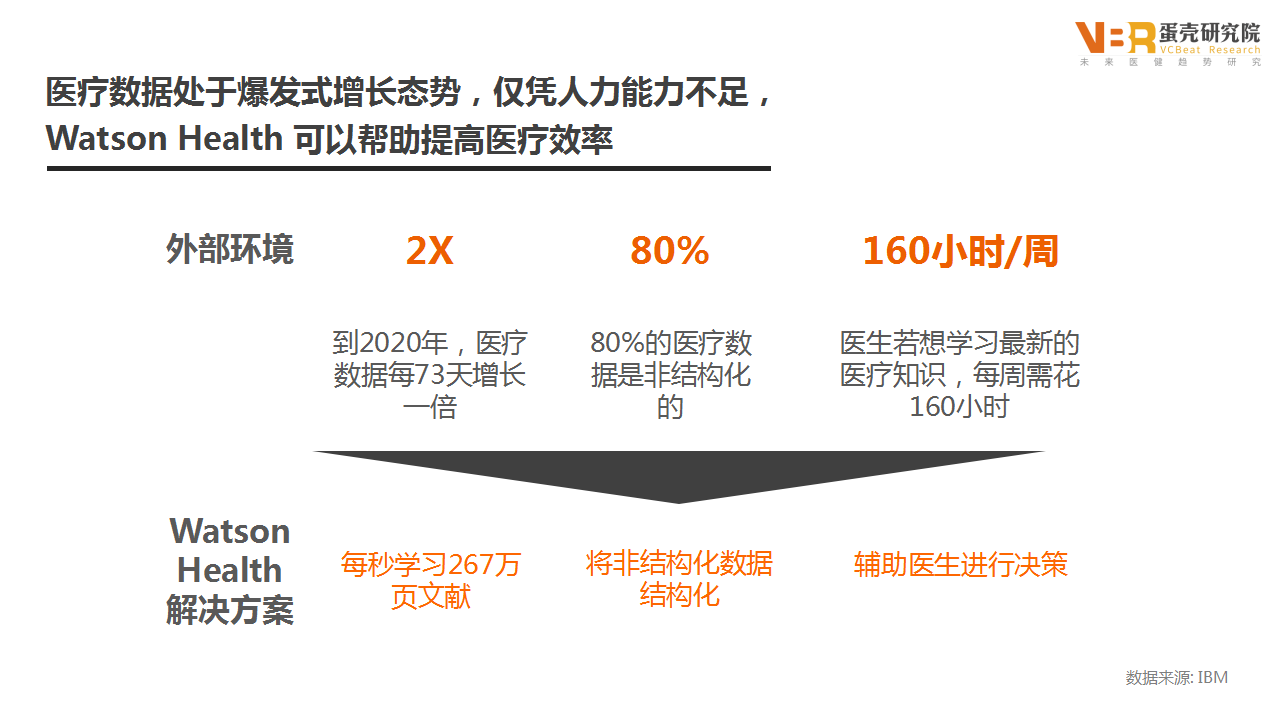
Medical data is experiencing explosive growth, making it impossible to process and learn from using manual labor alone; however, Watson Health can help improve medical efficiency. IBM predicted that by 2020, medical data would double every 73 days. Moreover, more than 80% of this data is unstructured. Unstructured data primarily refers to data that cannot be logically expressed or implemented using a fixed structure, such as videos, audio recordings, and images, which are invisible to computers. Watson, however, can perceive these data types and perform deep learning. To keep up with the latest medical knowledge, physicians would need to spend 160 hours per week studying, whereas Watson can read 40 million documents in just 15 seconds, demonstrating an extremely rapid learning speed.
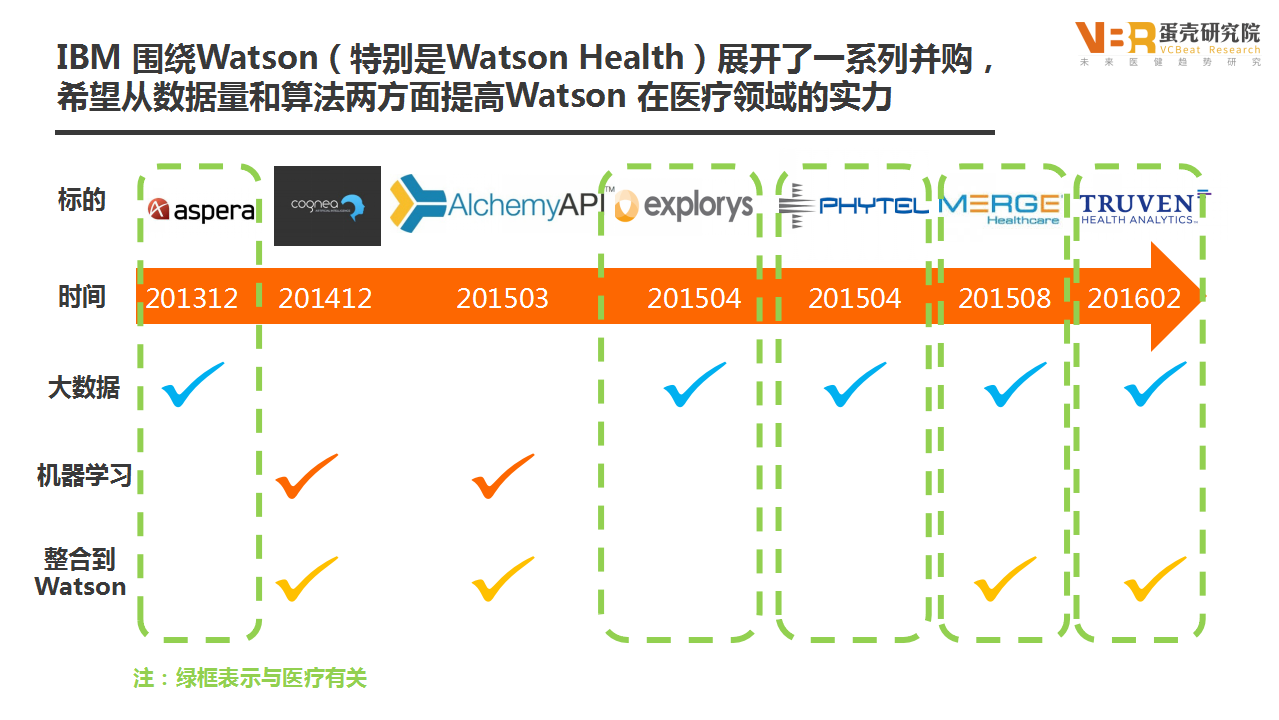
The development of IBM Watson has also involved multiple acquisitions, strengthening its technological capabilities. In early 2015, IBM announced the acquisition of Alchemy API, a platform leveraged by tens of thousands of developers to perform natural language processing and image recognition using machine learning algorithms, thereby enhancing the Watson ecosystem. Shortly thereafter, IBM acquired four healthcare data companies in succession: Phytel, Explorys, Merge Healthcare, and Truven Health Analytics, with the latter acquired for as much as $2.6 billion. Phytel develops cloud-based tools to improve care coordination and outcomes, while Explorys is a cloud-based data analytics company. In August 2015, IBM acquired Merge Healthcare for billions of dollars to bolster Watson Health. Each Watson application requires a period of pre-training, which places demands on computing power and data. As mentioned above, IBM’s investments and acquisitions have been aligned with the company’s long-term development strategy, including the purchases of private cloud provider Blue Box, database management tool Compose, API interface tool StrongLoop, and massive data storage provider Cleversafe, among others. These moves aim to enhance Watson’s capabilities in healthcare and other fields by improving both data volume and algorithms.
Human understanding of tumors has evolved through a lengthy process. From early aggressive surgical resections to radiotherapy and chemotherapy, and further to in-depth genetic research, oncologists have come to recognize that cancer is not a single disease but a broad category of diseases. Even tumors occurring in the same anatomical location can exhibit distinct pathological characteristics across different individuals. For instance, tamoxifen is effective for estrogen receptor (ER)-positive breast cancer but ineffective for ER-negative breast cancer. Due to such specificity, each tumor treatment regimen requires personalized therapy.
Three years ago, Memorial Sloan Kettering Cancer Center partnered with IBM Watson to jointly train the IBM Watson for Oncology solution. Cancer specialists inputted data into WatsonMemorial Sloan Kettering Cancer CenterIt was trained on a vast amount of medical record data. During this period, the system accumulated 15,000 hours of login time, while a team composed of physicians and researchers uploaded thousands of patient medical records, nearly 500 medical journals and textbooks, and 12 million pages of medical literature, training Watson to become an outstanding “oncology specialist.”
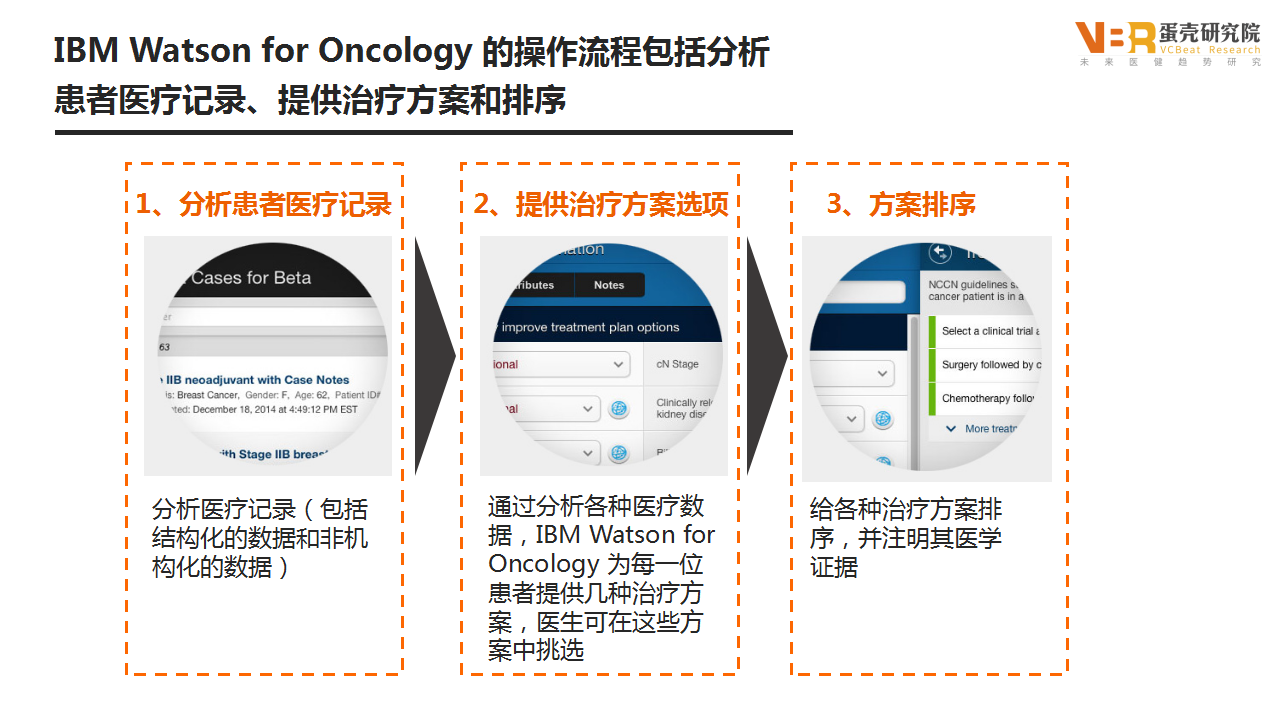
Watson’s approach to cancer treatment is as follows. First, IBM Watson analyzes the patient’s medical records. The Watson for Oncology solution features advanced capabilities to interpret the meaning and context of both structured and unstructured data in clinical records and reports, absorbing key patient information written in plain English that may be critical for selecting treatment options.
Next, Watson identifies evidence-based potential treatment options. By integrating attribute data from patient records with clinical knowledge, external research findings, and data, the Watson for Oncology solution identifies potential treatment options for physicians to consider.
Finally, IBM Watson searches through extensive literature to identify and provide supporting evidence. It ranks the identified treatment options and links each option to its corresponding evidence, thereby assisting oncologists in evaluating treatment plans for patients.
In 2015, 14 cancer centers from the United States and Canada announced the deployment of Watson to select appropriate treatment regimens based on patients’ tumor genomics. Through this collaboration, IBM aims to enable the Watson system to determine treatment plans based on processed genetic information, thereby replacing the current decision-making model of the “tumor board.” A tumor board is a consultative care model established in oncology practice, in which physicians with diverse medical specialties—such as surgical oncologists and pharmacists—convene to discuss the diagnosis and management of complex or rare cancer cases, formulating rational diagnostic approaches and therapeutic interventions.
Watson has been widely adopted by numerous cancer treatment institutions. Headquartered at Bumrungrad International Hospital in Bangkok—the largest private hospital in South Asia and one of the most popular healthcare institutions globally—Bumrungrad selected IBM Watson for Oncology, an innovative cognitive computing solution, to enhance the quality of its cancer care by helping physicians devise the most efficient treatment plans for individual cancer patients.
In August 2016, IBM and Hangzhou Cognitive Network Technology Co., Ltd. jointly announced the launch of Watson in China. Twenty-one hospitals across the country planned to adopt the Watson for Oncology solution, trained by Memorial Sloan Kettering Cancer Center, aiming to leverage this cognitive computing platform to assist Chinese physicians in delivering personalized, evidence-based cancer treatment plans.
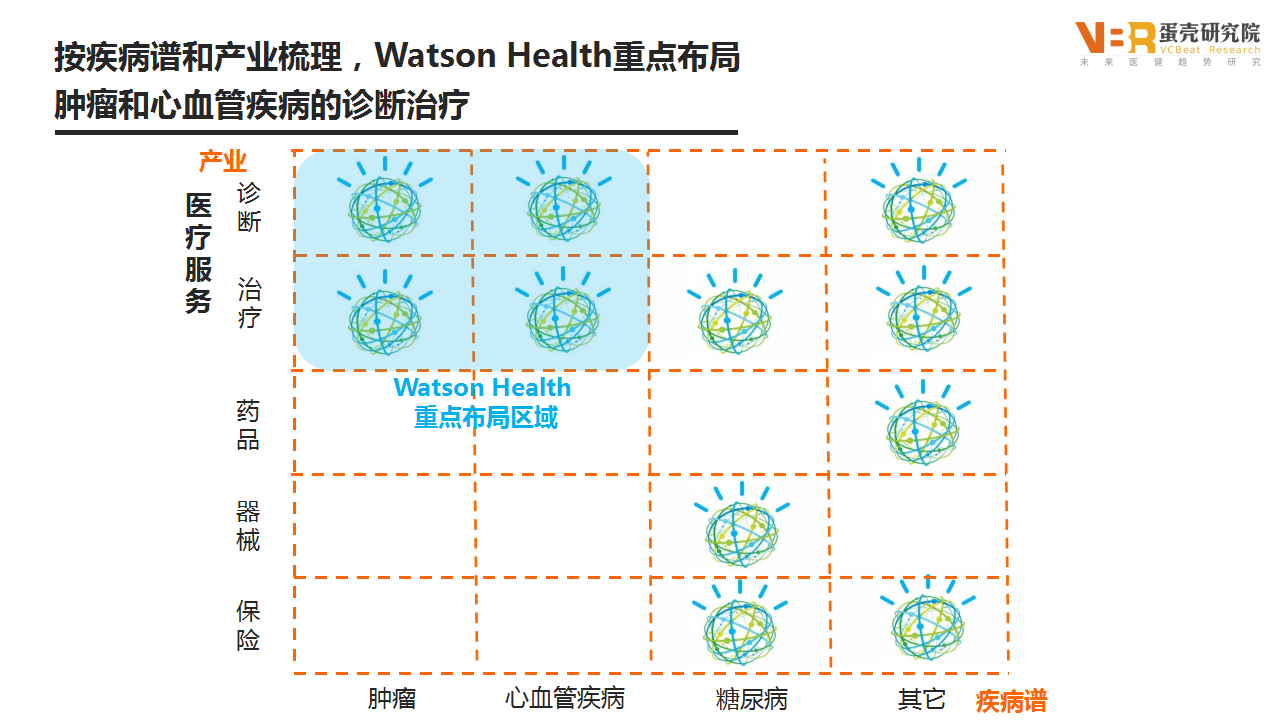
We have mapped out IBM Watson’s healthcare landscape, with its primary focus on the diagnosis and treatment of oncology and cardiovascular diseases. It also extends to other areas, such as diabetes. Below is an overview of Watson’s initiatives across various sub-sectors within the healthcare industry.
VHA: The Veterans Health Administration (VHA), with more than 1,700 care sites, is the largest integrated health care system in the United States, providing medical services to approximately 8.7 million veterans annually. In its quest for a better approach to caring for patients with post-traumatic stress disorder (PTSD), the agency has adopted cognitive computing to help improve the quality of care delivered to these veterans.
Watson can process vast amounts of medical literature, clinical data, and patient medical records to propose appropriate treatment plans for individual patients. It also provides evidence-based answers to a series of questions posed by clinicians. By saving physicians’ research time, Watson helps them devote more time to listening to patients and engaging with them.
CaféWell: A platform created by Welltok, a health and wellness company, that analyzes consumers’ health status from various sources and provides health-related recommendations. To enhance interactivity and personalization, Welltok adopted a cognitive computing approach developed by IBM. The resulting product, CaféWell Concierge, leverages natural language processing and cognitive capabilities to improve user engagement and extract deeper insights from potentially unstructured text sources, such as medical conversations, activity data, and health benefit information.
Baylor: From 23 million candidate documents, a research and development target named p53 was screened out within a few weeks.
Medtronic: By partnering with Medtronic and leveraging its devices, care management products, therapies, coaching, and the IBM Watson Health cloud platform to optimize patient outcomes. The system can predict hypoglycemic events in diabetic patients nearly three hours before they occur, preventing severe hypoglycemia.
Apple: Store and Analyze ResearchKit Data.
Johnson & Johnson: Analyzing Scientific Papers to Uncover Novel Associations for Drug Development.
Under Armour: Launches “Cognitive Coaching System” to Provide Athletes with Guidance on Sleep, Health, Activity, and Nutrition.
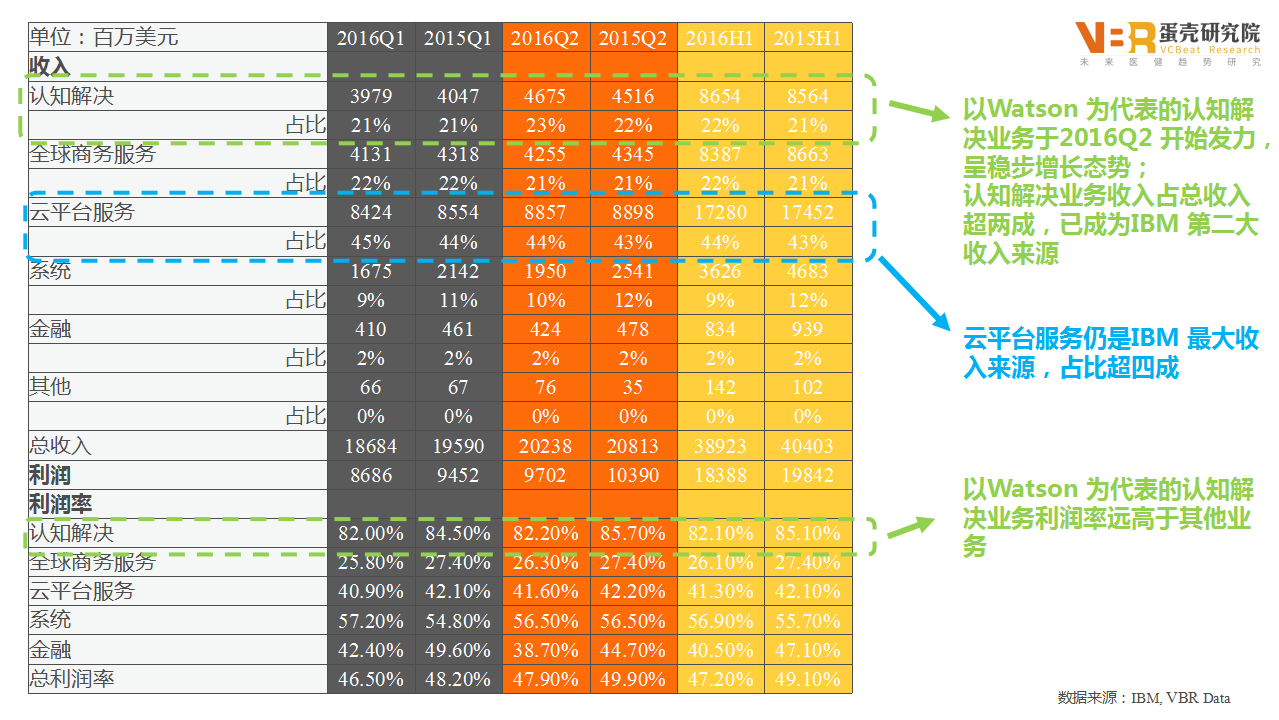
At CES this January,IBM IBM CEO Ginni Rometty stated that IBM is no longer a hardware or software company, but rather a “cognitive solutions and cloud platform” company. Indeed, the least profitable hardware business was divested by IBM first, followed by its software segment. IBM had previously experienced 15 consecutive quarters of year-over-year profit declines, and the Watson intelligent cloud platform has become IBM’s new driver for profitability. According to the second-quarter financial report this year, IBM’s total revenue amounted to $20.238 billion, down from $20.813 billion in the same period last year, marking 17 consecutive quarters of year-over-year decline. However, cognitive solutions businesses represented by Watson began to gain momentum in Q2 this year, showing steady growth. Revenue from cognitive solutions accounted for more than 20% of total revenue, making it IBM’s second-largest source of income.
This concludes Part II. In the next chapter, we will examine venture capital investment data for AI startups in the global healthcare sector over the past five years to gauge the industry’s momentum. Stay tuned.
Related Reading:
Article 1: Tech Giants' AI Strategic Layout
Article 2: A Detailed Analysis of IBM Watson’s AI Applications in Healthcare
Article 3: Analysis of Global AI Venture Capital Investment Data in Healthcare, 2011–2016
Part IV: What Can Be Achieved by Integrating Artificial Intelligence into Healthcare? (Part 1)
Part V: What Can Healthcare Achieve with Artificial Intelligence? (Part 2)
If you can’t wait, you can also view the full report in advance by clicking the link below to purchase:
2016 Report on Innovation Trends in AI for Healthcare