

Soaring Demand in Rehabilitation Healthcare Drives Promising Growth for Rehabilitation Robotics
Do you recall the moment at the opening ceremony of the Brazil World Cup when Juliano Pinto, a Brazilian young man with paraplegia, kicked off the tournament with the aid of brain-controlled mechanical exoskeleton technology? The device that enabled him to walk was a brain-controlled exoskeleton robot, a type of rehabilitation robot. Rehabilitation robots can assist patients with mobility impairments—such as those caused by stroke, traumatic nerve injury, limb disability, or age-related decline—in undergoing treatment and rehabilitation.

As a significant branch of medical robotics, rehabilitation robotics encompasses multidisciplinary fields including rehabilitation medicine, biomechanics, mechanics, computer science, and materials science, representing a typical integration of medicine and engineering. The fundamental cause of stroke-induced disability is not intrinsic limb pathology, but rather central nervous system damage that results in loss of motor control. Rehabilitation training can rebuild the neural connections between the limbs and the central nervous system, stimulate recovery in damaged brain regions, and restore effective limb control. Motor impairments caused by stroke and spinal cord injuries require intervention through rehabilitation devices. In China, the disability rate following stroke is as high as 75%, whereas in Western countries, due to advanced rehabilitation therapies, the post-stroke disability rate is only 30%.
Rehabilitation medical needs primarily come from three groups of people:
First, the elderly population. The main conditions requiring rehabilitation treatment among the elderly are high-prevalence diseases such as hypertension, diabetes, arthritis, cardiovascular and cerebrovascular diseases, and respiratory system diseases. As China’s aging population deepens, by the end of 2011, the number of people aged 60 and above nationwide reached approximately 190 million, of whom more than 70 million required rehabilitation services.
Second, the population with disabilities. According to the Sixth National Population Census and the Second National Sample Survey on Persons with Disabilities, by the end of 2010, the number of persons with disabilities in China had reached 85.02 million, among whom more than 50 million had rehabilitation needs;
Third, patients with chronic diseases and individuals in a sub-health state require rehabilitation services. It is projected that by 2030, the prevalence of chronic diseases in China will reach as high as 65.7%, with 80% of these patients requiring rehabilitation.
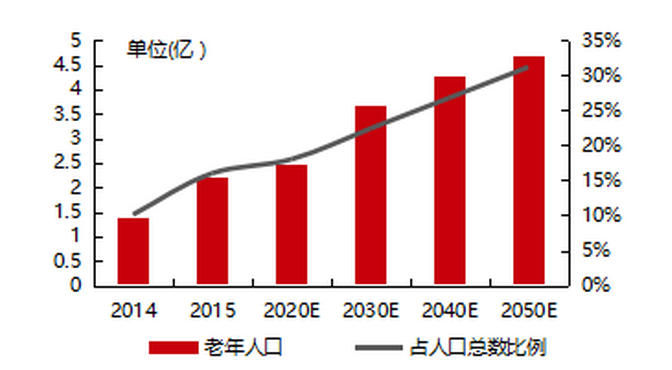
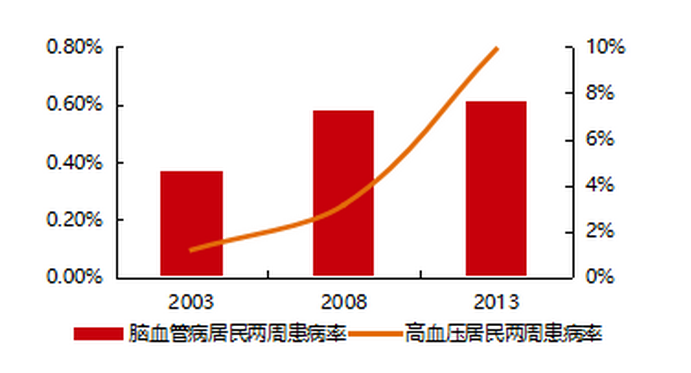
From 1998 to 2008, the incidence rate among Chinese residents continued to rise, particularly for chronic diseases such as hypertension, heart disease, and diabetes. According to data from the Fourth National Health Services Survey in 2008, the prevalence of chronic diseases increases with age. The shift in disease patterns driven by population aging, combined with the rehabilitation needs associated with high-incidence conditions among the elderly and disability resulting from chronic diseases, will continue to expand the demand for rehabilitation medical services.
Traditional rehabilitation therapies, such as acupuncture administered by rehabilitation therapists based on patients’ conditions, are associated with low cure rates and unpredictable outcomes. The emergence of rehabilitation robots can enhance rehabilitation efficacy and improve patients’ quality of life. As China enters an aging society with a growing elderly population, the incidence of stroke and other cerebrovascular diseases is rising, leading to an expanding gap in the demand for rehabilitation robots. Meanwhile, rising national income and heightened public awareness of healthcare have rendered current rehabilitation services inadequate to meet people’s needs. Therefore, the rehabilitation robot industry holds substantial growth potential.
Development of Rehabilitation Robots
The first commercially available rehabilitation robot was Handy1, developed by Mike Topping of the United Kingdom in 1987, marking nearly 30 years of development history to date. The earliest two rehabilitation robots to enter the market were Handy1 and another model named MANUS. Handy1 has five degrees of freedom, enabling individuals with disabilities to eat at table height. MANUS is a humanoid robotic arm mounted on a wheelchair with six degrees of freedom, offering a working range that extends from the floor to the height reachable by a standing person.
Currently, rehabilitation institutions abroad are primarily equipped with traction-based/suspension-based rehabilitation robots that feature multiple degrees of freedom, enhanced functionality, and a high level of automation. There is no universally accepted standard for the classification of traction-based/suspension-based rehabilitation robots. Based on the targeted limb segments, they are mainly categorized into traction-based upper-limb rehabilitation robots, traction-based lower-limb rehabilitation robots, and suspension-based lower-limb rehabilitation robots.
Currently, the most advanced rehabilitation robots are wearable exoskeleton robots. Designed based on bionic principles and integrated with ergonomics, they can be worn on affected limbs. Each joint is equipped with an independent actuator, ensuring that the robot’s movement patterns are coaxial with the human body’s degrees of freedom after the patient puts it on, thereby enabling more effective rehabilitation training. Representative products include the ReWalk series from Israel’s ReWalk Robotics, HAL from Japan’s Cyberdyne, eLEGS from the US-based Berkeley Bionics, and REX from New Zealand’s Rex Bionics.
Most exoskeleton robots currently on the market or under development feature rather complex designs and are inconvenient to use. This is because they require extensive mechanical structures, electrical components, and power supply systems to support the patient’s weight and assist with ambulation.In February this year, a cross-disciplinary international research team from Europe began developing XoSoft, a soft bionic exoskeleton that can be worn like pants. Nine organizations from seven EU countries are participating in this highly innovative R&D project, with the product prototype expected to be launched before 2019.
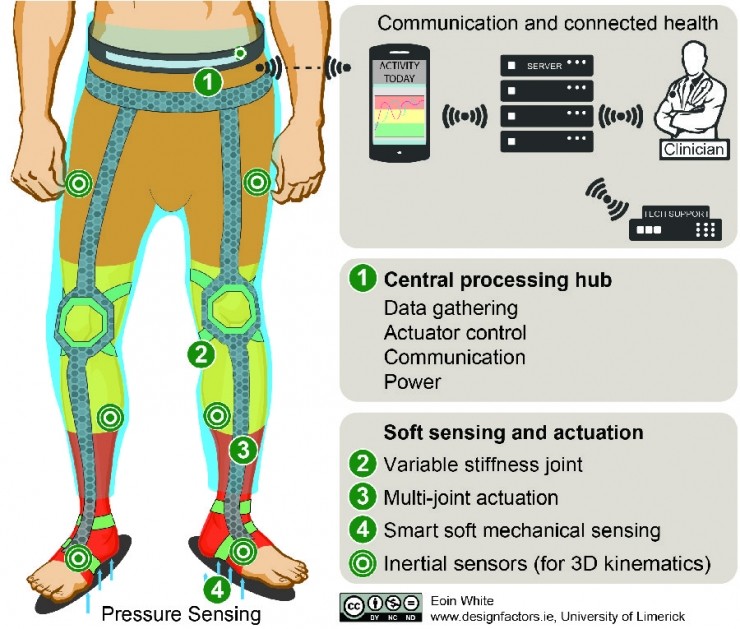
Unlike other exoskeleton robots, XoSoft’s most distinct feature is its soft structure. By wearing this lower-limb exoskeleton, which resembles a pair of jeans, elderly individuals and people with disabilities can significantly improve their independent mobility. This exoskeleton utilizes advanced textiles and smart materials to create sensors and rigid joints. Built-in sensors detect the user’s movements and intentions, enabling real-time analysis by various control units and delivering appropriate assistance through actuators. In other words, the type of assistance provided by the exoskeleton is entirely determined by the user’s instantaneous needs. It helps patients restore limb function comparable to that of healthy individuals, while its sleek design and lightweight build allow users to almost forget they are wearing it. This may well represent the future direction of wearable rehabilitation robotics.
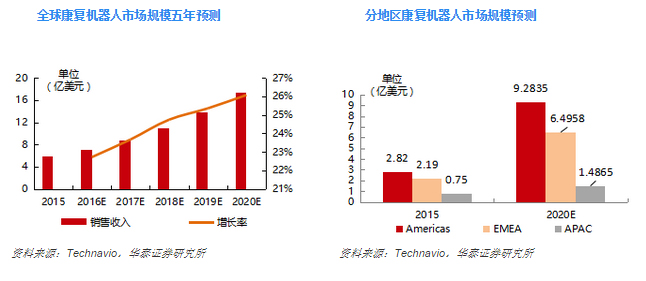
In a report released in March 2016, the UK market research firm Technavio stated that global sales revenue (industry size) for rehabilitation robots amounted to USD 577 million in 2015. The market size is projected to reach USD 1.73 billion by 2020, representing a compound annual growth rate (CAGR) of 24.51%. The market share and growth rate of rehabilitation robots in developed regions such as the United States and Europe are significantly higher than those in developing countries.

According to data from another statistical firm, Grand View Research, surgical robots account for the largest proportion among various medical robot products, exceeding 60%, making them the best-selling type of medical robots. Minimally invasive radiosurgery systems follow, accounting for approximately 20%. Emergency response robots, exoskeleton robots, assistive rehabilitation robots, and non-clinical hospital robots each hold relatively small market shares. Although surgical robots command the largest market share in the medical robotics sector, rehabilitation robots are experiencing the fastest growth rate.
According to Grand View Research, the market share of exoskeleton robots and assistive rehabilitation robots increased significantly from 2012 to 2022. It is estimated that the compound annual growth rate (CAGR) of the broader category of rehabilitation robots will be approximately 37% over the next five years. Within this segment, the CAGR for rehabilitation robots is projected at 21%, while that for exoskeleton robots is expected to reach 47%, far exceeding the average growth rate of other categories of medical robots. Although there are slight discrepancies in the specific figures projected by these two companies, they both concur that the growth rate of rehabilitation robots is the fastest among all medical robot categories.
Global Leader in Rehabilitation Robotics
ReWalk Robotics
ReWalk Robotics, an Israeli provider of exoskeleton systems, went public on the Nasdaq in September 2014. The company manufactures wearable powered exoskeleton devices that help individuals with paraplegia regain mobility. ReWalk received European Union certification in 2012, enabling its entry into the European market. In June 2014, ReWalk’s exoskeleton product obtained approval from the U.S. Food and Drug Administration (FDA), becoming the first and only exoskeleton product to receive FDA clearance.
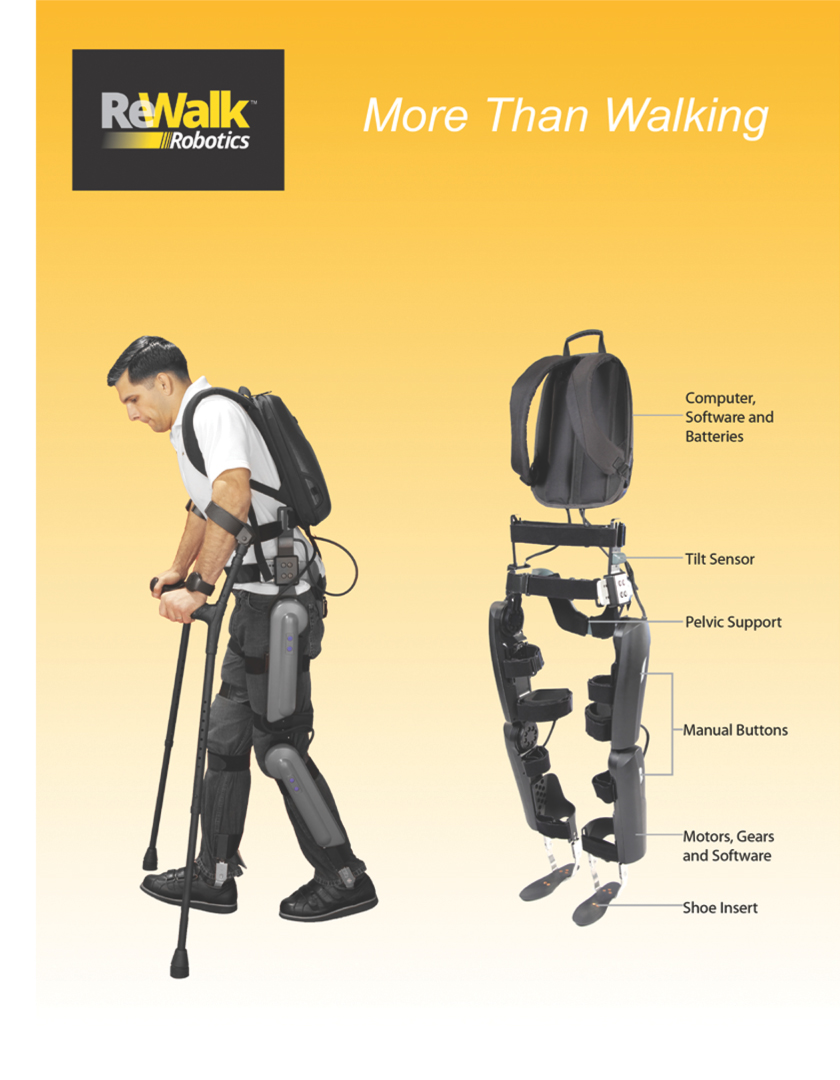
The company currently offers two products: ReWalk Personal and ReWalk Rehabilitation. The former is primarily designed for use in home, work, or social settings, enabling patients to stand, walk, and climb stairs through the use of sensors and monitors. The latter is intended for clinical rehabilitation, providing physical therapy for paralyzed patients by alleviating limb pain and muscle spasticity caused by paralysis, improving bowel function, and accelerating metabolism. Stroke survivors and individuals with cerebral palsy are also target populations for ReWalk’s future expansion.
HOCOMA AG
HOCOMA AG, a Swiss company founded in 1996, collaborates with universities across Europe and the United States to develop high-end rehabilitation therapy and training products. As an internationally renowned medical rehabilitation robotics company, it possesses advanced technologies in numerous fields, including ergonomics, electronic sensors, computer hardware and software, and artificial intelligence.
The company primarily offers four rehabilitation robot products:
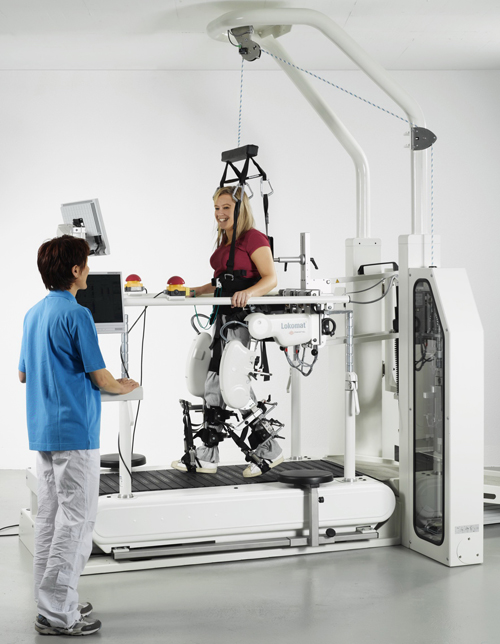
Lokomat: A gait training robot capable of providing real-time feedback and assessment, it demonstrates significant rehabilitative efficacy for patients with neurological disorders such as stroke, spinal cord injury, traumatic brain injury, and multiple sclerosis. Currently, Lokomat holds a near-monopoly on China’s high-end rehabilitation robotics market.
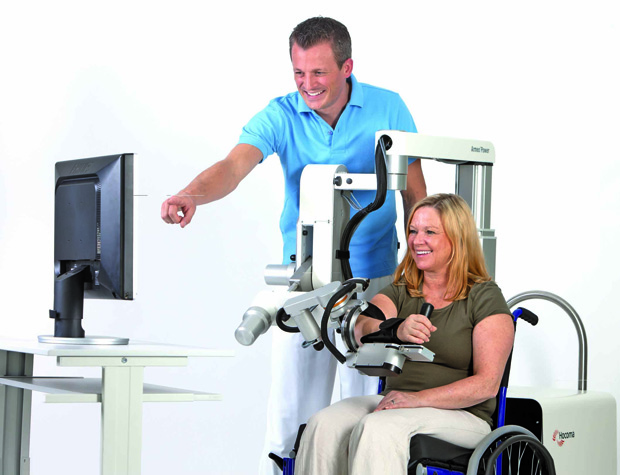
Armeo: An upper-limb rehabilitation robot that provides real-time feedback and assessment, supporting comprehensive kinematic chain therapy from the shoulder to the fingers. It automatically adjusts assistance levels based on the patient’s condition, enabling high-intensity early-stage rehabilitation even for patients with severe symptoms.
Erigo: An integrated tilt-robot system for early neurorehabilitation training in long-term bedridden patients.
Valedo Series: Designed for the treatment of back pain, the series includes three products—Valedoshape, Valedomotion, and Valedo—for spinal assessment, clinical treatment, and home-based therapy, respectively.
Ekso Bionics
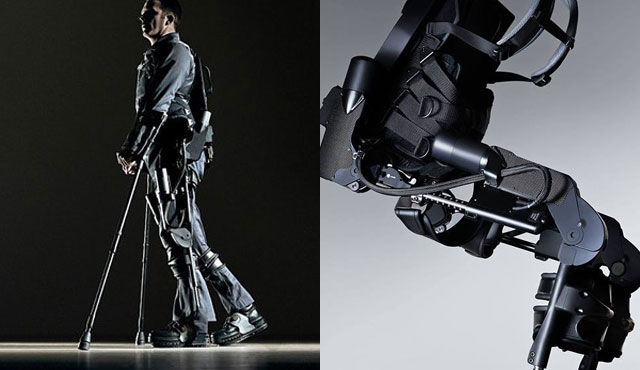
Ekso Bionics is a publicly traded company, formerly known as Berkeley Bionics. As a pioneer in applying robotic exoskeletons to enhance human mobility, the company has collaborated with the military for over a decade and began researching solutions for individuals with lower-limb paralysis in 2012. Since its inception, Ekso Bionics has established partnerships with world-class research institutions such as the University of California, Berkeley, secured research funding from the U.S. Department of Defense, and obtained patented technologies from Lockheed Martin.
Ekso Bionics is an exoskeleton robot that leverages bionic principles to enable individuals with lower-limb paralysis to stand up and walk on the ground through weight support and a four-point mutually compensatory gait. Walking is initiated by the user’s forward weight shift, with battery-powered motors driving the legs to substitute for neuromuscular function.
Cyberdyne
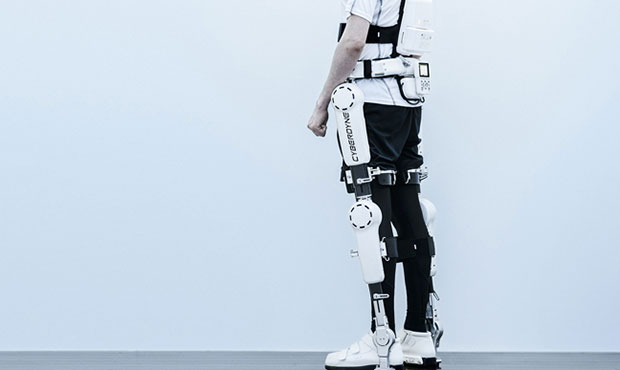
Cyberdyne is a Japanese company specializing in exoskeleton rehabilitation robots. Cyberdyne has commercialized the inventions of Professor Yoshiyuki Sankai and his laboratory at the University of Tsukuba. The company’s products fall under the category of Hybrid Assistive Limbs (HAL), and it has currently developed devices for lower-limb assistance and robotic arms.
The most appealing feature of Cyberdyne is its mind-controlled operation. When the brain intends to move a limb, the human nervous system and muscles emit weak electrical signals; a series of sensors mounted on the exoskeleton continuously monitor these signals and execute corresponding movements.
Open Bionics
Open Bionics is a privately held company specializing in medical, assistive, and operational robots. The company’s products are affordable robotic prosthetic arms. The Open Bionics bionic hand weighs the same as a human hand and connects to the arm muscles via medical-grade electrodes. When the arm muscles contract, electrical signals are generated on the skin surface. Sensors detect these signals and transmit them to the robotic hand.
Domestic Rehabilitation Robots
Jinghe Tech Innovation
Flexbot Multi-Position Intelligent Rehabilitation Robot System, launched by a joint venture between Qianjing Group and Zhanghe Electric, is designed to assist in the rehabilitation of patients with stroke, traumatic brain injury, and spinal cord injury. Flexbot provides a lower-limb rehabilitation training workstation that accurately simulates normal human gait, thereby enhancing the efficacy of lower-limb walking function training.
Anyang Shenfang
The upper-limb rehabilitation robot developed by Anyang Shenfang Rehabilitation Robot Co., Ltd. has officially passed the market access review for medical devices, becoming the first product in China’s rehabilitation robotics industry to be applied in clinical settings and obtain a medical device registration certificate. Its market launch will break the reliance on imported products for upper-limb rehabilitation robots in China.
Jinming Precision Machinery
Jinming Precision Machinery and the Department of Mechanical Engineering at Tsinghua University have established a Joint Research Center to conduct research on neurological rehabilitation robots. Compared with similar technologies abroad, the neurological rehabilitation robot developed by Professor Ji Linhong’s team at Tsinghua University has reached an internationally leading level, particularly in applying feedback control technology to clinical training protocols and in therapeutic techniques for alleviating spasticity.
Dima Shares
Dima Co., Ltd. partnered with the University of Electronic Science and Technology of China in 2015 to conduct joint research and development in areas including personal work platforms based on exoskeleton technology, human-machine coupling technology, assistive exoskeletons, and rehabilitation medical exoskeletons.
Explore the Evolution of Rehabilitation Robotics and Chart the Path to Recovery at the World Medical Robot Conference. Featuring Exoatlet, a Russian startup specializing in exoskeleton rehabilitation robots, sharing its authentic R&D journey on-site!
Venue: Wuzhou Hotel, Shenzhen, China
No. 6001 Shennan Avenue, Futian District, Shenzhen
Conference Dates: October 29–30, 2016

Click the link below or scan the QR code to register. For investment promotion and sponsorship inquiries, please contact Peipei at VCBeat (WeChat ID: xiaopeiling185025).

Related Reading: