

Shenzhen Pioneers Mobile Medical Insurance Payment with Tencent's One-Click Hybrid Payment Solution
Leveraging “Internet Plus” technology, substantial innovative measures have been introduced to address the persistent issue of “three long waits and one short consultation” that plagues both patients and physicians. Shenzhen has taken the lead nationwide in streamlining the mobile medical insurance payment process, enabling users to complete a “hybrid payment” combining medical insurance coverage and out-of-pocket expenses with a single tap via WeChat on their smartphones. This advancement has completely transformed the traditional experience of seeking medical care and making payments.
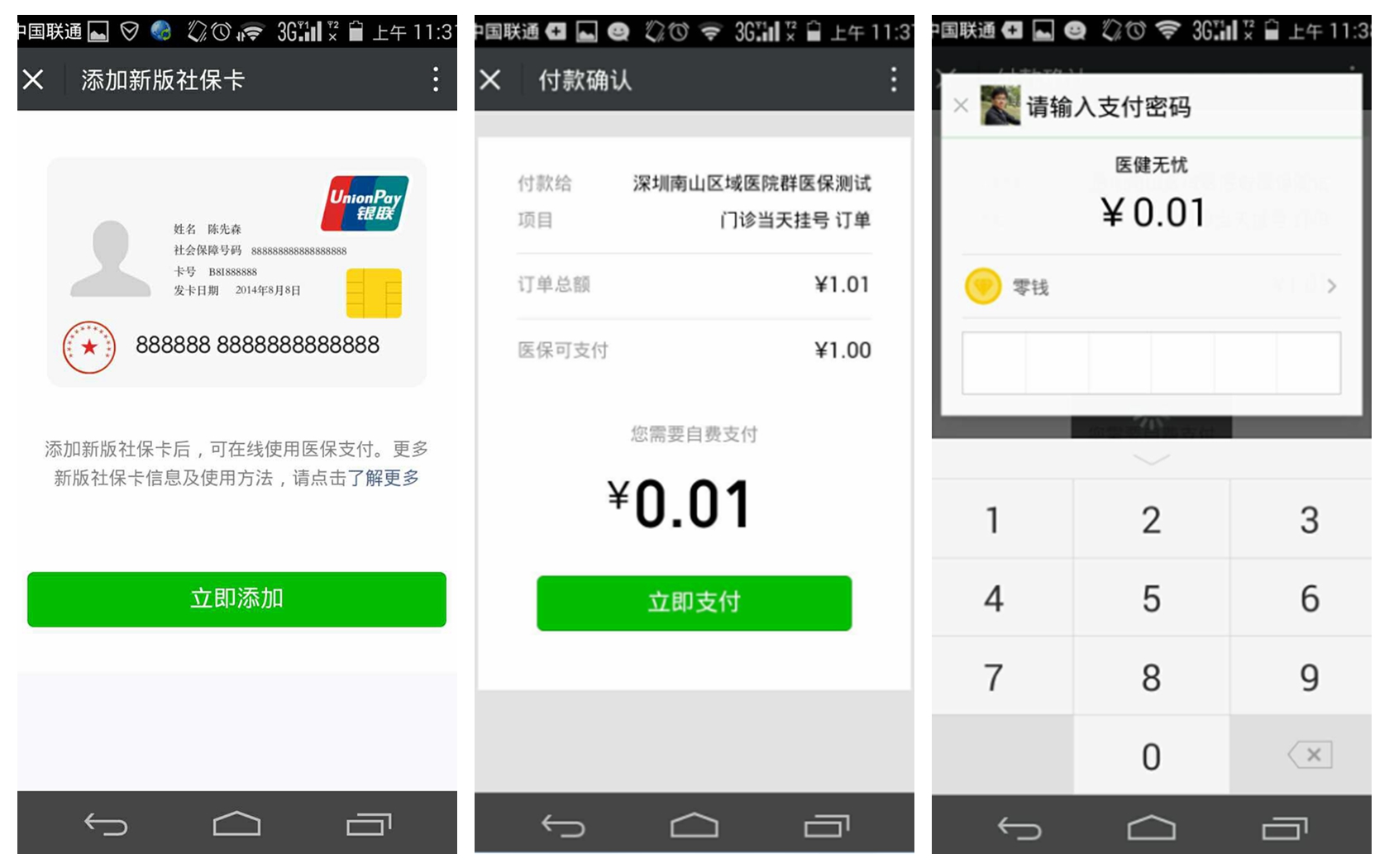
After binding your social security card on the WeChat City Services platform, you can enjoy "hybrid payment" combining medical insurance coverage and out-of-pocket expenses.
As the first innovative case in China to enable mobile medical insurance payment capabilities and a key component of the “Smart Human Resources and Social Security” service model, the Tencent Medical Insurance joint project team integrated its technical capabilities and resources, working closely with the Shenzhen Municipal Human Resources and Social Security Bureau, the Nanshan District Health and Family Planning Commission, Kingdee, and other stakeholders. Together, they overcame numerous informatization challenges in traditional medical consultation and payment processes, creating an innovative “Internet + Healthcare” model.
Enabling mobile medical insurance payment capabilities means not only that patients can pay for medical services via WeChat Pay, but also that the entire healthcare journey can be digitized on the WeChat platform. By opening WeChat Wallet, accessing the City Services platform, and linking their electronic social security card, users can enjoy convenient “hybrid payment” combining medical insurance coverage and out-of-pocket expenses. Additionally, they can complete self-service tasks across the full spectrum of care, including online appointment registration and medical information inquiries, through the Tencent Internet+ Healthcare platform.
During the medical visit, the system automatically pushes patient service information to the WeChat interface on their mobile phone, assisting patients in completing the entire process from registration to payment settlement. Registration details, medication information, pricing lists, and payment information are disclosed openly and transparently, promptly informing patients of the tasks they need to complete. If either the health insurance or out-of-pocket payment fails, the system automatically initiates a refund process to prevent financial loss for the user.
Implementing mobile medical insurance payment is a crucial component of the government’s initiative to establish a smart human resources and social security service system, as well as a successful practice of empowering human resources and social security work through the “Internet Plus” strategy. Since the State Council issued the Guiding Opinions on Actively Promoting the “Internet Plus” Action in 2015, it has explicitly called for the vigorous promotion of city services based on mobile internet platforms, including online social security administration and medical insurance settlement, as well as convenient healthcare services such as appointment scheduling and price calculation and payment. “Internet Plus” refers to the deep integration of internet-based innovations with various socioeconomic sectors, including human resources, social security, and healthcare, thereby fostering new forms of development.
Shenzhen achieved a nationwide breakthrough by becoming the first city in China to implement mobile medical insurance payments, a feat made possible by its pioneering spirit in “Internet Plus” innovation. Meanwhile, Tencent opened up its five core “Internet Plus” capabilities—cloud computing, big data, location-based services (LBS), payment solutions, and security—and partnered with ecosystem allies such as Kingdee to connect government agencies, hospitals, and hundreds of millions of users. By leveraging technological innovation, they addressed critical pain points such as difficulties in accessing medical care and cumbersome administrative procedures, thereby improving public welfare.