

Historic Alliance of U.S. Tech Giants Launches Partnership on AI with IPO Filing
This is an unprecedented collaboration among tech giants! VCBeat (WeChat ID: vcbeat) has promptly republished information about this newly formed, most powerful AI organization on Earth to share with our readers~
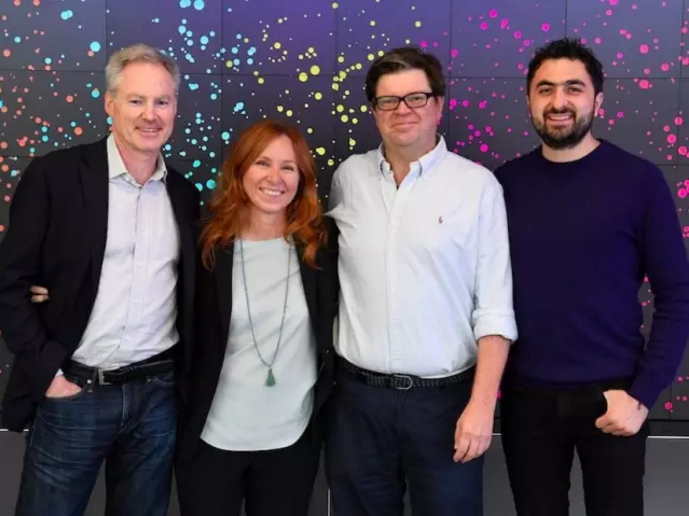
A partial list of the star-studded lineup includes Eric Horvitz, Director of Microsoft Research Redmond; Francesca Rossi, AI Ethics Researcher at IBM; Yann LeCun, Head of Facebook AI Lab; and Mustafa Suleyman, Co-founder of Google DeepMind.
The full name of the organization is the Partnership on Artificial Intelligence to Benefit People and Society., abbreviated as the Partnership on AI. The organization was established to focus on researching and addressing the various challenges that AI poses to human society, and to explore how humanity can most effectively leverage rapidly advancing technology.
The collaboration was announced to the media via a teleconference by the AI heads of the respective companies. They stated that this partnership would facilitate more effective advancement of research in the field of artificial intelligence and provide reference information for other stakeholders in the AI sector, thereby supporting them in the development of their own systems.
Tech leaders also shared this major good news with everyone on Twitter.
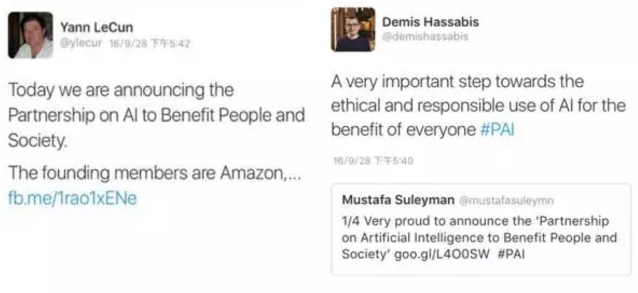
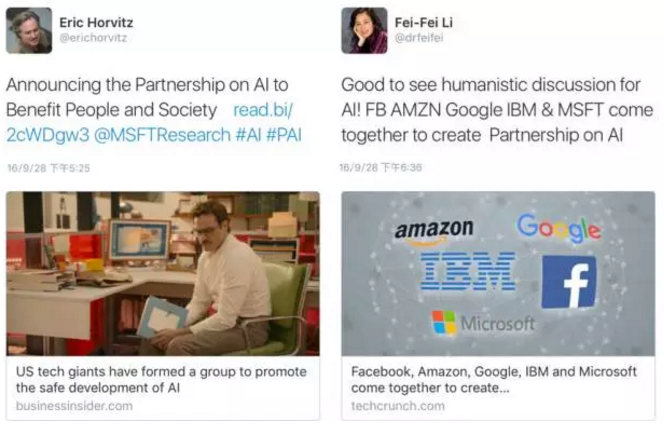
From healthcare, education, and manufacturing to smart homes and transportation, the development of AI has improved human living standards in every aspect. However, numerous theories about the threats posed by AI have emerged today, such as those proposed by renowned scientist Stephen Hawking and tech mogul Elon Musk, who warned that AI could ultimately lead to the end of humanity.
Nowadays, the primary task for many software developers worldwide is to write programs that enable machines to learn from their environments. However, a growing number of people are concerned that if this trend continues, machines with their own consciousness could pose hidden risks, with certain aspects of their intelligence potentially harming human society. Other viewpoints, such as that of Nick Bostrom, a professor at the University of Oxford, suggest that superintelligent machines will surpass human intelligence within a few decades.
Mustafa Suleyman, co-founder of DeepMind, Google’s AI lab, has proposed that tech companies should begin to increase public engagement in AI research and development to foster a more comprehensive understanding of artificial intelligence. “The positive impact of AI largely depends on public engagement,” he stated, adding that this new organization will further refine Google’s existing AI Principles Board.Google’s AI Ethics Board was established in 2014 when the company acquired DeepMind for $400 million, but it has remained confidential to this day.
Yann LeCun, head of Facebook’s AI Lab, and Ralf Herbrich, head of machine learning at Amazon, stated that AI has the potential to improve the living standards of millions of people, emphasizing its critical significance for the future of human society.
“As researchers in this field, we take the public’s trust in us very seriously and strive to ensure that AI research and development are grounded in the maximization of human values,” said LeCun. “We hope that, through collaboration with other companies in the industry and sharing the latest findings, every day will bring”New breakthroughs and advances, which are no longer confined to Facebook but extend to the entire field of AI research.“We believe that by working together with other outstanding companies in this direction and sharing our respective perspectives, we can drive the entire AI field toward more responsible development.”
Funding for the consortium will also come from all founding companies—tech giants that are commercial competitors of one another. The specific location of the organization’s headquarters and staffing arrangements have not yet been determined, but these matters are expected to be decided in the coming weeks.
Through AI collaborative organizations, these American tech giants willConducting AI research in the following areas:
Ethical Standards, Fairness, and Inclusivity;
Transparency, Personal Privacy, and Interoperability;
Human-AI Collaboration;
Trustworthiness, Reliability, and Activity of AI.
The organization’s board of directors will be composed of corporate and non-corporate members, selected according to specific criteria. Academic representatives and nonprofit organizations will also be invited to participate, along with other entities interested in AI regulation, such as Elon Musk’s OpenAI. The organization disclosed that it is already in discussions with the Association for the Advancement of Artificial Intelligence (AAAI) and the Allen Institute for Artificial Intelligence (AI2) regarding their membership.
“In the coming weeks, we will announce the non-corporate members joining the AI partnership organization, as well as other components within the organization,” said Suleyman.
The AI Cooperation Organization has established the following principles:
We will strive to ensure that AI technology benefits more people.
We will conduct public science education while actively listening to feedback from the public and engaged stakeholders, promptly reporting our research progress to them, and addressing their concerns.
We are committed to open research on the ethical, social, economic, and legal dimensions of AI.
We believe that the research and development of AI cannot proceed without the participation and contributions of various stakeholders.
We will incorporate stakeholders from the business sector into the organization to ensure that concerns and opportunities in specific areas are understood and addressed.
We are committed to maximizing the benefits of AI while addressing potential threats and challenges.
Sources: Business Insider, TechCrunch, etc.
Compiled by Agnes Pan