

Verily Unveils New Health-Focused Smartwatch for Clinical Research with Advanced Biometric Monitoring
According to MIT, Verily, the life sciences laboratory under Alphabet (Google’s parent company), is developing a health-focused smartwatch and has already produced hundreds of prototypes. Leaker Antonio Regalado stated that the current white, round-shaped watch design (which has undergone at least two upgrades) differs significantly from the nearly square shape of the first generation released in 2015. As for the final appearance of the product to be released in the future, Chief Technology Officer Brian Otis has not disclosed precise details.
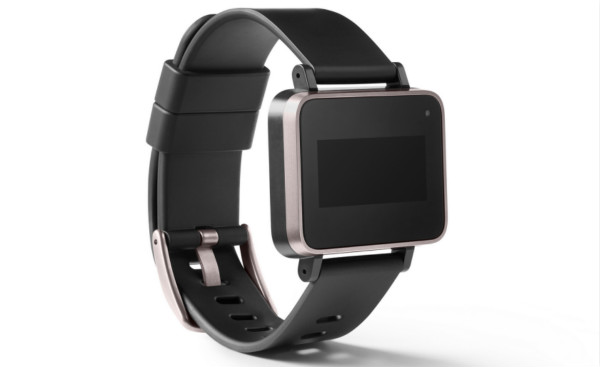
One year ago, when I first learned ofAlphabetsmartwatch with a square design, intended exclusively for research and clinical use, capable of measuring heart rate, skin temperature, low-dose radiation exposure, noise levels, and other parameters; at that time, it was a highly forward-looking project within Google X Lab. Although Google underwent significant restructuring within a year, its pace of innovation never slowed.
withUnlike the Apple Watch, Verily’s smartwatch is not a consumer-grade device; rather, it is positioned for medical research, enabling large-scale monitoring of individuals’ physiological conditions, with its most likely application being in the Health Baseline Project.
The Baseline Project, a collaboration between Verily, Duke University, and Stanford University, aims to map human health through the collection of biological samples and the creation of a large-scale biomedical dataset. By identifying biomarkers associated with various diseases, the project seeks to develop big data-driven techniques for disease prevention and diagnosis, potentially enabling the prevention of epidemics as well as common conditions such as heart disease and cancer. Later this year, Verily may conduct pilot testing involving 1,000 to 2,000 participants.
Regarding the specific technical details of the smartwatch, there are some distinctive features. Traditional smartwatches typically use LCD or OLED displays capable of rendering rich colors, whereas this model is equipped with an e-ink display. This design choice not only helps extend the battery life of the wearable device but also further suggests that the device is not intended for consumer markets, but rather serves primarily to collect health data.
What data is collected? Brian Otis refers to it as “a heart and activity monitor.” In terms of sensors, there is nothing particularly novel about this device: it incorporates an accelerometer and gyroscope for motion detection, along with a photoplethysmography (PPG)-based LED on the back to measure heart rate.In addition to other sensors that can detect electrodermal activity, future models will also incorporate blood pressure monitoring capabilities—features not commonly found on the Apple Watch or Fitbit fitness trackers. It is foreseeable that the new smartwatch will play a significant role in preventive care and remote monitoring.
Verily has made efforts to improve the accuracy of data collection. First, by using an external ring to test data from different body locations and pairing it with the metal pads on the back of a watch, more accurate electrocardiogram (ECG) measurements can be achieved. However, engineers have not provided precise figures on just how accurate the data is. Additionally, Verily is seeking new breakthroughs in blood pressure measurement methods. The company has already recruited David He, a blood pressure measurement expert from the well-known startup Quanttus, signaling its aggressive push toward innovation.
Brian Otis, Chief Technology Officer of Verily, stated that the company is currently developing its own chips with the aim of minimizing energy consumption. Equipped with sensors for measuring various physiological data within the human body, these devices can continuously monitor users’ vital signs. In this regard, Apple’s Apple Watch falls short. Perhaps this smartwatch represents only a small component of Verily’s broader health initiative, as the company strives to leverage intelligent hardware and big data analytics to enhance clinical research services. This is Verily’s true ambition.