

China's Commercial Health Insurance: Rapid Growth, Life-Insurance-Like Products, and Widespread Losses
Recently, Founder Securities released an industry report titled “Commercial Insurance Completes the Closed-Loop Business Model of Internet Healthcare.” From the perspectives of healthcare reform and medical big data, the report offers constructive insights on breaking the current impasse in internet healthcare business models. VCBeat (WeChat official account: vcbeat) has distilled the core viewpoints into four chapters, which will be presented sequentially in the coming days.
With increasing policy support, China’s health insurance sector has entered a phase of rapid growth. In 2015, premium income from health insurance in China reached RMB 241 billion, representing a year-on-year increase of 52%, with the growth rate rising by 9 percentage points compared to the previous year. The growth momentum of health insurance has continued to strengthen over the past five years, achieving a compound annual growth rate (CAGR) of 29% from 2011 to 2015. Compared with other types of insurance, health insurance has demonstrated a significantly higher growth rate, and this gap continues to widen.
High market participation and significantly enhanced supply capacity. By the end of 2014, more than 100 insurance companies were offering health insurance services, with over 2,300 filed health insurance products available for sale. These products fell into four major categories: medical insurance, critical illness insurance, long-term care insurance, and disability income insurance.
Strong market innovation capabilities are prominently demonstrated through innovations in marketing strategies, products, and services. In terms of marketing innovation, insurance companies have increasingly leveraged the internet and mobile internet to support their marketing efforts. For instance, Taobao Insurance partnered with Tmall Pharmacy and Sunshine Property & Casualty Insurance to launch the “Tmall Pharmacy Insurance” product. Regarding product innovation, Taiping Life Insurance introduced a specialized offering—the “Ai Weixiao” Dental Medical Insurance, while Union Life Insurance launched the “Zhenai Xingfu” Lifetime Critical Illness Insurance, which covers up to 50 types of diseases. In enhancing value-added health management services, PICC Health introduced health management products such as “Health Watch,” which flexibly combines health services including medical examinations, health record management, and health assessment guidance.
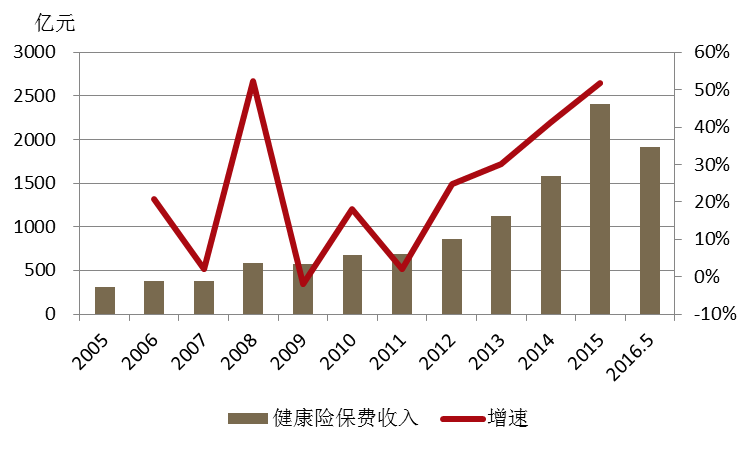
Figure 20: Health Insurance Premiums in May 2016 Increased by Over 100% Year-on-Year
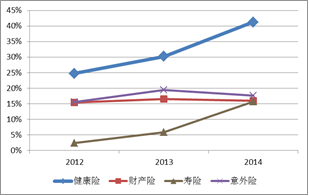
Figure 21: Growth Rate of Health Insurance Far Exceeds That of Other Insurance Categories
The health insurance market size is artificially inflated, while the scale of products that genuinely provide coverage for critical illness, medical care, nursing, and disability remains small. Currently, China’s health insurance market exhibits a pronounced “life-insurance-like” characteristic.
There are three main types of companies providing health insurance: (1) life insurance companies, which often bundle long-term health insurance products with life insurance policies or terms to facilitate customer acceptance; (2) property and casualty insurance companies, which are restricted to offering only short-term health insurance; and (3) specialized health insurance companies, which operate with a professional focus and can offer the full range of health insurance products. Among these, life insurance companies are the primary providers of health insurance, accounting for approximately 80% of the market share by premium volume. Specialized health insurance companies entered the market later, holding only a 10.4% market share in 2014. Property and casualty insurance companies also hold a relatively small market share due to limitations on their product offerings and their primary focus on corporate clients.
In China’s commercial health insurance market, which is dominated by life insurers, product structures exhibit “life-insurance-like” characteristics.Over the past decade, commercial health insurance in China has maintained rapid development; however, its claim expenditures have consistently accounted for a low proportion of total healthcare spending. A key reason for this lies in the product structure of China’s commercial health insurance market. Taking the life insurance industry as an example, long-term critical illness insurance products, which combine health protection with savings features, are the flagship health insurance offerings promoted by most insurers. Embedding long-term savings components into these products helps expand premium volume but does not contribute to increasing the share of health insurance claim payouts in total healthcare expenditure.
It has gradually become an industry consensus that domestic insurance companies in China are not making profits from their health insurance business.The primary participants in the health insurance market are life insurance companies; however, listed insurers do not separately disclose the profitability of their health insurance operations. We examined five professional health insurance companies that are currently operating normally. In terms of net profit, except for a few professional health insurers achieving profitability in certain years, the remaining companies and years recorded losses. If the impact of investment activities is excluded, the magnitude of losses in the health insurance business is substantial. In 2015, after excluding the impact of investment activities, all five professional health insurers—Ping An Health, PICC Health, Kunlun Health, Hexie Health, and CPIC-Allianz Health—reported losses.
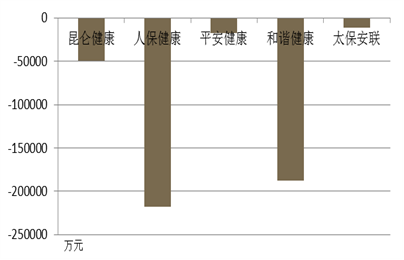
Figure 23: In 2015, specialized health insurance companies all incurred losses after excluding the impact of investment activities
Medical insurance consists of two components.Health insurance products can be broadly categorized into four types: long-term critical illness insurance, short-term medical insurance, nursing care insurance, and disability income loss insurance. According to statistical data from the China Insurance Regulatory Commission (CIRC) in 2014, long-term critical illness insurance and short-term medical insurance accounted for 52.6% and 40.9% of health insurance premium income, respectively, while nursing care insurance and disability income loss insurance accounted for 6.5% and 0.1%, respectively.
Due to product-specific characteristics, and against the backdrop of China’s currently non-marketized, overly concentrated healthcare supply system and an imperfect social credit framework, profitability varies significantly across different products.
Long-Term Critical Illness Insurance: If the insured is diagnosed with a specified critical illness, they receive a fixed benefit payment from the insurance company. Its features include a contract term exceeding one year, a fixed benefit amount (typically ranging from RMB 300,000 to 800,000), and coverage for 25–50 types of critical illnesses. The nature of these products, which condition payouts on the diagnosis of a critical illness, results in relatively low moral hazard (as individuals are unlikely to deliberately induce illness to claim benefits). Furthermore, since most critical illness insurance policies are bundled with savings plans, they exhibit strong profitability.
Short-Term Medical Insurance: This product reimburses insured individuals for actual medical expenses incurred, including costs for medical treatment, hospitalization, surgery, and diagnostic tests. It is characterized by contract terms of less than one year, with indemnity amounts typically calculated as a percentage of actual medical expenses incurred, subject to coverage limits and a defined scope of reimbursement (formulary). Due to significant moral hazard associated with claims based on actual medical expenses, coupled with challenges such as fraud, rising medical costs, lack of medical data, and limited bargaining power and monitoring capabilities over hospitals, short-term medical insurance products are generally unprofitable.
Long-Term Care Insurance: Insured individuals receive benefits upon losing the ability to live independently. It is characterized by a broad age coverage (e.g., up to age 80), with premiums typically paid in installments. Currently, most long-term care insurance policies in China provide fixed monthly payments rather than covering actual care costs; while profitable, their market scale remains limited.
Disability Insurance: Compensation paid by the insurer when the insured’s disability impairs their ability to work. It is characterized by short-term coverage, during which the insurer pays a fixed monthly amount equivalent to the insured’s salary. Such products are not profitable and remain limited in scale.
Currently, the primary source of losses in China's health insurance business is short-term medical insurance.According to HSBC’s estimates, using the NBV/APE margin to measure the profitability of health insurance products and selecting several large domestic insurers as typical case studies reveals a significant disparity in profitability between long-term critical illness insurance and short-term medical insurance. The profit margin for the former can reach 80%–250%, whereas the latter exhibits very low margins, generally breaking even or operating at a loss. Media reports indicate that among insurers offering health insurance, more than 80% have loss ratios exceeding 80%, approximately 40% have loss ratios surpassing 100%, and some individual companies even report loss ratios above 200%.
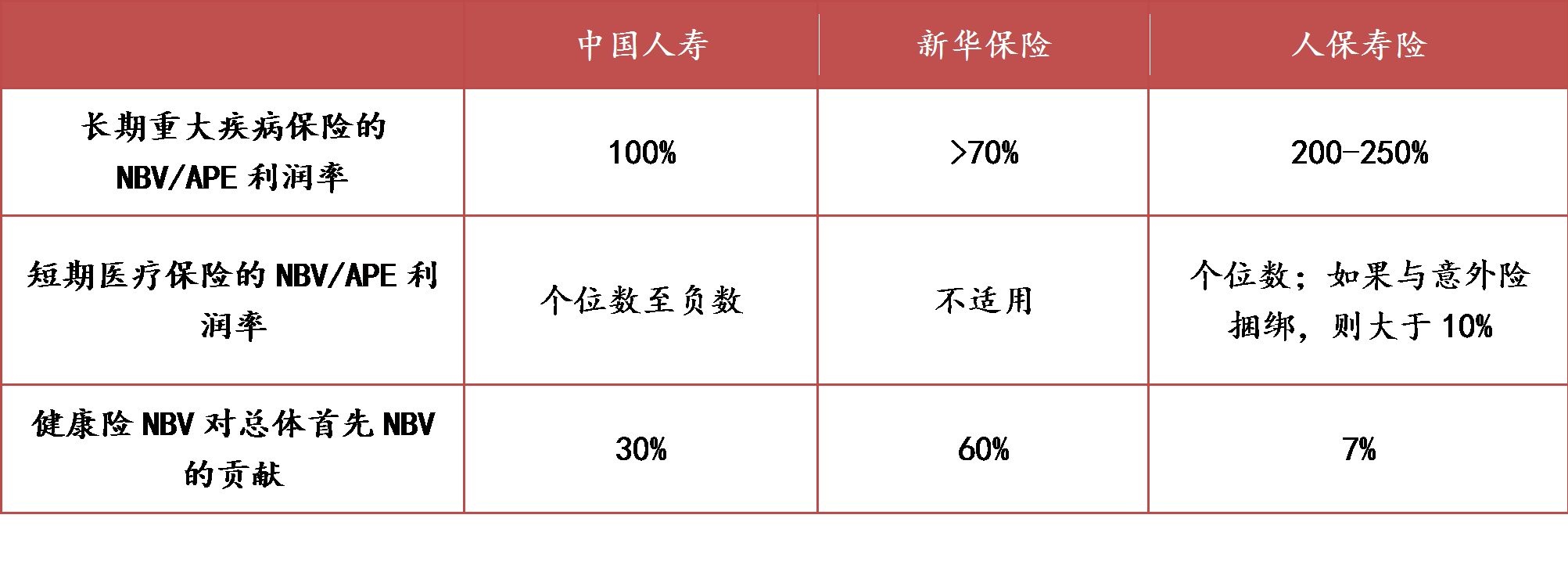
Figure 24: Significant Variations in Profitability Across Products of Large Life Insurance Companies; Short-Term Medical Insurance Products Yield Low Profits
High adverse selection risk in individual health insurance is the cause of losses in the health insurance business.Based on the insured, health insurance can be categorized into individual health insurance and group health insurance. Individual health insurance is underwritten on an individual basis to meet the needs of individuals and families. Group health insurance provides coverage to multiple members within a defined group. There are significant differences between the two in terms of risk selection, underwriting methods, and cost and premium calculation methodologies.
The subjects of risk selection differ. In individual health insurance, risk selection is based on the individual, leading to a high risk of adverse selection (individuals in poorer health are more inclined to purchase health insurance, thereby systematically increasing the risk of claims). In group health insurance, group-level selection replaces individual selection, as the group helps to disperse individual risk (the group comprises both healthy and unhealthy individuals).
Different underwriting methods. Individual health insurance uses a separate policy to define the rights and obligations between the insurer and the insured. Group health insurance, regardless of the number of insured individuals, uses only one master policy that outlines the rights and obligations between the insurer and the group.
Costs and premium rates are calculated using different methods. Regarding costs, since the Provisions on the Administration of Insurance Agents stipulate that individual agents are prohibited from handling corporate group life insurance business (including health insurance), the marketing chain for group health insurance is shorter. This reduces commission expenses paid to agents. Additionally, due to simplified procedures and exemption from medical examinations, the marketing costs and administrative expenses for group health insurance are lower than those for individual health insurance. Regarding premium rates, individual health insurance premiums are determined based on mortality tables, whereas group health insurance premiums are generally calculated based on the group’s claims experience or records from the previous year, i.e., using the experience rating method.
The differences between individual health insurance and group health insurance also determine their differing profitability. A correlation analysis of the net profits (excluding the impact of investment activities) and the product structure by insured category for five specialized health insurance companies reveals thatThe higher the proportion of premium income from individual health insurance, the poorer the profitability.
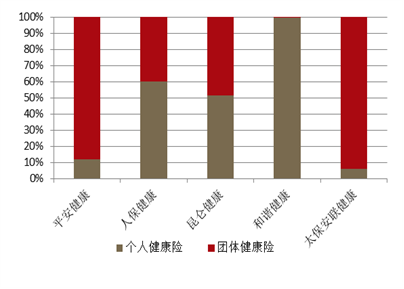
Figure 25: Revenue Structure of Specialized Health Insurance Companies by Customer Type
Product form is an intrinsic factor that determines the risk management capability of health insurance businesses, thereby determining their profitability. Most insurance companies in China currently provide only coverage (particularly financial protection), and their awareness of risk management remains at a rudimentary stage focused merely on risk identification and actuarial assessment. They have not yet advanced to the refined stage of managing and intervening in the risks associated with insured subjects. We believe that,Currently, health insurance products in China that lack medical service attributes represent only the primary form of health insurance. The future development trend of health insurance products will inevitably involve increasing integration with medical and healthcare services, evolving into the product model of managed care insurance.
Managed Care Health Insurance is a type of health insurance product that integrates healthcare providers, commercial insurers, and policyholders through specific mechanisms. By combining medical care, insurance, financing, and supply chain management into a unified operational model, it provides insured individuals with both healthcare services and insurance coverage, aiming to reduce healthcare expenditures.Its core comprises two key aspects: first, establishing a community of shared interests between insurers and healthcare providers to mitigate moral hazard in the delivery of medical services; second, managing the health of insured individuals through healthcare service management to reduce disease incidence.International experience indicates that managed care health insurance generally reduces premiums by 10–20% compared with traditional health insurance; given China’s specific circumstances, the premium savings are likely to be even greater.
Managed care insurance originated in the United States in the 1970s. After more than 30 years of development, it has replaced traditional health insurance in the U.S. market and gradually become the mainstream model. Currently, managed care insurance accounts for over 95% of the market share.
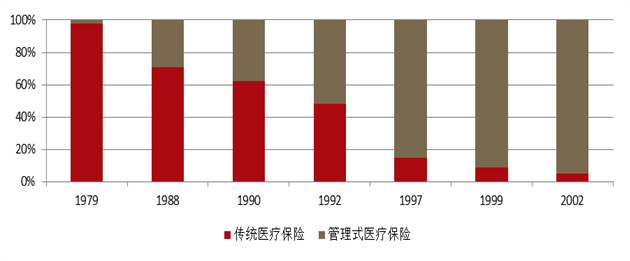
Figure 26: Managed Care Insurance Has Gradually Become the Dominant Type of Health Insurance in the United States
Report Source: Founder Securities