Global Venture Investment Analysis in AI-Enabled Healthcare (2011–2016): Insights from the 2016 AI + Healthcare Innovation Trends Report III
This “2016 Report on Innovation Trends in AI-Driven Healthcare” is divided into five sections, with this being the third. In the previous two sections, VCBeat’s VBInsight focused on analyzing the strategic layouts and ecosystems of IT tech giants in the field of artificial intelligence, as well as the applications of IBM Watson AI in healthcare. In this section, we will primarily present an analysis of venture capital and private equity data related to AI in the global healthcare sector from 2011 to 2016. After reading this report, you will gain a multidimensional understanding of AI-related investment activities across various dimensions, including time, industry, geography, and funding rounds.
The structure of the public version of this report is as follows:
Article 1: Tech Giants’ AI Strategic Layout
Part II: A Detailed Analysis of IBM Watson’s AI Applications in Healthcare
Part 3: Analysis of Global AI Venture Capital Data in Healthcare and Medicine, 2011–2016
Part IV: What Can Healthcare Achieve with AI? (Part 1)
Part 5: What Can AI Do for Healthcare? (Part II)
Here is the third article:

In Chapter 1, we analyzed that major global IT giants have made artificial intelligence a key focus for their future development. They have been actively acquiring companies with strengths in algorithms, data processing, and data storage through mergers and acquisitions. Acquisition has become an important means for IT giants to rapidly expand in the field of artificial intelligence. In addition, investment amounts and transaction volumes in AI startups possessing core technologies have shown a sustained upward trend in recent years.
As the costs of computing and storage have dropped significantly, computing power has grown substantially, and the artificial intelligence ecosystems built by IT giants have become increasingly mature, the barriers to entry for AI startups are lowering. After Facebook announced the open-sourcing of multiple deep learning AI tools last January, Google, IBM, and Microsoft nearly simultaneously announced their own open-source initiatives last November. The successive release of various open-source platforms by major companies indicates that technical barriers in artificial intelligence are being rapidly dismantled. This is accelerating the pace of innovation among AI startups, which will bring users a wider range of AI-powered products across diverse application domains in the future.
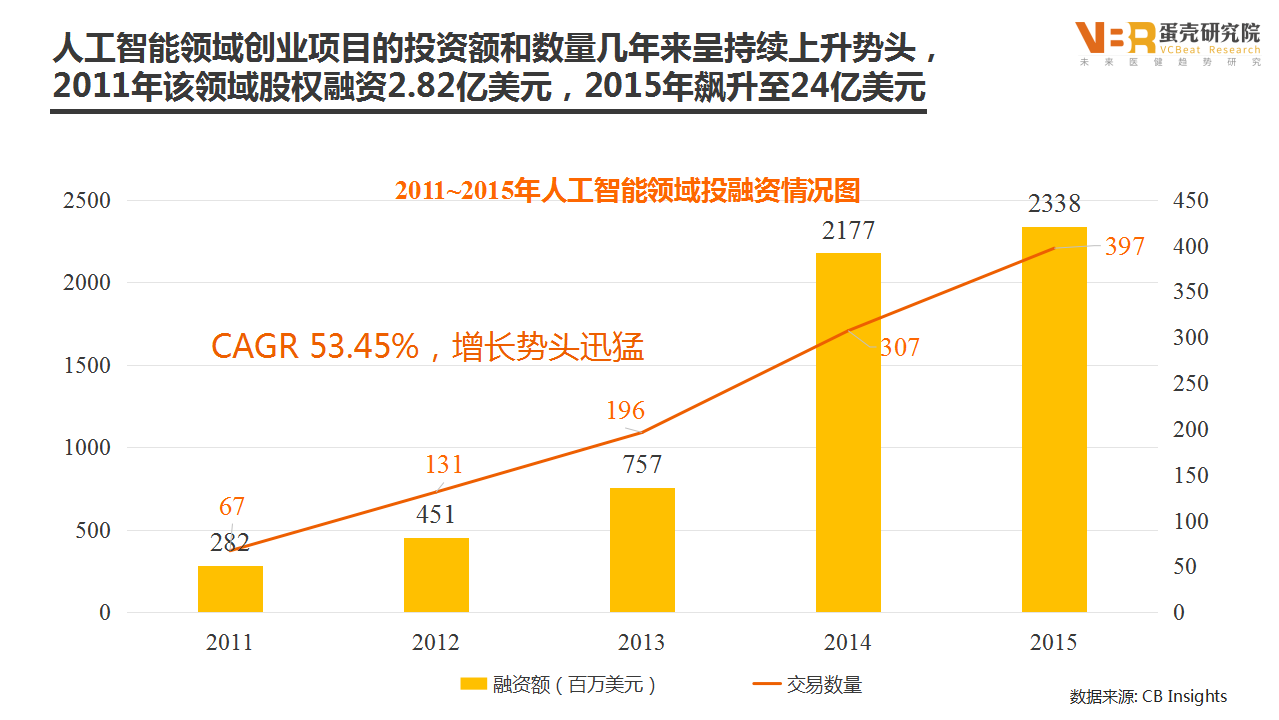
Between 2011 and 2015, investment and financing in the field of artificial intelligence experienced substantial growth, surging from $282 million in 2011 to $2.4 billion in 2015, with a compound annual growth rate (CAGR) of 53.45%. The number of transactions increased more than sixfold compared to five years earlier, rising from 67 to 397.
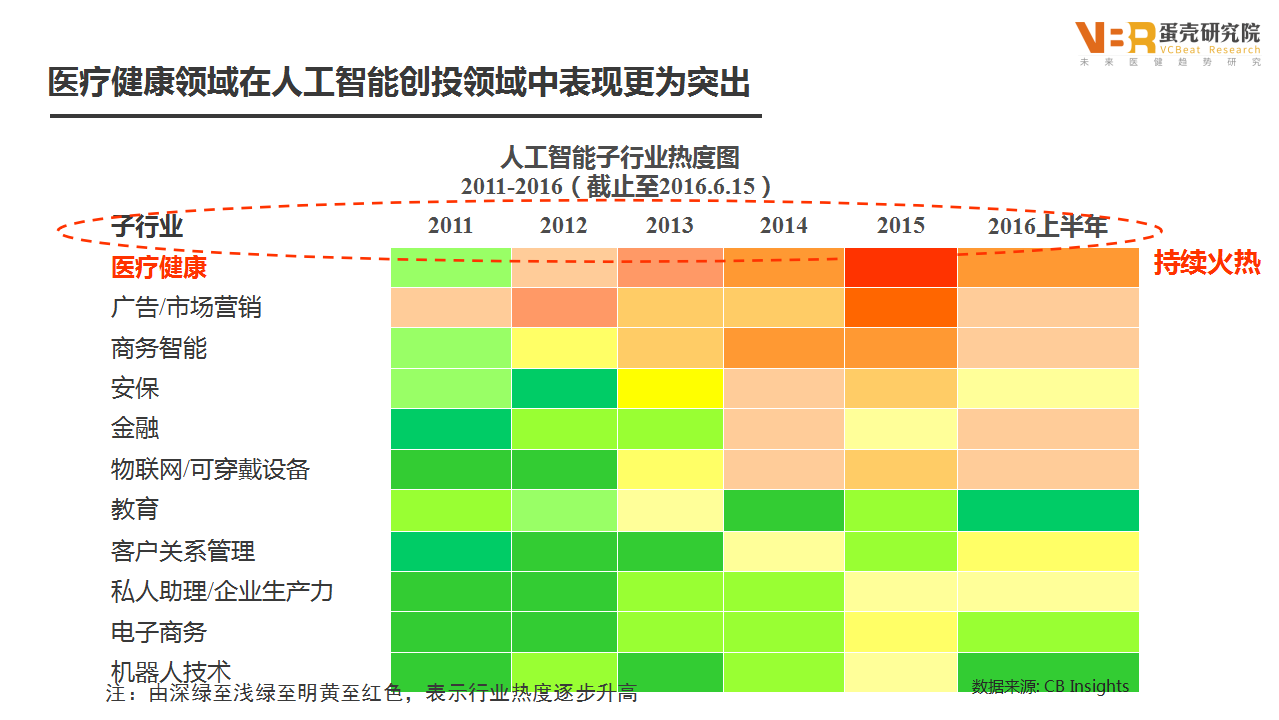
At the application level, when implemented in specific industries, AI startups in the healthcare sector have demonstrated more prominent performance, attracting the highest levels of attention and financing. In particular, after Google acquired DeepMind in 2014, valuations for AI projects surged. In the same year, Butterfly Network, whose core business focuses on AI-powered medical imaging, secured $100 million in funding. Investment in the AI-plus-healthcare sector rose significantly starting in 2014; although the number of transactions decreased from 14 in 2013 to 10, the total investment amount increased by more than fourfold, with a marked rise in the average funding per round. As of August 2016, both the number of investment deals and the total investment amount in the AI-plus-healthcare sector had already far exceeded the full-year figures of the previous year.
In recent years, with the rapid development of emerging technologies such as mobile internet and the Internet of Things (IoT), the volume of data generated by various terminal devices has become increasingly massive. According to forecasts by relevant institutions, big data volume was projected to reach 44 zettabytes (ZB) in 2020. It is understood that up to 80% of this data consists of unstructured formats, including text, images, and videos. However, due to technical bottlenecks, existing IT systems are unable to recognize such unstructured data, rendering it akin to “garbage” and essentially valueless. Cognitive technologies based on artificial intelligence are an inevitable product of the big data era; they not only identify vast amounts of unstructured data but also provide data insights. Cognitive computing can comprehend unstructured data in various forms, thereby generating insights that help enterprises quickly derive understanding from complex, massive datasets and make more precise business decisions. In the healthcare sector, a substantial amount of data has been generated, most of which is unstructured. In fact, several high-tech companies both domestically and internationally have already applied advanced technologies such as cognitive computing and deep learning to the field of medical imaging.
From an investment perspective, AI applications in the healthcare sector hold the greatest value. In certain vertical domains, AI applications are most likely to succeed or achieve industrialization. Because some vertical domains have relatively small data volumes, machine deep learning can deliver a superior user experience. The healthcare sector is one such domain; IBM Watson’s earliest application was in healthcare.
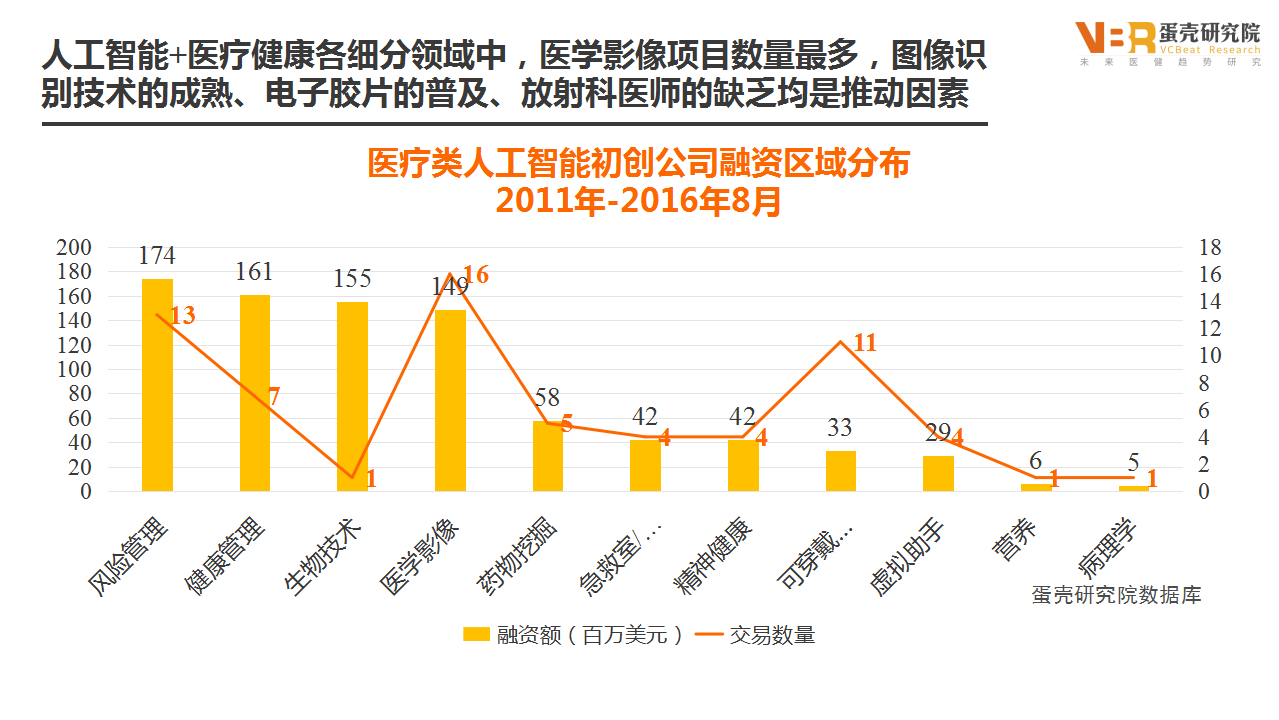
In the field of AI + healthcare, we can further subdivide into more specific sectors. Among these companies, risk management has attracted the highest investment amounts, while medical imaging has seen the most frequent financing rounds. AI-powered large-scale data processing platforms can better uncover the intrinsic connections and value within data. By integrating professional medical databases, these platforms provide more appropriate diagnostic and treatment plans as well as medical strategies, thereby offering patient risk management. Zephyr Health secured $32.5 million in investment; it is a medical database that provides solutions to the pharmaceutical and healthcare industry by collecting disease data, enabling healthcare professionals to identify suitable treatment plans for patients. Apixio, a healthcare big data company, aims to provide healthcare institutions with big data analytics platforms to facilitate more precise diagnosis and treatment by physicians, and it raised $26.1 million. Lumiata, the first AI company to leverage big data technology to build a healthcare knowledge graph, received $10 million in funding. The company uses graph analysis to identify optimal diagnostic and treatment pathways, improve diagnostic accuracy, and rapidly propose treatment plans, thereby saving physicians’ time.
Medical imaging accounts for the largest number of projects. This is not only due to the high quality and strong continuity of imaging data, but also driven by other key factors, including the high accuracy of artificial intelligence (AI) in image recognition, the widespread adoption of digital films, and a shortage of radiologists. Investors have shown strong confidence in AI’s role in image analysis. Enlitic developed image recognition software capable of detecting malignant tumors in X-rays and CT scans. By leveraging Convolutional Neural Networks (ConvNets), a deep learning technique, for tumor diagnosis, the company secured $12 million in investment. Meanwhile, Butterfly Network, which aims to develop portable medical ultrasound imaging devices, raised $100 million in funding.
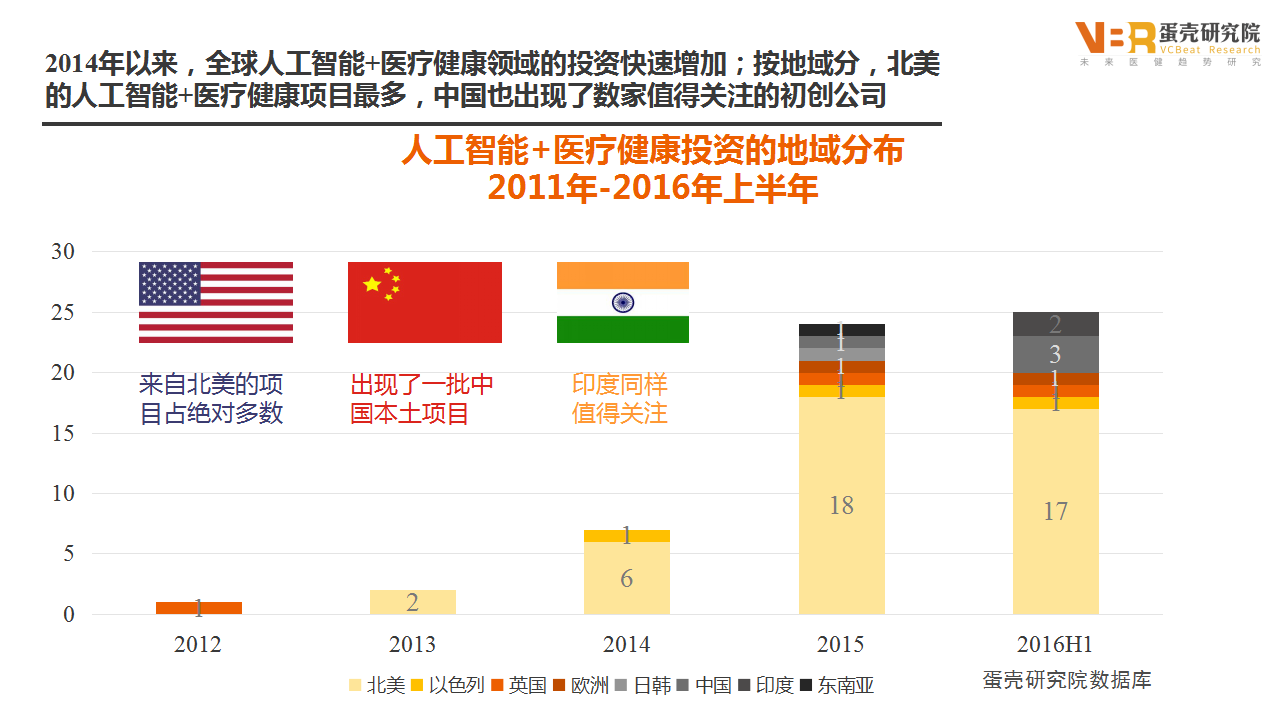
Prior to 2013, investment activities in artificial intelligence (AI) startups were scarce, but they gradually increased thereafter. Geographically, North America accounted for the largest share of invested AI + healthcare projects, owing to its most mature development of AI-related technologies and business models. Meanwhile, a growing number of AI + healthcare companies in China and India have also gained investor recognition.
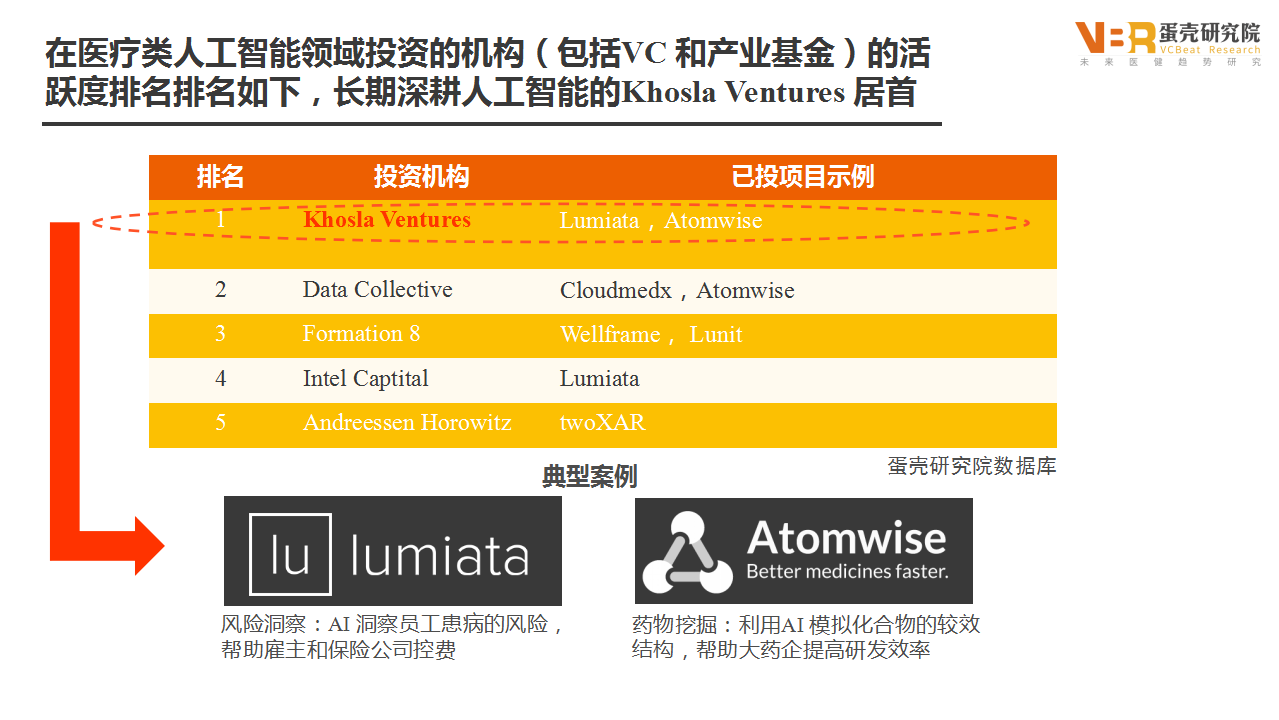
Khosla Ventures, which has long been deeply engaged in the field of artificial intelligence, currently ranks first in activity. Two of its key investments are Lumiata and Atomwise. Lumiata is a predictive analytics company that leverages medical AI to enhance risk and care management for taxpayers, population health organizations, and physicians. Founded in 2013 and headquartered in Silicon Valley, its team comprises clinicians, data scientists, and medical experts. Lumiata’s core predictive analytics product is the Risk Matrix, which requires extensive data points from a large base of health plan members or patients to map out each individual’s trajectory of disease risk over time. Atomwise is an AI-driven drug discovery company that employs deep learning neural networks to identify new drug candidates. The company claims to achieve the world’s best results in new drug discovery, binding affinity prediction, and toxicity screening. Rounding out the top five investment firms are Data Collective, Formation 8, Intel Capital, and Andreessen Horowitz, ranked second through fifth, respectively.
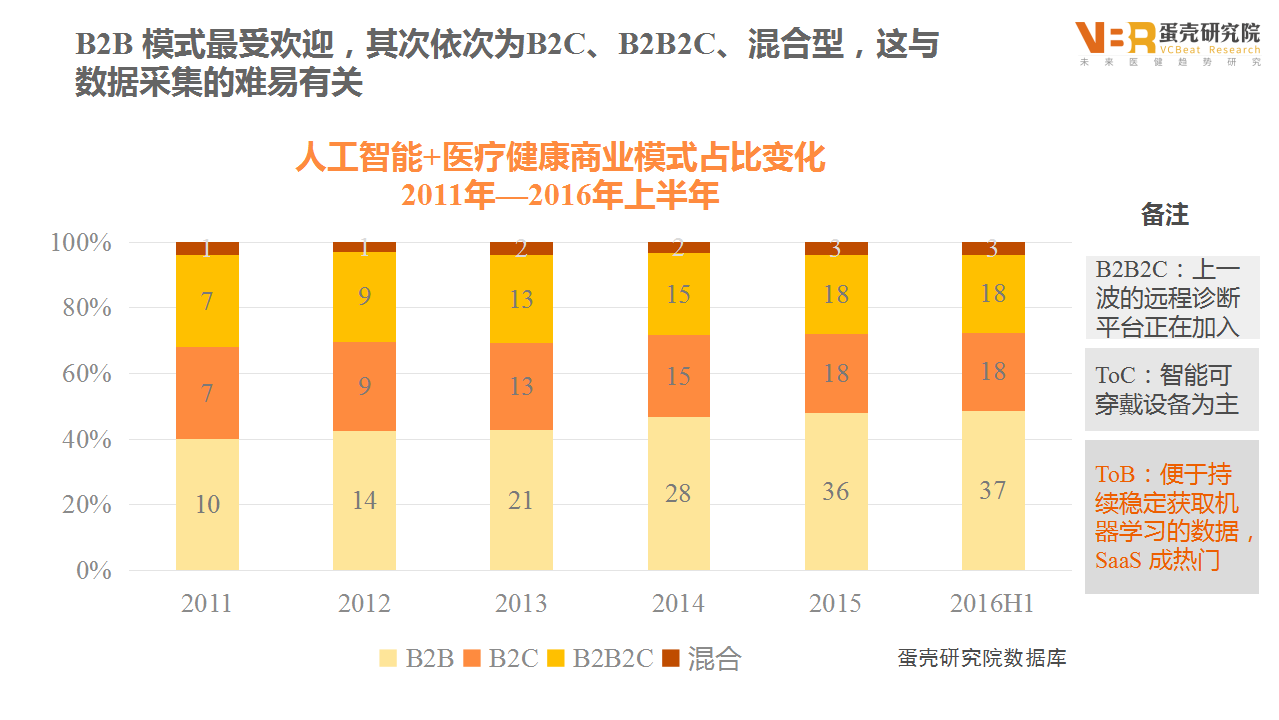
Among the customer engagement models adopted by artificial intelligence (AI) companies, the B2B model is the most prevalent, followed by B2C, B2B2C, and hybrid models. This distribution is closely related to the ease or difficulty of data acquisition. The advancement of AI relies on several key elements: algorithms, big data, the Internet of Things (IoT), and computing devices. Algorithms serve as the core, while hardware such as IoT infrastructure and computing equipment forms the foundation (the development of which does not depend on startups). Data, however, is the critical factor determining the success or failure of companies. Consequently, a primary focus for startups is researching how to acquire data and through which channels to obtain it for intelligent learning. The predominance of B2B enterprises stems from their ability to consistently and stably access machine learning data. For instance, IBM Watson’s initial collaboration with Memorial Sloan Kettering Cancer Center was aimed at acquiring cancer medical records and data. A team composed of physicians and researchers uploaded thousands of patient cases, nearly 500 medical journals and textbooks, and 12 million pages of medical literature to Watson. In contrast, B2C companies target individual users, primarily through smart wearable devices that collect data via sensors, which is then subjected to algorithmic analysis.
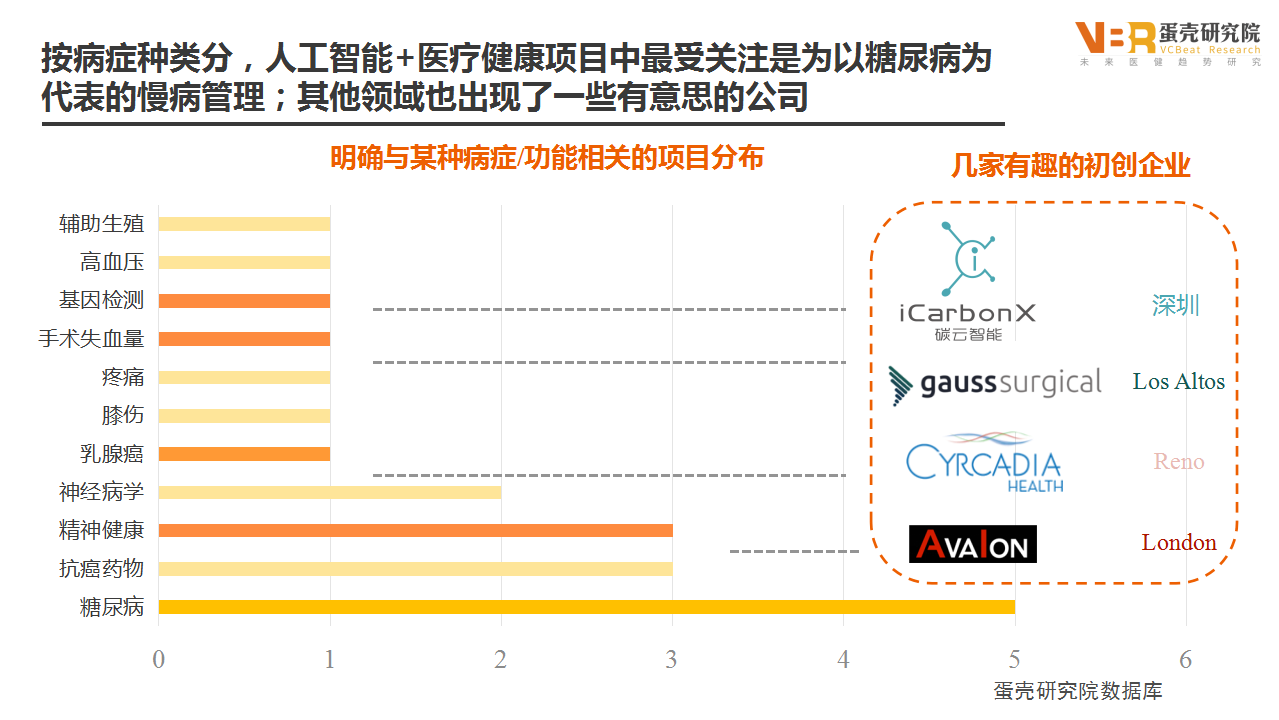
By disease category, the most closely watched AI-plus-healthcare projects are those focused on chronic disease management, exemplified by diabetes. Diabetes, oncology therapeutics, and mental health conditions all entail prolonged treatment courses, high costs, and significant clinical complexity. From a profitability standpoint, research in these areas offers greater potential for returns and enjoys stronger recognition from investment institutions.
In the following two articles, we will screen a selection of AI-driven healthcare startups and categorize them into 11 sectors: health management, wearable devices, medical imaging, risk management, nutrition, emergency room/hospital management, biotechnology, drug discovery, mental health, pathology, and virtual assistants. We will then conduct an in-depth analysis of eight of these sectors, highlighting representative startups to explore the surprising innovations emerging from the integration of artificial intelligence with specific medical applications. Stay tuned.
Article 1: Tech Giants' AI Strategies
Part 2: A Detailed Analysis of IBM Watson’s AI Applications in Healthcare
Article 3: Analysis of Global AI Venture Capital Data in Healthcare (2011–2016)
Part IV: What Can Healthcare Achieve with Artificial Intelligence? (Part 1)
Part 5: What Can Healthcare Achieve with Artificial Intelligence? (Part II)
If you can’t wait, you can also view the full report in advance by clicking the link below to purchase:
2016 Report on Innovation Trends in AI for Healthcare