

2016 Nobel Prize in Physiology or Medicine Awarded to Japanese Molecular Cell Biologist Yoshinori Ohsumi for Discovery of Autophagy Mechanism
At 5:30 p.m. Beijing time today, the Nobel Foundation announced that the 2016 Nobel Prize in Physiology or Medicine has been awarded to Professor Yoshinori Ohsumi.(Yoshinori Ohsumi),The award was given for “the discovery of mechanisms for autophagy.”
“Autophagy” is a remarkable phenomenon in cells—under specific conditions, cells digest their internal proteins, cell membranes, or organelles.
Several conditions can trigger autophagy. The first is xenophagy. When infectious particles enter a cell, the cell initiates the autophagic process to clear these foreign substances, which plays a significant role in the cellular elimination of pathogens. The second condition involves cellular self-repair. After operating for a certain period, some organelles become damaged. Autophagy can “engulf” these old organelles and utilize the macromolecular building blocks generated from their digestion for the synthesis of new organelles.
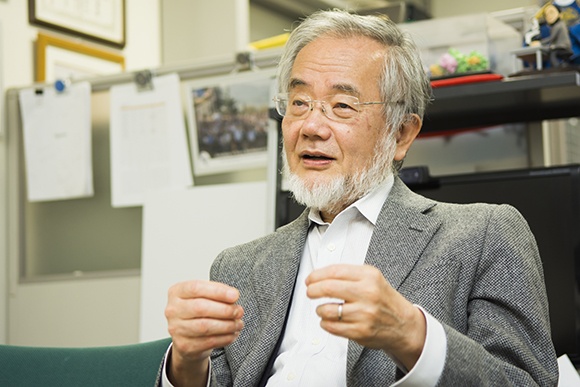
Yoshinori Ohsumi
Yoshinori Ohsumi, born on February 9, 1945, is a Japanese molecular cell biologist. He currently serves as Professor Emeritus at the Graduate University for Advanced Studies (SOKENDAI) and the National Institute for Basic Biology, as well as Distinguished Professor at the Institute of Innovative Research, Tokyo Institute of Technology. A pioneer in autophagy research, Professor Ohsumi has been honored with the Kyoto Prize, the Gairdner Foundation International Award, and became the second Japanese recipient of the Wiley Prize. Driven by scientists such as Professor Yoshinori Ohsumi, autophagy has emerged as a prominent frontier in biological research.
2015: Chinese scientist Tu Youyou was awarded the prize for “the discovery of a novel therapy against malaria.” The other two laureates were William C. Campbell from Ireland and Satoshi Ōmura from Japan, who were honored for “the discovery of a novel therapy against infections caused by roundworm parasites.”
2014: Three scientists from the United States and Norway, John O’Keefe, May-Britt Moser, and Edvard I. Moser, were awarded the prize for “their discoveries of cells that constitute a positioning system in the brain.”
2013: Three scientists from the United States and Germany, James E. Rothman, Randy W. Schekman, and Thomas C. Südhof, were awarded the prize for “their discoveries of machinery regulating vesicle traffic, a major transport system in our cells.”
2012: British scientist John B. Gurdon and Japanese scientist Shinya Yamanaka were awarded the prize for “the discovery that mature cells can be reprogrammed to become pluripotent.”
2011: Three scientists from the United States, France, and Canada were awarded the prize for their discoveries in immunology. Half of the prize was awarded to Bruce A. Beutler and Jules A. Hoffmann “for their discoveries concerning the activation of innate immunity,” and the other half was awarded to Ralph M. Steinman “for his discovery of the dendritic cell and its role in adaptive immunity.”