

Centralized Drug Procurement Slashes Prices: Handan Model Unveiled by NHSA to Deliver Healthcare Reform Dividends
Deepening healthcare reform is a major initiative critical to China’s economic and social development and to the well-being of its people, serving as a public-confidence-building project aimed at safeguarding the health and welfare of 1.4 billion citizens. Led by the National Healthcare Security Administration and its local counterparts, efforts have focused on reducing drug prices to alleviate the medication cost burden on the population, thereby ushering in a new phase in healthcare reform.
Tackling Livelihood Challenges: The State Takes the Lead in Lowering Drug Prices
Over the eventful decade of new healthcare reform, the “Sanming Healthcare Reform,” which pioneered the integrated “three-medical” linkage reform encompassing pharmaceuticals, health insurance, and medical services, has provided valuable reference experience for the entire country and received high-level attention from the state. General Secretary Xi Jinping affirmed the achievements of the Sanming Healthcare Reform at the 21st and 33rd meetings of the Central Leading Group for Comprehensively Deepening Reforms, explicitly calling for the nationwide promotion of the Sanming model.
To meet the requirements of deepening healthcare reform under the new era and circumstances, the National Healthcare Security Administration was officially established in 2018, with provincial and municipal healthcare security bureaus subsequently inaugurated. This initiative aims to improve the unified basic medical insurance system for urban and rural residents and the critical illness insurance system, continuously enhance the level of medical security, ensure the rational, safe, and controllable use of medical insurance funds, and coordinate the “three-medical linkage” reform (integrating medical care, health insurance, and pharmaceutical supply), thereby better ensuring access to medical care for all patients.
Under the new organizational framework, healthcare security administrations at all levels are targeting the persistent challenges of “difficult and costly access to medical care,” assuming the critical responsibility of eliminating inflated prices for pharmaceuticals and medical consumables while enhancing the efficiency of healthcare security fund utilization.
At the end of 2018, the National Healthcare Security Administration (NHSA) implemented the "4+7" City Drug Centralized Procurement Pilot Program. The average price reduction for selected drugs was 52%, with a maximum reduction of 96%, significantly alleviating the medication cost burden on patients. This September, the NHSA further clarified that it would organize relevant regions to form an alliance and carry out cross-regional alliance-based centralized volume-based procurement of drugs. It is estimated that if the national drug centralized procurement program were rolled out nationwide, savings in medical insurance funds could reach RMB 19 billion from the procurement costs of just the 25 selected drugs.
To enable local residents to access affordable, high-quality medications at an earlier stage, the healthcare security administrations of Fujian and Hebei provinces took the lead in implementing the bid-winning results across their respective jurisdictions. According to the latest official statistics from Fujian Province, two months after the policy’s implementation, savings in pharmaceutical expenditures have reached RMB 194 million, demonstrating significant price-reduction effects.
Shouldering the Heavy Responsibility of Reform, Handan Pioneers a New Model
At the request of the National Healthcare Security Administration, provincial and municipal healthcare security administrations across China have accelerated their reform efforts, demonstrating initiative, assuming responsibility, overcoming challenges, and advancing rapidly. The Handan Municipal Healthcare Security Administration serves as a typical example.
Established in December 2018, the Handan Municipal Healthcare Security Administration initially faced significant challenges, including limited staffing, funding, and office resources, as well as a complex and chaotic operational landscape. With the support and encouragement of the Hebei Provincial Healthcare Security Administration, and under the guidance of the Handan Municipal Leading Group for Centralized Procurement of Pharmaceuticals and Medical Consumables for Medical Institutions, the Administration adopted a proactive stance—refusing to wait, rely on others, or delay. It rapidly built teams, established regulations, and constructed an operational framework, successively launching initiatives to combat insurance fraud, strengthen the management of chronic and special diseases, and implement efficiency-based management of community healthcare insurance.More importantly, the Administration tackled the entrenched issue of artificially high drug prices by starting with pharmaceutical procurement. Demonstrating remarkable reformist resolve and determination—working on a day-by-day and hour-by-hour basis, scheduling backward from deadlines, and executing according to mapped-out plans—it studied advanced practices from regions such as Sanming. By integrating these insights with local conditions in Handan, it creatively implemented city-level centralized tendering and procurement reforms for pharmaceuticals and medical consumables under the new healthcare reform model, thereby pioneering the “Handan Model” for the centralized tendering, procurement, usage, and control of pharmaceuticals and medical consumables.
“The Handan Model” leverages big data to collect pricing information for registered products, engages senior experts throughout the formulation of drug catalog specifications and price negotiations, and subjects the entire process to oversight by disciplinary inspection departments. As a result, the average price reduction for selected drugs reached 35.6%, with a maximum reduction of 96.52% for individual items; the average price reduction for medical consumables was 32.5%, with a maximum reduction of 86.4% for individual items. Following these price reductions, an estimated CNY 560 million in medical expenses is expected to be controlled annually, saving the public CNY 220 million in pharmaceutical costs and delivering tangible benefits through reduced fees.
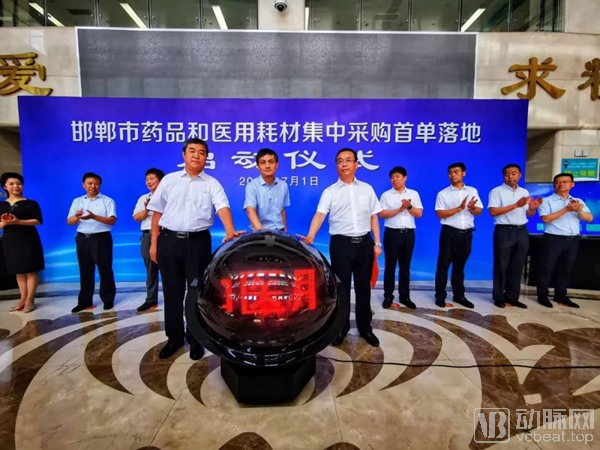
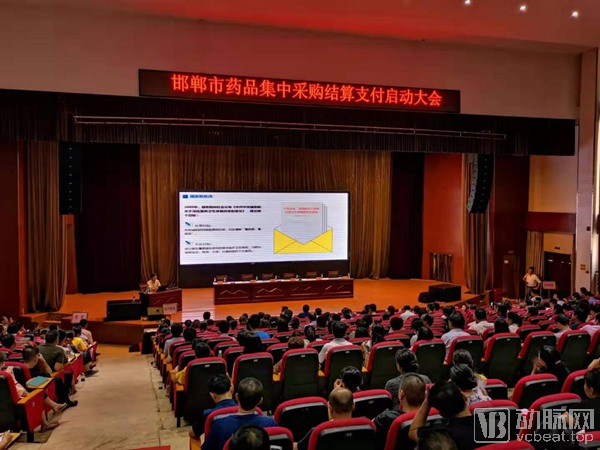
On July 1 this year, Handan City held the launch ceremony for the first implementation of centralized procurement of pharmaceuticals and medical consumables, marking the official operation of the “Handan Model.” Statistics show that, to date, public medical institutions in Handan have saved nearly RMB 45 million on the procurement of relevant drugs, demonstrating significant effectiveness. Notably, Handan’s current initiative specifically targets high-volume, high-cost medications for certain chronic and special diseases, effectively alleviating the medication burden for patients with these conditions. For example, the price of puerarin injection, used to treat coronary heart disease and hypertension, dropped from RMB 249 per box (containing 10 ampoules) before the reform to just RMB 24.9 afterward—only one-tenth of the original price.
The Implementation and Effectiveness of Healthcare Reform: Organizational Support Is the Key
The successful implementation of centralized procurement of pharmaceuticals and medical consumables in Handan City is also attributable to the strong support provided by the Handan Municipal Committee of the Communist Party of China, the Handan Municipal People’s Government, and the Hebei Provincial Healthcare Security Administration.
As a major innovative reform, it has received high attention from the main leaders of Hebei Province and Handan City, who have conducted multiple special scheduling sessions and on-site supervision. The Handan Municipal Government issued a special document to establish a leading group headed by the deputy mayor in charge, with members comprising relevant leaders from the Municipal Healthcare Security Administration, Health Commission, Market Regulation Bureau, Finance Bureau, and the Discipline Inspection and Supervision Team stationed at the bureau. This has provided strong organizational guarantees for healthcare reform in Handan. Under the leadership of the leading group, all departments in Handan City have worked together with unity and coordination, laying a solid foundation for the smooth advancement of centralized procurement work.
Yang Liulin, Director of the Handan Municipal Healthcare Security Administration, once stated, “The new generation of healthcare security professionals in Handan must undertake projects that benefit the people, facilitate public access, and provide specialized coverage, truly serving the people and delivering tangible results.” By planning and establishing the “four beams and eight pillars” of Handan’s healthcare reform, the administration strives to ensure that the dividends of reform benefit all citizens. As inscribed in the “Ode to Healthcare Security,” prominently displayed on the office wall of the Handan Municipal Healthcare Security Administration: “Shouldering heavy historical responsibilities and the trust of our times, we uphold our duties with commitment”; “Centralized procurement, payment reform, price reduction, fee control, and management—grand strategies to aid society and benefit the people.”
The proactive initiatives undertaken by the Handan Municipal Healthcare Security Administration exemplify the broader efforts of China’s National Healthcare Security Administration to drive reform and innovation, thereby reducing costs and benefiting the public. In this new era, under the new system and within the new landscape, it is believed that the national healthcare security authorities will play an even more significant role in eliminating artificially inflated prices for pharmaceuticals and medical consumables, improving the efficiency of healthcare fund utilization, and providing the public with more accessible, higher-quality, and superior healthcare coverage.