

CrowdMed Files IPO Prospectus to Bring Crowdsourced Medical Diagnosis to Public Markets
Crowdsourcing, or “crowd outsourcing,” is a professional term coined in 2006 by a journalist from Wired magazine to describe a new business model that leverages the ideas, creativity, and expertise of the general public via the internet to solve problems. These “crowds” often possess specialized skills in one or more fields and are willing to work in their spare time for small payments, or even without monetary compensation, viewing better future development prospects as a form of “reward.” Currently, this model is widely applied in the software and service industries. So, what prompted CrowdMed to introduce this model into the healthcare sector?
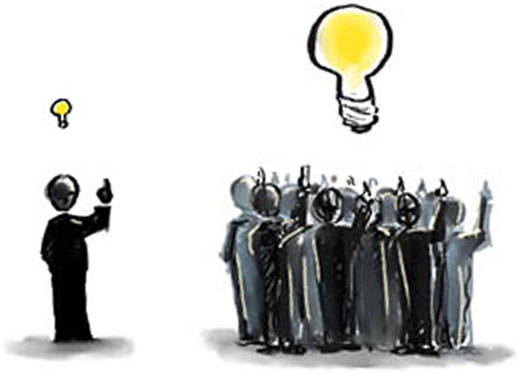
“The Core of the ‘Crowdsourcing’ Concept: Leveraging the Wisdom and Power of the Masses”
In the public perception, seeking medical care is often a mentally and physically exhausting endeavor. The financial cost and time commitment are secondary concerns; for many patients with refractory or chronic conditions, the greater challenge lies in consulting countless physicians, undergoing extensive diagnostic tests, incurring substantial medical expenses, and trying multiple treatment regimens, only to see no improvement in their condition. In some cases, they may not even receive a definitive diagnosis. Consequently, these patients are left to cope with an "undiagnosed" illness day after day, year after year, suffering a significant decline in their quality of life.
Jared Heyman is the founder of CrowdMed. His sister once suffered from a rare and complex condition that took three years to finally diagnose. The entire process was not only lengthy but also astonishingly expensive: nearly twenty physicians were involved, with costs approaching six figures. This experience allowed Heyman to identify shortcomings in the current healthcare system: “Most patients receive medical diagnoses that are often singular in nature. A single physician makes a diagnosis for a patient, and then the process ends, leaving the patient without input from other professionals.”
Before founding CrowdMed, Heyman had established two other companies. Drawing from his prior market research experience, he concluded that if collective wisdom is aggregated and leveraged appropriately, its power and effectiveness often surpass those of a single expert, even one who is preeminent in their field. It was this insight that inspired Heyman to introduce the “crowdsourcing” model into the healthcare industry, ultimately leading to the creation of CrowdMed.
CrowdMed, founded in 2012 and headquartered in San Francisco, was one of the 46 startups selected for Y Combinator’s Winter 2013 batch. During its founding phase in 2012, the company randomly recruited 300 individuals to participate in website testing, and its public beta was officially launched at the TEDMED conference held in Washington in 2013.
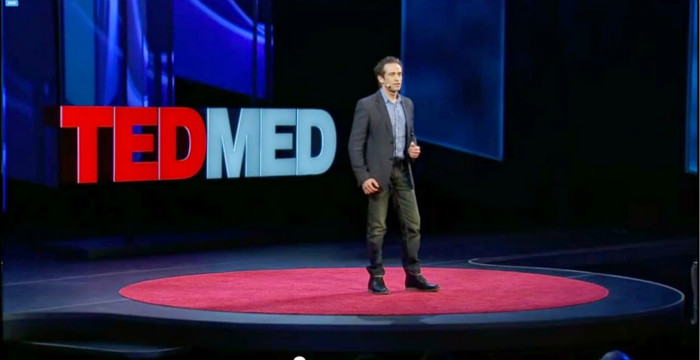
CrowdMed Founder Jared Heyman at the TEDMED Conference
CrowdMed provides customized, comprehensive medical services. They assemble a team of “medical detectives” through their online platform—typicallyRetired physicians, nurses, medical students, researchers, and individuals who have recovered from prior illnesses. Leveraging their professional expertise, detectives provide patients with the information they need to streamline healthcare workflows, while also developing solutions for patients with chronic diseases and complex, difficult-to-diagnose conditions.
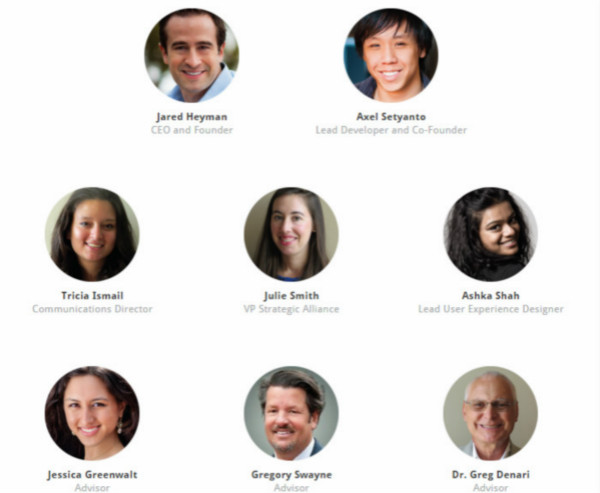
CrowdMed Team Members and Their Respective Titles
Although CrowdMed adopts a model driven by both technology and the wisdom of the crowd, it is fundamentally a technology company. While the final solutions provided to patients are the product of collective intelligence, they are underpinned by precise and sophisticated technology. The company holds two U.S. patents and has invested millions of dollars, along with significant human resources and time, into developing its core technologies. Therefore, technology remains central to CrowdMed’s operations.
It is also worth noting that the story of CrowdMed was selected by Dr. Amin Azzam for inclusion in his courses under the “Allied Health Programs” at the University of California, Berkeley, and the University of California, Los Angeles, where it serves as a case study for student learning and research.
Overall, CrowdMed operates as follows: Patients log on to the website, register, complete a questionnaire, and then submit their case details, uploading prior diagnoses, laboratory results, and findings from various tests. Some patients even upload their complete medical records. The website then automatically performs preliminary processing and preparation of these materials to generate a structured case file. Once this step is completed, CrowdMed employs a precise and scientific algorithm to help “medical detectives” select cases that match their areas of expertise. Subsequently, extensive communication takes place between physicians and patients, as well as among physicians themselves, ultimately leading to diagnostic and treatment recommendations. On average, it takes CrowdMed two months to resolve a case.
The steps that the patient needs to complete are as follows:
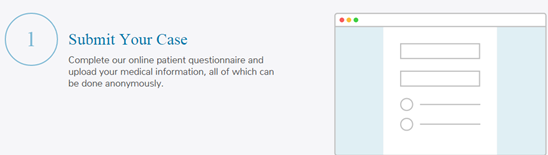
Step 1: Submit the case.
Complete the questionnaire and upload medical record materials. The entire process can be completed anonymously.
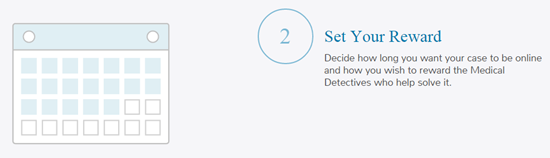
Step 2: Set up rewards.
Specify the expected wait time, as well as the methods and amounts of rewards for contributing medical detectives.
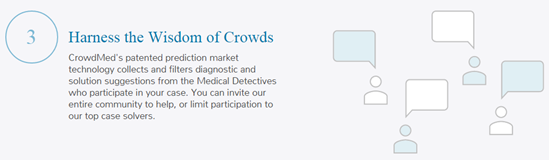
Step 3: Wait for diagnosis and treatment.
CrowdMed collects and screens the diagnostic analyses and recommended treatment plans proposed by medical detectives. Patients can invite all detectives to participate or limit participation to the top-ranked few.
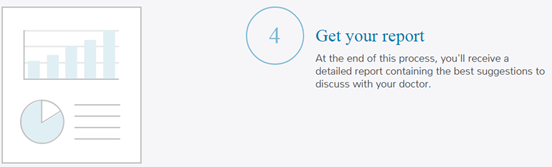
Step 4: Retrieve the report.
Upon completion of the entire process, patients will receive a detailed report. They can refer to the recommendations provided therein when visiting healthcare institutions for follow-up diagnosis and treatment, facilitating communication with physicians regarding their condition.
For medical detectives, the tasks to be undertaken are divided into the following steps:
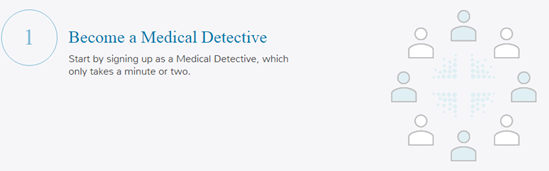
Step 1: Online Registration.
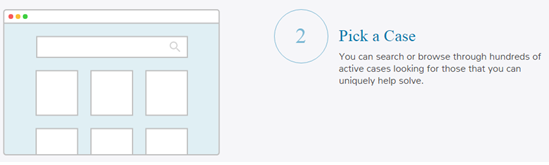
Step 2: Case Selection.
Detectives can search or browse cases submitted by CrowdMed users to identify those matching their areas of expertise for follow-up.
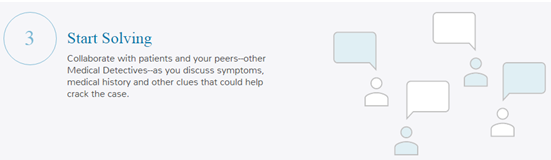
Step 3: Analysis and Research.
Discuss the patient’s condition with the patient and other medical detectives to understand their symptoms, medical history, and other information helpful for making a diagnosis.
Regarding fees, CrowdMed charges users a monthly subscription fee. There are three tiers: the Basic Plan ($99), the Standard Plan ($149), and the Premium Plan ($249). Each plan offers different benefits, with variations in the number of “medical detectives” that can be engaged, whether a case mediator is assigned, and whether there is an opportunity for expert review of the case. For certain disadvantaged individuals facing financial hardship, CrowdMed also provides a limited amount of pro bono assistance.
As for the returns detectives can earn, CrowdMed generally recognizes and respects the value of every suggestion. Once a case is closed, the patient provides a certain monetary reward to each medical detective who offered effective assistance. In other words, the more effectively a detective participates, the greater the rewards they can receive.
Furthermore, making accurate diagnoses, providing valuable treatment recommendations, and offering effective assistance to peers can all enhance a detective’s reputation on CrowdMed. Once their reputation reaches a certain level, detectives gain access to discuss more complex cases, thereby earning greater rewards, including personal points on the platform and monetary incentives.
To alleviate any psychological concerns that detectives may have when offering diagnostic and treatment recommendations, CrowdMed explicitly states to patients:The information provided on the website is for advisory purposes only and does not constitute a formal medical diagnosis.; only physicians can provide authoritative diagnoses and treatment plans.
To date, more than 1,300 patients from over 30 countries have received assistance through CrowdMed; 70% of users reported that the recommendations provided by CrowdMed’s “Medical Detectives” were helpful for subsequent diagnosis and treatment. Third-party market research on CrowdMed has shown that after using the platform, patients’ healthcare expenditures decreased by nearly 40%, while the frequency of patient visits to healthcare providers dropped by approximately 75%, significantly reducing the patient management costs for healthcare providers.
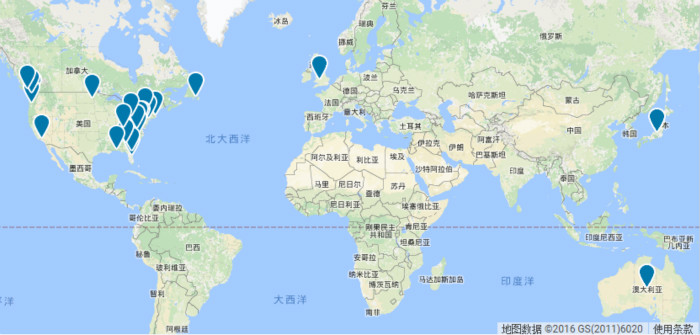
Geographic Distribution of CrowdMed Users
Heyman established two criteria for calculating CrowdMed’s success rate. The first criterion defines a “successful case” as one in which patients gain a clearer and deeper understanding of their condition after receiving diagnostic and treatment recommendations from CrowdMed, thereby improving their chances of recovery. Under this standard, CrowdMed’s current success rate exceeds 60%. The second criterion is more stringent: a case is considered “successful” if any of the diagnostic or treatment recommendations provided by the “detectives” align with the final diagnosis issued by a formal medical institution. According to this latter standard, CrowdMed’s success rate surpasses 50%, indicating that it has delivered accurate diagnoses for more than half of its users.
We have specially excerpted the user experiences of two individuals below:
Julietta from the United States stated:
“Over the past 20 years, I saw nearly 30 doctors. After their evaluations, they would simply look at me helplessly and say, ‘We really can’t determine why you have swelling and pain in this area…’ But after turning to CrowdMed, I received an effective solution within just two weeks. I have now fully recovered. CrowdMed was truly my lifesaver!”
Lindsay, also from the United States, stated:
“A medical detective at CrowdMed offered some advice regarding my symptoms. I underwent the corresponding tests at a hospital based on his recommendations, and his hypothesis was later proven correct. The treatment plan he outlined was nearly identical to that provided by my physician at the Cleveland Clinic. A health issue that took me two years and $80,000 to resolve through traditional medical institutions was solved in just five days via CrowdMed, and at no cost!”
However, it is essential to consider both sides of any issue. Arthur Caplan, who is affiliated with NYU Langone Health, acknowledged the advantages of the crowdsourcing model while also expressing certain concerns. For instance, because CrowdMed employs medical detectivesVoluntary Participation ModelIn such cases, if the detective best matched to a particular case is unable to participate in the discussion due to busyness or other reasons, the patient may miss out on highly valuable insights. Additionally, it is important to prevent medical detectives from participating in case discussions solely for the purpose of earning monetary rewards, as the effective operation of the CrowdMed model relies on ensuring that their participation is at least conscientious and responsible.
CrowdMed has raised over $3 million in funding, including four rounds of seed investment. All funds came from Silicon Valley venture capital firms, with investors including the global venture capital firm New Enterprise Associates (NEA), top-tier Silicon Valley VC firm Greylock Partners, leading Silicon Valley startup incubator Y Combinator (YC), venture capital firm Andreessen Horowitz, early-stage investment firm SV Angel, and Khosla Ventures.
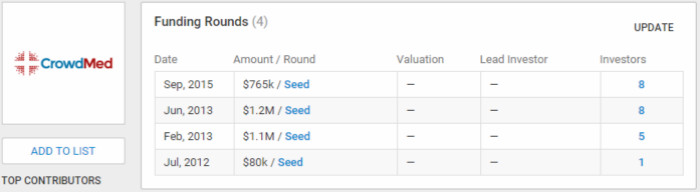
CrowdMed's Financing Status
Currently, CrowdMed has partnered with healthcare service providers specializing in high-risk conditions, helping them significantly reduce costs. In the future, the company intends toCollaboration among healthcare institutions, hospitals, and insurers, with the hope that the latter will embrace CrowdMed’s concept and leverage the “crowdsourcing” model to effectively save time and reduce costs.