

AHA, Verily, and AstraZeneca Award $75M 'One Brave Idea' Grant to Calum MacRae for Groundbreaking Coronary Heart Disease Research
The sudden passing of Zhang Rui, founder of Chunyu Doctor, cast a shadow of gloom and sorrow over the National Day holiday. Yet, as time flows on unceasingly, day and night, our remembrance of Zhang Rui should not be limited to fleeting online tributes that fade into oblivion within months. While a myocardial infarction claimed Zhang Rui’s life, the underlying factors that brought him down should serve to strengthen those of us who remain. This is perhaps why healthcare professionals, fully aware that death is an ultimate inevitability, still press forward without hesitation.
As if by a predestined connection. This past Wednesday, the American Heart Association (AHA), Verily (Google’s life sciences company), and multinational pharmaceutical giant AstraZeneca jointly announced that, after nine months of screening and evaluation, the selection process for a single research grant worth up to $75 million had been finalized. This substantial funding will be dedicated to investigating the origins and causes of coronary heart disease.

Coronary heart disease (CHD), the cardiovascular condition these three institutions aim to eradicate, is formally known as coronary artery disease. The coronary arteries are blood vessels that supply oxygen essential for cardiac function to the heart muscle. In patients with CHD, substances such as fats and thrombi gradually accumulate within the arterial walls, leading to atherosclerosis. These pathological changes reduce coronary blood flow; in severe cases, they can trigger angina pectoris, myocardial infarction, or even heart failure. Due to its high risk, CHD claims approximately 7 million lives worldwide each year. Cardiovascular diseases, including CHD, have become the leading cause of death globally, accounting for one in every three deaths.
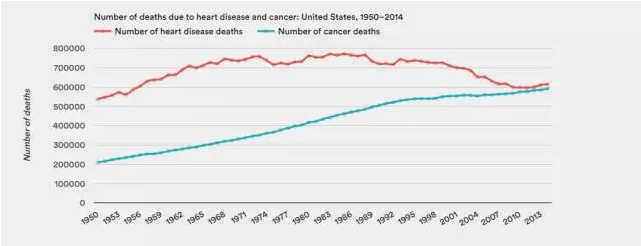
Data shows that in the United States, heart disease remains a more formidable “killer” than cancer.
To address this “number one killer” of humanity, the American Heart Association (AHA), Verily, and AstraZeneca launched a research grant competition in January called “One Brave Idea,” with a funding pool of up to $75 million. This $75 million prize has only one winner: an independent research team that proposes a more comprehensive and in-depth research plan for cardiovascular diseases. Ultimately, the award was granted to a team led by Calum MacRae, Chief of Cardiovascular Medicine at Brigham and Women’s Hospital in the United States, in recognition of its “visionary understanding and therapeutic approach to coronary heart disease.”
“A Bold Idea” has also become the largest single incentive program ever for coronary heart disease research, as well as the largest award granted in the history of the AHA. How wealthy and generous are these three funders? No comparison, no harm: In 2015, the average single research grant from the renowned National Institutes of Health (NIH) was only $435,525.
Indeed, the ambition of “A Bold Idea” is truly vast. Its original intent was to bring about a qualitative transformation in disease research and to reshape the traditional paradigm of biomedical research. The project’s ultimate goal is to design and implement an entirely new strategy for coronary heart disease that provides treatment for those affected and prevention for those at risk. In contrast, research previously funded by the National Institutes of Health (NIH) has typically focused on specific, isolated aspects of heart disease.

A major reason MacRae was able to secure $75 million in funding is its focus on biosignals for coronary heart disease (CHD). It is worth noting that a significant number of CHD patients are unaware of their condition before being rushed to the emergency room. A CHD screening study involving 3,473 middle-aged adults in North China revealed that 79.4% of those diagnosed with CHD were asymptomatic in their daily lives, and fewer than one-third showed abnormalities on resting electrocardiograms (ECGs).
MacRae’s research focus is not on individuals who are already diseased, but rather on exploring the pathogenesis of coronary heart disease (CHD) to identify previously unknown signals that predict its onset. Therefore, his study subjects are less likely to be middle-aged and elderly patients with established disease, and more likely to be young individuals without significant manifestations of CHD. He will employ research approaches such as genetics, omics, and molecular biology.
Research leveraging big data will also be a crucial component. MacRae and his team will monitor a range of metrics from volunteers, including sleep patterns, daily activities, and mental stress levels, while Verily will provide analytical tools, such as artificial intelligence, to facilitate the research.
MacRae also hopes that traditional indicators predicting cardiovascular disease risk, such as blood pressure, blood lipids, and cholesterol, will be further expanded, with biomarkers like DNA sequencing and salivary cardiac enzymes providing additional basis for interpretation.
|Source: Health Point
|Author: Tang Chen