

2016 World Medical Robotics Conference to Convene in Shenzhen with Global Experts and Innovators
The “2016 World Medical Robot Conference” is scheduled to take place in Shenzhen, China, on October 29–30. Hosted by the World Medical Robot Association, this global summit for the medical robotics industry features the theme: “Technology Transforms Healthcare, Health Leads the Future.”
This is the inaugural global summit on medical robotics, integrating scientific research, clinical practice, and industry. The event will be attended by more than 20 academicians from various countries, along with dozens of presidents of globally renowned hospitals and clinical experts who will deliver presentations and participate in discussions.
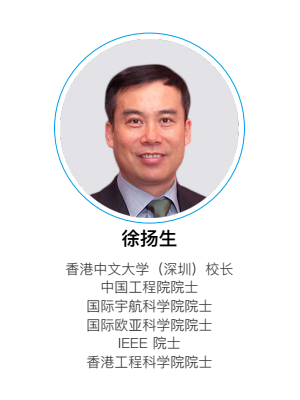
Xu Yangsheng is the President of The Chinese University of Hong Kong, Shenzhen, and an Academician of the Chinese Academy of Engineering, the International Academy of Astronautics, the Eurasian Academy of Sciences, IEEE, and the Hong Kong Academy of Engineering Sciences. His research interests include robotics, intelligent systems, and artificial intelligence. He has published six monographs and more than 300 international academic papers in areas such as space robotics, service robotics, dynamics, control, self-learning systems, wearable human-machine interfaces, and intelligent vehicles.
In an article, Academician Xu Yangsheng described the current state of intelligent robotics development as follows: The demand for performing tasks under complex operating conditions has served as a revolutionary impetus for the advancement of robotic technology, evolving it from research focused on single-task execution into an integrated technology combining sensors, controllers, and actuators. During this phase, robots have been capable of accomplishing tasks beyond human capability, thereby expanding the scope of human work and overcoming physiological limitations.
Over the past two decades, rapid advancements in microelectronics, communications, computer science, artificial intelligence, control systems, and image processing have laid the foundation for highly intelligent robots. Robots are no longer merely cold, impersonal production tools; they are gradually becoming assistants and companions in daily life, providing services across various domains such as living, health, and entertainment. This shift has given rise to a vast service robotics industry. For instance, in home healthcare monitoring, ordinary households often rely solely on a thermometer, meaning diseases are typically detected only after symptoms become apparent. Medical robots, however, can operate within home environments, automatically measuring users’ physiological conditions and intelligently analyzing vital signs or relaying data to healthcare professionals. This enables timely alerts and early diagnosis, thereby achieving the goal of “preventive treatment” or “treating potential diseases before they manifest.”
Meanwhile, medical robots can assist surgeons in performing complex procedures, minimizing incisions, expanding the surgical field of view, and enhancing precision and controllability. In home care settings, for instance, robots can act as comprehensive household managers, assisting the elderly and children with daily living activities and providing home surveillance when occupants are away. At this stage, the primary focus of robotic applications has undergone a fundamental shift—from objects to humans—positioning robots as friends and companions to humanity.
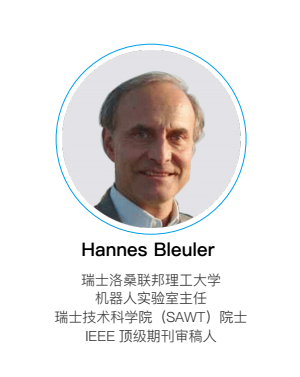
Professor Hannes Bleuler has led or participated in dozens of major research projects funded by organizations such as the Natural Sciences and Engineering Research Council of Canada, the National Aeronautics and Space Administration (NASA), the Swiss National Science Foundation (SNSF), and the European Union’s Seventh Framework Programme (FP7). Professor Bleuler has published more than 200 papers in internationally renowned journals, including Nature, authored three books, and his publications have been cited 4,393 times.
Professor Hannes Bleuler is from the École Polytechnique Fédérale de Lausanne (EPFL), a renowned institution of science and technology in Europe and worldwide, holding an esteemed reputation in the field of engineering and technology. Within this prestigious yet understated university, a compact laboratory team of just 25 members, known as LSRO, possesses cutting-edge technologies in robotics and collaborates on projects with globally renowned institutions. The LSRO Laboratory focuses on research in biomedical robotics, microrobotics, haptic systems, MRI-compatible devices, nanotechnology, and high-precision instrumentation.
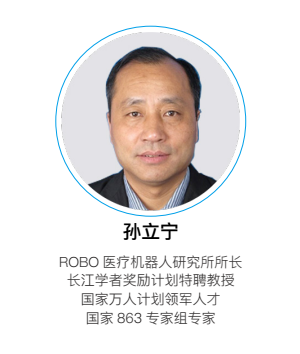
Professor Sun Lining, former Director of the Robotics Institute at Harbin Institute of Technology and Chairman of Boshi Robots. He currently serves as Vice President of the China Mechatronics Association and Chairman of its Robotics Professional Committee, Vice Chairman of the Chinese Society for Computer Assisted Surgery, Standing Committee Member of the Medical Robot Engineering and Clinical Application Branch of the Chinese Society of Biomedical Engineering, Vice Chairman of the Robotics Professional Committee of the Chinese Association of Automation, and Executive Director of the Chinese Society of Micro-Nano Technology. His primary research interests include micro-nano manipulation robots and equipment, advanced robotics and control, and mechatronic equipment. He has presided over more than 20 national projects under the National High-Tech Research and Development Program (863 Program), the National Basic Research Program (973 Program), and the National Natural Science Foundation of China. He has received two Second-Class National Awards for Science and Technology and three First-Class Provincial Science and Technology Awards, published more than 300 academic papers, and been granted more than 20 national invention patents.
Professor Sun Lining mentioned in a speech that medical robotics has emerged as a rapidly developing new application area over the past five years. Human ocular structures, nerves, and blood vessels are extremely delicate. When surgeons perform operations manually, they are not only prone to fatigue but also limited by the precision of human hand movements. Currently, robots can be employed to automatically assist with positioning, manipulation, and surgical procedures. Another category is rehabilitation robotics. There is a high incidence of conditions such as hemiplegia and paralysis. After completing initial treatment, patients require systematic exercise and functional recovery of their limbs. Given the limited availability of medical personnel, it is impractical for doctors to provide daily manual therapies such as massage or traction to individual patients. Robotic systems can facilitate passive limb movement, enforcing daily therapeutic exercises to optimize muscular recovery. Therefore, the demand for robots in the healthcare industry is expected to be substantial in the future.
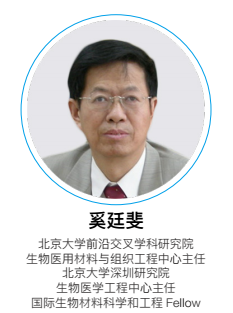
Xi TingfeiFrom December 1982 to June 2008, served as Director of the Center for Medical Device Testing at the National Institutes for Food and Drug Control (NIFDC) of China (served as a Visiting Researcher at the National Institute of Health Sciences in Japan from 1991 to 1993; worked as an International Visiting Scholar at the Therapeutic Goods Administration of the Australian Department of Health in 1995). Since July 2008, has been serving as Director of the Center for Biomedical Materials and Tissue Engineering at the Academy for Advanced Interdisciplinary Studies of Peking University, and Director of the Center for Biomedical Engineering at the Shenzhen Graduate School of Peking University. Holds the position of Chair Professor at Southeast University.
Fellow of the International Union of Societies for Biomaterials Science and Engineering; Distinguished Young and Middle-Aged Expert with Outstanding Contributions, Ministry of Health; Recipient of the State Council Special Government Allowance; Expert Liaised by the Organization Department of the CPC Central Committee. Expert involved in drafting the implementation plan for the Ministry of Science and Technology’s 13th Five-Year Plan Key Special Project on “Biomedical Materials and Tissue/Organ Repair and Replacement.” Long-term engagement in evaluation and standards research for biomedical materials, artificial organs, and tissue engineering. Has undertaken or completed 30 national and ministerial-level projects, authored or co-authored over 250 papers (90 indexed by SCI), edited or co-edited 18 books, led or participated in the drafting of 15 national or industry standards, and filed 8 patent applications. The project “Establishment and Application of Biological Evaluation Standards and Test Methods for Medical Devices” received the Second Prize of the Chinese Medical Science and Technology Award (2010); “Research on Molecular Biological Evaluation Methods for Medical Devices” received the Second Prize of Zhejiang Provincial Science and Technology Progress Award (2007); and “Research on Biological Evaluation Standards and Test Methods for Medical Devices” received the Second Prize of Beijing Municipal Science and Technology Progress Award (2002). Listed among the Most Cited Chinese Researchers (2014 and 2015) published by Elsevier: Xi Tingfei (Biomedical Engineering), with 150 papers published between 2005 and 2014 cited 1,515 times.

Xu Jing, joined AstraZeneca China in December 2014 as Vice President of the Information Technology Department, where she provided IT support, optimized information systems, and implemented best practices in information management to support AstraZeneca’s business growth. Meanwhile, she formulated IT strategies and managed projects in alignment with the company’s overall business strategic priorities. Ms. Xu Jing is currently responsible for AstraZeneca China’s Commercial 3D Innovation (“Digital, Diagnosis, Device” 3D Innovation Strategy), helping the company build an ecosystem dedicated to developing integrated diagnostic and therapeutic solutions for diseases.
Prior to joining AstraZeneca, Ms. Jing Xu served as Head of Information Technology and Director of Business Relations for Microsoft Greater China, where she contributed to the company’s strategic development plans to support rapid business growth while fostering strong partnerships with business stakeholders.

Xing Liping, Partner in Healthcare Industry Consulting Services at PwC, with over 15 years of experience in management consulting and business operations across numerous industries. In recent years, Ms. Xing has accumulated extensive project experience in the healthcare sector. Her expertise in financial and operational management, combined with her deep insights into the healthcare industry, has earned her consistent recognition and acclaim from industry peers, establishing a strong reputation. She has been invited to serve as a Standing Committee Member of the Economic Management Professional Committee of the Chinese Hospital Association. Ms. Xing also holds two professional certifications: Project Management Professional (PMP) and Certified Public Accountant (CPA).
The future holds immense growth potential for medical robots. Globally, the industrialization and technological breakthroughs in this sector are at a prime stage of development. In China, numerous automation companies are strategically positioning themselves in the medical robotics market, currently in the early stages of industrialization. The World Medical Robot Conference will provide a rich platform for exchange among enterprises and research institutions, fully leveraging its role as a bridge and link. It aims to facilitate communication and collaboration for government officials, industry leaders, experts and scholars, corporate elites, emerging entrepreneurs, media representatives, and enthusiasts dedicated to the global medical robotics industry.
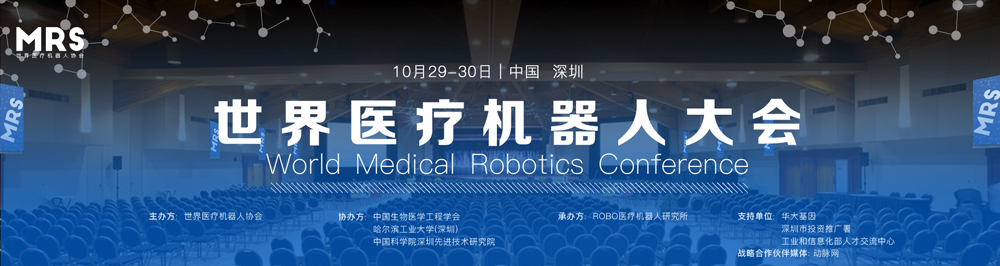
Venue: Shenzhen, China
Conference Dates: October 29–30, 2016
The “2016 World Medical Robot Conference,” organized by the World Medical Robot Association, is scheduled to take place in Shenzhen, China, on October 29–30. This inaugural global summit integrates scientific research, clinical practice, and industry development in the field of medical robotics. More than 20 academicians from various countries will attend the conference, alongside dozens of presidents of renowned hospitals and clinical experts worldwide who will deliver reports and participate in discussions. Experts and scholars from prestigious domestic and international institutions—including the Swiss Academy of Engineering Sciences (SAWT), the UK Royal Academy of Engineering, the Chinese Academy of Sciences, the Singapore Academy of Medicine, and the ROBO Medical Robot Research Institute—will share insights on global trends in medical robot applications and research directions. They will conduct thematic discussions centered on the conference theme: “Technology Transforms Healthcare, Health Leads the Future.”
Click the link below or scan the QR code to register

For sponsorship inquiries, please contact Peipei at VCBeat (WeChat ID: xiaopeiling185025)
Related Reading:
“2016 World Medical Robot Conference” News Preview
Growth Rate Reaches 34.45%, Promising Future for the Medical Robotics Industry