

Beyond Gene Sequencing: Emerging Applications of Next-Generation Sequencing in Biomedicine

In the current next-generation sequencing (NGS) market, Illumina continues to dominate. Since the launch of its HiSeq X sequencing platform, the cost of gene sequencing has been significantly reduced, with the cost of research-grade whole-genome sequencing remaining stable at around $1,000. Since then, its only competitor at this price point—BGI’s Revolocity sequencer—has struggled to keep pace. This has led many researchers to speculate that the lack of competition over time could slow the development of NGS, at least in the area of short-read sequencing. However, it is encouraging to note that applications of NGS in other fields are advancing rapidly.
Recently, Genetic Engineering & Biotechnology News conducted a review of these fields, and VCBeat (WeChat: vcbeat) compiled and translated the main content.

NGS has made tremendous progress in the field of long-read sequencing, revealing the complexity of genome-wide transcription. In the process of genomic analysis, the primary challenge is handling repetitive DNA sequences. If the length of sequence repeats exceeds the basic read length, achieving unique mapping to the reference genome becomes difficult, if not impossible.
Not coincidentally, the analysis of gene transcription faces similar challenges. “Most genes contain multiple exons, such that the length of the mRNA exceeds the length of the sequencing reads,” said Dr. Brenton Gravely of Personalized Healthcare. “Therefore, it is unlikely to accurately and unambiguously determine which isoforms are present in a specific sample using long-read sequencing.”
Oxford Nanopore is a highly anticipated gene sequencing company. Last spring, Oxford Nanopore pioneered the launch of MinION, a sequencer based on nanopore technology. Although the company later delayed the official release, it has indeed brought its technology to the public. Currently, more than 1,000 research teams are using the MinION sequencer.
Within a year of the initial release, a series of improvements in enzyme chemistry and nanopore design increased MinION’s production output from less than 100 million to over 1 billion. In terms of quality, yield, and cost, MinION still lags behind Illumina; however, Oxford Nanopore’s instruments hold advantages in two areas: read length and portability.
User reports indicate that the average read length across tens of thousands of reads exceeds 100,000 bases. DNA input quality and preparatory storage appear to be the only true factors limiting read length. In other words, if input quality and preparatory storage requirements are met, read length can be extended.
Meanwhile, the MinION is a handheld sequencer that can even perform data collection in the field, eliminating the need to bring processed samples back to the laboratory for analysis. Initially, its data quality was far inferior to that of Illumina; however, following improvements, the data quality has significantly increased. The latest R9 version features a fast mode, and under ideal conditions, the accuracy of testing has risen to 95%.
Pacific Biosciences is a leader in long-read sequencing and has achieved significant results in recent years. At last year’s American Society of Human Genetics meeting, the company unveiled a new platform—Sequel. Developed in collaboration with Roche, this platform offers improvements across all aspects compared to its predecessor, the RS II.
Compared with the RS II, the Sequel system delivers higher throughput, occupies less than two-thirds of the space, and costs only half as much. Pacific Biosciences has long aimed to maximize platform utilization by addressing chemical and supply-chain challenges, particularly for consumable SMRT (single-molecule, real-time) cells. These issues now appear to have been resolved, and the company is awaiting feedback from data generated by its first customers.
In addition to the two companies mentioned above, another influential player in the industry is 10X Genomics from GemCode, which can generate linked reads from underlying short-read sequencing data. Although this technology still has some limitations, such as limited effectiveness for repetitive regions longer than the underlying short reads, the platform is currently operating well. Earlier this year, it signed a joint marketing agreement with Illumina, which will take effect if Illumina’s Moleculo synthetic long-read technology declines.
“Despite progress, long-read sequencing technologies, particularly those for transcriptome sequencing, still face urgent challenges. One issue is the throughput of current platforms, but a more significant problem is that the processivity of reverse transcriptases remains insufficient,” explained Dr. Gravely. “In direct RNA sequencing, high-performance reverse transcriptases can make a substantial difference.”
Exciting transcription researchers, Oxford Nanopore demonstrated in a recently published paper that they are set to launch commercial kits for direct RNA sequencing using MinION.

Another application is single-cell genomics. To date, with very few exceptions, all next-generation sequencing (NGS) projects have been conducted on pooled cell populations, rather than performing sequencing on individual cells from thousands or even tens of thousands of cells. If all cells were completely homogeneous, they could collectively represent the somatic genome under general circumstances, which would not pose a problem. However, in many applications, cells are not entirely homogeneous, necessitating the targeted isolation and selection of key information.
For instance, tumor biopsies are highly heterogeneous, containing both somatic cells and cancer cells. Moreover, even cancer cells within the same tumor may possess different genomes. Aggregating multiple cells generates a mixed genomic pool, thereby increasing the difficulty of interpretation and analysis. At the current level of research, only a small fraction of cellular variations can be considered negligible.
Initially, the researchers adopted a strategy of sampling and measuring individual cells from several different locations within the biopsy tissue. By accumulating a sufficient number of such single-cell measurements, they could construct a comprehensive view of the tumor genome.
Another approach is the single-cell method. The transcriptome exhibits high cellular variability, and pooling cells can mask potential variations in gene expression patterns.
“Just a few years ago, transcriptomic analysis of hundreds of single cells could consume substantial time and resources.” Genomics scientist Richard Shen, who recently left Illumina to join RS Technologies, noted, “Now, with the advent of user-friendly NGS library preparation technologies, development costs have been significantly reduced. Analyzing thousands of single cells has not only become feasible, but the resulting data have also demonstrated value in many applications.”
For the preparation of single-cell libraries, many platforms are available: Fluidigm’s C1 can process 800 cells simultaneously, while 10x Genomics’ Chromium platform can handle up to 48,000 cells at once. However, such high throughput is not the goal for every researcher. As Gravely pointed out, “The throughput of some platforms or homemade devices is indeed exciting. What we hope to see is a synergistic effect, such as that offered by single-cell long-read sequencing instruments like the Holy Grail.”

Another attention-grabbing application is liquid biopsy for cancer diagnosis. To some extent, the use of next-generation sequencing (NGS) in tumor biopsy is becoming increasingly widespread. Foundation Medicine’s FoundationOne test serves as a prime example—a single testing panel comprising markers for 315 cancer-related genes. These comprehensive panel tests have replaced traditional single-gene assays.
Cancer diagnosis is also shifting from tumor tissue biopsies to liquid biopsies. Unlike extracting DNA from sliced tumor tissues, cancer liquid biopsies isolate cell-free DNA (cfDNA) from circulating tumor cells (CTCs) or cell-free components in patients’ blood. For now, tumor tissue biopsies are not expected to disappear entirely, as they provide substantial information on anatomical and cellular structures; however, many researchers in the field of liquid biopsy argue that liquid biopsies offer greater functional insights.
“From the perspective of cancer screening, liquid biopsy is more attractive because it is not only simpler and more accurate but also enables routine pre-cancer screening,” said Gabriel Otte, Co-founder and CEO of Freenome. “In terms of testing for prevention and diagnosis in patients, liquid biopsy also offers advantages, particularly for the more than 30% of cases where invasive biopsy is unsuitable for various reasons.”
As a hot new field, some emerging companies are growing rapidly, and more large companies are innovating to capture the huge and growing market.
As early as 2014, Guardant Health claimed to be the first liquid biopsy company to enter the market. This diagnostic test is known as Guardant360. Freenome has adopted a different approach by analyzing the whole genome for cancer detection. “We rely on our deep learning,” said Otte. “To achieve accurate cancer detection, we have defined specific partitions based on the most relevant genomic regions.”
Illumina’s sequencing technology has been adopted by most companies. In this competitive landscape, it also launched its own liquid biopsy company—Grail. Perhaps to avoid direct competition with its customers, Illumina stated that it would primarily focus on early-stage screening, a more challenging task that has not garnered attention from other companies.
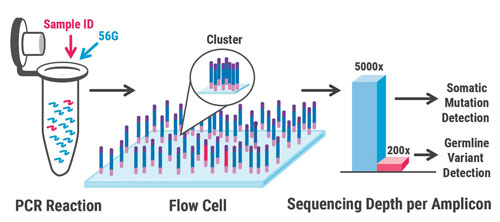
With the advent of liquid biopsy, monitoring patient responses in investigational trials and ensuring proper sample tracking have become increasingly important. This process requires the analysis of at least three types of samples: tumor tissue, normal tissue, and cell-free DNA.
When the sequencing target is large, such as when performing whole-genome sequencing, genetic fingerprints can be determined, allowing for appropriate sample matching during data analysis. However, according to Dr. Drew McUsic, a biologist at Swift Biosciences, genetic fingerprints cannot be generated when the sequencing target is small.
“Until now, researchers have still relied on single-nucleotide diversity and LIMS system alignment and pairing to accurately track samples.” Dr. McUsic pointed out, “These methods depend on the correct labeling of multiple samples and the precise matching of data files with materials.”
To identify a more precise method for sample identification, Swift Biosciences has developed the Accel-Amplicon™ Sample_ID Panel. The genetic fingerprint is provided by 104 exons and sex-specific amplicons, which are added as a low-percentage spike-in (reference standards added to test samples to monitor sample loss during experimental procedures) to any Swift amplification platform, such as the Accel-Amplicon 56G Oncology Panel v2. Dr. McUsic further added, “This technology can be applied across a range of applications, from shallow germline sequencing to deep-coverage somatic mutation detection.”
This technology not only provides an effective, single-tube assay for analyzing somatic mutations in tumor specimens but also generates genetic fingerprints within the same sequencing file. He further stated that as more projects are designed to monitor response rates in cancer patients, selecting appropriate specimen tracking tools for these longitudinal studies will become increasingly important.
Currently, Illumina continues to dominate the market with its high-throughput short-read sequencing technology, while other companies are seeking advancements in other areas. Oxford Nanopore has announced several upcoming initiatives, including the PromethION, a high-throughput nanopore sequencer. The company claims that its throughput will be competitive with Illumina’s HiSeq X. The company also discussed two automated sample preparation instruments, VolTRAX and Zumbador, aiming to comprehensively simplify DNA sequencing in the future.
Pacific Biosciences’ Sequel platform is also poised for rapid adoption. It has the potential to reduce sequencing costs, with its value appreciation possibly surpassing that of Illumina. One thing is certain: as workflows become simpler and costs decline, barriers to the clinical application of next-generation sequencing (NGS) will be alleviated.