

Six Decades of AI Evolution: Reshaping the Future of Healthcare
This year has undoubtedly been the most dynamic year for artificial intelligence. In addition to the match between AlphaGo and Lee Sedol at the beginning of the year becoming a major event of the year, on the afternoon of September 28, 2016, the most significant news from the AI community came from the United States: Google, Facebook, Amazon, IBM, and Microsoft officially announced the establishment of a non-profit organization called the Partnership on AI.Artificial intelligence is not only garnering significant attention in the public sphere but has also become a focal point in the healthcare sector. More than a dozen top-ranked U.S. hospitals for cancer treatment are currently deploying IBM Watson, which officially entered the Chinese market this August. Meanwhile, in recent years, AI startups in the healthcare sector have been emerging continuously in the United States, the United Kingdom, Israel, China, and other regions. Both financing amounts and the number of projects show an upward trend, with substantial progress achieved across multiple specialized subfields.
The significant changes brought by the integration of artificial intelligence and healthcare in terms of business models, efficiency, and accuracy have greatly increased public attention to this “new” technology. In fact, artificial intelligence has been in existence for 60 years, and it began participating in diagnosis and treatment as early as over 40 years ago.This article presents the eight pivotal stages and key milestones in the history of artificial intelligence from its inception to the present, offering a retrospective on this historical journey.
Phase I: The 1950s, the dawn of artificial intelligence concepts
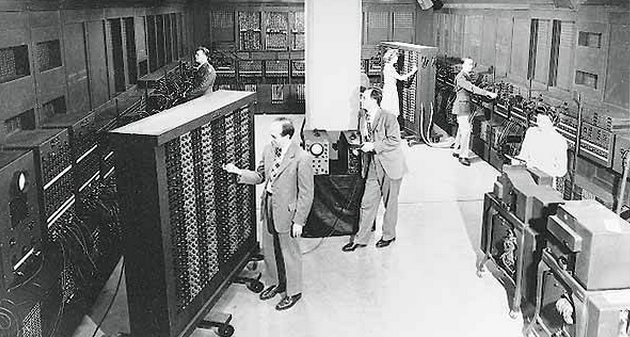
On February 14, 1946, the first electronic computer, ENIAC, was born in the United States (another view holds that the Atanasoff–Berry Computer was the first, making ENIAC the second). The full name of ENIAC is Electronic Numerical Integrator and Computer. It was originally developed as a tool to assist artillery units in calculating projectile trajectories. Construction began one year before the Allied landing in Western Europe, but it was not completed until after the ceasefire in 1945. In the early Cold War period, the military discovered numerous other applications for ENIAC; for instance, its 17,468 vacuum tubes were used to test the feasibility of early hydrogen bomb designs.
During this period, scientists sought to determine whether machines possessed genuine intelligence and how to distinguish between conscious humans and unconscious machines. Although computers provided the necessary technical foundation for artificial intelligence research, it was not until the early 1950s that people began to recognize the connection between human intelligence and machines. Norbert Wiener, a renowned American mathematician and the founder of cybernetics, was among the earliest scientists to study feedback theory. The most familiar example of feedback control is the thermostat, which compares the collected room temperature with the desired temperature and responds by adjusting the heater up or down, thereby regulating the ambient temperature. The significance of this research on feedback loops lies in Wiener’s theoretical assertion that a communication system always transmits information with varying ideological content according to human needs, while an automatic control system must adjust its own operations in response to changes in the surrounding environment, exhibiting a certain degree of flexibility and adaptability. All intelligent activities are the result of feedback mechanisms, and these mechanisms can potentially be simulated by machines. This discovery had a profound impact on the early development of AI.
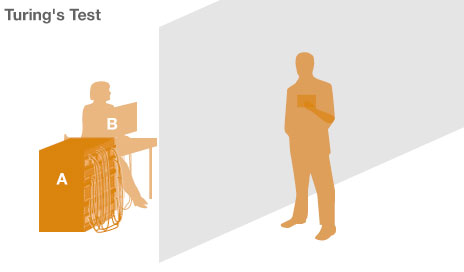
In 1950, Alan Turing published a landmark paper titled “Computing Machinery and Intelligence,” seeking to define machine intelligence. The paper predicted the possibility of creating machines with genuine intelligence in the future and proposed the famous Turing Test: if a machine can engage in conversation with humans (via teleprinter), and at least 30% of human evaluators are unable to distinguish it from a human within five minutes, then the machine is considered intelligent.
In 1955, Allen Newell and Herbert A. Simon (the founders of the Computer Science Department at Carnegie Mellon University) developed a program called the Logic Theorist. This program is regarded as the beginning of artificial intelligence applications and is considered the first AI program. It modeled each problem as a tree structure and then used algorithms to select the branch most likely to lead to the final answer. The emergence of the Logic Theorist marked a significant milestone in the field of AI research.
Phase II: 1956, the Official Birth of Artificial Intelligence
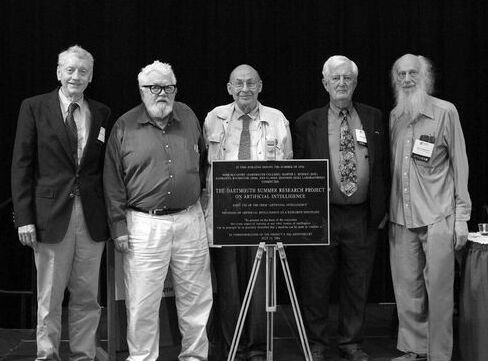
Reunion of the Attendees of the 2006 Dartmouth Conference, from left: Moore, McCarthy, Minsky, Selfridge, Solomonoff.
It is widely believed that the concept of artificial intelligence was first formally proposed at the 1956 Dartmouth Conference. John McCarthy, a professor in the Department of Mathematics at Dartmouth College and hailed as the father of artificial intelligence, organized a month-long workshop, inviting experts interested in machine intelligence, including Marvin Minsky from Harvard University, Nathaniel Rochester from IBM, Claude Shannon from Bell Telephone Laboratories, and Oliver Selfridge (a pioneer of pattern recognition) who was a student of Norbert Wiener, as well asNewell and SimonAlthough the conference was not entirely successful, it marked the first introduction of the concept of artificial intelligence. It initiated research into how automated computers can simulate higher-order functions of the human brain, possess linguistic capabilities, construct neural networks, address computational scale theory, and achieve self-improvement. The conference brought together the founders of the field of artificial intelligence, laying the foundational groundwork for AI research.
Subsequently, a large number of scientists began researching artificial intelligence. Carnegie Mellon University, the Massachusetts Institute of Technology (MIT), and IBM established AI research centers, yielding a series of notable achievements. Key work during this period included general search methods, natural language processing, and robotic block-manipulation tasks. These efforts focused primarily on methodologies and algorithms, remaining far from practical application; nevertheless, widespread optimism within the field attracted significant investment to artificial intelligence.
Key achievements during this period include automated theorem proving, checkers-playing programs, the General Problem Solver, and the LISP list-processing language. The General Problem Solver was developed by the same team that created expert systems for logic, extending the feedback principles proposed by Norbert Wiener to solve a wide range of common-sense problems.
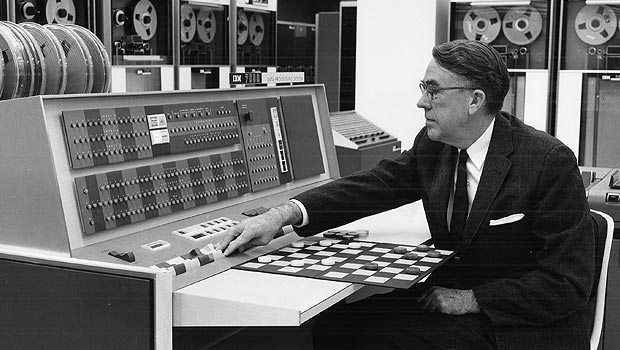
The checkers program was developed by IBM scientist Arthur Samuel. The program could provide better guidance for subsequent moves by observing the current position and learning an implicit model. Samuel found that as the game program ran for longer periods, it achieved increasingly effective guidance for future moves. Four years later, the program defeated Samuel himself; three years after that, it beat a U.S. champion who had remained undefeated for eight years. Through this program, Samuel refuted Providence’s assertion that machines could not surpass humans or code and learn like humans. He coined the term “machine learning,” defining it as “the field of study that gives computers the ability to learn without being explicitly programmed.”
The LISP list processing language, developed by John McCarthy, the father of artificial intelligence, has been hailed as the most suitable language for AI and remains in use to this day. Following the establishment of artificial intelligence as a discipline, two critical issues inevitably needed to be addressed: first, how to represent the world; and second, how computers can derive intelligence from knowledge about this world. AI research differs from conventional programming in that it involves diverse input data formats—such as images, mathematical problems, and puzzles—commonly referred to as unstructured data. All such data must first undergo “knowledge representation” to be converted into a format that computers can process. This data format is the linked list, and the language embodying this approach is LISP.
Phase III: The Late 1960s, When Artificial Intelligence Entered Its First Winter
From the late 1960s to the late 1970s, the pace of machine learning development nearly halted, marking the first downturn in artificial intelligence. Bottlenecks in computer performance, increasing computational complexity, and a scarcity of available knowledge for learning meant that computers lacked sufficient databases to support algorithm training, rendering any notion of intelligence unattainable. Scholars called for machines to possess a child-level understanding of the world, but they soon realized this expectation was overly ambitious: in 1970, no one could create such massive databases, nor did anyone know how a program could learn such rich information. The stagnation of many projects also influenced the direction of funding, plunging artificial intelligence into a prolonged trough lasting several years.
Phase 4: The 1980s—The Rise of Artificial Intelligence Led by Expert Systems
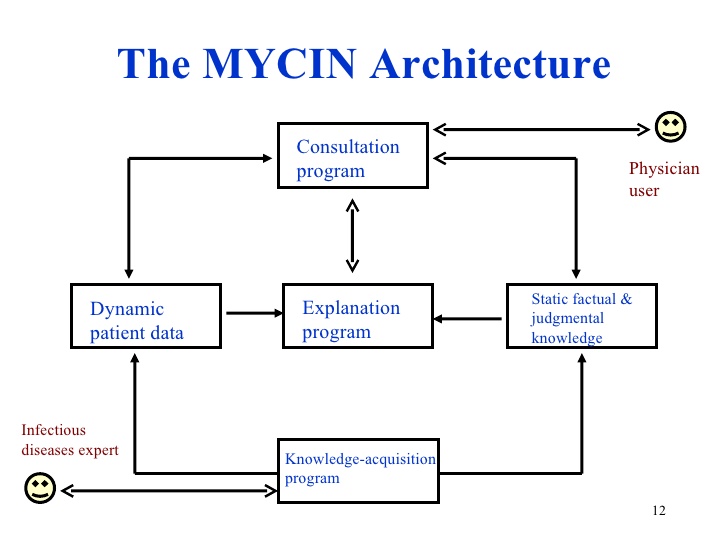
In the 1970s, it was recognized that artificial intelligence (AI) research should not only focus on solution algorithms but also incorporate knowledge. This led to the emergence of expert systems, ushering in a new surge in AI research. Expert systems can predict the probability of certain solutions under specific conditions. Given the substantial storage capacity of computers at the time, expert systems had the potential to derive patterns from data. In 1972, MYCIN, an expert system designed for diagnosing infectious blood diseases and prescribing treatments, was successfully developed, laying the foundation for subsequent expert system research. The research and development of expert systems such as DENDRAL (a chemical mass spectrometry analysis system), PROSPECTOR (a mineral exploration system), and Hearsay-II (a speech understanding system) propelled artificial intelligence toward practical applications.
After entering the 1980s, the development of artificial intelligence accelerated and expanded into numerous commercial sectors. In 1986, sales of AI-related hardware and software in the United States reached $425 million. Many large corporations adopted expert systems; for instance, Digital Equipment Corporation used the XCON expert system to configure VAX mainframes, while DuPont, General Motors, and Boeing also implemented expert systems.
Phase 5: The Second AI Winter in the Early 1990s
Prior to the 1990s, most artificial intelligence projects were sustained in research laboratories through funding from government agencies, with the direction of financial support directly influencing the development of AI. By the mid-1980s, the performance of Apple and IBM personal computers had surpassed that of general-purpose computers running expert systems, leading to the decline of expert systems and causing AI research to face another funding crisis. After 1987, although research continued, artificial intelligence was rarely mentioned.
Phase 6: In the late 1990s, artificial intelligence rose to prominence, with IBM’s Deep Blue gaining worldwide recognition

In the late 1990s, the widespread adoption of personal computers (PCs) brought them from academic institutions into households. Advances in internet technology created new opportunities for artificial intelligence research, shifting the focus from studies on individual intelligent agents to distributed artificial intelligence within networked environments.
Following expert systems, machine learning became the focal point of artificial intelligence. Its objective is to equip machines with the capability for automatic learning, enabling them to discern patterns from vast amounts of historical data through algorithms and to perform judgment, recognition, or prediction on new samples. Furthermore, the introduction of Hopfield’s multilayer neural network model spurred a flourishing era in the research and application of artificial neural networks. During this period, IBM was undoubtedly the leader in the field of AI. The victory of Deep Blue (based on exhaustive search trees) over world chess champion Garry Kasparov in 1996 became a landmark event in the development of artificial intelligence; indeed, much of the public’s awareness of AI stemmed from Deep Blue.
Stage 7: Early 21st Century—Deep Learning Ushers in the Spring of Artificial Intelligence
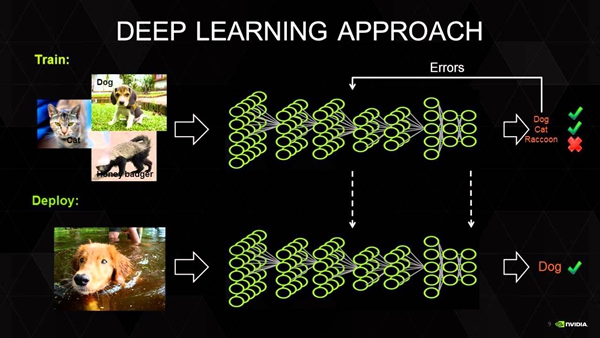
The development of machine learning is divided into two categories: Shallow Learning and Deep Learning. Shallow learning originated from the back-propagation algorithm for artificial neural networks in the 1920s, which paved the way for the widespread adoption of statistics-based machine learning algorithms. Although artificial neural network algorithms during that period were also referred to as Multilayer Perceptrons (MLP), training multi-layer networks proved challenging; consequently, models typically featured only a single hidden layer, characterizing them as shallow models.
Deep learning has ushered in the second wave of machine learning. In fact, deep learning is not a novel concept; it is an evolution of traditional neural networks. Geoffrey Hinton, a leading figure in neural network research, proposed deep learning algorithms for neural networks in 2006, significantly enhancing their capabilities and posing a challenge to support vector machines. Hinton and his student Ruslan Salakhutdinov published a paper in the prestigious academic journal *Science*, marking the beginning of the deep learning era. This paper presented two main arguments: first, multi-hidden-layer artificial neural networks possess superior feature learning capabilities, with the learned features providing a more essential representation of the data, thereby facilitating visualization or classification; second, the training difficulties associated with deep neural networks can be effectively overcome through “layer-wise pre-training,” which was achieved via unsupervised learning in this study.
The concept of deep learning originates from research on artificial neural networks. While neural networks and deep learning share similarities, such as the adoption of similar layered structures, they differ in that deep learning employs distinct training mechanisms and possesses powerful representational capabilities. Traditional neural networks were once a prominent direction in the field of machine learning but later faded from prominence due to challenges such as difficult parameter tuning and slow training speeds. Subsequently, deep neural network models have become a significant frontier in the field of artificial intelligence. Deep learning algorithmic models have undergone a period of rapid iteration, with various new models being continuously proposed, including Deep Belief Networks, Sparse Coding, Recursive Neural Networks, and Convolutional Neural Networks. Among these, the Convolutional Neural Network (CNN) has emerged as the most prominent algorithmic model for image recognition.
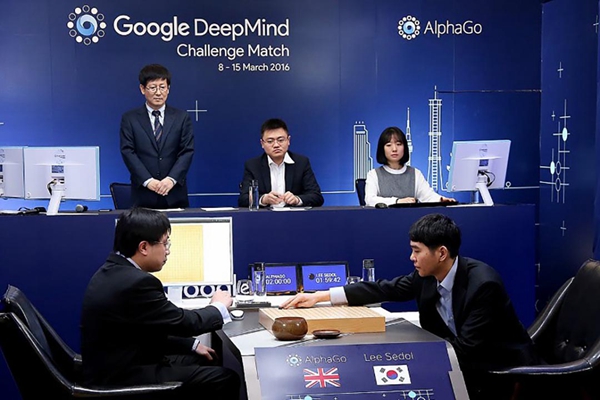
Deep learning was ranked as the top breakthrough technology of 2013 by MIT Technology Review. As deep learning technology matures, artificial intelligence (AI) is gradually transitioning from a cutting-edge innovation to a widely adopted tool. The public’s most profound awareness of AI stems from the match earlier this year between AlphaGo and Lee Sedol, which showcased AI’s core capability: deep learning. AlphaGo incorporates two deep neural networks: Value Networks and Policy Networks. The Value Networks evaluate positions on the Go board, while the Policy Networks determine the next move. These neural network models are trained using a novel approach that combines knowledge derived from human expert game records with reinforcement learning through self-play. In other words, the integration of AI enables AlphaGo to continuously improve its Go-playing skills through learning.
Phase 8: 2016: The Five Tech Giants Established the World’s Most Powerful AI Organization
On the afternoon of September 28, 2016, the most significant news from the artificial intelligence (AI) community came from the United States: Google, Facebook, Amazon, IBM, and Microsoft officially announced the establishment of a non-profit organization named the Partnership on AI. The organization’s full name is the Partnership on Artificial Intelligence to Benefit People and Society, abbreviated as the Partnership on AI. It aims to research and develop best practices in the field of artificial intelligence, promote public understanding of AI, and serve as an open platform for discussing and engaging with AI technology and its impacts, thereby ensuring that AI develops safely, transparently, and responsibly in the future.
From healthcare and education to manufacturing, smart homes, and transportation, the development of artificial intelligence has improved human living standards in various aspects. However, numerous theories warning of the threats posed by AI have emerged among the public. Prominent figures such as renowned scientist Stephen Hawking and tech mogul Elon Musk have argued that AI could ultimately lead to the demise of humanity. Although whether AI will indeed end human existence remains speculative, incidents like Microsoft’s AI chatbot Tay—corrupted within less than 24 hours of its launch into a racist entity spewing profanities—have heightened concerns. Such events have led growing numbers of people to worry about potential hidden dangers and harms that artificial intelligence might inflict on human society. In response, companies such as Microsoft and IBM have established AI ethics advisory committees. One of the future key priorities of the “Partnership on AI” is to address and change the prevailing public perception of AI as a threat. The Go match between AlphaGo and Lee Sedol, which ended in Lee’s decisive defeat, has already given the public an initial awareness of the power of artificial intelligence.
Research on Artificial Intelligence by 21st-Century Tech Giants
An analysis of publicly disclosed investment data reveals that over the five-year period from 2011 to 2015, M&A funding in the artificial intelligence sector grew from $282 million to $2.388 billion in 2015, while the number of M&A transactions increased from 67 to 397. Industry giants such as Google, Apple, IBM, Microsoft, and Facebook are strategically positioning themselves within the industry through mergers and acquisitions.
Google has benefited from a series of artificial intelligence-related acquisitions. In March 2013, Google acquired DNNresearch at a significant cost, thereby securing the services of Professor Geoffrey Hinton, the pioneer of deep learning technology. In early 2014, Google acquired the deep learning algorithm company DeepMind for $400 million. DeepMind’s founder, Demis Hassabis, is a prodigy spanning multiple fields, including game development, neuroscience, and artificial intelligence. In July 2014, Google established collaborations with two artificial intelligence research teams at the University of Oxford, with DeepMind serving as the primary entity. DeepMind soon released its research findings; in October, it unveiled a new simulated neural network designed to mimic the working memory principles of the human brain. This network boasts enhanced logical processing capabilities, such as induction, organization, and associative deduction, thereby enabling faster task processing. It can also be trained to handle tasks autonomously. This novel deep learning algorithm is applicable in fields such as computer vision and speech recognition. The most prominent achievement of DeepMind is AlphaGo. In the world Go championship in March 2016, AlphaGo decisively defeated Lee Sedol, the world’s top-ranked player, with a score of 4–1. This victory marked another instance of artificial intelligence surpassing human performance and further heightened public interest in the development of AI.
IBM
IBM began developing Watson in 2006 and rose to prominence in February 2011 by competing on the quiz show *Jeopardy!*. Initially, IBM aimed to position Watson as a supercharged version of Siri, primarily to drive hardware sales. However, it later pivoted to become a cognitive computing platform for business, with applications in the healthcare sector launching in August 2011. In oncology, for instance, Watson has incorporated data from 42 medical journals in cancer research, over 600,000 pieces of medical evidence from clinical trials, and two million pages of text. Watson can sift through 1.5 million patient records—spanning decades of cancer treatment history, including medical charts and treatment outcomes—within seconds, providing physicians with evidence-based treatment options. Currently, the top three hospitals in cancer care are utilizing Watson, which officially entered the Chinese market in August of this year. In August 2014, IBM unveiled the SyNAPSE (Systems of Neuromorphic Adaptive Plastic Scalable Electronics) chip, designed to mimic the human brain. This chip contains one million programmable neurons and 256 million programmable synapses, capable of performing 46 billion synaptic operations per joule of energy consumed. During real-time biological computations, the chip’s power consumption is as low as 70 milliwatts (mW), several orders of magnitude lower than that of modern microprocessors.
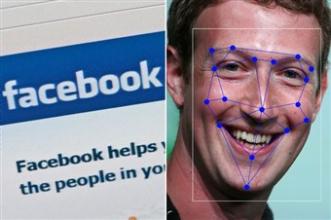
In December 2013, Facebook established its Artificial Intelligence Laboratory and appointed Yann LeCun, the most renowned researcher in convolutional neural networks (CNNs) and a tenured professor at New York University, as its director. As a leading figure in the field of CNNs, LeCun’s expertise aligned closely with Facebook’s needs and its accumulated data types, particularly given that the primary applications of this technology include image recognition and natural language processing. With LeCun’s assistance, Facebook’s DeepFace technology received high acclaim in peer-reviewed reports in 2014, achieving a facial recognition accuracy rate of 97%. Furthermore, the algorithms developed by the Facebook AI Lab under his leadership have become capable of analyzing users’ entire behavioral patterns on the platform, thereby curating content tailored to their interests.
Microsoft
Compared with Google and IBM, Microsoft has been relatively slower in its artificial intelligence initiatives. Its major achievements are based on speech, vision, natural language understanding, and distributed machine learning. Microsoft entered the AI field by launching the intelligent chatbot Xiaoice, the voice assistant Cortana, and the augmented reality headset HoloLens. Microsoft’s AI products include Microsoft Azure (storage, computing, databases, Live services, and media capabilities), the Distributed Machine Learning Toolkit (DMTK) (for natural language processing, recommendation engines, pattern recognition, computer vision, predictive modeling, etc.), and the AI platform Project Malmo.
Baidu
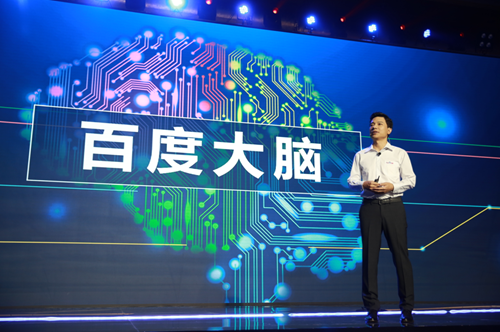
In May 2014, Andrew Ng, known as the "Father of Google Brain," joined Baidu as Chief Scientist to oversee the "Baidu Brain" initiative. Big data serves as the foundation of artificial intelligence; as a natural big-data enterprise, Baidu possesses robust capabilities in data acquisition and data mining. On July 14, 2014, leveraging its big data technologies, Baidu achieved a perfect record in predicting the outcomes of all 14 World Cup matches, outperforming Microsoft and Goldman Sachs. In September 2014, Baidu officially launched its Smart Business Platform, which integrates big data with Baidu Maps’ Location-Based Services (LBS), aiming to provide enhanced big data solutions for various industries in the mobile internet era.
Baidu Brain consists of three components: artificial intelligence algorithms (ultra-large-scale neural networks), computing power (hundreds of thousands of GPU-based servers for computation), and big data. It primarily offers four core capabilities: speech technologies (speech synthesis and speech recognition), image processing, natural language processing, and user profiling.
The Integration of Artificial Intelligence and Healthcare by Tech Giants
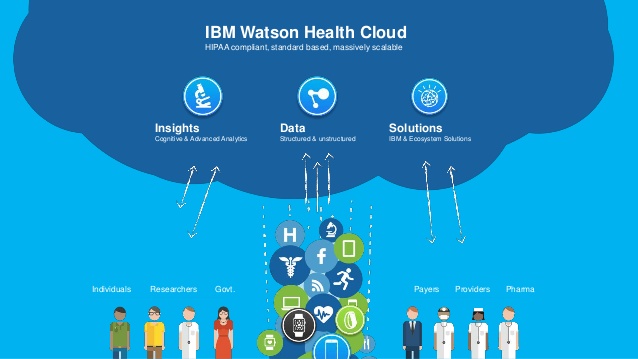
The Role of Artificial Intelligence in Healthcare Cannot Be Overlooked; It Has Become the Most Significant Technology Influencing the Development of the Medical Industry.Artificial intelligence has been widely applied in the healthcare sector. In terms of application scenarios, it is primarily categorized into 11 areas: virtual assistants, medical imaging, drug discovery, nutrition, biotechnology, emergency room/hospital management, health management, mental health, wearable devices, risk management, and pathology. The integration of artificial intelligence can significantly enhance the speed of disease assessment, diagnostic accuracy, and drug development progress, while reducing costs.
Since the advent of expert systems in the 1970s, artificial intelligence (AI) has been involved in the diagnosis and treatment of human diseases. In the healthcare sector, IBM Watson is perhaps the most widely recognized AI platform, having achieved remarkable success. For instance, in oncology, Watson has incorporated data from 42 medical journals in cancer research, over 600,000 pieces of clinical evidence from trials, and two million pages of textual materials. Within seconds, Watson can sift through 1.5 million patient records spanning decades of cancer treatment history—including medical histories and treatment outcomes—to provide physicians with evidence-based therapeutic options. Currently, the top three hospitals in cancer care are deploying Watson, which officially entered the Chinese market in August of this year. Meanwhile, in recent years, AI startups in healthcare have continually emerged in the United States, the United Kingdom, Israel, China, and other regions, with both funding amounts and project numbers showing an upward trend. Notable and intriguing progress has been made across various specialized sectors. Over the past two years, AI startups focused on healthcare in China have also begun to emerge.
On February 24 this year, Google DeepMind announced the establishment of the DeepMind Health division, which will collaborate withThe National Health Service (NHS) of the United KingdomCollaboration to assist in clinical decision-making or enhance efficiency and reduce time. In a pilot collaboration with the Royal Free Hospital, DeepMind Health developed software called Streams. This software serves as an acute kidney injury (AKI) alert platform for blood tests, helping clinicians review medical results more rapidly. DeepMind’s partnership with Moorfields Eye Hospital applies artificial intelligence technology to the early detection and treatment of sight-threatening eye diseases. Moorfields Eye Hospital will provide DeepMind with one million anonymized retinal scans, which will be used to study how machine learning analyzes optical coherence tomography (OCT) images and to develop algorithms capable of detecting early signs of eye conditions such as wet age-related macular degeneration and diabetic retinopathy. DeepMind is also participating in an NHS study that utilizes deep learning to design radiotherapy treatments for patients with head and neck cancer. By analyzing anonymized data from over 700 head and neck cancer patients in compliance with UCLH’s data privacy policy, deep learning techniques are being employed to explore possibilities for reducing radiotherapy duration.
On October 11, Baidu officially unveiled its latest achievement in the healthcare sector—Baidu Medical Brain—under the theme “Opening a New Era of Intelligent Healthcare,” positioning it against comparable products from Google and IBM. As a specific application of Baidu Brain in the medical field, Baidu Medical Brain is an AI-driven product designed through the collection and analysis of massive amounts of medical data and professional literature. It simulates the clinical consultation process, engages users in multi-turn dialogues, identifies potential health issues based on reported symptoms, conducts iterative verification, and provides final recommendations. Throughout this process, it collects, aggregates, classifies, and organizes patients’ symptom descriptions, alerts physicians to additional diagnostic possibilities, and assists primary care physicians in completing consultations.
Explore the Evolution of AI and Its Integration with Healthcare Applications at the World Medical Robot Conference. Featuring Keynote Speeches by IBM Watson Cognitive Care COO and Baidu Health General Manager Li Zheng!
Venue: Shenzhen, China
Conference Dates: October 29–30, 2016

The “2016 World Medical Robot Conference,” hosted by the World Association of Medical Robotics, is scheduled to take place in Shenzhen, China, on October 29–30. This inaugural global summit integrates scientific research, clinical practice, and industry development in the field of medical robotics. More than 20 academicians from various countries will attend the conference, alongside dozens of presidents of renowned hospitals worldwide and clinical experts who will deliver reports and participate in discussions. Experts and scholars from prestigious domestic and international institutions—including the Swiss Academy of Technological Sciences (SAWT), the UK Royal Academy of Engineering, the Chinese Academy of Sciences, the Singapore Academy of Medicine, and the ROBO Medical Robotics Institute—will share insights on global trends in medical robot applications and research directions. They will conduct thematic seminars centered on the theme “Technology Transforms Healthcare, Health Leads the Future.”
Click the link below or scan the QR code to register.

For sponsorship inquiries, please contact Peipei at VCBeat (WeChat ID: xiaopeiling185025)