

LSRO Robotics Laboratory: A Leading European Force in Medical Robotics Innovation
Medical robots have become a frequently discussed topic in the surgical community. Technology has continuously evolved, from cumbersome articulated industrial robotic arms to teleoperated systems, with future single-port surgical robot systems and novel control methods representing the direction of next-generation surgical robotics. Today, we introduce a leading figure in European medical robotics: Hannes Bleuler, Academician of the Swiss Academy of Technical Sciences (SATW) and Professor at the École Polytechnique Fédérale de Lausanne (EPFL).

European Pioneer in Medical Robotics:Prof. Hannes Bleuler
Professor Hannes Bleuler is affiliated with the École Polytechnique Fédérale de Lausanne (EPFL), a prestigious institution in the field of engineering in Europe. Since 1995, he has been dedicated to scientific research in areas such as robotics. Prior to this, he served as an Associate Professor of Intelligent Mechatronics at the University of Tokyo for four years.
Bleuler once led the European Space Agency’s surgical robotics project and was a key contributor to the European Blue Brain Project. He has made significant contributions to dozens of major research initiatives funded by organizations such as the Natural Sciences and Engineering Research Council of Canada, the National Aeronautics and Space Administration (NASA), the Swiss National Science Foundation (SNSF), and the European Union’s Seventh Framework Programme (FP7). He also serves as a reviewer for top-tier IEEE journals, has published numerous articles in fields such as surgical robotics and haptic feedback, and has authored more than 200 papers featured in prestigious international journals including Nature. In addition, he has published three books, and his work has been cited a total of 5,521 times.
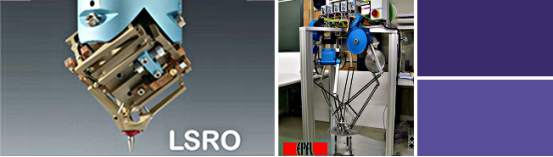
LSRO Robotics Systems Laboratory
Professor Bleuler leads a 25-member team at the Laboratory of Robotic Systems (LSRO) at École Polytechnique Fédérale de Lausanne. The team’s research interests are highly diverse, encompassing biomedical robotics, haptics, microrobotics, MRI-compatible devices, and nanotechnology. Their primary focus is on “medical robots with haptic capabilities.” The research team is deeply interested in the precise control of robotic movements, which is essential for surgical procedures that demand extremely high precision.
The team’s current projects are diverse, including optical fiber delay lines developed for the European Southern Observatory and electrostatic motors for cesium beam atomic clocks. In the medical field, LSRO has undertaken and is currently working on projects involving devices suitable for laparoscopy, hysteroscopy, diagnostic imaging, and colonoscopy.Haptic-Feedback Minimally Invasive Surgical Simulator; fMRI-compatible haptic devices; mandibular generation; micromanipulators for neurosurgery; parallel robot design, etc.
Professor Bleuler and his team are dedicated to researching mechatronic systems for human-computer interaction, with a significant portion of this work applied in the biomedical field, particularly in surgery. The following is an introduction to some of the team’s prominent medical robotics technologies and patents.
Two Major FP-7 Projects
The laboratory has two projects under the European Union’s Seventh Framework Programme (FP7): the SAFROS project and the ARAKNES project. The objectives of the SAFROS project include modeling and calibration of soft organs, development of real-time 3D imaging and display technologies, surgical planning, surgical simulation, training for surgeons, and research and development of surgical interfaces with haptic feedback and stereoscopic vision. The ARAKNES project aims to integrate the advantages of traditional open surgery, minimally invasive surgery, and robotic surgery, developing a system applicable to various types of surgical scenarios.New Surgical System, meaning that it can perform both open surgery and robot-assisted remote endoluminal procedures, tailored to the specific conditions of individual patients.
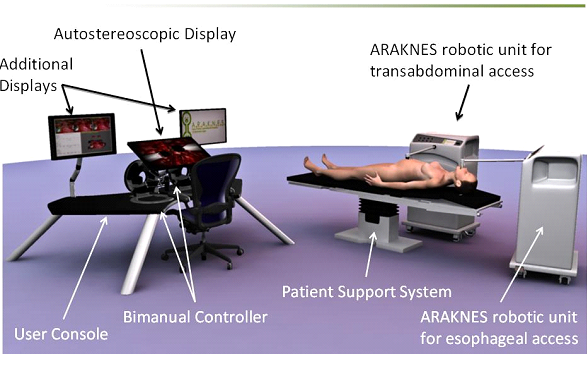
ARAKNESMultifunctional Next-Generation Surgical System
Patented Maestro-AF Catheter
Percutaneous catheter ablation is poised to become a promising therapeutic approach for atrial fibrillation. The Maestro-AF catheter, developed in the laboratory, leverages magnetic coupling between an “ablation catheter” and a “delivery catheter” to overcome the primary limitations of current technologies, thereby enabling more precise continuous mechanical control of the catheter. The Maestro-AF catheter also offers a more advanced capability: real-time monitoring of tissue temperature, which facilitates improved intraoperative decision-making.
The invention from the LSRO Laboratory has been patented and has demonstrated favorable outcomes through experimental validation.
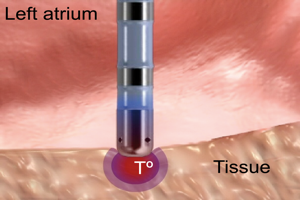

Traditional Catheters vs. Maestro-AF Catheter
MRI-Compatible Robotic Technology
Magnetic Resonance Imaging/Functional Magnetic Resonance Imaging (MRI/fMRI) systems have become a standard tool in brain research. MRI-compatible robotics integrates brain activity visualized by MRI scanners with force feedback from tactile sensors, enabling interactive motion with the human body through actuators; this technology can be used to investigate the correlation between brain activity and human movement, among other applications. The tactile interface developed by the team has been adopted by neurologists in Japan, Italy, Switzerland, and the United Kingdom forResearchTool Manipulation, ActionsLearningAspectofBrainMechanism。
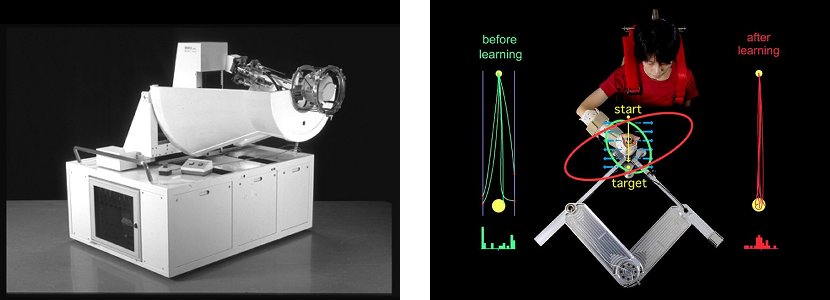
LSRO Laboratory's Integrated Robotic System for Neurosurgery
Haptic Feedback Surgical Simulator
Some surgeons who have performed robotic surgeries have reported that the most disconcerting aspect is the lack of tactile feedback from holding a scalpel, which impairs their ability to gauge cutting force and makes it more difficult to determine the extent of tissue requiring resection. The LSRO Laboratory is currently researching a technology to address this issue.
Professor Bleuler's team's surgical simulator utilizes the highly popularVR Technology, enabling hands-on surgical training. Surgeons can view 3D model images of organs on computer screens and, while manipulating the surgical control handles, haveRealistic Haptic Feedback, just likeSelfLike holding a scalpel, one can perceive the tissue grasped by surgical instruments or sense the force applied to bodily tissues during incision, as well as their degree of firmness or softness, thereby enabling judgment of their properties and achievingTracking of Surgical Instrument Displacement, no longer worrying about "accidentally cutting" tissues outside the surgical field。
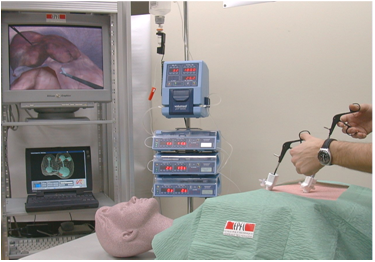
VR Technology and Haptic Feedback in Robotic Surgery: Enhancing Realism and Decision-Making
The team has devoted the most effort to the haptic feedback system on the hardware surface of this surgical system. Instrumenting the original surgical tools and reintegrating the entire surgical system with a haptic interface are both highly challenging tasks. The LSRO Laboratory has currently developed distinct haptic systems for several scenarios, including colonoscopy, hysteroscopy, laparoscopy, and interventional imaging diagnostics.
· Tactile Feedback System for ColonoscopyDeveloped in conjunction with the colonoscopy simulation software developed by Australia's CSIRO (Commonwealth Scientific and Industrial Research Organisation). ThisPatent application pending approval, has now passedCommercial Certification of the Swedish Society of Surgeons。
· Hysteroscopic Tactile Feedback SystemAs early as 2007, the hysteroscopic tactile feedback system developed by the LSRO Laboratory had already launched its project by-products to the market:VirtaMed AG。
· Laparoscopic Haptic Feedback SystemSince the 1990s,Laboratory test results are correct.Laparoscopic surgery is designed forThe “VR prototype” for teaching simulations: During the research process, Professor Bleuler co-founded a company dedicated to simulating laparoscopic surgery.Xitact SA, later acquired by Mentice AB.
· Interventional Imaging Diagnostic Simulation SystemIn the preliminary phase of interventional imaging diagnostics, tubular instruments must be surgically implanted into the patient’s vascular system. This implantation procedure demands exceptionally high technical precision from physicians. Recognizing this critical need, the LSRO Laboratory has developed a haptic feedback simulation environment specifically designed for interventional imaging procedures, enabling physicians to engage in repeated simulated practice.
The brief introduction above is insufficient to provide a comprehensive and detailed understanding of Professor Hannes Bleuler and the LSRO Laboratory he leads. Their contributions to medical robotics, along with some of the most cutting-edge technologies in this field, can be best conveyed through Professor Bleuler’s own explanations.
October 29–30, hosted by the World Medical Robot AssociationWorld Medical Robot ConferenceThe event will be grandly held in Shenzhen. As the sole strategic media partner, VCBeat will provide comprehensive coverage of the conference. Professor Hannes Bleuler, one of the initiators of this conference, will attend in person.Deliver a keynote report on medical robots, to share the advanced technologies and research findings of European medical robots with everyone.
Venue: Shenzhen, China
Conference Dates: October 29–30, 2016
The “2016 World Medical Robot Conference,” hosted by the World Association of Medical Robotics, is scheduled to take place in Shenzhen, China, on October 29–30. This inaugural global summit integrates scientific research, clinical practice, and industry development in the field of medical robotics. The event will be attended by more than 20 academicians from various countries, along with dozens of presidents of renowned hospitals and clinical experts worldwide, who will deliver reports and participate in discussions. Experts and scholars from prestigious domestic and international institutions—including the Swiss Academy of Technical Sciences (SAWT), the UK Royal Academy of Engineering, the Chinese Academy of Sciences, the Singapore Academy of Medicine, and the ROBO Medical Robotics Institute—will share insights on global trends and research directions in medical robotics. They will engage in thematic discussions centered on the conference theme: “Technology Transforming Healthcare, Health Leading the Future.”
Click the link below or scan the QR code to register.

For sponsorship inquiries, please contact Peipei at VCBeat (WeChat ID: xiaopeiling185025)