

Fenng Returns with a Bang: Launching Medical Search Startup After Three-Month Hiatus
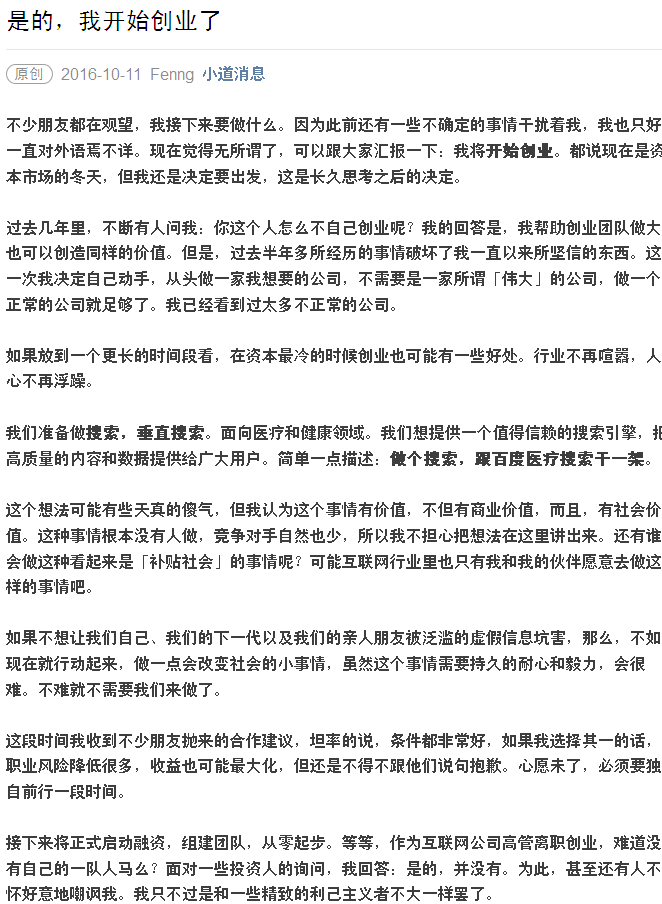
“Yes, I’ve started my own venture!” Feng Dahui’s roaring return to the scene instantly set social media abuzz, with an impact comparable to the Samsung Galaxy Note 7. This declaration, as commanding as a king’s triumphant comeback, seemed to dispel the gloom that had shrouded him since the “July resignation controversy.” Shedding his earlier disappointment and melancholy, the Feng Dahui we know is back! This time, however, he has made an even more challenging choice: entrepreneurship.
The original text of the rumor is as follows:

As early as May this year, Sogou announced the launch of “Sogou Mingyi,” a vertical search engine dedicated to healthcare, with the aim of providing users with authoritative, accurate, and effective medical information. As a medical-focused vertical search channel under Sogou Search, “Sogou Mingyi” aggregates content from authoritative knowledge, medical, and academic websites, offering users reliable and truthful resources such as Wikipedia entries, Zhihu Q&A discussions, and cutting-edge international academic papers.
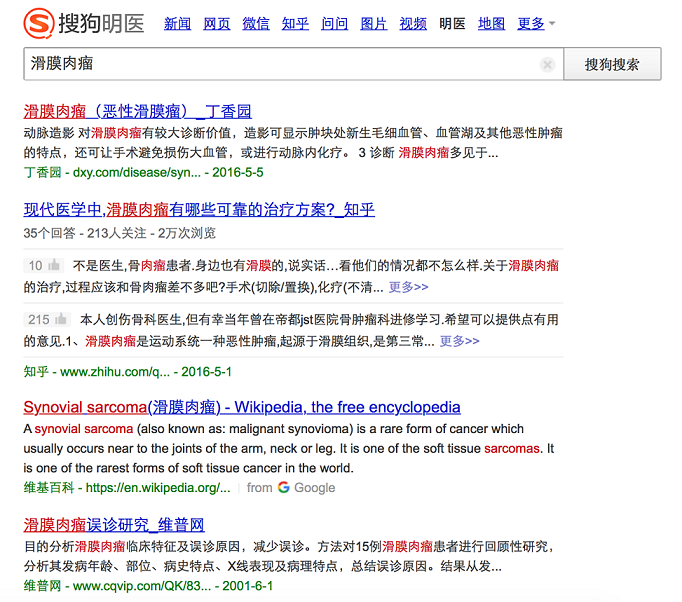
Interestingly, in addition to Wikipedia, the Zhihu community, and academic journals, Sogou Mingyi’s content providers also include Dingxiangyuan, the former employer of Feng Dahui. It remains to be seen whether Feng Dahui’s search project, upon its launch, will be able to let bygones be bygones and reconcile with his former employer.
Although Feng Dahui’s declaration that he would “fight Baidu to the bitter end” somewhat disregarded the feelings of Sogou, the second-largest player in the search industry, his decision to launch a startup focused on medical search is not without merit at this stage, for three reasons:
First: As he stated, vertical medical search is an untapped blue-ocean market. With only a handful of players currently entering the space and the sector still in its exploratory phase, there is no established industry model yet; thus, any new entrant has the opportunity to emerge as the dominant leader in this field.
Second: Even in the aftermath of the Wei Zexi–Baidu incident, Baidu has remained the primary online healthcare entry point for the vast majority of patients. While the Wei Zexi incident did not spark a revolution in search engine technology, it delivered a significant blow to traditional search giants. If vertical search engines can subsequently forge deeper collaborations with more high-quality internet healthcare content providers, this could hold even greater significance for the role of search engines in the future healthcare industry.
Third: The key to medical search lies in reach rate; the higher the search reach rate, the better the user experience. This encompasses two aspects: first, the relevance of search results, and second, the breadth and depth of resources in the search results. From a technical perspective, there is a clear advantage in search relevance; however, from a content perspective, Feng Dahui has transitioned from a technical role to CTO, shifting his focus from technology to content. Having moved from Alibaba Pay to DXY.cn, he has an in-depth understanding of content operations and user needs. Therefore, it is not impossible for him to catch up and even surpass competitors in terms of content accumulation.
Mr. Zhang Rui’s sudden passing has been viewed by some as a wake-up call for healthcare entrepreneurs. Mr. Feng Dahui’s impassioned writing seems to have reignited their passion. As he stated in his conclusion, “I can’t wait; I’m setting out now!” Perhaps what healthcare entrepreneurs will never lack is that innate sense of justice and boundless enthusiasm.
To these entrepreneurs, thank you for making the healthcare industry less monotonous and dull. As for the future, if we do not strive with all our might, how can destiny ever be determined?