

Mobile Health App Developer Survey (2016): Global Market Status and Trends

The Mobile Health Survey Project is dedicated to studying the latest developments and releases of mobile health apps worldwide. Now in its sixth year, this research2guidance initiative aims to reveal the current state and trends of the mobile health ecosystem. The survey covers 5% of global eHealth app companies, encompassing 2,600 mobile health practitioners and 7,900 mobile health apps, with respondents distributed across a wide range of regions.
This year’s report will focus on the performance of health insurance companies in the mobile health app market, as well as how they view their app developers. The report will also provide an in-depth analysis of key contributors to the mobile health app market, their achievements, the trajectory of market development, and forecasts for market growth over the next five years.
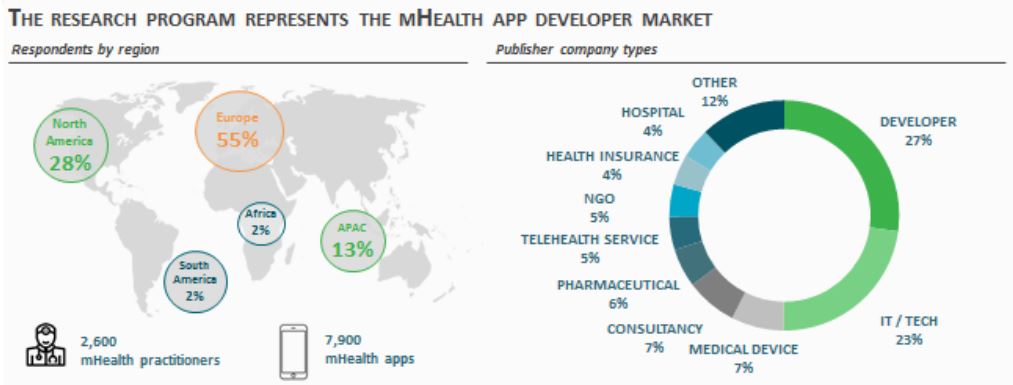
The survey sample distribution is as follows: North America 28%, Europe 55%, South America 2%, Africa 2%, and Asia-Pacific 13%. The participating institutions are categorized as: hospitals 4%, health insurance 4%, telemedicine services 5%, pharmaceuticals 6%, consulting 7%, medical devices 7%, IT 23%, developers 27%, and others 12%.
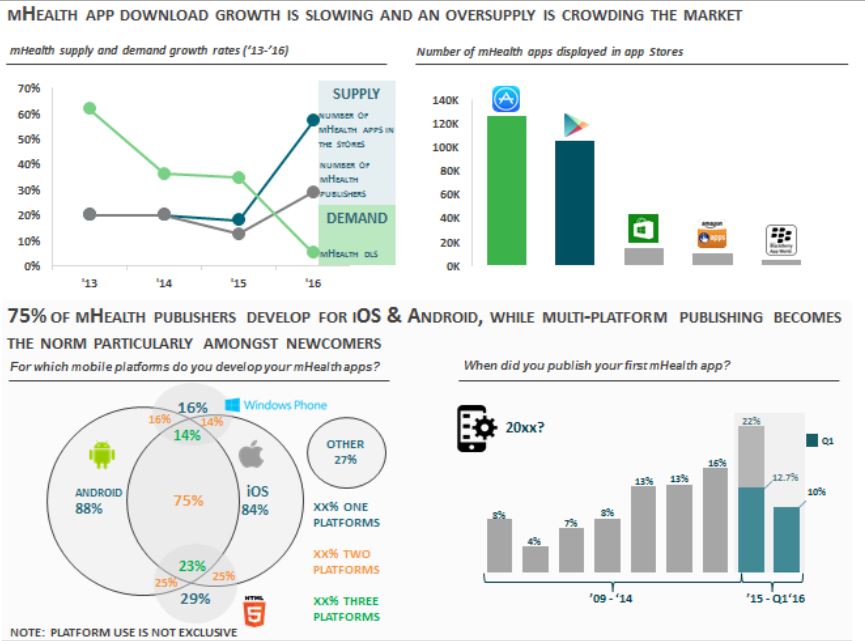
In the app market, the current landscape is characterized by slowing growth in mobile health app downloads and an oversupply. Although the growth rates of supply and demand for mobile health apps remain stable, and their download performance across major app stores is also steady, cross-platform development has emerged as a new mainstream trend.
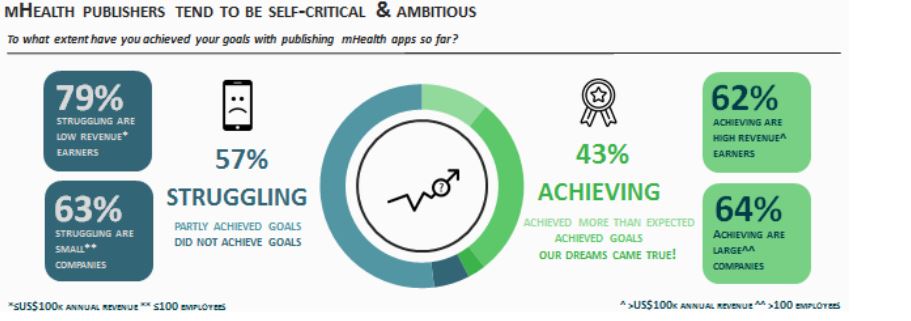
From the developers’ perspective, surveys reveal that most entrepreneurs face ongoing challenges, tend to be self-critical and ambitious; small companies and struggling founders fare far worse in achieving their goals than large companies and high-income individuals.
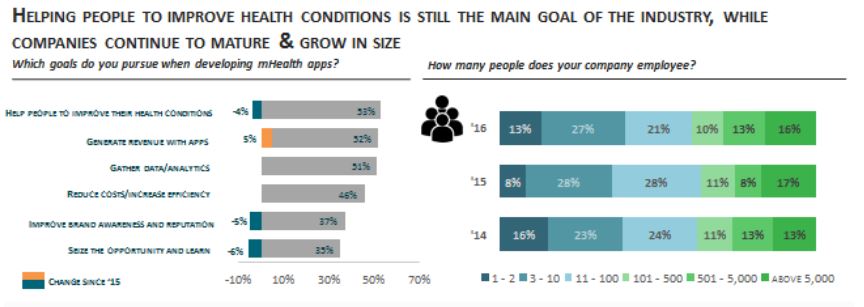
In terms of mindset, helping people improve their health conditions remains the primary goal of the industry, while companies strive to mature and expand their scale;
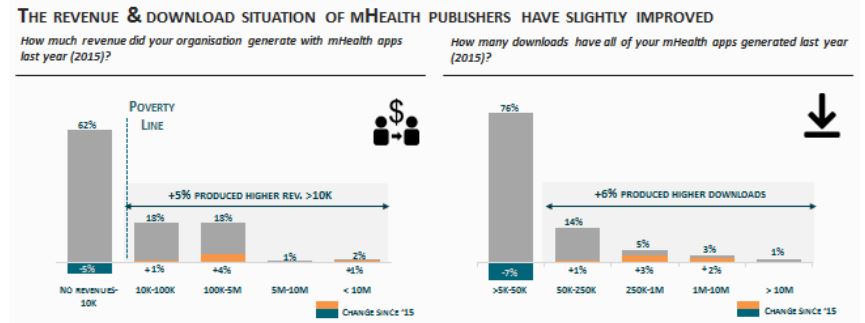
In terms of revenue and business models, the revenue and downloads of mobile health apps have slightly increased, with business models and target audiences becoming increasingly clear, while clinical diseases continue to be the most promising target;
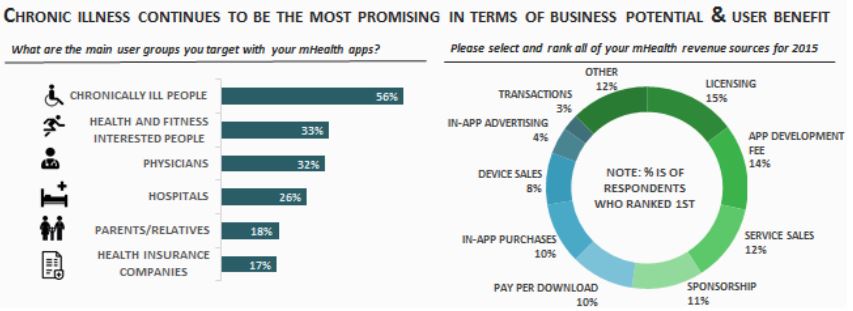
In terms of predictions, this article will identify the application types and medical sectors with the greatest market potential over the next five years, aiming to provide readers with a comprehensive understanding of the current status and development trends of mobile health apps.
Overview and Summary: 13 Key Points of This Article
The mobile health market is currently experiencing a surge in popularity, yet only a subset of developers have identified viable monetization strategies. Amidst this dynamic landscape, several notable shifts warrant attention; here, we synthesize them into 13 key points.
1. The Mobile Health App Market Is Becoming More Crowded
2. Significant slowdown in demand-side growth
3. Cross-platform development becomes the norm
4. Close Collaboration with Mobile Health App Developers
5. Mobile Health App Developers Are More Experienced
6. Mobile Health App Teams Are Shrinking in Size
7. Mobile Health Still Struggles to Achieve Profitability
8. The market generally believes that consumers are unwilling to pay more than $10 for medical apps
9. Health Insurance Companies Are Expected to Become the Main Players in the Market
10. The Mobile Health App Market Continues to Grow
11. Medical apps and the current healthcare system will undergo gradual integration over the next five years
12. Tracking and Monitoring Will Become the Most Influential Feature of Mobile Health Apps
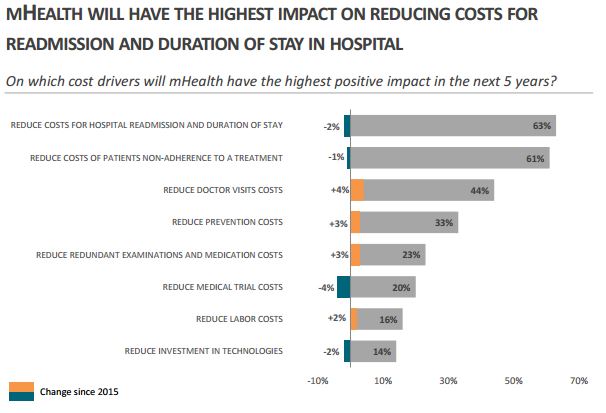
13. Reducing redundant medical visits and medication habits will remain a key lever for controlling healthcare costs over the next five years
Current Status of the Mobile Health App Market
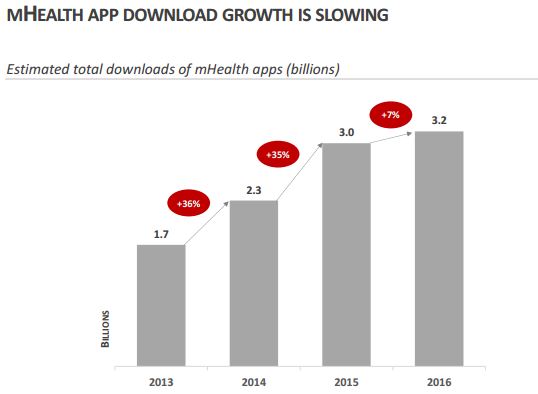
Despite the sustained enthusiasm among mobile health app providers, demand has clearly stagnated. Global downloads of mobile health apps doubled over a four-year period and were projected to reach 3.2 billion in 2016, representing a 7% increase from 2015. This growth trajectory exhibits a linear correlation with download increases across other app categories, fully reflecting the expansion of portable device adoption.
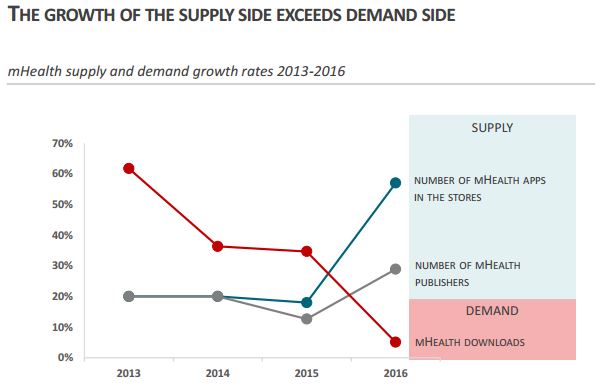
Competition on the supply side has intensified significantly, with mobile health apps growing by 57% in major app stores. This trend is primarily driven by three factors: an increase in the number of developers, the growing importance of cross-platform compatibility, and a rise in the variety of mobile health apps currently available. With 58,000 active mobile health app developers in the market, standing out has become increasingly difficult amid a proliferation of similar products.
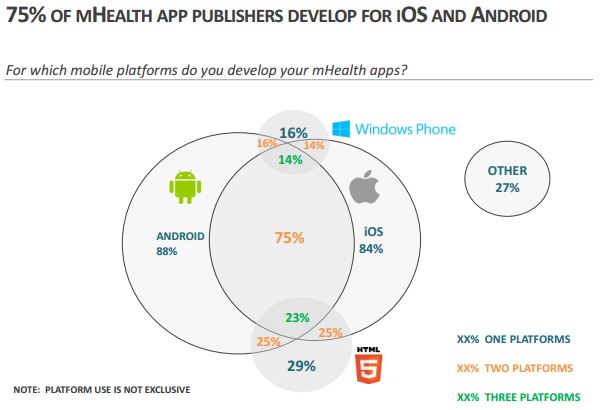
Although the iOS platform remains the most important app launch platform, its competitor, the Android market, also has 105,000 medical apps. The market share of other platforms, such as Windows, HTML5, and BlackBerry, has increased by 25% compared to last year. On the other hand, cross-platform applications have become the norm, with 75% of apps available on both iOS and Android markets. However, cross-platform development holds greater significance for Windows and HTML5, and developers on these niche platforms are more inclined to create non-proprietary apps.
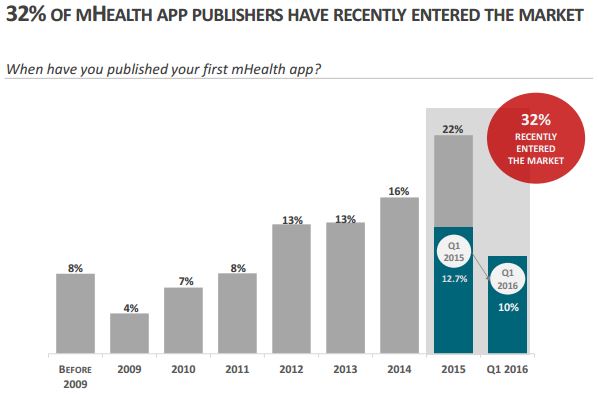
Despite intense competition, the influx of new entrants remains substantial. Since January 2015, 32% of R&D developers have entered the market; among them, 89% chose to launch first on the Android platform, 81% on the Apple platform, 15% on the Microsoft platform, and 19% on the HTML5 platform. However, cross-platform releases have become the norm, with exclusive launches on Android, Apple, Microsoft, and HTML5 platforms accounting for only 10%, 7%, 0%, and 2%, respectively.
Meanwhile, the proportion of companies releasing 2 to 10 mobile health apps rose from 59% in 2014 to 64% in 2016, while the share of companies with only one app declined from 30% in 2014 to 16% in 2016. This trend may reflect companies’ anticipation of rapid market changes and their need for diversified strategies to respond.
In 2016, mobile health app revenue is projected to reach $12.5 billion, primarily derived from five sources:
1. Service Revenue: Services primarily include backend database support for servers, medical teams and diagnostic experts, and personalized health plan design.
2. Device Revenue: Hardware sales of bound devices, such as disease-specific sensors
3. Transaction Revenue: Sales of pharmaceuticals or other medical products, such as smart application devices
4. Paid Download Revenue: Initial Download Fee
5. Advertising Revenue: In-App Ads
The primary source of revenue is the sales of devices bundled with the app, but this proportion is likely to change over the next five years, while the overall upward trend of the market remains unchanged.
Background of Mobile Health App Developers
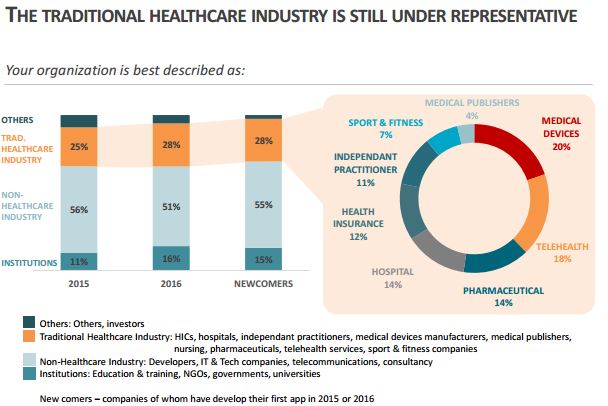
Although the proportion of developers from the traditional healthcare industry has risen slightly to 28%, those from technology companies still account for 51%. Institutional developers have shown the most rapid growth trend, reaching 16% in 2016. Most new entrants to the market are non-medical professionals, while medical professionals are more focused on connecting electronic devices and telemedicine services with apps.
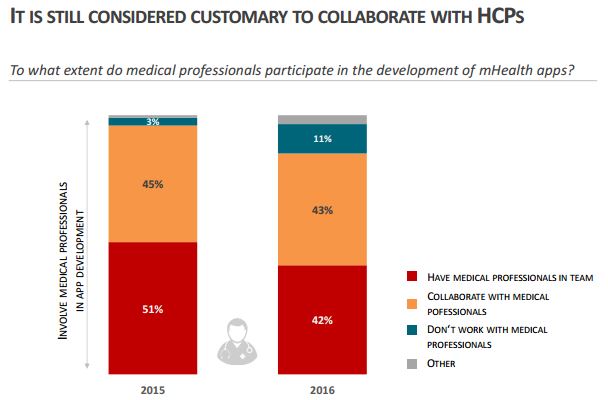
Although many entrepreneurs come from non-medical industries, their teams include a significant number of medical experts. While 85% of practitioners seek professional medical services, 11% claim that they do not require expert involvement.
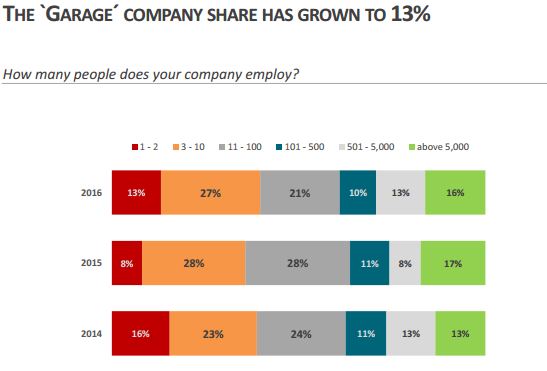
The number of small, garage-style companies with only one or two employees has shown an overall upward trend, rising from a fluctuating range of 8% to 16% over the past three years to 13% this year. Thirty-nine percent of these small enterprises have indicated their intention to expand their teams or seek partnerships. The typical company is currently of medium size, possesses an information technology background, and has three to four years of market experience, with its developers focused on improving people’s health.
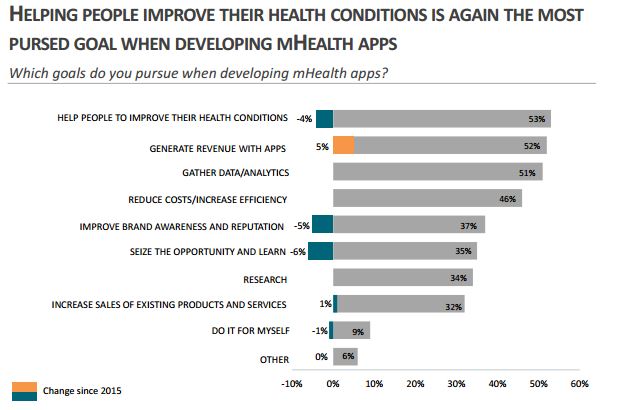
Altruism remains the original intention of app developers, with 53% stating that their primary goal was to improve people’s health conditions. However, 52% also indicated that developing apps was aimed at generating revenue. Developers’ objectives have shifted over the past year: while 35% previously focused on launching their apps and understanding market dynamics, this proportion has declined this year, alongside a decrease in the goal of promoting brand awareness.
How Mobile Health App Developers Leverage Tools, APIs, and Sensors
Today’s developers are more experienced, with 72% utilizing analytics, testing, storage, and cross-platform tools—an increase from last year. Meanwhile, ad networks have not yet become commonplace in the mobile health sector; only 19% of tool users and 13% of developers have integrated them into their apps.
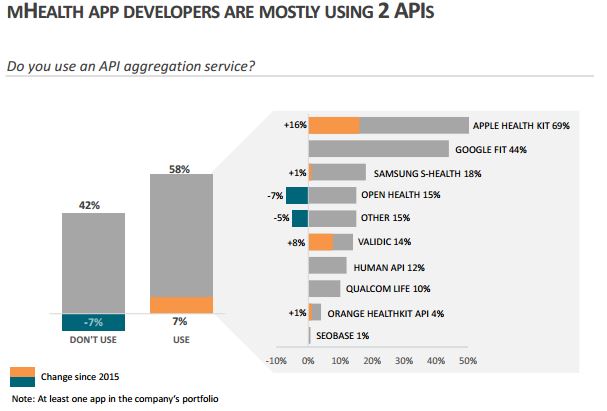
Mobile health developers have become more closely connected in recent years. In 2016, 58% of developers chose to integrate their apps with APIs to obtain and upload data, compared to only 42% in 2015. The three most popular platforms for integration were Apple’s HealthKit, Google Fit, and Samsung’s S-Health. Additionally, developers are directly connecting their apps with other apps or sensors.
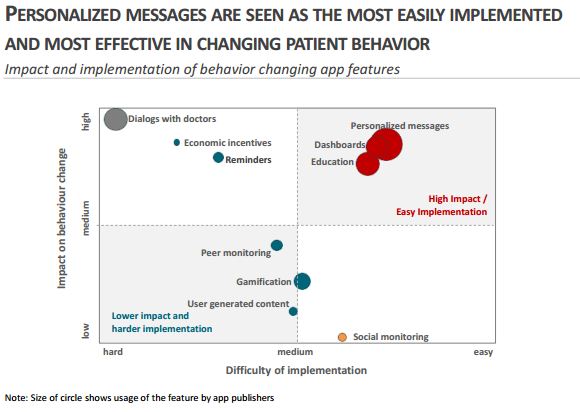
Meanwhile, mobile health apps still lack key mechanisms to drive changes in health behaviors. Reminding, educating, and motivating users remain significant challenges, and merely setting parameters, sending reminders, and tracking data have not effectively addressed these issues. Currently, the integration of communication channels for healthcare professionals (HCPs) is the most impactful approach for influencing consumers. Personalized messages, data dashboards, and educational content are also contributing to this effort. However, achieving lasting changes in health behaviors remains a long and arduous journey.
Moreover, using apps to change health behaviors is only effective when users remain actively engaged; however, most users discontinue use before any meaningful behavioral change occurs. Data indicate that only 10% to 20% of users engage with their health apps at least once a month.
Performance of Mobile Health App Developers
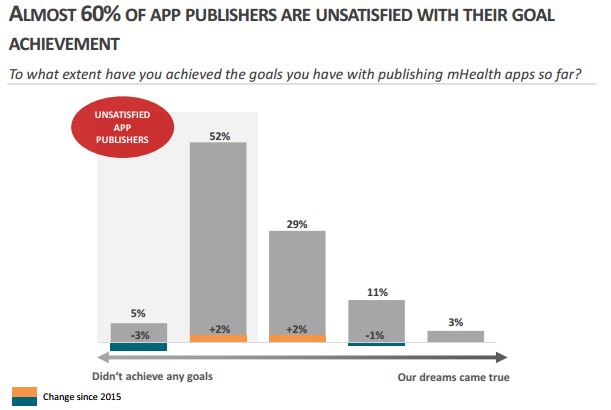
Mobile healthcare remains an unprofitable venture, although certain revenue streams do exist. Developers in this space have set ambitious goals; indeed, 57% report struggling to meet their objectives, believing they have either failed to achieve them or only partially succeeded. This dissatisfaction is even more pronounced among small companies with annual revenues under $100,000. The industry awaits a breakthrough.
Meanwhile, 43% of companies claimed to have exceeded expectations and achieved their goals; however, the majority of these companies reported revenues exceeding $5 million.
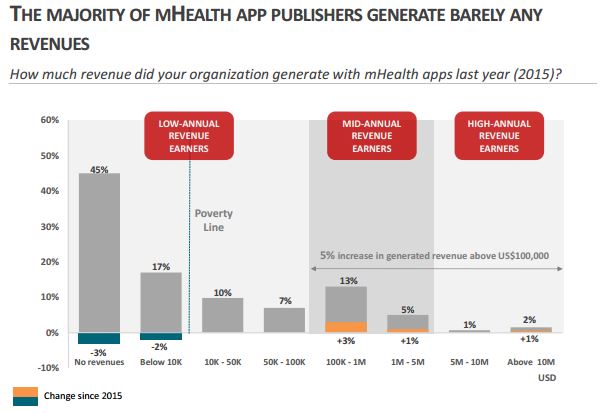
The revenue landscape of the mobile health market remains bleak, with 79% of developers earning less than $100,000 annually. This figure stood at 84% in previous years. Such low-earning developers constitute a relatively small proportion within higher-revenue companies. For lower-revenue companies, this situation is likely attributable to their later entry into the market, which also reflects the fact that mid-to-high-income companies have generally been operational for more than two years. Time may yet reward these newer entrants.
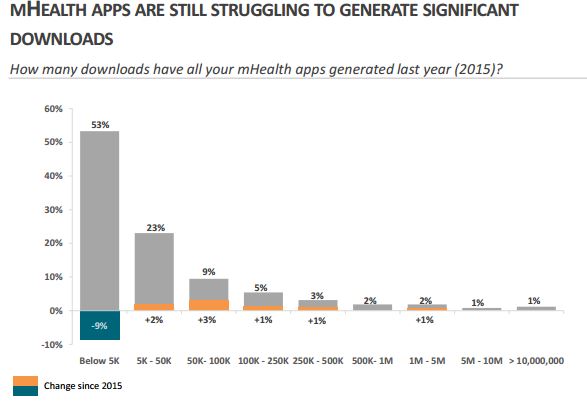
Traditional app store revenue streams, such as in-app purchases (IAP), app downloads, or in-app advertising (IAA), constitute the primary income source for only 4% to 10% of developers, who mainly rely on technology or third-party intermediary services for profitability. Annual downloads of mobile health apps have increased; the slight rise in downloads this year shows a linear correlation with overall market download growth. More than three developers have successfully achieved over 100,000 downloads, and currently, 14% of developers reach 100,000 downloads annually. However, 53% of developers report annual downloads of fewer than 5,000, although this proportion has seen a slight decline compared to previous years.
Target Population, Revenue Model, and Pricing of Mobile Health Services
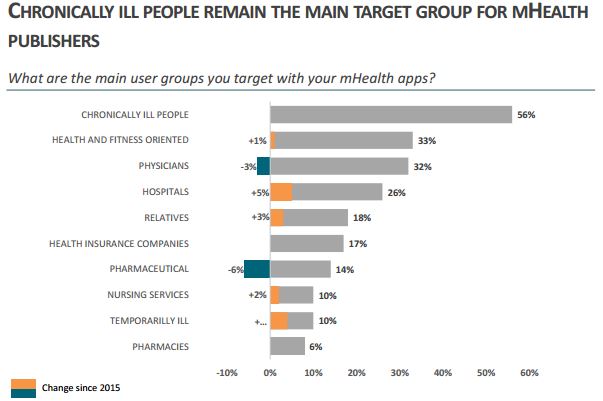
Clinical disease solutions remain the primary focus of mobile health apps, with 56% of app developers identifying patients with clinical conditions as their target customers. By leveraging these apps, patients can reduce the frequency and cost of medical visits. The second-largest target demographic consists of individuals highly interested in health and fitness. There has been a significant decline in the number of developers targeting surgeons and pharmaceutical companies, indicating that collaboration and co-launching health initiatives are highly challenging. However, hospitals have emerged as a new area of interest for developers. Health insurance companies currently rank sixth.
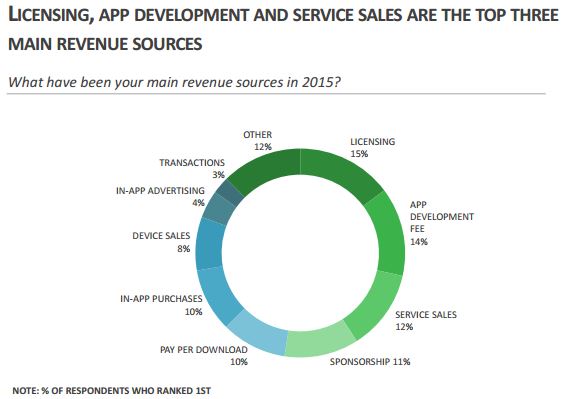
The profit models in this industry are constantly evolving, with licensing, app development fees, and waste sales being the three primary revenue streams. While the boundaries between these revenue sources remain relatively clear at present, there is potential for them to become integrated in the future. The era when traditional app downloads, in-app purchases (IAP), and in-app advertising (IAA) dominated revenue generation has passed, with only 24% of companies now relying on these models for survival. In 2015, licensing emerged as a revenue source exceeding $1 million, and companies deriving income from licensing demonstrated significantly stronger performance in securing collaborative development fees, service sales, and sponsorship revenues.
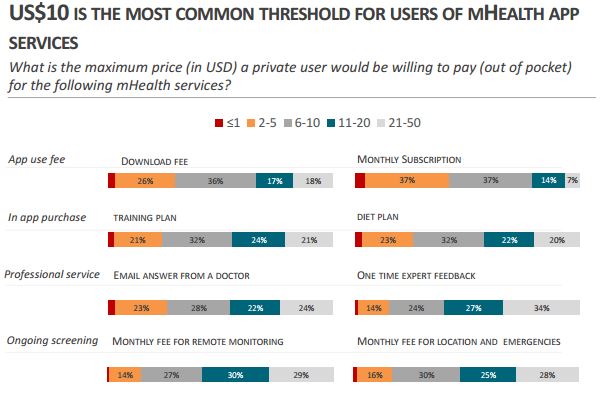
On the other hand, consumers are generally willing to pay a threshold fee of $10 for health apps, with only 21% to 35% of developers considering pricing above this level as mandatory. The service item with the highest perceived value is one-time feedback from medical experts, with 34% of mobile health practitioners setting the mandatory price for this service between $20 and $50. For monitoring services, a majority of 59% of companies have implemented a mandatory service fee of $10.
Health Insurance Companies (HICs)
Health insurance companies (HICs) will undoubtedly become key players in the future app market, although they have not yet fully assumed this role. As shareholders in many health systems, HICs are regarded as playing a critically important part in mobile health and are considered the second-largest distribution channel for mobile health over the next five years. However, their current performance remains lackluster: up to 82% of mobile health practitioners believe that HICs should engage more actively in addressing challenges within the mobile health sector. Meanwhile, health insurers claim that they have indeed been invited by mobile health app companies to collaborate.
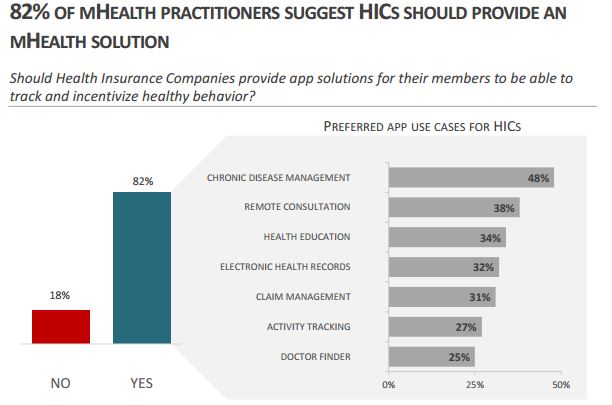
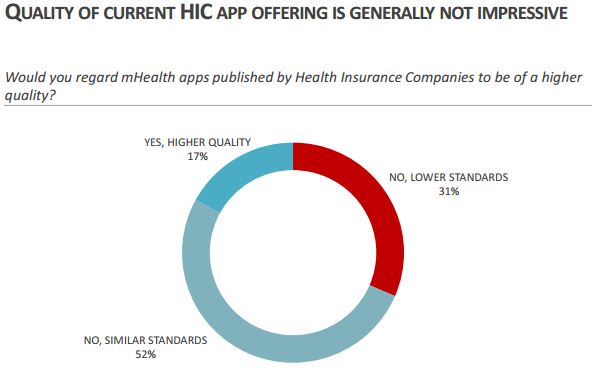
Currently, the apps most widely offered by Health Insurance Companies (HICs) are primarily those supporting the complaint management process. In contrast, mobile health practitioners believe that HICs have greater potential to expand their scope, such as in clinical pathway management and telemedicine consultations. Apps provided by HICs receive an average rating of only 2.5 stars out of 5, with 31% of digital health practitioners expressing concern over their quality compared to other healthcare apps.
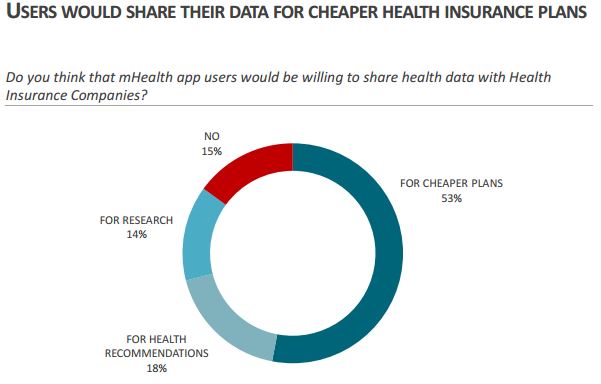
On the other hand, the revenue model for mobile health has become clearer. Users are more willing to share data and information within apps developed by health insurance companies (HICs) in exchange for more affordable insurance plans, health advice, and supportive research. Only 15% of mobile health practitioners believe that users are unwilling to share data with HICs. This signifies that the large-scale entry of HICs into the market is highly significant. For HICs, it is crucial to establish a comprehensive management process, including screening, valuation, integration, and facilitation of third-party apps.
Future Trends: Five-Year Forecast
Over the next five years, the mobile health app market will remain a growth sector. Although forecasting such a dynamic market is challenging, given the consistent trends observed in recent years, we have reason to believe that the mobile health app market will ultimately become an integral part of the healthcare system. In light of the current growth in user base, expansion of app services, emergence of business models, and the widespread adoption of connected devices, it is reasonable to expect sustained market growth over the next five years. According to this report’s projections, by 2020, the mobile health app market will reach a size of $31 billion, with a compound annual growth rate (CAGR) of 15%, serving 2.6 billion users, of whom 551 million will be active users.
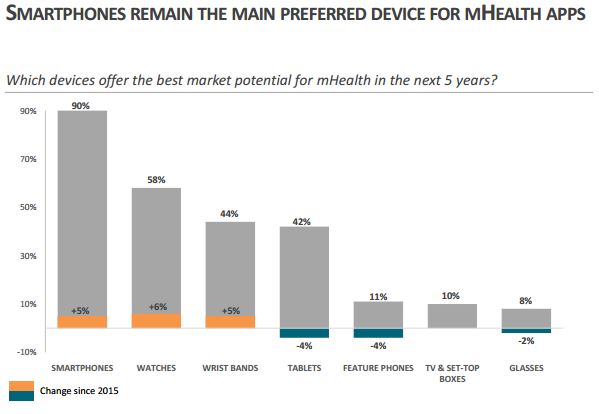
In terms of devices, smartphones will remain a key driving force in the mobile health market. Currently, smartphones are still the primary platform for apps and continue to gain popularity. However, in the future, fitness bands and smartwatches may also become wearable devices capable of hosting healthcare apps. In reality, once a mobile health app is launched, it is difficult to assess its effectiveness within a year. For developers, this uncertainty is quite evident, and the popularity of various related devices is hard to predict. Therefore, the choice of platform is critically important.
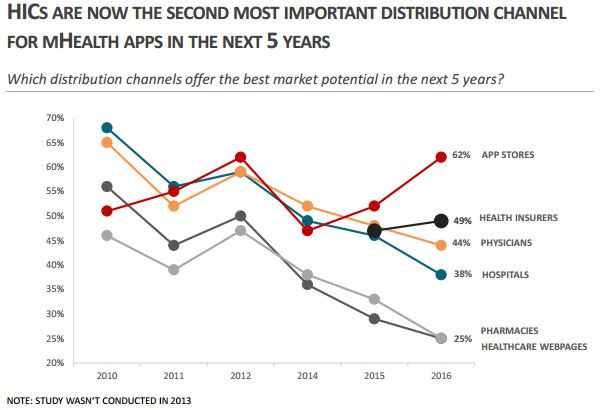
A broader societal issue is that integrating mobile health apps into healthcare systems will be a gradual evolutionary process over the next five years. The distribution channels for mobile health apps follow a dynamic lifecycle; in the coming five years, these apps will increasingly be recommended by physicians through hospitals. Although the influence of app stores as a distribution channel has declined in recent years, their current market share of 62% still underscores their position as the leading distribution channel. Distribution channels in the mobile health sector should not be viewed through the lens of traditional medical distribution channels; however, the situation remains similar in High-Income Countries (HICs), where both channels are of significant importance to all stakeholders.
For problem-solving, mobile health apps will have a significant impact on patient tracking and monitoring over the next five years. Patient tracking and monitoring is a critical component of the patient experience; it can serve as a telemedicine modality and a tool for doctor-patient communication, facilitating the exchange of laboratory data, observation of various pathological changes, and monitoring of plan implementation.
For patients, the most critical economic benefit of mobile health apps is reducing the time spent seeking medical care at hospitals and lowering overall healthcare costs. The apps’ key cost-control capability lies in reducing expenses related to hospital visits, follow-up consultations, and monitoring. Meanwhile, this also reduces patient out-of-pocket expenditures and, on a broader macroeconomic level, labor costs.
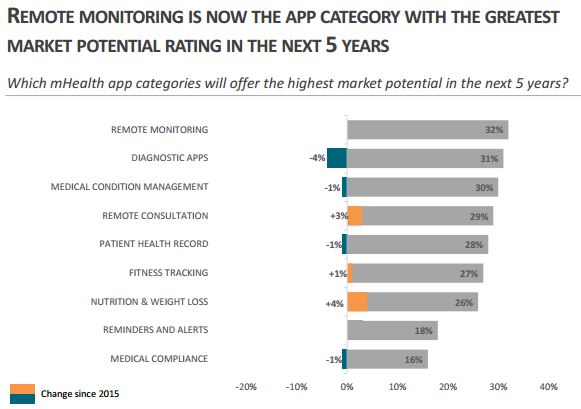
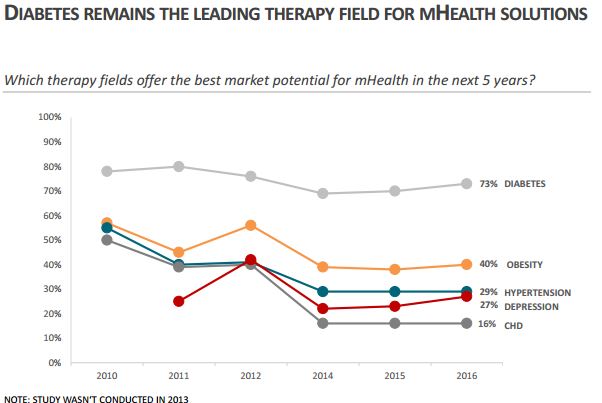
In terms of app categories, the attitudes of mobile health practitioners have remained largely unchanged. Only the nutrition and weight loss app categories have seen the addition of new subcategories, driven by their significant future market potential. Diabetes has emerged as the primary industry target, a focus that has remained constant since the rise of mobile health in 2010. Reviewing the shifts in disease-specific targets over the years, only hypertension and cardiovascular and cerebrovascular diseases are now considered to have a larger market than before.
In summary, the mobile health app market remains young; its mere seven-year history indicates that it is still highly dynamic, with several new apps launched every month, leading to rapid changes and consolidation within the industry. Health insurance companies, as potential key players poised to capture significant market share in the future, are expected to play an increasingly important role and exert a positive influence on the industry.
Compiled by Fu Haitian
Author: VCBeat. Please credit the WeChat official account when reposting.VBResearch2016
↓↓↓
