

Seven Digital Health Devices for Diabetes Management Received FDA Approval in Q3 2016: Companies File IPO Prospectus
Based on devices approved by the U.S. FDA in the third quarter of 2016, the U.S. Food and Drug Administration has undergone a series of changes in recent months. Major regulatory agencies are also updating their systems to accommodate the emerging digital health tools.
In June this year, the FDA released a draft guidance document outlining regulators’ views on patient access to manufacturer data via medical devices, aiming to help medical device manufacturers better understand patients’ access rights. While reminding manufacturers to ensure absolute data privacy and security, the guidance clarifies that medical device manufacturers may provide data to patients without requiring additional approval. The document urges extensive feedback from industry stakeholders and patient advocacy groups, yet the provisions pertaining to lead companies remain unclear.
Over the past few months, the FDA’s Center for Devices and Radiological Health (CDRH) has been busy issuing draft and final guidance documents to regulate the conduct of app developers and connected device manufacturers. The lack of a clear and well-defined regulatory framework often hinders innovation in the digital health industry; therefore, the FDA’s initiatives to enhance regulatory clarity will be widely welcomed within the sector. VCBeat (WeChat: vcbeat) has compiled a list of seven companies that received FDA clearance in the third quarter of this year.
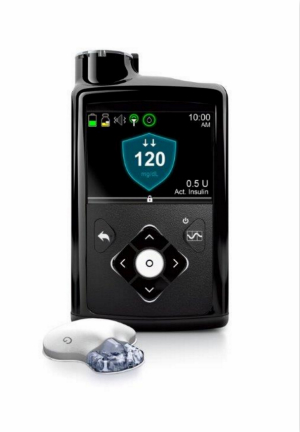
Medtronic MiniMed 670G Hybrid Closed-Loop System Device
Most FDA-approved devices or applications are used for diabetes management. Among the seven products we track, only two are intended for managing other health conditions. Recently, Medtronic achieved two milestones in diabetes management: the FDA approved its hybrid closed-loop insulin delivery system, allowing it to conduct initial testing of the Sugar.IQ app developed in collaboration with the IBM Watson team. As the first automated insulin delivery system to receive FDA approval, the agency itself announced the clearance of Medtronic’s MiniMed 670G hybrid closed-loop system.
In addition, Medtronic has obtained CE certification for its Guardian Connect continuous glucose monitoring (CGM) system and accompanying mobile application. The company plans to launch the system in Europe, Asia, and Latin America in the second quarter of 2017, and expects to receive FDA approval for sales in the United States during the same period. Medtronic’s Minimed Connect, a connected CGM device from its Dublin, Ireland-based subsidiary, has already received both FDA and CE clearance; however, this system is available only to patients who use both Medtronic’s CGM and the company’s insulin pumps. In an email to MobiHealthNews, a Medtronic spokesperson explained the differences between the two systems.
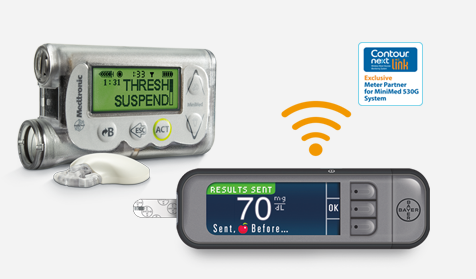
Panasonic Healthcare Holdings completed its acquisition of Bayer Diabetes Care earlier this year and established a new business unit, Ascensia Diabetes Care. Recently, the unit announced that it would launch the Contour Next Link blood glucose monitor, which has received FDA clearance as an equivalent device, at a later date. Ascensia has developed a connectivity solution linking its standalone lancing-based blood glucose meters to other devices. For instance, the Contour Next Link can wirelessly transmit data to the Medtronic MiniMed 630G insulin pump. According to Ascensia, the Contour Next Link is currently the only FDA-approved blood glucose meter compatible with the MiniMed 630G insulin pump, which also began sales today.
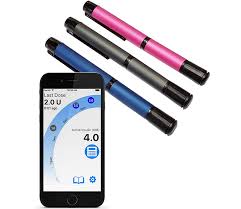
The mysterious San Diego-based company, Companion Medical, received investment from Eli Lilly and Company last year. Its Bluetooth-connected smart insulin pen and associated mobile application, InPen, have obtained FDA 510(k) clearance. Sean Saint, CEO and a veteran engineer from Dexcom, Medtronic, and Tandem Diabetes Care, stated in a press release, “The FDA-cleared InPen and mobile app represent a significant advancement in the field of diabetes care.” This product combines the advantages of advanced insulin pumps with the ease of use and affordability of insulin pens and syringes, aiming to provide optimal diabetes management for patients, physicians, and caregivers. We are delighted to be the first company to launch this new class of insulin delivery devices.
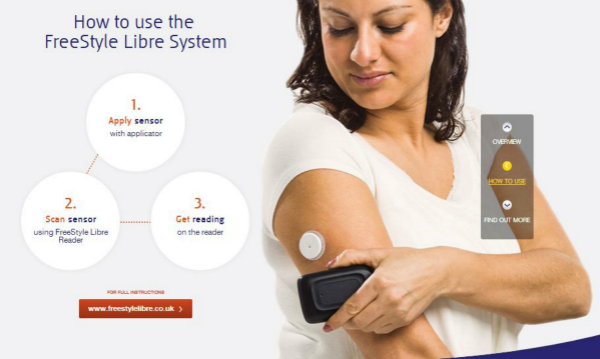
In addition, Abbott’s FreeStyle Libre Pro system has received FDA approval, significantly boosting sales of its continuous glucose monitors (CGMs) in the United States. In Europe, any system that has obtained CE certification since September 2014 is available in both prescription and over-the-counter versions, with the latter being compatible with smartphones. The FreeStyle Libre Pro system offers the advantage of not requiring fingerstick blood tests for calibration and is priced lower than other CGMs on the market. Users need to wear a small insertable sensor and an applicator patch on their upper arm, with the entire process lasting up to fourteen days. The patch on the arm records glucose data every 15 minutes and transmits the data using NFC technology.
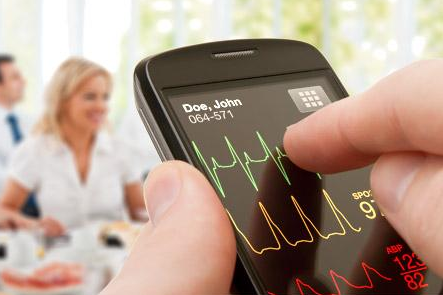
The FDA advisory panel previously voted to support a change in the intended use of the G5 continuous glucose monitor (CGM) developed by Dexcom. Although the G5 has received FDA approval, it is currently cleared only as an adjunctive device that tracks interstitial fluid glucose levels and cannot fully replace traditional fingerstick blood glucose meters (BGMs). If the agency adopts the advisory panel’s recommendation, Dexcom, based in San Diego, California, would be able to market the G5 as a CGM that supports patient treatment decisions, rather than merely as an adjunct to BGMs. To explore the potential new indications for the G5, Dexcom released clinical data from trials of its G4 CGM—which uses the same glucose sensor and algorithm—prior to the FDA meeting.
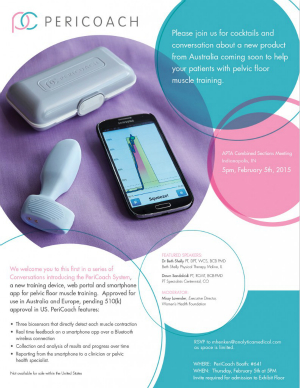
Analytica’s PeriCoach is a female-specific Kegel exercise trainer that connects to smartphones. The product has received its second FDA 510(k) clearance, allowing it to be sold over the counter (OTC). The previous approval, granted in March of last year, had restricted its use to prescription-only. Analytica is an Australian company, and this device, also known as a pelvic floor exerciser, has already obtained OTC sales authorization in Australia and the United Kingdom. The company states that PeriCoach can address bladder leakage, or stress urinary incontinence, which affects one in three women.
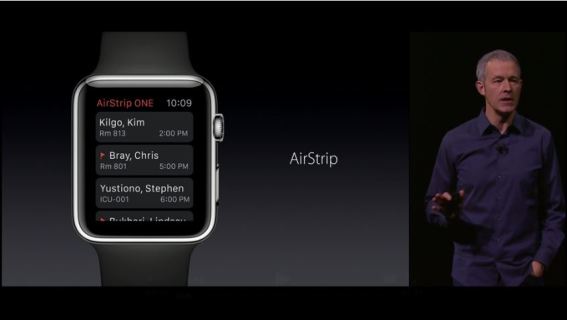
AirStrip is a company dedicated to developing integrated mobile monitoring applications. The web application version of its mobile interoperability platform, AirStrip ONE, has recently received FDA 510(k) clearance. Additionally, a feature of AirStrip ONE has been patented. This ECG waveform interpretation function serves as a visual caliper, assisting clinicians in measuring digital waveforms. Previously, the company’s AirStrip remote patient monitoring solution had already received approval, and its AirStrip OB was among the first medical applications in the App Store to obtain FDA clearance.
There is also a product that has not yet received FDA approval, but we believe it is only a matter of time. Headquartered in Maryland, Senseonics is a company dedicated to the research and development of long-term implantable continuous glucose monitors (CGMs). The company announced preliminary results from its pivotal U.S. trial on the same day as its second-quarter earnings conference call, marking a significant step toward obtaining FDA premarket approval.