FDA Approves Seven Digital Health Devices in Q3 2016, Majority Focused on Diabetes Management

This issue of the Little Blue Book comprises 25 pages and covers the following content:
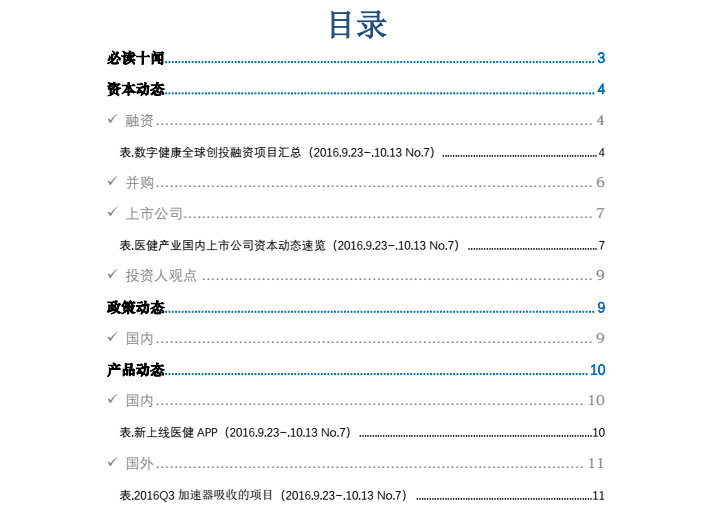
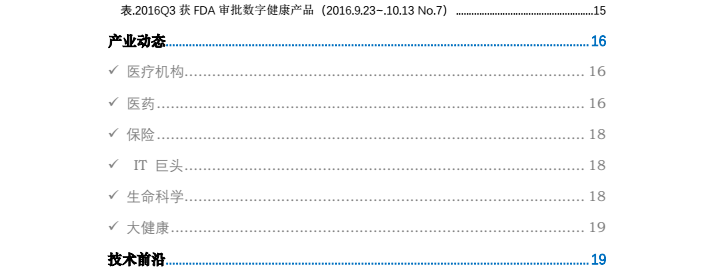
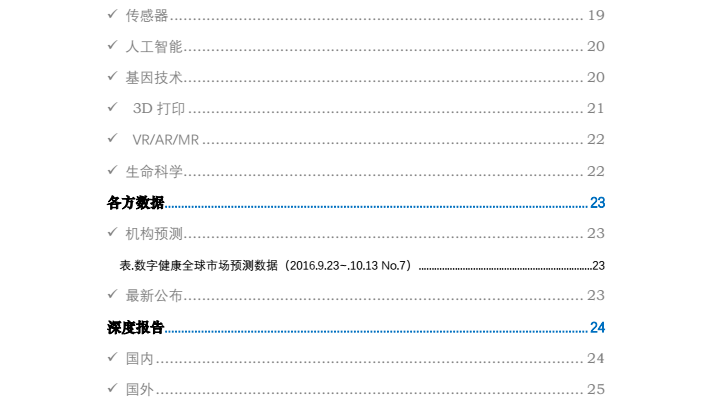
The content of this article is excerpted from [Eggshell Blue Book_No.7】, the full version will be regularly shared with group members in the VCBeat WeChat discussion group. To join the VCBeat WeChat discussion group, scan the QR code to apply >>>
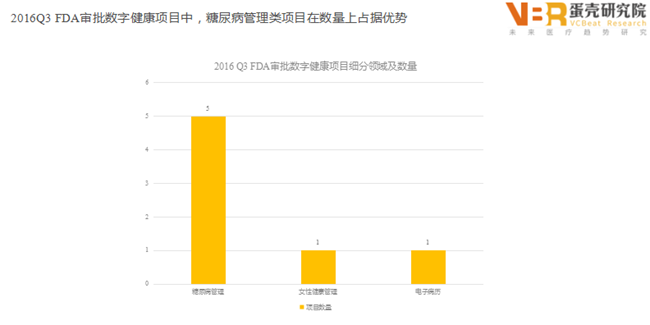
According to the VCBeat database, a total of seven medical devices and apps received FDA approval in the third quarter of 2016. Among these, five products were in the field of diabetes management, one in women’s health, and one in electronic medical record (EMR) management. Diabetes management products were the most prominent category approved by the FDA during this quarter, accounting for five approvals. The FDA-approved products in Q3 2016 originated from the United States (4), Ireland (1), Switzerland (1), and Australia (1).
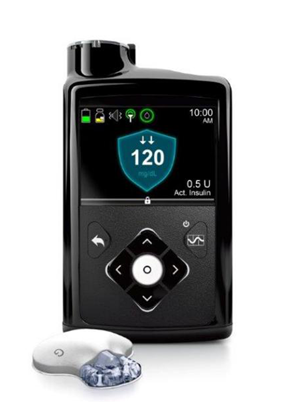
MiniMed 670G
MiniMed 670G is an intelligent blood glucose monitoring system manufactured by Medtronic, capable of automatically monitoring blood glucose levels and delivering appropriate doses of insulin based on the results. The product is a hybrid closed-loop system designed for individuals aged 14 years and older with type 1 diabetes. The system comprises three components: a subcutaneous sensor that measures blood glucose levels, an insulin pump, and an infusion set (connected to the pump via a catheter for insulin delivery).
The device measures blood glucose levels every 5 minutes. When the sensor detects that the blood glucose level has reached a preset critical minimum threshold, the instrument triggers an alarm and automatically administers insulin if the user does not respond.
Medtronic conducted a clinical trial involving 124 patients and found that the average HbA1c level decreased from 7.4% at baseline to 6.9% in 58% of the participants. The device requires calibration every 12 hours, weekly adjustment of the glucose sensor, and refilling of the insulin reservoir every three days.
Traditional blood glucose monitoring devices are open-loop systems, requiring patients to manually adjust insulin dosage. The director of the FDA’s Center for Devices and Radiological Health stated, “This technology is unprecedented; it improves the quality of life for patients with type 1 diabetes by eliminating the need for manual blood glucose management.”
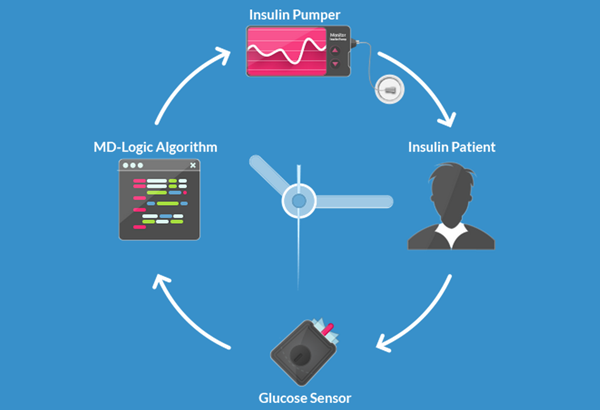
Schematic Diagram of the Intelligent Blood Glucose Meter Closed-Loop System
This is a blood glucose monitor manufactured by Ascensia Diabetes Care, capable of wirelessly transmitting data to the Medtronic MiniMed 630G insulin pump. The MiniMed 630G automatically reads data from the Contour Next Link 2.4 Meter, reducing the risk of errors in determining insulin dosage.
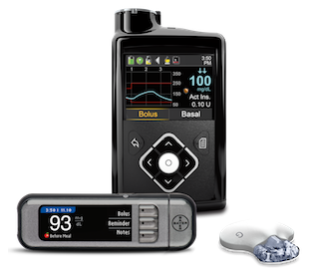
Ascensia Diabetes Care is a new business unit created through Panasonic Healthcare Holdings’ acquisition of Bayer’s diabetes care division in January 2016 for €1 billion. Michael Kloss, CEO of Ascensia, stated, “Panasonic Healthcare Holdings has been a pioneer in the development of core products for diabetes management. We aim to deliver more innovative technologies to improve the quality of life for people with diabetes and maintain our leadership position in the field.”
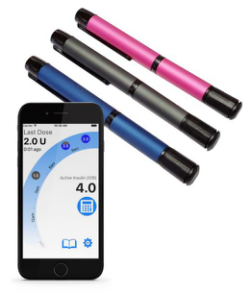
This is a product from Companion Medical, designed for patients who are not suitable for insulin pumps. The device and app can track and calculate the appropriate insulin dosage and send the data to healthcare providers. Timothy Bailey, Associate Professor of Clinical Medicine at the University of California, San Diego School of Medicine, said, “Diabetes is a complex condition, and insulin dosing requires precision. InPen includes a dose calculator that delivers safe and conservative doses to patients daily. Furthermore, insulin dosage data is shared with physicians, helping to optimize treatment plans.”
This is a professional continuous glucose monitoring (CGM) system for physician use, manufactured by Abbott, capable of tracking patients' continuous glucose levels.In 2014, the system received CE certification in Europe.
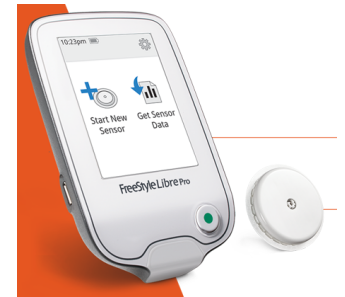
The specific usage method is as follows: A physician inserts a small sensor into the patient’s upper arm and secures it with adhesive tape for 14 days. The sensor measures glucose levels in the interstitial fluid beneath the skin of the upper arm via a microcapillary tube measuring 5 mm in length and 0.4 mm in width. Over the 14-day period, the glucose monitor automatically records a glucose value every 15 minutes, yielding a total of 1,344 glucose readings. After 14 days, the patient returns to the physician’s office, where the physician uses a handheld scanner to scan the sensor on the upper arm and downloads the 14-day glucose record within 5 seconds.
Compared with other blood glucose meters currently on the market,Advantages of FreeStyle Libre ProThere are two points:
1. Patients do not need to prick their fingers to obtain blood samples for measurement.
2. A doctor can purchase a single scanner for use with all patients, thereby reducing costs.
Note: The version of this continuous glucose monitor (CGM) approved by the FDA is the physician version; the patient version is currently under review.
G5 Dynamic Glucose Monitoring System
In July 2016, an FDA advisory panel voted on the scope of use for Dexcom’s G5 Mobile Continuous Glucose Monitoring (CGM) System, recommending that the agency approve the system as a replacement for traditional fingerstick blood glucose testing. The G5 CGM System received FDA approval in August 2015, but at that time it was cleared only as an adjunctive device for glucose monitoring. This meant the system could be used solely to track and assess glucose levels in interstitial fluid and could not replace traditional fingerstick blood glucose measurements.
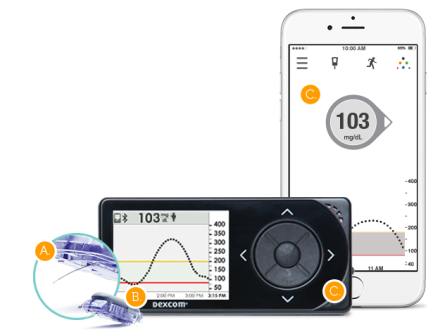
This vote and recommendation were conducted by the FDA’s advisory panel; the final outcome will depend on the FDA’s subsequent decision. The FDA has expressed reservations regarding this proposal, noting that the G5 system is less accurate than traditional blood glucose meters. However, it also acknowledged that the G5 system provides correlational data unavailable from conventional devices, which offers more meaningful guidance for users in selecting appropriate insulin doses. If the FDA approves this recommendation, the G5 continuous glucose monitor will no longer serve merely as a supplement to traditional measurement methods but may be used directly as a basis for diagnosis.
Unlike Dexcom’s previous generations of glucose monitors, the G5 continuous glucose monitoring system can transmit data to smartphones via Bluetooth, eliminating the need for users to carry a separate receiver. This data can be transmitted to iOS devices.
This is a product of Analytica, a female pelvic floor muscle assisted exercise system. In March 2015, PeriCoach received FDA clearance for the product itself. Today’s second clearance pertains to the device’s distribution channel; with this approval, consumers can purchase the device directly from pharmacies or drugstores without a physician’s prescription. This latest approval enhances Analytica’s competitive advantage in the market.
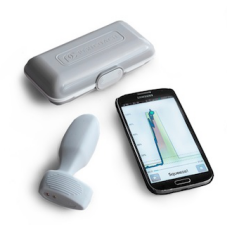
This system helps women improve urinary tract health. The device records the duration and intensity of exercises, and the data can be transmitted via Bluetooth to a linked app. Users can view exercise analytics charts on the app, and the data can also be shared with physicians and pelvic health specialists. The entire system, including the device, is priced at $299 and is currently available for purchase in Australia and the United Kingdom.
This is the desktop application developed by AirStrip, a remote digital health application development company, serving as an interactive platform for physicians. The Chief Development Officer at AirStrip stated, “Physicians spend a significant amount of time dealing with cumbersome medical records; electronic health records (EHRs) help them save time and provide more accurate patient information.”
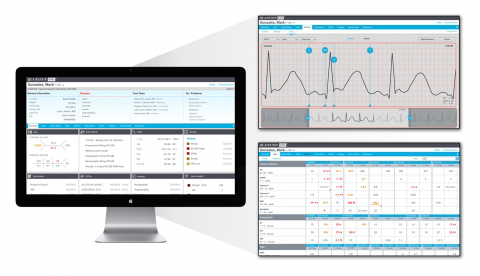
In July 2010, AirStrip’s app, AirStrip OB, received FDA clearance. Concurrently with the certification of AirStrip One, the electrocardiogram (ECG) waveform interpretation feature within this application was granted a patent.
By VCBeat. Please credit the WeChat Official Account when reprinting:VBResearch2016
↓↓↓