

Bowell Medical Robotics: Advancing Intelligent Nursing Care with Pilot Deployment at Peking University Shenzhen Hospital
In the field of medical robotics, attention and engagement have primarily focused on two categories: surgical robots and rehabilitation robots, while behavioral assistance robots have received relatively less attention. This is because the emergence of surgical robots can significantly address certain challenges faced by surgeons during procedures, reducing patient suffering, improving surgical precision, and lowering surgical risks. Similarly, the use of rehabilitation robots can markedly enhance patients’ physical functional recovery and quality of life. These two types of robots involve more direct interaction with patients and contribute to improved post-illness recovery outcomes, thereby commanding a substantial market share and high level of interest.
Behavioral assistance robots primarily provide services such as medical care, cleaning, and delivery. Since they are not directly involved in treatment or surgical procedures and have limited direct contact with patients, they have received relatively less attention in the market. However, behavioral assistance robots can play a significant role in supporting medical and nursing staff by directly reducing their workload and improving work accuracy.
Shenzhen Bowei Medical Robot Co., Ltd. was established in 2015 and specializes in the fields of medical robotics and medical automation. As a high-tech enterprise integrating research and development, manufacturing, and sales, the company holds multiple independent intellectual property rights. Bowei has currently launched three medical robot products: an intravenous medication compounding robot, a nurse assistant robot, and a medical logistics robot. All these products are positioned within the domain of behavioral assistance robots, designed to provide services to healthcare professionals.
Jin Haiyang, the founder of Bowei Company, obtained his Bachelor’s and Master’s degrees in Engineering from Harbin Institute of Technology in July 2005 and December 2009, respectively. He previously worked at the Shenzhen Institutes of Advanced Technology, Chinese Academy of Sciences, before establishing Bowei Company to specialize in the research, development, and commercialization of nursing robots. When asked why he chose to focus on nursing robots, Jin Haiyang stated, “The surgical robot market is currently dominated by the da Vinci system, which continues to lead market trends. I entered the field of medical robotics in 2009 and spent two-thirds of my time developing surgical robots. However, I later shifted my focus from surgical robots to nursing robots. The primary reason is that it is highly unlikely for another blockbuster product like da Vinci to emerge in the surgical robot sector. If one develops minimally invasive surgical robots, they must compete directly with da Vinci; if other types of robots are developed, the required R&D cycle is excessively long.”
Jin Haiyang revealed that he had been engaged in the research and development of spinal surgery robots at the Shenzhen Institutes of Advanced Technology, Chinese Academy of Sciences. Currently, this surgical robot is still in the R&D phase, with animal trials expected to begin next year. “The development cycle for surgical robots is long and requires substantial investment, making it unsuitable for enterprises to undertake. Development of this spinal surgery robot began in 2010, and it is only now gradually entering the animal trial stage. If left to enterprises, the financial burden would be difficult to bear,” said Jin Haiyang.
As a company with technology as its core competitiveness, Bowei Company boasts a strong core management team and technical R&D team. Key team members include postdoctoral fellows, PhDs, and Master’s graduates from the University of Hamburg in Germany, Lancaster University in the UK, Harbin Institute of Technology, and the Chinese Academy of Sciences, as well as technical experts who have previously worked at renowned enterprises such as Huawei and Siemens. Bowei Company also has an advisory team composed of senior experts in relevant fields, including members of the German National Academy of Sciences Leopoldina, academicians of the Chinese Academy of Sciences, and expert professors from well-known hospitals in China.
Intravenous Drug Preparation Robot
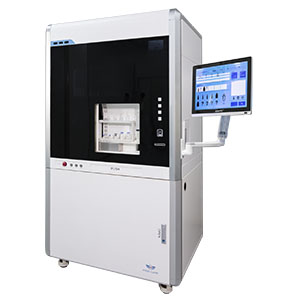
The “Intravenous Drug Compounding Robot,” independently developed by Bowei Medical Robotics, drew significant attention from attendees at the recently concluded China (Shenzhen) Smart Nursing Summit. This intelligent robot features internationally leading technology and independent intellectual property rights. Currently, intravenous infusion medications in hospitals are compounded manually by healthcare professionals, a process that not only carries risks of human error and drug contamination but also poses health hazards to pharmacy nurses due to exposure to chemotherapy agents, antibiotics, and other hazardous drugs. The Intravenous Drug Compounding Robot enables automated compounding of intravenous medications, meeting the demands of China’s clinical practice, which involves a wide variety of medication types, diverse dosage forms, and complex, varied packaging.
This medication preparation robot has successfully overcome the aforementioned challenges, particularly in handling glass ampoules—the most common type in China that previously could not be broken open by robotic arms—reducing the breakage rate to less than one in a thousand. It is capable of performing operations such as cutting and snapping ampoules, opening vials, shaking, disinfecting, aspirating, and injecting. The system not only automates the entire medication preparation process within a Class 100 clean, enclosed environment but also integrates functions such as drug compatibility testing, medical waste classification, and comprehensive multi-parameter monitoring. Featuring high preparation accuracy, strong adaptability, a high degree of automation, robust traceability, compact size, flexible mobility, and cost-effectiveness, it ensures a rigorous, precise, standardized, and safe workflow, thereby thoroughly eliminating issues such as toxicity exposure and contamination that are difficult to avoid with manual operations.
Nurse Assistant Robot
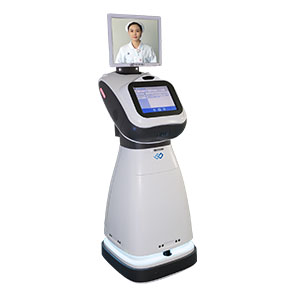
Bowe’s “Nurse Assistant Robot” features a cartoon-like nurse appearance and can assist nurses in performing routine care tasks based on patients’ conditions, such as handling administrative procedures, providing environmental guidance, querying data, conducting ward rounds, delivering items, and printing documents. Previously tedious tasks that had to be repeated dozens or even hundreds of times daily can now be fully undertaken by the robot, which is available on demand and never tires. By taking over these low-value, repetitive tasks, the robot allows nurses—who are already in short supply—to dedicate their time and energy to more valuable work, such as analyzing patient conditions and providing psychological support, thereby helping nurses transition from mundane chores back to professional care.
Medical Logistics Robot
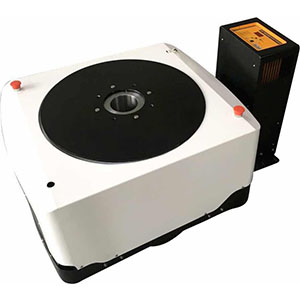
BoWei Company also showcased another medical robot—the Medical Logistics Robot. Designed specifically for material transport between hospital departments and operating rooms, this robot reduces the physical burden on nurses during transportation tasks. It also prevents secondary environmental contamination from medical waste, thereby ensuring a safe and comfortable environment for both healthcare workers and patients.
Supporting Nursing Care at Peking University Shenzhen Hospital
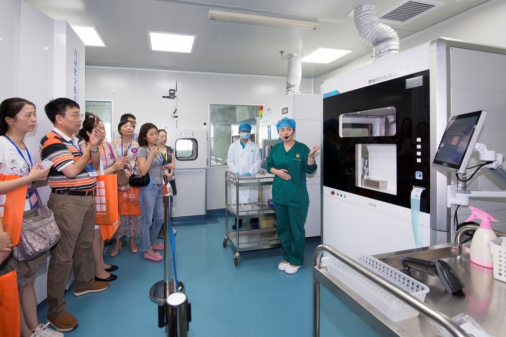
Peking University Shenzhen Hospital is a large Grade A tertiary hospital with an annual outpatient and emergency visit volume of over 3 million, 53,000 discharged patients, and 34,700 surgical procedures. Amidst an imbalanced nurse-to-patient ratio and increasing volumes of outpatient visits and surgeries, nurses bear a substantial workload, making it challenging to ensure absolute safety and accuracy in their work. In response to these challenges, the demand for intelligent nursing solutions has grown significantly. To enhance patient satisfaction and improve nursing care, Peking University Shenzhen Hospital has introduced various smart nursing devices and nursing robots, including an intelligent infusion system, an intelligent nursing clinical decision support system, as well as Bowei Company’s intravenous medication preparation robot, nurse assistant robot, and medical logistics robot products.
To prevent errors in manual medication preparation and ensure the absolute safety of personnel, Peking University Shenzhen Hospital has implemented multiple protective measures at its Intravenous Admixture Services (IVAS) Center. These include an intelligent reagent library, an intelligent medication dispensing cart, an intelligent labeling system, an intelligent solvent shelf, an intelligent drug sorting system, and an intravenous medication preparation robot. Once physicians issue medical orders, they are transmitted to the IVAS Center. After pharmacists verify the prescriptions for accuracy, the medication information is sent to the intelligent reagent library. Operators retrieve the medications from the library and transport them via the intelligent dispensing cart to the intelligent labeling system. The intelligent labeling machine performs reagent scanning, verification, printing, and label application. Finally, the Bowei intravenous medication preparation robot handles the compounding of high-risk medications.
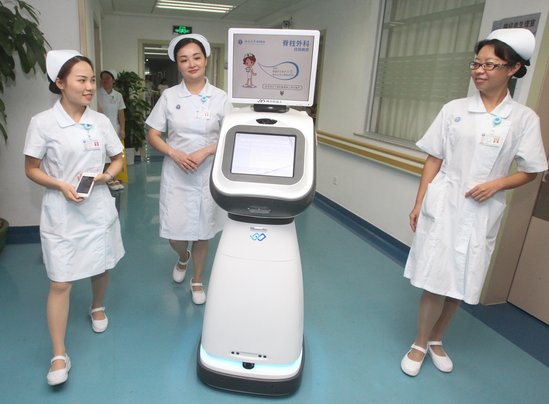
Nurse assistant robots have taken on the health education responsibilities at Peking University Shenzhen Hospital, enabling nurses to dedicate more time to nursing research and engage in more face-to-face communication with patients. In future developments, Peking University Shenzhen Hospital will also integrate additional features, such as inquiry services for test orders.
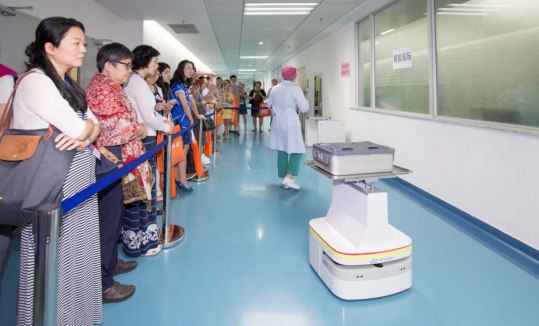
Demo of Medical Logistics Robots

Venue: Shenzhen, China
Conference Date: October 29–30, 2016
The “2016 World Medical Robot Conference,” hosted by the World Medical Robotics Association, is scheduled to take place in Shenzhen, China, on October 29–30. This inaugural global summit integrates scientific research, clinical practice, and industry development in the field of medical robotics. More than 20 academicians from various countries will attend the conference, while dozens of presidents of renowned hospitals worldwide and clinical experts will participate in presentations and discussions. Experts and scholars from prestigious domestic and international institutions—including the Swiss Academy of Technical Sciences (SAWT), the UK Royal Academy of Engineering, the Chinese Academy of Sciences, the Singapore Academy of Medicine, and the ROBO Medical Robotics Institute—will share insights on global trends in medical robot applications and research directions. They will engage in thematic discussions centered on the conference theme: “Technological Innovation Transforming Healthcare, Health Leading the Future.”
Click the link below or scan the QR code to register

For sponsorship inquiries, please contact Peipei at VCBeat (WeChat ID: xiaopeiling185025)