

2016 West Lake International Medical Forum Concludes: Cross-Boundary Collaboration Across Three Dimensions Envisions the Future of Healthcare
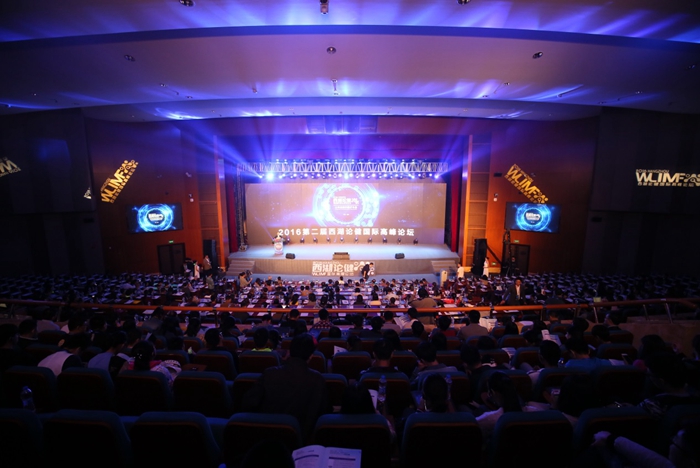
The 2016 “West Lake Health Talk” International Summit, hosted by the Organizing Committee of the Hangzhou West Lake International Expo and the Administrative Committee of Hangzhou Economic and Technological Development Zone, organized by Hangzhou Jianpei Technology Co., Ltd., and co-organized by the Zhejiang Health Information Society, Alibaba Cloud, the Chinese American Clinical Oncology Society (CACO), the Baihua Association, the Precision Health Management Branch of the China Medical News and Information Association, Hangzhou Dianzi University, Huoshi Chuangzao, and VCBeat, concluded successfully at the Hangzhou International Conference Center. The conference achieved cross-disciplinary sharing across three dimensions, providing rich insights for exploring the future of the healthcare sector.
First: The Crossover Between Healthcare and IT Technology.At the conference, experts from the medical and IT sectors shared their insights and explored how to “return technology to its core role in healthcare,” leveraging technological means to support medical practice and enhance the diagnostic accuracy and efficiency of hospitals and medical personnel. Hangzhou Jianpei Technology Co., Ltd. showcased its cutting-edge product—the “Image Interpretation Robot,” capable of self-learning and self-calibration—hailed as the “AlphaGo of medical imaging.” In a live “Man vs. Machine” challenge, the robot competed against two radiologists with 15 years of experience each from Zhejiang Provincial Hospital of Traditional Chinese Medicine and Hangzhou Red Cross Hospital. Although the match ended in a 1:1 draw, the robot completed each task in just one minute, whereas the consulting physicians required 8–10 minutes per case.
Experts from the Zhejiang Provincial Hospital of Traditional Chinese Medicine stated, “Jianpei Technology’s robotic system has been highly beneficial for our preliminary lung screening. It took two of us ten minutes to complete the task, whereas the robot finished it in just one minute. The first case was relatively challenging, and the second involved multiple nodules, yet the robot still completed both in one minute each. Admittedly, we were quite nervous, as this was our first time interacting with the robot in front of an audience of hundreds. Initially, I perceived the robot as somewhat profound, but upon realizing it was essentially a computer-driven system, I truly recognized its significant value in supporting our clinical work.”The project leader for the “Image Reading Robot” initiative added, “Our goal is to enable computers to handle tasks that humans prefer not to perform, rather than replacing human intelligence. Since the dawn of tool-making, humanity has created tools to assist itself and reduce workload. We also hope that radiology experts will provide their suggestions and engage in further discussions with our company.”
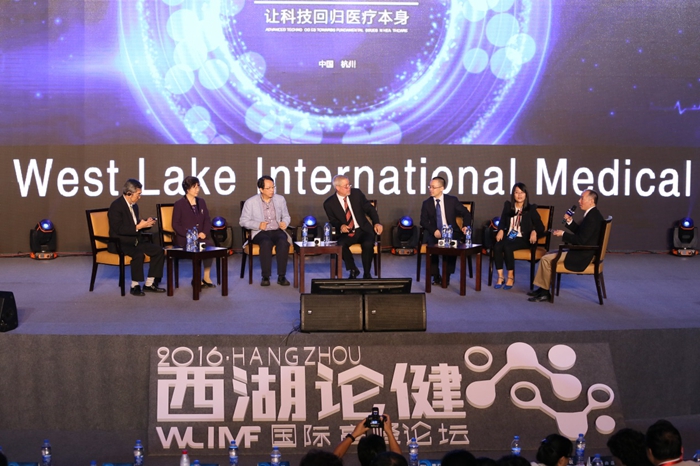
Second: Cross-border Integration of Chinese and International Academia.The forum brought together numerous academicians and experts from the United States, Japan, India, and China, who generously shared their insights and engaged in active exchanges, fostering interdisciplinary academic collaboration. During the event, Li Lanjuan, Academician of the Chinese Academy of Engineering and former Director of the Zhejiang Provincial Health Department; He Lin, Academician of the Chinese Academy of Sciences, Academician of The World Academy of Sciences (TWAS), and Changjiang Scholar Distinguished Professor; Hiroshi Fujita, Chairman of the Japanese Society for Medical Imaging and Information Sciences; David Flores, Chairman of BioCentury; Ms. Li Hong, Chief Architect of Alibaba Cloud Healthcare; and Mr. Cheng Guohua, CEO of Jianpei Technology, participated in a roundtable discussion themed “Returning Technology to Its Core Role in Healthcare.”
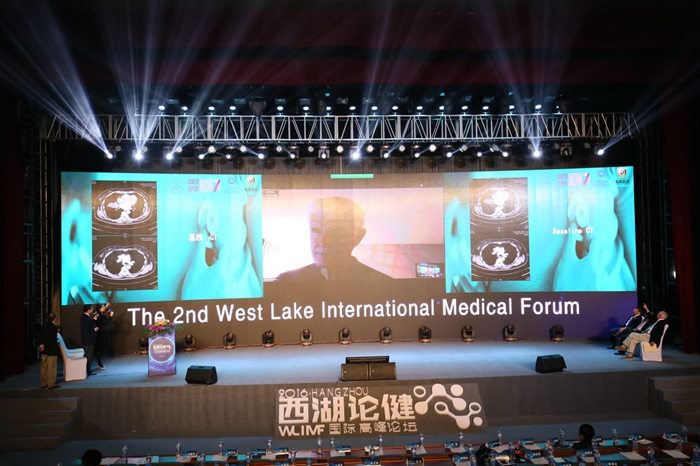
Third: Cross-boundary integration across online and offline channels, as well as geographic regions.For the first time in the industry, telemedicine and multidisciplinary team (MDT) consultations were brought to the stage, enabling real-time cross-border, multidisciplinary, and multi-expert consultations for complex and refractory cases.
The forum featured two thematic sub-forums: “When Healthcare Meets Big Data” and “Cancer, Please Go Away.” More than twenty experts delivered insightful presentations, including Mr. Jin Li, Academician of the Chinese Academy of Sciences and Vice President of Fudan University; Mr. He Lin, Academician of the Chinese Academy of Sciences and Dean of the Bio-X Institute at Shanghai Jiao Tong University; Mr. Guo Qing, Vice President of Zhejiang Chinese Medical University; Mr. David Flores, Chairman of BioCentury; Mr. Hiroshi Fujita, Professor and Chair of the Department of Intelligent Image Information, Graduate School of Medicine, Gifu University, Japan; Mr. Liu Jie, Changjiang Scholar and Director of the Institute of Digestive Diseases at Fudan University; Mr. Li Lihua, Founding Dean of the College of Life Information and Instrument Engineering at Hangzhou Dianzi University; Mr. Sanjiv Agarwala, Director of Clinical Oncology and Hematology at St. Luke’s Cancer Center in the United States; and Mr. David Garfield, Founding Member and Chairman of the Lung Cancer Committee in the United States. Other notable participants included Tu Youyou’s research team, DXY, Alibaba Cloud, Firestone Creation, the Editorial Office of the Chinese Medical Association, and the Chinese Journal of Digestive Endoscopy.
As the main forum of the medical sector at the Hangzhou West Lake International Expo, the 2016 "West Lake Health Talk" International Summit aimed to "promote the development of medical technology through the deep integration of academia, healthcare, technology, and capital." The summit focused on discussing how IT technology can provide more effective technical support for challenges encountered in tumor treatment, AI-driven healthcare, big data healthcare, and medical information systems. This event also served as a major gathering for Hangzhou in the field of medical health.