

23Mofang Files IPO Prospectus: Aiming to Become China's Most Cost-Effective Genetic Testing Provider

With advancements in technology, the cost of genetic testing has rapidly decreased, while test results have become more accurate and reliable. Diseases such as cancer can now be screened for risk and prevented early through genetic testing. On the other hand, driven by growing health awareness, consumption upgrades, and the rise of the middle class, the genetic testing market is also experiencing rapid growth.
23mofang is a professional institution that pioneered personal genetic testing services in China. Leveraging its internet platform, it integrates data, algorithms, and genetic testing to create a new ecosystem for the genetic testing industry. Currently, 23mofang offers over 340 testing items covering six major areas, including health risks, rare genetic disorders, and drug responses. Committed to helping users gain an in-depth understanding of their own needs, 23mofang strives to become China’s most pioneering genetic testing organization.
From Real Estate Big Data to Genetic Testing: The Growth Journey of 23mofang
Zhou Kunxiang, Founder of 23mofangVCBeat (WeChat: vcbeat) reporters revealed that,In 2014, while still working in the real estate big data industry, he serendipitously entered the field of genomics. It was in the realm of real estate big data that Zhou Kun met Wang Mian, the company’s current CTO, who had many years of experience in big data. Initially, Zhou Kun and his team developed a software tool for analyzing mRNA expression level transformations, aiming to help research institutions and scientists process mRNA transformation data more efficiently.
Unfortunately, due to a lack of in-depth understanding of the genomics industry at the time, the market space was limited, and development did not proceed smoothly. To secure a foothold in the rapidly expanding genomics market, some changes may be necessary. As the saying goes, “A blessing in disguise.” With continued engagement in the genomics sector, the team gradually gained profound insights into the industry and recognized its potential for comprehensive explosive growth in the future.
In March 2015, 23mofang was officially established. The company also assembled a bioinformatics team composed of several former bioinformatics engineers from BGI. This time, they set their sights on the genetic testing field. Zhou Kun recalled, “With the declining cost of genetic testing, I believe that genome sequencing will become accessible and ubiquitous for everyone.” Diseases can be predicted, and he hopes to realize this vision through 23mofang.
Genes are the code of human heredity, and genetic testing can be used for disease risk prediction and assessment of individual physical constitution. At its inception, the company successfully secured RMB 5 million in investment from substantial capital sources. On August 23, 23mofang made a strong market debut through collaborations with Didi Chuxing and Yihao Zhuanche. Within two months of its launch, 23mofang sold nearly 2,000 test kits. On November 23, 23mofang launched pre-orders for its children’s package, receiving over 1,100 reservations within eight hours.
Zhou Kun stated that 23mofang is far from satisfied with its current user base, hoping to achieve one million users within two years by tapping into the consumer market it initially identified as promising.
Model: Leveraging the Internet as a platform to provide users with convenient services
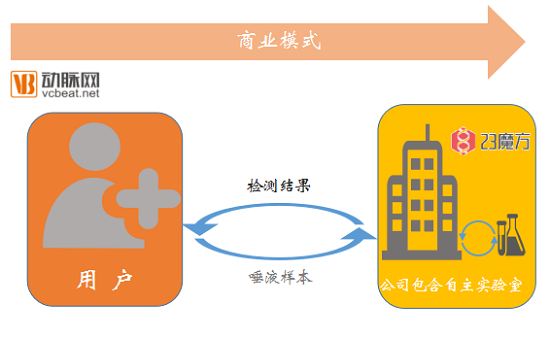
23mofang leverages the internet as a platform to directly provide genetic testing services. By analyzing test data, it feeds back results to users, helping them understand their health status and potential risks for future diseases. After placing an online order, users receive a saliva collection kit mailed by 23mofang. They are instructed to collect a 2 mL saliva sample according to the guidelines and mail it back to the company.
Upon receipt of the samples, the company conducts DNA sequencing experiments in the laboratory. After completing the relevant tests and data analysis, the company provides the results to the user. The entire process, from sample collection to result delivery, typically takes 25 working days. Users are only required to provide a simple saliva sample.
Test Results: A Multi-Pronged Approach to Ensure Accuracy
There is a wide array of genetic testing companies both domestically and internationally, with varying levels of proficiency. So, how does 23mofang ensure the accuracy of its test results? Zhou Kun toldVCBeat (WeChat: vcbeat) reporter, primarily focusing on the following three aspects:
1. Utilizing Illumina sequencers, including the HiSeq series, with an accuracy rate of up to 99.9%. This is the first step to ensure the accuracy of measurement data from the hardware perspective.
2. Continuously collect global scientific achievements in genetic testing and publicly available authoritative academic research to establish an independent database. Compare and analyze experimentally detected data against this vast repository of research findings to calculate users' disease risks and other genetic traits.
3. Expert Team: Postdoctoral experts from Fudan University, the University of California, San Francisco (UCSF), and other institutions, with over 10 years of professional experience. After the laboratory detects genetic information, molecular information specialists further verify these results.
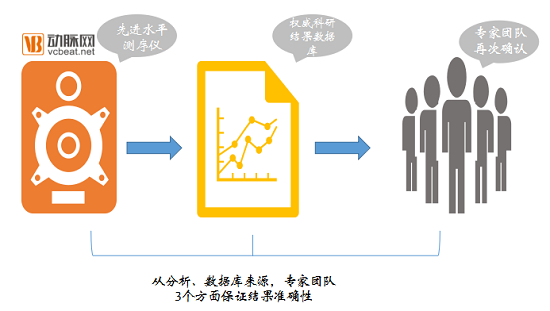
Notably, the database is not only independently built by 23mofang but also features self-learning capabilities. As the number of tested users continues to grow, the database becomes increasingly comprehensive and refined, thereby enhancing the accuracy and reliability of test results.
Currently, the company offers more than 340 testable items. Its core value proposition is to help individuals understand their health status more quickly and conveniently.
Price: Online sales offering the most cost-effective services
Abroad, with advancements in technology, the cost of whole-genome sequencing has dropped from hundreds of millions of dollars in 2001 to $1,000. In China, the consumer genetic testing market began to develop in late 2014. However, Zhou Kun noted that some companies in the market rely on channel-based sales, leading to relatively chaotic pricing. By adopting an online direct-to-consumer model via the internet, 23mofang has significantly reduced costs for users. “23mofang is currently the most cost-effective genetic testing provider in China offering services under 1,000 yuan,” said Zhou Kun.
Currently, the company is not in a rush to expand its backend business operations. They believe that better helping users understand their health inherently addresses a significant challenge. When users truly recognize their current health status and potential future disease risks, they are empowered to make informed decisions in advance.
Future: Rooted in User Needs, Delivering Superior Services
With a simple model, multi-layered quality control for test results, and relatively reasonable and affordable pricing, 23mofang has delivered a superior product at one-tenth of the market price. The company secured RMB 5 million in angel investment shortly after its establishment, with funds primarily allocated to continuous product improvement, laboratory construction, iterative product enhancements, and technological research and development. Additionally, the company completed its Pre-A financing round at the end of 2015; however, further details such as the exact amount raised have not yet been disclosed. Zhou Kun stated thatVCBeat (WeChat: vcbeat) reporter revealed that this investmentLed by Singularity Capital, with participation from Fuhou Capital. The company is currently raising its Series A round.
As lifestyles evolve, single-platform online services can no longer meet user demands, prompting numerous companies to turn their attention to the mobile app market. Currently, the majority of 23mofang’s traffic comes from its WeChat Official Account. It is expected that in November this year, 23mofang will launch its first mobile app to serve a broader user base in a simpler and more convenient manner.
For users, the launch of the app makes the gene sequencing process more convenient and efficient, allowing them to order services and receive test results entirely through their smartphones. For the company, it frees up more time and energy to focus on backend development, helping users apply their test results to their daily lives, truly realizing the value of testing data, and addressing post-testing service needs.
Meanwhile, 23mofang plans to complete genetic testing for one million people within three years. By leveraging artificial intelligence, it aims to initially achieve disease prediction and forecasting between 2018 and 2019, and to build a massive genetic database in 2019, thereby helping users lead high-quality lives.
Strictly speaking, China’s genetic testing market only began to flourish in late 2014. Despite several years of growth and expansion, the industry is still in its nascent stage in China. Determining the future direction of genetic testing and uncovering its untapped potential will require continuous exploration and effort by professionals in the field. Zhou Kun believes that this industry boasts substantial room for development and promising prospects. He is confident that, within a few years, new companies will spring up across various sectors, delivering more valuable services to consumers.