

Docent Health: Revolutionizing Patient Experience with VIP-Level Care for All
In the Q3 2016 StartUp Health Digital Health Industry Report, the Patient/Consumer Experience category ranked first in terms of investment and financing volume both in the United States and internationally. VCBeat (WeChat ID: vcbeat) will feature special coverage on foreign companies within this category, analyzing their products, business models, and funding status to provide insights for investors and entrepreneurs in China.
This article introduces a company dedicated to directly helping hospitals improve patient experience. Inspired by the service standards of high-end hotels and restaurants, it aims to ensure that every patient receives VIP-level medical care.
The experience of seeking medical care at hospitals is often far from satisfactory: long waiting times, constant comings and goings of medical staff, and patients in a vulnerable state due to physical discomfort frequently feel neglected by physicians.
Docent Health aims to help hospitals build lasting, positive doctor-patient relationships, ensuring that patients’ voices are heard and reflected. This may sound implausible—yet the company draws on best practices from top-tier restaurants and hotels to steer the healthcare industry toward a “customer-first” approach. The goal is not merely to treat diseases and save lives, but more importantly, to enhance patients’ overall health and well-being by promoting physical and mental comfort.

“We are gradually witnessing a shift in the healthcare system’s attitude toward patients,” said Paul Roscoe, CEO of Docent. “They should be treated not merely as patients, but as customers.”
In recent years, patients have had access to more tools for selecting high-quality, affordable healthcare services. Medical consumer review platforms, such as Yelp, now boast ample review data, offering prospective patients the opportunity to gain comprehensive insights. Healthcare consumers are more motivated than ever to write reviews, as they recognize that spontaneous, authentic content can help drive price transparency, ultimately benefiting their out-of-pocket expenses and overall value. In response to this emerging trend, hospitals must consider how to enhance patient satisfaction and loyalty.
In fact, the healthcare industry has long been making efforts to improve patient experience. Since 2007, Medicare has required hospitals to report patient satisfaction information to the federal government and has conducted official patient surveys, primarily via mail, achieving some positive results.
However, Roscoe stated that these data do not fully capture the patient experience. This is because questionnaires are typically distributed to patients several weeks after discharge, which inevitably introduces recall bias, and the response rate is too low.
CEO Paul Roscoe stated that their goal is to improve the frequently strained doctor-patient relationship, help hospitals achieve higher patient satisfaction, and broaden the reach of their brand among the public. While the concepts of customer retention and word-of-mouth marketing are well-established in other service industries, they have indeed received insufficient attention in the traditional healthcare sector.
“I want to identify and transform any healthcare setting that leaves patients feeling disheartened,” said Roscoe. The ultimate goal of Docent Health is to build a platform akin to Salesforce.comComprehensive and IntelligentofCustomer Relationship Management Company, albeit applied within the medical field. He frequently draws comparisons between high-end restaurants and hotels on one hand, and hospitals on the other—noting that the former are more diligent in recording guest preferences, anticipating consumer needs, and prioritizing repeat business.
The Docent team’s projected revenue model is to leverage its self-developedMedical SaaS Platforms Sold to Hospitals Seeking to Improve Patient ServicesDocent’s CEO stated that, through conversations with several industry executives, he learned that improving patient satisfaction is indeed their top priority. “Although the implementation of patient experience initiatives is still in its early stages, many healthcare institutions have already shifted their mindset to deliver medical care that more closely resembles true ‘service.’”
In the seed funding round this January, Bessemer Venture Partners, New Enterprise Associates, and Maverick Capital VenturesToDocent Health secured a $2.1 million investment; in July this year, the company closed its Series A financing round, raising a total of $15 million. Three venture capital firms continued to provide funding support, with co-investors including Oxeon, a New York-based executive search and healthcare investment firm that had previously supported Docent in its early stages.
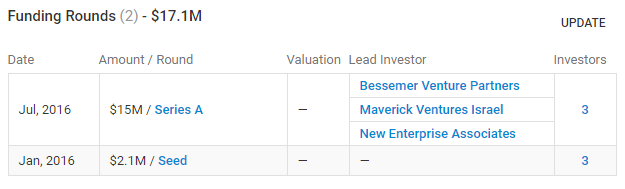
Docent Health Funding Details
Docent Health originally emerged from Oxeon’s corporate studio, where it was the first startup to be launched. The studio began by offering executive search services, gathering the latest industry insights and data, and providing business planning services to promising new ventures. Oxeon remains a major shareholder of Docent Health.
Oxeon foresaw two major transformations now sweeping the healthcare industry: first, tying hospital revenue to actual treatment outcomes, rather than profiting from patients through overly complex treatment protocols; second, leveraging technology to empower patients with greater decision-making authority over their healthcare expenditures.
Docent Health’s Approach to Improving Healthcare ServicesDual Approach: Integrating Online and Offline Experiences. They developed PC and mobile applications that integrate web technologies with specially trained medical professionals, who maintain ongoing communication with patients to stay abreast of their needs.
Whenever the Docent team receives notice that a patient will be visiting the hospital, a “liaison” calls to inquire about their needs and raise essential considerations, such as transportation arrangements or medication history. On a more personable note, they also ask personalized questions, such as whether the patient prefers to be addressed by a nickname. Depending on the specific circumstances, care is provided by staff from the hospital, Docent Health, or both.
Upon arrival at the hospital, patients are greeted by a liaison. From that moment on, every step of their treatment is recorded in the Docent database, ensuring their needs are met in real time. Even after discharge, patients can maintain contact with the liaison to enjoy long-term “post-care services.”
How do care coordinators manage to record patient information in real time? This is made possible by the integration of human effort with the Docent platform’s technology. While serving patients, they carry mobile phones or tablet devices at all times, documenting patients’ conditions and experiences directly into the Docent application. At any given time, each care coordinator manages a caseload of approximately 10 patients.
Hospital for Special Surgery in New York has signed an agreement with Docent Health, becoming the first hospital to adopt its services. Prior to its seed funding round this January, the service had been quietly piloted at the facility for several months, with approximately 5,000 patients being among the first to experience the enhanced hospital services powered by Docent Health. Roscoe, CEO of Docent, stated that they expect other renowned healthcare organizations across the United States to join them in the near future.
The core concept of the Docent service is “Patient Journey”, which encompasses the extended period from before a patient visits the hospital until long after they have completed treatment and been discharged. Cloud-based software platforms enable both healthcare providers and patients to receive timely updates, record personal preferences, and continuously collect feedback.

Product Lead Charlie Dunning Introduces the Docent Platform at the 2016 Health 2.0 Conference
“It’s not hard to imagine that Docent’s services are truly appealing to hospitals seeking to enhance patient experience and stand out from competitors,” said Regina Holliday, a patient advocate from Maryland. Moreover, hospitals face substantial fines if they fail to reduce their readmission rates. Docent Health’s robust post-discharge services continue to remind patients to take their medications after discharge, thereby reducing readmissions caused by improper rehabilitative care.


Founder and CEO, Paul RoscoeWith the Co-FounderRoyal Tuthill
WoundFounder Paul Roscoe has been active in the healthcare industry for many years—dating back to 1999, when he began his career at a computer software company.Vice President of Healthcare Investments at New Era of Networks; the company was acquired by Sybase in 2001.(Sybase) After the acquisition, he served as Assistant Vice President in the healthcare investment sector at Sybase; starting in 2003, he worked at a healthcare software companySentillionServing as a senior executive, all the way untilSentillionAcquired by Microsoft, he served as General Manager of Microsoft’s Healthcare Solutions Division for five months; he also previously held the position of CEO at VisionWare, a company specializing in healthcare master data management solutions. With years of experience at the intersection of healthcare and database software, Roscoe has been honed into an expert in healthcare data platforms and software.
In 2015, he and Royal TuthillCo-foundedDocent Health. Royal Tuthill, formerly the head of the aforementioned Oxeon corporate studio—officially named Cien Ventures—serves as Chief Transformation Officer at Docent Health, overseeing the company’s innovation and development strategy.
When the concept of Docent became known to healthcare professionals who advocate for “patient-centered” care, their primary concern remained: To what extent can patients truly benefit from merely optimizing non-clinical services within healthcare institutions?
In this regard, Roscoe pointed out that even if a hospital possesses impeccable medical expertise, poor patient experience, ineffective emotional engagement with patients, and a failure to understand their needs and preferences will result in low brand loyalty among patients. “Only by combining superior medical skills with an excellent patient experience can hospitals foster patient brand loyalty and support their long-term development.”
However, if Docent is to truly realize its medical vision of “VIP care for all” while simultaneously driving greater revenue for hospitals, it must prove that it is not merely another concierge healthcare company designed exclusively for the wealthy.
Alexandra Drane, a healthcare entrepreneur and patient rights advocate, expressed concerns about Docent Health’s approach: if their VIP services ultimately benefit only a select group of “privileged” patients, it will undoubtedly exacerbate healthcare inequalities.

“I strongly agree with and look forward to the VIP medical experience offered by Docent,” said Drane. “However, as a patient rights activist, I am concerned that it may create significant conflict between those who have access to such privileges and those who do not.” She added, “I believe that what most people define as ‘VIP’—empathizing with patients emotionally, demonstrating compassionate care, maintaining transparency, sharing forward-looking information, and expressing understanding and respect—is both desirable and achievable across the healthcare industry without incurring substantial costs.”