

WeDoctor's First Public Response to General Practice Center Recruitment: Going Offline Isn't Easy
Recently, news of WeDoctor’s recruitment for its General Practice Centers spread rapidly online. Previously, VCBeat (WeChat ID: vcbeat) learned from WeDoctor’s job postings that its first General Practice Center is scheduled to open in Hangzhou this December, with the stated aim of “creating the ‘Starbucks’ of China’s healthcare industry.”
It is understood that WeDoctor General Practice Centers are a nationwide chain of physical medical institutions under WeDoctor, serving as a crucial component of WeDoctor’s online diagnosis and treatment, remote consultations, and integrated online-to-offline healthcare operations. At the launch event for the Sichuan WeDoctor Internet Hospital held in Chengdu on October 16, Professor He Chao, Head of WeDoctor General Practice Centers, Senior Vice President of WeDoctor, and former President of Sir Run Run Shaw Hospital in Zhejiang, granted an exclusive interview to VCBeat. He provided detailed insights into the business model and preparatory status of WeDoctor General Practice Centers. The following is the interview content with President He Chao, compiled by VCBeat:
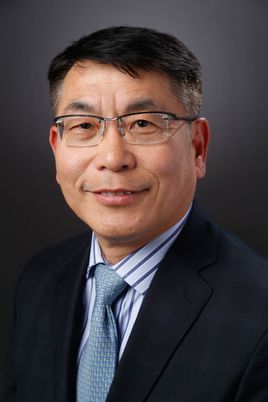
Professor He Chao, Head of WeDoctor General Practice Center, Senior Vice President of WeDoctor, and Former President of Sir Run Run Shaw Hospital
1China's primary healthcare is relatively underdeveloped, so general practice centers need to be established.
Medical advancement is a long-term process, and healthcare models evolve in tandem with shifts in societal structures. Globally, the focus of healthcare services has transitioned from “disease treatment” to “health management,” and further toward the World Health Organization’s concept of “high-quality life.” Different stages of social development have given rise to distinct demands for healthcare services.
The development of healthcare in Western countries has evolved from undifferentiated general practitioners to specialized internists and surgeons, and further to numerous subspecialists. This evolution has bifurcated into two trends: one toward increasingly specialized fields and professionals, and the other back to general practitioners and family physicians focused on health management. The key distinction lies in their core objectives: one centers on treatment, while the other emphasizes prevention and health management.
The quality of primary healthcare and initial diagnostic and treatment services has a significant impact on the overall health status of residents. In some impoverished areas of China, primary care is scarcely available. Consequently, patients in these regions often delay seeking medical attention until their conditions have progressed to advanced stages, at which point they seek treatment at large hospitals. By then, however, it is often too late for effective intervention, imposing a severe burden on both society and families.
Over the past two decades, China’s top-level design has advanced by leaps and bounds, with many fields and cutting-edge technologies—such as aerospace and high-speed rail—already ranking among the world’s best. However, Chinese medicine remains far behind that of other developed countries, particularly in the realm of primary healthcare, where the gap is even more pronounced.
WeDoctor’s advantage lies in its internet-based platform; therefore, primary care services must be developed around this platform.
During my first visit to a primary healthcare institution in a prefecture-level city in Zhejiang Province, I was surprised to find that even in Zhejiang, a region with relatively advanced economic development in China, village-level medical services remain significantly underdeveloped. Both the infrastructure of healthcare facilities and the clinical competence of healthcare personnel are severely inadequate.
Therefore, I believe it is highly necessary to develop general practice. For WeDoctor, advocating for the development of general practice serves not only as a corporate social responsibility but also as an integral part of our core business. We aim to leverage the Internet to drive change by connecting primary care physicians with large hospitals and with families, thereby enhancing the service capabilities of primary care providers and fulfilling their role as “health gatekeepers” for the public.
2Family Health Is the Core Component of General Practice Centers
First, it is essential to provide proactive and continuous services to the general public. Current medical services are often passive, making it difficult for physicians to truly integrate into patients’ daily lives. For instance, addressing medication adherence among patients with chronic diseases requires long-term education and continuous medical care. Delivering continuous, proactive medical services centered around the patient is precisely what WeDoctor General Practice Centers aim to achieve.
Secondly, health is a collective endeavor, and the family constitutes the patient’s community. For general practice centers, family members should be regarded as an integral part of the patient’s treatment; we should not view them in isolation. Each family has its own established dietary and lifestyle habits, and the burden of any member’s illness is shared among all members. Therefore, diseases are often confronted collectively by the family unit. WeDoctor’s General Practice Centers address health issues with the patient’s family as the fundamental unit.
Third, specialists need general practitioners; the two share a complementary and mutually beneficial relationship. General practice centers assist specialists in managing initial primary care consultations and patient triage, while specialists help general practitioners address specialized conditions beyond their scope of practice, thereby establishing a tiered diagnosis and treatment system at the physician level.
Fourth, the multidisciplinary team (MDT) for family doctors must be organized and coordinated by general practitioners; otherwise, it cannot be effectively established. Many hospital specialties already operate as group-based services, commonly referred to as MDTs. This implies that the Micro Medical General Practice Center holds significance in two aspects: first, it provides diagnostic and treatment support among multiple physicians, forming a more scientific and reasonable consultation system; second, it addresses the issue of time allocation by family doctors for each patient.
3Not focusing on health checkups as the primary service, but targeting chronic disease management
WeDoctor General Practice Center will not prioritize routine health examinations as its core service for meeting members’ healthcare needs; instead, it will focus primarily on chronic disease management and health consultations. Chronic disease management is highly meaningful, with its greatest research value lying in the prevention of complications—such as liver failure resulting from long-standing hepatitis. The primary role of chronic disease management is precisely to prevent such adverse events from occurring.
Therefore, chronic disease management for conditions such as cardiovascular diseases and cancer will undoubtedly serve as the core business of WeDoctor’s General Practice Centers. Early-stage diagnosis and treatment of chronic diseases are amenable to standardization, with relatively consistent therapeutic approaches. Currently, WeDoctor’s General Practice Centers are making substantial efforts to standardize and institutionalize long-term disease management.
4One Built This Year, with a Target of One Hundred
Establishing a general practice center is no easy task; whether it involves personnel training or standardizing operational procedures, extensive preparation time is required. Furthermore, a critical factor for the successful implementation of a general practice center is to establish contracted partnerships with government-affiliated family doctors; otherwise, the initiative will remain an unrealistic fantasy.
Micro Medical Group’s General Practitioner Recruitment Announcement Released on the 14th Attracts Over 80 Applicants in Just Three Days. Micro Medical Group has created favorable conditions for the professional development of general practitioners, representing a completely new model of medical service delivery. We warmly welcome individuals who are committed to pursuing careers as general practitioners and family doctors.
The beginning is always the hardest; once the first facility is successfully established, subsequent expansion and scaling will become relatively easier. WeDoctor plans to open one center this year, with two to three others entering the preparatory phase, aiming to establish 100 general practice centers within five years.
The Hangzhou General Practice Center, set to open soon, will serve as a model facility. The total investment amounts to RMB 20 million, comprising RMB 10 million for basic infrastructure and another RMB 10 million for renovation and software systems, excluding personnel costs. The physical hospital covers an area of 2,400 square meters.
The first general practice center was fully funded by WeDoctor. However, various other models—such as partnerships and trusteeships (with franchising not ruled out)—will be considered in the future. It is certain that not all future general practice centers will be fully funded by WeDoctor; meanwhile, corresponding flagship stores will be established to guide development in other regions.
5Promising Business Model, with Resource Integration as the Key
The formation of the business model for General Practice Centers must take into account the public’s level and rate of acceptance of this approach. In addition to effective patient education, it also requires coordinated support from multiple sectors, including society, government, and policy frameworks.
WeDoctor General Practice Centers focus on primary care at the grassroots level, whereas traditional hospitals are more oriented toward specialized disciplines, disease-specific care, and advanced treatment. Therefore, establishing connectivity with public Grade 3A hospitals is an essential initiative.
WeDoctor General Practice Center represents WeDoctor’s new exploration into offline operations. In the future, it may gradually integrate physician groups, basic medical insurance, and commercial insurance, thereby establishing a comprehensive healthcare service system.