

Sweat Sensing Emerges as Next Frontier in Smart Health Wearables, U.S. Air Force Invests $4M
Recently, sweat-sensing technology has emerged as a hot niche within the smart wearable device sector, attracting participation from both the U.S. Air Force and the National Football League (NFL). On October 8, Eccrine Systems, a developer of sweat sensors, announced that it had secured $5.5 million in Series A financing, with $4 million coming from the U.S. Air Force. On October 18, GraphWear, another smart wearable company, announced a collaboration with the NFL to conduct technical validation and support R&D for its fluid-sensing sensors.
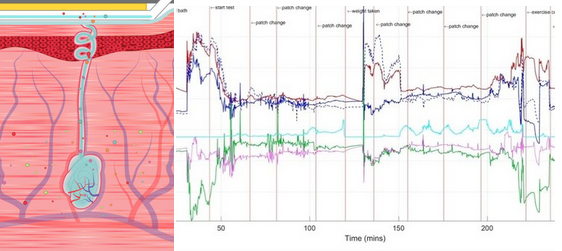
Smart wearable devices primarily help us understand and monitor our physical condition by collecting physiological data from the human body. From simple step counting to traditional metrics such as heart rate and body temperature, and now to sweat analysis, smart wearables are beginning to track an increasing array of human physiological parameters. Do not underestimate sweat; beyond salt, a single drop contains various scientific insights into our bodily functions, including hydration levels, electrolyte balance, lactate levels, blood glucose levels, and calorie expenditure. Researchers believe that by measuring various electrolytes and metabolites in sweat, and combining these with user data such as body temperature and heart rate, it is possible to more accurately analyze an individual’s physiological status, determine whether they are experiencing fatigue or dehydration, and provide timely alerts to prevent overexertion during exercise.
Currently, most smart devices designed for sweat analysis have yet to achieve commercialization. Key challenges requiring breakthroughs include detection sensitivity, device size, integration with the human body, and practicality. While using bodily fluids to assess health status is common—with hospital laboratory tests relying heavily on various types of bodily fluids—sweat, despite carrying abundant biological information, has not yet been widely adopted. Major research institutions are striving to make further advancements in sweat-sensing technology to enable non-invasive diagnostics.
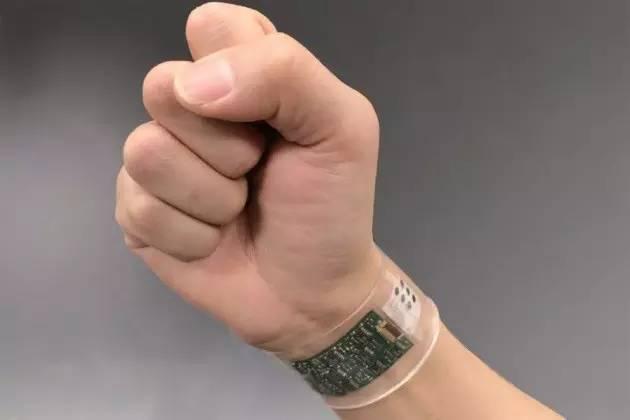
This August, Gao Wei, a postdoctoral fellow at the University of California, Berkeley, was named to MIT Technology Review’s annual list of Innovators Under 35 for his development of fully flexible sweat sensors. The Javey Research Laboratory, led by Gao and his advisor Ali Javey, recognized the potential of sweat as a medium for non-invasive diagnostics, given its diverse chemical composition and ease of collection. In the initial version of their sweat sensor, they designed five detection parameters: glucose, lactate, sodium ions, potassium ions, and skin surface temperature. They have since continued to expand the range of analytes to include heavy metals and chloride ions. These specific biomarkers offer insights into the body’s physiological state. According to Gao, it is well-established in medicine that sodium levels in blood can indicate dehydration, chloride levels can be used to diagnose cystic fibrosis, and glucose levels—correlated with blood glucose—can help monitor diabetes.
In addition to university research institutions decoding the secrets of sweat, numerous startups have launched or are preparing to launch sweat-sensing devices, attracting significant investor interest.
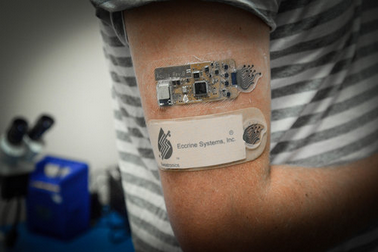
Eccrine Systems is a privately held company founded in 2013 and headquartered in Cincinnati, Ohio. The company is dedicated to improving human health, safety, and work efficiency through sweat sensor technology. Its commercialized technologies and intellectual property originate from the University of Cincinnati and are supported by CincyTech. On October 8, the company announced the completion of a $5.5 million Series A financing round. Robert Beech, Co-founder and CEO of Eccrine Systems, stated at the press conference, “Sweat is the best source for obtaining molecular and physiological data through non-invasive means. In the medical community, such data has traditionally been derived from blood. The application of sweat analysis has often been limited by the lack of real-time data during daily human activities, including work, sleep, and recreation. Today, advances in microfluidics, nanotechnology, microelectronics, and energy management have made it possible to monitor sweat molecules in real time through sensing systems.”
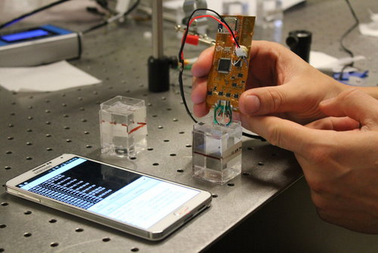
The U.S. Air Force is also highly interested in sweat research, providing Eccrine Systems with $4 million in funding for a five-year research program aimed at real-time physiological monitoring and functional enhancement training for ground troops and pilots. Air Force researchers seek a reliable method to conduct molecular-level, quantitative analysis of the body without relying on blood samples. Researcher Joshua Hagen stated that the laboratory has already conducted multiple prototype tests among U.S. Special Forces units, which were among the earliest adopters of this technology.
Of course, sweat can also help researchers study the physiological performance of pilots. For instance, although the U.S. Department of Defense has collected extensive data from its multi-billion-dollar fighter jets (such as the F-22 and F-35), these data provide limited effective information for revealing the physiological status of pilots under high stress in aircraft. Measuring cortisol, a component in sweat, is currently a key research focus for Eccrine Systems. Cortisol is a hormone that serves as a critical biomarker for stress in the body. Assessing dehydration status and detecting cortisol are the primary initial objectives of sweat monitoring for pilots, which will be implemented over the next two to four years.
Funding Status
Eccrine was founded by Jacob Heikenfeld, a professor at the University of Cincinnati, in collaboration with the U.S. Air Force. The company’s chairman is a former Navy member, while another executive is a former Air Force pilot. Of its $5.5 million Series A financing round, $4 million came from the U.S. Air Force Research Laboratory to support the development of non-invasive sensing systems for monitoring specific molecular biomarkers in sweat. CincyTech and other investors also participated in this funding round.
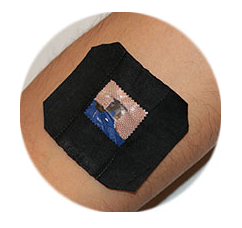
Graphwear, hailing from the University City Science Center in Philadelphia, USA, was incubated by the renowned DreamIt Ventures and specializes in the development of smart wearable devices. Its first product, SweatSmart, leverages real-time sweat analysis to monitor dehydration, detect glucose levels, and assess muscle endurance. In October, Graphwear partnered with the National Football League (NFL)—which has also invested in Kenzen, another company specializing in smart sweat-sensing devices—to analyze athletes’ sweat glucose and electrolyte levels, thereby prompting timely fluid replenishment. Gudibande, CEO of Graphwear, stated, “Professional athletes will help us validate our technology, and we need to collect more data to enhance product stability.” Graphwear plans to launch a beta version for athletes next May, with a commercial release scheduled for 2018. The company also intends to introduce a new product that tracks blood glucose levels through sweat, targeting individuals with diabetes. This product will be a Class II medical device requiring FDA clearance.
SweatSmart replaces silicon-based sensors with graphene. Due to its flexibility and ability to be bent arbitrarily, graphene offers greater comfort when worn on the human body. Furthermore, graphene sensors are highly sensitive to bioelectric signals, enabling the detection of subtle changes in physiological signs. In terms of power consumption, graphene batteries will also deliver a breakthrough in battery life. Although graphene has been discovered for nearly a decade, GraphWear previously required 23 processing steps to fabricate graphene sensors, making mass production seemingly impossible and driving costs exceptionally high. The estimated launch price for the first-generation product was $60,000.
Funding Status
Received $50,000 in seed funding; the investor is unknown.
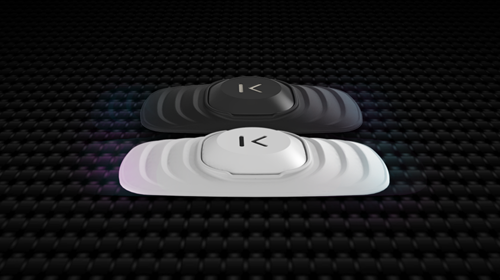
Kenzen is a company specializing in the research and development of smart sweat-sensing devices. Its products have undergone two iterations, with the current model being the ECHO Smart Patch. This device can monitor the composition of human sweat in real time, requiring only minimal sweat droplets to perform analysis of key biomarkers. In addition to water, it analyzes electrolytes such as sodium, metabolites like glucose, as well as various other molecules and proteins. Using the ECHO Smart Patch not only alerts users when they need to rehydrate but also provides further insights into deficiencies in vitamins and minerals. In the future, it will also help users balance their sugar intake, preventing excessive fat accumulation in the body.
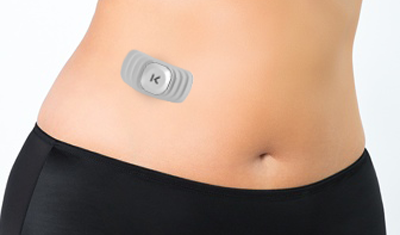
This device is compact, low-power, and designed to adhere closely to the skin. It continuously monitors changes in the chemical composition of sweat and transmits this data to smartphones via Bluetooth. Consequently, it is highly likely to be integrated into athletic apparel in the future, evolving into what is known as sweat-sensing smart clothing.
Funding Status
In February 2016, Kenzen secured $50,000 in seed funding led by the National Football League (NFL), with participation from Connectivity Capital Partners and Kii Corporation.
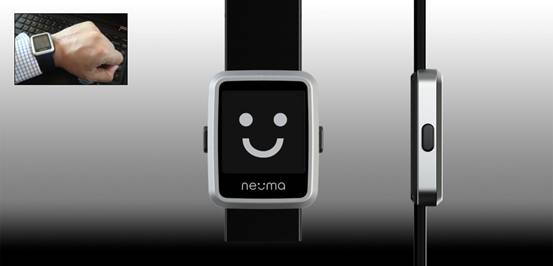
Neumitra was founded in 2009 by Robert Goldberg, a neuroscientist and MIT graduate. Its other two co-founders are computer algorithm engineer Safiyy Momen and biotechnologist Anand Yadav. The company is headquartered in Boston, USA. Neumitra develops smart wearable devices dedicated to helping people measure and manage the impact of daily activities on brain health and executive function. The smart devices launched by Neumitra are designed for stress perception. When under increased stress, individuals often experience unexplained shortness of breath and accelerated heart rate. Neumitra’s devices can detect increases in sweat volume and body temperature caused by stress or excitement, and relay this information to the wearer.
Neumitra has launched three products—wearable devices, desktop computing systems, and a mobile app—that integrate data to manage brain health and assess its impact on daily life. Currently, the Neuma wrist-worn sensor is priced at $1,500. Sweat glands and stress responses are regulated by the same region of the nervous system; therefore, by measuring the electrical conductivity of the skin on the fingers, palms, and soles of the feet, we can partially gauge the body’s current stress levels. Generally, greater sweating leads to higher skin conductance, which corresponds to elevated brain stress levels. Thus, skin conductance can serve as an indicator for measuring brain stress.
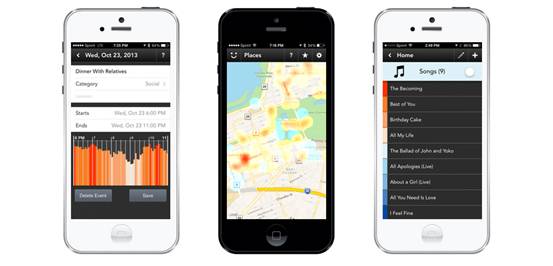
Using Neumitra is simple: users wear the wrist-worn Neuma sensor, which accurately and continuously measures autonomic nervous system activity across various daily life scenarios. The temporal data collected by Neuma—such as events, locations, and activities—is then analyzed via a companion mobile app to identify spontaneously occurring symptoms and determine their underlying causes. When the sensor detects signs of impending stress, it alerts the wearer through vibration, enabling proactive preparation and helping them avoid locations and situations that may trigger anxiety.
Financing Status
In October 2010, the company secured a seed round of financing with an undisclosed amount. In June 2012, Rock Health invested $20,000 in its seed round. In August 2015, it received an angel round investment of an undisclosed amount from TechNexus EMERGE Accelerator.