

Not Rumor! Laobaixing Pharmacy Officially Clarifies: No Abandonment of B2C, Committed to Developing Both B2C and O2O
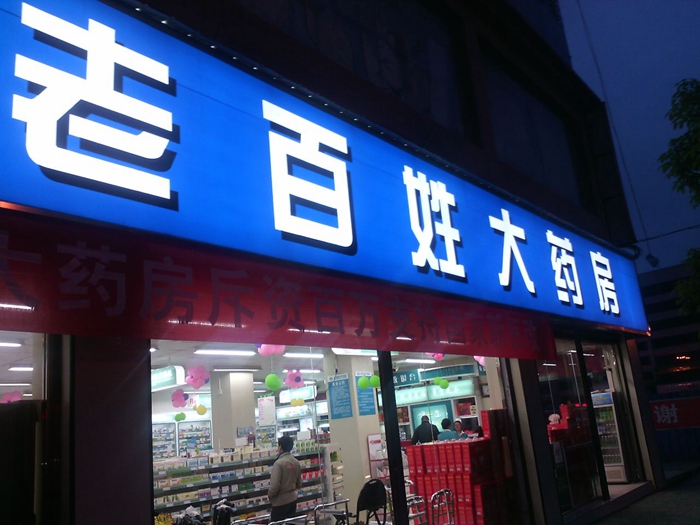
On the evening of October 19, social media feeds were flooded with the headline: “Laobaixing Pharmacy’s E-commerce Team Dissolved! Prospects for Online Prescription Drug Sales in Doubt!” Within just a few hours, WeChat platforms and various websites reported extensively on this incident.
In October 2001, Laobaixing Pharmacy was officially established in Changsha, Hunan Province. It took only 15 years for the company to grow from a local, single-store private pharmacy into a nationwide chain pharmacy.
Currently, Laobaixing Pharmacy has successfully developed 15 provincial-level markets, including Hunan, Shaanxi, Zhejiang, Jiangxi, Guangxi, Shandong, Hebei, Guangdong, Tianjin, Shanghai, Hubei, Henan, Beijing, Jiangsu, and Anhui. It operates more than 600 large and medium-sized stores, with a business area exceeding 100,000 square meters. The company boasts total assets of nearly RMB 1 billion, net assets of nearly RMB 500 million, annual sales revenue of nearly RMB 3.7 billion, and employs over 18,000 staff members.
Laobaixing Pharmacy, as the industry leader in chain drugstores, has drawn significant attention to every adjustment it makes, whether shifting from offline to online operations or expanding into other ancillary services.
Although Laobaixing Pharmacy was established in October 2001, it did not obtain the qualification for online drug trading until 2009.
In 2012, Laobaixing Pharmacy began exploring the online pharmacy sector by partnering with Japanese e-commerce companies to launch an online pharmacy.
In March of the same year, Laobaixing Pharmacy announced a partnership with Kenko, Japan’s largest health supplement retailer, to establish an online pharmacy. The two parties founded Hangzhou Laobaixing Youkang Trading Co., Ltd. in Hangzhou. According to Laobaixing’s pre-IPO prospectus, Laobaixing Pharmacy injected RMB 6.6 million into the joint venture, holding a 55% equity stake. However, the joint venture encountered numerous challenges in resource allocation, cultural differences, and operational philosophies. After one year of operation, it ultimately failed due to issues related to business philosophy and team management.
After its initial foray into e-commerce ended in failure, Laobaixing Pharmacy did not give up; instead, it swiftly moved to rebuild its online pharmacy sales operations. In December 2013, Laobaixing E-Commerce Co., Ltd. was established to independently operate the company’s e-commerce initiatives. Reportedly, Laobaixing E-Commerce Co., Ltd. has a registered capital of RMB 12 million, with Laobaixing Pharmacy holding an 89% stake. The online pharmacy went live in January 2014, offering more than 10,000 products spanning pharmaceuticals, health supplements, medical devices, adult products, and cosmetics. According to the prospectus, Laobaixing Pharmacy reported operating revenue of RMB 3.3 billion and net profit of RMB 190 million in 2013.
Just as online pharmacies were gradually moving toward normal operations, in May 2014, the China Food and Drug Administration (CFDA) released the Administrative Measures for the Supervision and Management of Online Food and Drug Operations. This policy clearly signaled an impending opening of the market for online drug sales. However, Laobaixing Pharmacy was evidently unprepared to cope with large-scale competition. Therefore, Xie Zilong, Chairman of Laobaixing Pharmacy, voiced strong opposition, arguing that while online pharmacies are subject to local jurisdiction, their sales scope covers the entire country, which would significantly increase regulatory difficulty and workload. He further warned that lowering entry requirements for online pharmacies could lead to a proliferation of counterfeit and substandard drugs online. His stance was interpreted by outside observers as a lack of confidence on the part of Laobaixing Pharmacy and an attempt to monopolize the online market.
Due to the slow progress in implementing the "Measures for the Supervision and Administration of Online Food and Drug Operations," major pharmacy chains are nonetheless accelerating their online expansion. Yixintang, which went public in 2014, explicitly stated in its third-quarter report that it would invest RMB 120 million in e-commerce. Jointown Pharmaceutical announced its focus on O2O (Online-to-Offline) services. In 2014, Tai'an Tang acquired Kangaiduo, one of China's top three online pharmacies, for RMB 350 million. Nepstar partnered with Alipay to develop its O2O strategy. These moves collectively demonstrate the determination of traditional pharmaceutical retailers to enter the e-commerce sector.
Laobaixing Pharmacy was not to be outdone, comprehensively beginning its O2O layout. In September 2014, Laobaixing Pharmacy partnered with Chunyu Doctor to launch a “remote consultation + mobile medication purchase” service. In November 2014, Laobaixing Pharmacy joined forces with Chunyu Doctor and Yitijiankang to establish a smart wearables zone on the Laobaixing Online Pharmacy, entering the smart wearables market. Users can purchase and use related products from Laobaixing Online Pharmacy to monitor vital signs, then conduct online self-checks or consultations on the Chunyu Doctor platform based on the uploaded monitoring results, and finally return to Laobaixing Online Pharmacy to purchase medications according to the online doctors’ guidance. The entire closed-loop system is relatively complete.
During the 2014 “Double 11” shopping festival, Laobaixing Pharmacy Group deployed more than 1,000 stores and stocked RMB 100 million worth of inventory to participate in Tmall’s Double 11 campaign, actively responding to the major e-commerce challenge. However, according to data released by Tmall’s Health Pavilion, the top 10 merchants in the pharmaceutical and health category in 2014 were: Qilekang Pharmacy, Kangaiduo Pharmacy, Neptunus Drugstore, Huayuan Pharmacy, Baixiu Pharmacy, Deshengtang Pharmacy, Comvita, Yihao Pharmacy, Conba, and Harbin Pharmaceutical Group. Laobaixing Pharmacy was notably absent from the list, indicating that it had failed to win over online consumers.
Until March 25, 2016, Laobaixing released its first annual report since its listing in April 2015. The company’s operating revenue for 2015 was RMB 4.568 billion, with a net profit of RMB 241 million. Of this, e-commerce business revenue amounted to RMB 68 million, accounting for 1.49% of total revenue. On August 18, 2016, Laobaixing published its financial report for the first half of 2016. During the first half of the year, its revenue reached RMB 2.769 billion, representing a year-on-year increase of 32.63%. Additionally, “B2C platform revenue reached nearly RMB 50 million, and the monthly average number of visits to the e-commerce platform totaled 604,000.” This figure remains significantly lower than the annual sales volumes of leading pharmaceutical e-commerce companies.
In fact, large chain pharmacies in China have generally adopted a dual-pronged “B2C + O2O” strategy in their e-commerce endeavors. On one hand, they are actively collaborating with third-party platforms; on the other, they are transitioning towards interconnected and intelligent pharmacy models. By making substantial investments to integrate online and offline resources, these companies aim to maximize the advantages of their physical networks and services.
However, Laobaixing Pharmacy has not delivered impressive results on its path of transformation. According to insiders, in August this year, the company’s B2C e-commerce platform was fined over 40,000 yuan for selling prescription drugs. The following month, it was summoned for talks by the Drug Administration Bureau for the same reason. Previously, Laobaixing’s B2C e-commerce platform had signed an agreement pledging not to sell prescription drugs on online platforms.
It is worth noting that most pharmaceutical e-commerce platforms and other independent platforms currently sell prescription drugs, which has become an unwritten rule in the industry. The experience of Laobaixing’s B2C e-commerce team undoubtedly serves as a wake-up call for the entire pharmaceutical e-commerce sector.
LBX Pharmacy has successively faced penalties for selling prescription drugs, the pains of e-commerce transformation, and then escalating conflicts among its senior executives. It is truly a case of misfortunes never coming singly.
In January this year, Shi Wenlu, the former CEO of Laobaixing Online Pharmacy, officially stepped down and was succeeded by Wu Yong, the former head of Laobaixing’s O2O business. After a two-month transition period, Laobaixing Online Pharmacy ultimately brought in an external hire, Xu Xiangdong, as its new leader. (Xu Xiangdong is the former Executive Deputy General Manager of Qi Lekang Baiyun Internet Hospital.) According to insiders, internal conflicts within Laobaixing Pharmacy’s e-commerce division had long been intensifying. The primary conflict centered on interest disputes between CEO Xu Xiangdong and Deputy General Manager Li Bo. The escalating tensions have led to senior executive departures, which have become commonplace across the industry. Reports indicate that Li Bo was recently forced to leave the e-commerce team and transfer to the O2O team. By chance, Li Bo managed to avoid being laid off in this turmoil.
In response to the shutdown of its B2B business, Laobaixing Pharmacy issued the following statement to reporters:
“Laobaixing E-commerce maintains normal operations, reasonably advancing pilot innovations in its online business model while fully complying with national laws and regulations. It is also continuously exploring the integration of offline and online businesses, leveraging Laobaixing’s extensive offline presence to deepen strategic collaborations with third-party partners, thereby strengthening and upgrading Laobaixing’s distribution channels and professional services.”
The personnel adjustments involved were determined by the company’s reasonable arrangements and business needs. Claims of fractured interpersonal relationships are entirely unfounded. The scope of business management was clearly defined in the early division of labor: Xu Xiangdong was responsible for e-commerce (including third-party platforms and vertical official websites), while Mr. Li oversaw O2O and digital store operations. There were no business conflicts or disagreements whatsoever. Mr. Xu’s decision to leave Laobaixing Pharmacy was a carefully considered personal choice. We respect his decision and will continue to advance and optimize the business models he spearheaded, thereby meeting consumers’ demand for pharmaceutical purchases across multiple channels and scenarios.
On July 28 this year, the National Medical Products Administration (NMPA) issued the policy titled “Conclusion of the Pilot Program for Online Retail of Pharmaceuticals by Third-Party Internet Platforms.” Against this regulatory backdrop, Laobaixing Pharmacy has reallocated its resources and optimized the personnel structure of its existing e-commerce team to mitigate risks arising from the policy impact. Meanwhile, adhering strictly to national laws and regulations, Laobaixing Pharmacy has been continuously advancing the integration of offline store operations with online information systems to meet multi-scenario medication purchase demands. The company is vigorously expanding digital and networked operational innovations in its physical stores, maximizing the complementary advantages of integrated resources, and implementing innovative models in new e-commerce and new retail.
For Lao Bai Xing Pharmacy, this may be an “earthquake,” but it could also mark a rebirth!