

Dawn Breaks: University of Utah's Groundbreaking Reform in Doctor-Patient Relationships through Public Patient Reviews
China’s healthcare system faces numerous challenges, particularly strained doctor-patient relationships. However, it is crucial to recognize that we still have time to address these issues rationally, leaving considerable room for strategic intervention. Moreover, the pitfalls and success stories encountered by developed countries in their healthcare development can serve as valuable lessons for us. This coincides with a period of explosive growth in the internet and a series of emerging technologies. If we choose the right path,There is room for improvement. VCBeat (WeChat: vcbeat) explores this for you.a momentInnovative Initiatives of the University of Utah Health Care System: Insights for Us
Salt Lake City—Doctors in this mountain city are racing to find solutions to transform the nationwide doctor-patient relationship! They are not seeking answers in laboratories or on operating tables, but rather by asking patients directly via tablets: What do you hope to gain from your healthcare?
A father with a severe knee injury may wish to dance at his daughter’s wedding. A mother suffering from back pain may simply hope to return to work. This may sound simple, yet it represents the most fundamental goal of the healthcare system. Traditionally, the healthcare system has often defined success by meeting technical standards and government quality metrics—rather than by achieving patients’ own goals.
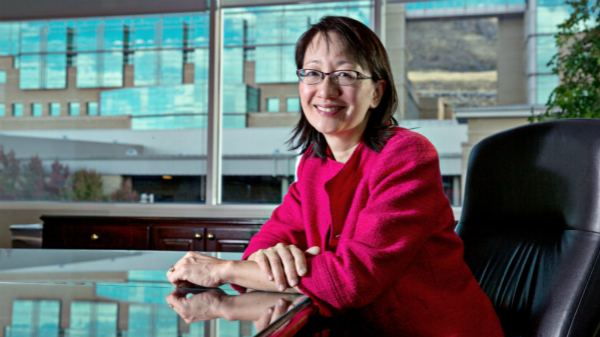
Dr. Vivian Lee has been leading the University of Utah’s healthcare system in challenging traditional medical practices and disrupting the relationship between physicians and patients.
“That is my ideal,” said Dr. Vivian Lee, CEO of the University of Utah Health system, which comprises four hospitals, a cancer institute, and ten community clinics. “We are now defining the value of healthcare based on patients’ goals.”
Lee has been striving to transform the healthcare system. Over the past decade, her medical system has repeatedly challenged conventional healthcare practices and norms, redefining the relationship between physicians and patients.
At the end of 2012, the University of Utah Health Care system became the first hospital system in the United States to post patient reviews of physicians online verbatim. On the hospital’s official website, patients can criticize specific physicians for rudeness, haste, or frequent tardiness—and rate them using a five-star system. (They can also offer ample praise.)
Two years later, Dr. Li’s team built a database twice the size of a football field to track patient costs within the healthcare system down to the cent. This was unheard of in the healthcare industry, as most hospitals merely provide patients with rough estimates of their actual expenses for procedures such as knee replacements, childbirth, or the diagnosis of chest pain in urgent care visits.
However, Dr. Li stated that the next step in building the database—having patients assess whether their healthcare was successful—is the most critical issue. At the same time, this represents a significant commitment from physicians to their patients.
Physicians within the University of Utah Health system collect data from patients to understand how their conditions affect daily life. Reports generated from this data are promptly uploaded into electronic health records, enabling every physician involved in the patient’s care to discuss the patient’s goals and develop plans to achieve them. However, this approach, known for its reliance on patient-reported outcomes (PROs) to significantly improve healthcare effectiveness, remains controversial.
Lee is someone you definitely don’t want to bet against.
Lee grew up in Oklahoma, where she was one of the few Asian children. Her parents worked as university professors there. Lee stated that she had no grand ambitions and did not take any Advanced Placement (AP) courses. Owing to her aptitude for mathematics and strong test-taking skills, she was ultimately admitted to Harvard University.
When some students at the University of Cambridge asked her about Oklahoma, she responded with stories of “overthrowing the old order,” and her classmates believed them.
Dr. Li was awarded the Rhodes Scholarship to the University of Oxford, completed her studies at Harvard Medical School, and became one of the few female surgical residents at Duke University. She still vividly remembers her experiences during the first few days in Durham, North Carolina, when a woman handed out hospital uniforms in the hospital laundry room.
“She handed me a white petticoat—very stiff,” she recalled. “It could almost stand up on its own. I said, ‘Can you give me a pair of trousers?’ The woman replied, ‘Honey, we don’t have women’s trousers. If you want some, you can go to the shopping mall and buy a pair.’”
Lee went to the shopping mall and bought a pair of pants.
At NYU Langone Medical Center, she chose not to remain in surgery but instead transferred to the Department of Radiology, where she later advanced to a managerial position overseeing research.
In July 2011, Dr. Li assumed the top executive position at the University of Utah, where she oversaw a budget of up to $3.3 billion. In addition to hospitals and clinics, the system comprised an insurance plan and five academic colleges, including the School of Medicine.
At 50, Lee is slender, with bangs swept across her forehead, radiating energy, enthusiasm, and optimism. Few hospital administrators can as effortlessly shed medical jargon to share engaging anecdotes as she does. When emphasizing a point, she lowers her glasses to make direct eye contact, as if dispelling their doubts.
Her healthcare system’s flagship location in Salt Lake City seamlessly blends contemporary and traditional design elements. The gleaming exterior leads directly into a soaring lobby, where a pianist performs in one corner. Adjacent to the lobby is a bustling Starbucks. The scenic mountain views outside help visitors forget the noise of cars and ambulances at the entrance.
Lee’s work at the hospital is demanding, but her life becomes even busier after she returns home. She and her husband have four daughters, aged 8, 10, 12, and 14.
To ensure a high-quality family life, she organizes her time meticulously. Lee often cooks large portions of fettuccine and curry rice. She maintains a “birthday gift cabinet” stocked with books, luminous watches, and rolls of stickers, which are given as presents when her children attend parties. There is no television in the room, allowing them to spend family time interacting face-to-face.
“I can’t guarantee that their socks will be in matching pairs every day, or that their rooms will be kept spotless,” Lee said of her daughters. “I just want to spend some quality time with them and enjoy being together.”
Lee works 12 to 14 hours a day. Her schedule is packed with various meetings and urgent emails. If she has any free time in the evening, she reads materials that interest her. She is currently reading Drive by Daniel Pink. The book focuses on the art of motivation. It argues that some employees, such as those working in healthcare institutions, are inherently self-motivated and do not require aggressive, top-down management.
This is precisely the belief that Lee has long held. Her management approach involves setting goals and then empowering employees to devise ways to achieve them. She is also highly receptive to incorporating her employees’ perspectives.
For example, at one of her hospitals, some doctors happened to come up with an idea to establish a nursery in the obstetrics ward, so that older children could play inside while their parents focused on caring for their newborns.
"After her staff presented the idea to her, she immediately jumped up from her office chair and drafted an outline for the nursery. 'The employees who run the clinic used a weekend and a plot of land to start laying bricks just like that,' she said. 'I really appreciate this approach. They came up with the idea entirely on their own.'"

University of Utah Hospital in Salt Lake City, with its gleaming facade leading to a large atrium, is located next to the busiest Starbucks in Utah.
To date, this management approach has proven highly effective.
Last month, the University of Utah Health system topped the annual rankings of renowned university medical centers for quality, surpassing Minnesota’s Mayo Clinic, California’s Cedars-Sinai Medical Center, and several other leading institutions.
Lee’s work has also attracted widespread attention. Sylvia Mathews Burwell, a professor at Harvard University and the U.S. Secretary of Health and Human Services, visited to study the new cost accounting practices. Hospitals across China have begun to replicate her approach to improve physician performance and enhance patient satisfaction.
Dr. Thomas Lee, Chief Medical Officer of Press Ganey, oversees patient surveys for the University of Utah and other hospitals. He still recalls his reaction when Vivian Lee told him she intended to post patient reviews online: “I said, ‘Are you kidding me?’”
“I truly can’t believe she actually did it, but at the same time, I must admit that this move was indeed excellent,” said Thomas Lee, who is not related to Vivian Lee. “We have begun to assess the value of healthcare based on patient goals,” stated Dr. Vivian Lee of the University of Utah Health Care Center.The Changes Brought by Lee.
Within a year, Atlanta’s Piedmont Healthcare and Wake Forest Baptist in North Carolina also began publishing patient reviews. Other healthcare institutions followed suit, including Pennsylvania’s Geisinger Health System, Boston’s Brigham and Women’s Hospital, and the Cleveland Clinic.
“Before the University of Utah published patient reviews, we did not have such a high level of transparency,” said Dr. Adrienne Boissy, Chief Patient Experience Officer at Cleveland Clinic. “Posting patient reviews online can lead to certain behavioral changes among clinicians. This was particularly striking in a market that did not initially endorse this viewpoint.”
Posting patient reviews online is not easy. Some doctors consider it a bad idea that could damage their reputation.
“I remember my phone becoming scorching hot from the constant calls,” said Chrissy Daniels, Chief Strategy Officer at University of Utah Health. She had received angry calls from physicians. “I felt so ashamed I wanted to crawl under the table.”
At the staff meeting, Lee listened to everyone’s complaints. Her response was straightforward: “We need to develop thicker skin.” Since patient reviews were first posted online, traffic to the University of Utah’s official website has increased by 127%. Moreover, physicians’ rankings in national patient satisfaction surveys have also improved.
“No one likes negative feedback,” says Dr. Eric Volckmann, a bariatric surgeon. However, he cannot ignore such feedback: when patients complain about his tardiness, he can try to improve the situation—or at least explain the reasons for the delay. “Negative feedback prompts you to examine your own behavior and consider how to improve it,” he says.
The patient review method has garnered widespread attention across China. However, Lee stated that this decision is merely a prelude to more fundamental changes in the future. She aims to restructure the relationship between doctors and patients in hospitals, giving medical costs a greater weight in their dynamic.
The problem at the University of Utah—and indeed at hospitals across China—is that no one knows the actual cost required to provide patient care. Most hospitals calculate the average cost per patient and provide only a rough estimate of medical expenses. However, such data fails to reveal how each cost component is utilized, where waste occurs, or how these expenditures can be reduced without compromising the quality of care.
In 2012, Lee convened a meeting to discuss how to track healthcare costs at the University of Utah Hospital. She quickly formulated a plan: she leased office space, built an office with cubicles, and assembled a team comprising the hospital’s top accountants and data management professionals.
She divided them according to their job responsibilities and gave them six months to find a way to track the medical expenses of the University of Utah Hospital. Late every night, she brought them pizza for a late-night snack.
Dr. Li is closely monitoring this project, as is everyone else in the healthcare system. When the data processing team requires assistance from clinical staff, they are readily available to help.
“All we have to say is, ‘We need you to come to the Research Park,’ and they’ll be right over,” said Charlton Park, Chief Analytics Officer at the University of Utah. “The hospital is well aware of this project and knows that Dr. Li is sponsoring it. … No one wants to be an obstacle.”
Ultimately, a massive database was generated: over 200 million information strings, each as wide as a football field.
It records the cost of every interaction with patients: resource utilization, medication dispensing, and physician consultations. For instance, the team determined that the healthcare system incurs a cost of 82 cents per minute in the emergency room and $1.43 per minute in the intensive care unit.
Approximately four months later, Dr. Li presented her team’s findings at a conference sponsored by the Johnson Foundation. Not a particularly charismatic speaker, she simply showcased her novel data tool on a small panel in the corner.
However, her remarks sparked considerable uproar. The discussion was quickly moved to another, larger conference room nearby. “All these senior executives were saying, ‘Wow, I can’t believe you actually did it,’” said Dr. Li. Many stated that they had also attempted to do the same but were ultimately told it was impossible.
“It’s really so embarrassing,” she said. “It has drawn too much unexpected attention.”
Once established, the database was used to examine how different physicians managed care for similar patients.
Some practices have begun to change.
For example, some surgeons performing laparoscopic hernia repair have noted significant cost variations, ranging from $700 to $1,800. Further investigation revealed that some surgeons used a $400 balloon dissector, which did not positively impact outcomes. This finding has the potential to save the healthcare system hundreds of thousands of dollars annually.
Meanwhile, orthopedic surgeons observed that mobilizing patients out of bed after joint replacement surgery yielded significant benefits. This finding led to staffing adjustments. In particular, physical therapists working from 8:00 a.m. to 5:00 p.m. were given the opportunity to evaluate patients scheduled for later surgeries. A substantial proportion of patients were able to return home rather than remain in skilled nursing facilities, thereby reducing the 30-day readmission rate.
The hospital has also developed a new treatment protocol for patients with sepsis. Physicians began reviewing data from infected patients to identify key information that had previously been overlooked.
“This is astonishing,” said resident physician Robert Pendleton, whose work focuses on preventing infections from progressing to sepsis.
Physicians developed a composite index to track infection characteristics, whereby nursing staff receive automatic alerts when a patient’s score reaches or exceeds 7 on a 1–10 scale. To date, the hospital has reduced sepsis mortality by 4% and significantly improved the timeliness of treatment, cutting the time from 8 hours to 4 hours.
Lee stated that the next step is to engage more patients directly in their medical care—as well as in discussions regarding their care expectations. The hospital plans to incorporate this information into its existing database, covering quality metrics established by both physicians and the federal government.
Dr. Li refers to this outcome metric as the “Perfect Healthcare Index,” which is used to assess which goals have been achieved. Was the patient free from infection? Did she regain mobility? Is she able to play with her children?
“Once these goals are achieved, the hospital will redesign its medical programs to make them more affordable—leveraging evidence of improved performance to compete with the nation’s top healthcare institutions. ‘Then, you can steer the market in the direction we all hope for,’ said Lee. ‘In the future, we expect healthcare technology to become more advanced and of higher quality.’”