

Ambitious Doctors Tackle the Terrifying Aftermath of ICU: A New Approach to Combat Post-Intensive Care Syndrome
Intensive Care Unit (ICU)ICU), also known as the Intensive Care Unit (ICU). Patients admitted to the ICU are generally those at risk of critical illness. The ICU is equipped with various emergency resuscitation equipment and monitoring devices, enabling immediate rescue and treatment should a patient's condition deteriorate. However, many people undergoFollowing ICU resuscitation, severe“Post-Intensive Care Syndrome,” which can even impact daily life. VCBeat (WeChat: vcbeat) has compiled for you the U.S.Explore the latest practices of medical professors and emergency care specialists at Vanderbilt University Medical Center in Nashville, Tennessee, to see how they ensure patient safety and mental well-being.
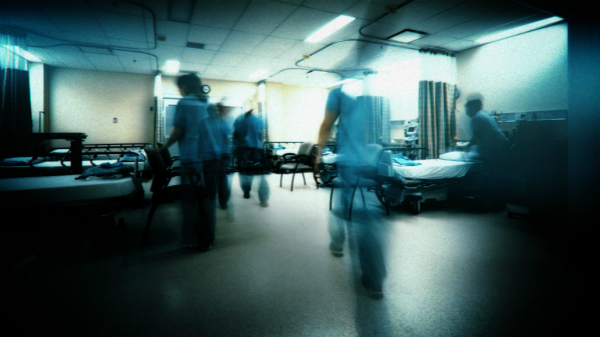
These terrifying, violent hallucinations have long plagued David Jones, now 39 years old. He spent six weeks in the intensive care unit at Northwestern Memorial Hospital in Chicago but was discharged a few months later. He felt he was on the verge of losing his mind and experienced profound loneliness.
But in fact, he is not.
Many people have recognized the prevalence of “post-intensive care syndrome,” and numerous doctors and nurses across China are spearheading an ambitious campaign to modify certain treatment practices in intensive care units (ICUs) in order to reduce “ICU delirium” (a manifestation of post-intensive care syndrome), which can involve sudden and severe confusion, including hallucinations, delusions, and paranoia.
Approximately one-third to over 80% of intensive care unit (ICU) patients experience delirium during their hospital stay. Additionally, one-quarter of ICU patients develop post-traumatic stress disorder (PTSD) after discharge, a prevalence rate comparable to that observed among veterans and rape survivors. ICU patients who have experienced delirium are less likely to resume normal life and are at greater risk of long-term cognitive impairment, particularly if their condition deteriorates.
“This is a huge and pervasive public health problem,” said Dr. Wes Ely, a professor of medicine and critical care specialist at Vanderbilt University Medical Center in Nashville, Tennessee. He was one of the first experts to identify this “intensive care unit syndrome.”
Dr. Ely has been advocating nationwide for all medical personnel, including his colleagues, to reduce the use of sedatives and ventilators in patients with intensive care syndrome. Simultaneously, he encourages patients to recover quickly from both physical and psychological ailments, thereby reducing their risk of developing delirium. Dr. Ely’s speech highlighted a significant issue: many patients are still talking and texting while fully intubated, which severely compromises the level of sedation required by traditional treatment protocols. He also noted that many patients, despite suffering from severe injuries, walk through hospital lobbies without seeking medical attention.
“The Liberation Movement of the ICU” is a socially organized initiative dedicated to the study of critical care medicine, operating as a professional organization composed of ICU clinicians, with Dr. Yili serving as co-chair. If successful, this movement will improve surgical outcomes and reduce hospital costs.
However, this is a difficult thing to achieve.
Despite its significant clinical impact, intensive care syndrome is frequently overlooked. The intense, noisy, and fast-paced nature of treatment in the intensive care unit often leads to this condition being neglected.
“One patient may require reintubation, while another may have already gone into shock; the intensive care unit is simply too busy,” said Dr. Matt Aldrich, an anesthesiologist who has long advocated for the ICU Liberation movement and practices at the UCLA Medical Center in Los Angeles, California, where he oversees adult critical care matters.
Physicians strive to preserve patients’ lives, yet this endeavor inevitably comes at a cost. Post-Intensive Care Syndrome (PICS) represents a new set of challenges that emerge after successful resuscitation: today’s intensive care units (ICUs) can save patients whose survival would have been unimaginable even five, ten, or twenty years ago. By effectively managing conditions such as sepsis and acute respiratory distress syndrome (ARDS), ICUs have created a large population of “ICU survivors.” While these individuals are alive, they often suffer significant psychological and mental health impairments.
“We tend to call this ICU psychosis,” says Justin DiLibero, a clinical nurse specialist at Beth Israel Deaconess Medical Center in Boston who has been working to reduce the incidence of neuropsychiatric complications among critically ill patients. “We always assumed that patients would inevitably improve once they recovered and were discharged home. However, we are now gradually recognizing that after being hospitalized, leaving the intensive care unit, and returning home, some patients may become completely different people.”
Family members of the patient are often the first to notice that their closest loved one no longer seems like themselves. The patient may exhibit paranoid behavior, display uncharacteristic anger, or engage in seemingly foolish actions, such as attempting to organize large-scale events while being connected to multiple medical tubes and devices.
Although the exact cause of intensive care syndrome is not yet fully understood, risk factors appear to include inadequate cerebral oxygenation due to impaired ventilation, which reduces oxygen delivery to the brain. Additionally, reduced sedation rotation, particularly involving benzodiazepines, may have neurotoxic effects. Patients who are immobilized or physically restrained seem more prone to psychological stress. Furthermore, sleep deprivation, compounded by noisy alarms and the constant presence of nurses and doctors moving in and out while issuing various instructions, contributes to this condition.
The effects of intensive care syndrome can persist for a very long time.
There are far too many such examples.
“Whenever I go home, I experience cognitive issues. It’s truly terrible panic; everything feels horrifying,” said Jones. “I feel like I’ve endured months of torment. I’m afraid to sleep. I wake up shivering uncontrollably and drenched in cold sweat.”
The above account comes from Jones, who was hospitalized in 2012 with stomach pain caused by acute necrotizing pancreatitis. His pancreas was undergoing autodigestion, while his other organs also began to necrose. He received essential life support, including mechanical ventilation and dialysis via intubation. Nutritional depletion caused Jones to lose 70 pounds out of his initial body weight of 260 pounds. On the ninth day of his hospitalization, doctors gathered his family to bid him farewell.
However, thanks to the surgery, extensive antibiotic treatment, and the meticulous care provided by the hospital staff, Jones survived. He is deeply grateful for the care and concern he received.
Yet he was also angry after his recovery, because he knew that post-intensive care syndrome is not so distant a threat, but no one had ever discussed with him or his family the severe psychological issues faced by so many ICU patients.
The Alarming Culture of Keeping Patients Sedated
Ely had always taken pride in his work in the ICU. But in the late 1990s, he began to notice something troubling: many of his patients were faring poorly after leaving the hospital. Some suffered severe psychological impairment, and many were unable to return to their normal jobs.
“They keep losing their cars and their checkbooks,” he said. “We want to know, what happened in the ICU? What exactly went wrong?”
However, Eli wavered when faced with difficulties; he lacked the drive to raise this issue with other intensive care physicians, key nursing specialists, and even the National Institutes of Health.
He called for a more restrained use of medications that suppress and sedate patients during treatment. What Ely described is a deeply entrenched therapeutic principle in intensive care units. “The prevailing mindset has been: ‘We want to render you unconscious so that you do not suffer. In doing so, we believe we are ‘protecting’ the patient.’”
Meanwhile, there are many practical issues: for nurses, heavily sedated patients are easier to care for than those who are frightened, agitated, or in pain.
Over the past two decades, Ely has been investigating this issue and has accumulated substantial data to persuade his colleagues. For instance, a 2013 study revealed that nearly 75% of ICU patients developed delirium during their hospital stay. In approximately one-third of these cases, cognitive impairment was so severe that, even one year after discharge, patients continued to exhibit deficits comparable to those seen in mild traumatic brain injury.
To minimize such injury, Eli Lilly developed a protocol known as the ABCDEF bundle, which includes steps for assessing intensive care syndrome, judiciously selecting sedatives, and facilitating early mobilization of patients after discharge.
When all these steps are implemented, they seem to work miracles.
At Beth Israel Deaconess Medical Center, the nursing team in the medical intensive care unit (ICU) has reduced the number of patients suffering from intensive care syndrome by 60% since 2012. They achieved this by carefully evaluating patients’ various symptoms, ensuring consensus among multiple members of the nursing team on these assessments, and then reducing the use of sedatives, particularly minimizing the use of benzodiazepines whenever possible.
“We discuss every patient every day, and the critical care syndromes they may develop are also part of our discussion,” said DiLibero, a clinical nurse specialist who runs a project funded by the American Association of Critical-Care Nurses.
It is particularly important to assess intensive care unit (ICU) syndrome in elderly patients. Without careful evaluation, elderly ICU patients may be misdiagnosed with dementia and unnecessarily admitted to nursing homes.
Beth Israel’s program has been operating successfully and has been adopted by other ICUs in regional hospitals. DiLibero has been working on this issue since 2010.
“It has taken years of concerted effort to reach this point,” he said. “This shift represents a cultural change.” Moreover, such changes are now observable at the hospital where he works.
“Nowadays, in the ICU, anyone about to be intubated is heavily sedated,” said DiLibero. “The phenomenon where some patients are completely weaned off sedatives yet remain intubated was previously inconceivable. I never thought I would witness it.”
Although there is a consensus that preventing post-intensive care syndrome (PICS) to the greatest extent possible is crucial, many other challenges remain. Regarding how best to address these issues, Vanderbilt University Medical Center is one of the few hospitals offering a dedicated post-ICU clinic. Since its opening in 2012, the clinic has attracted patients from across China. At this center, patients receive multidisciplinary care from a team comprising nurses, pharmacists, case managers, neuropsychologists, and ICU physicians, who collaborate to help patients understand and alleviate their symptoms.
At the end of the story, Jones stated that his treatment in Chicago had been immensely helpful, including revisiting the ICU room where he had been hospitalized to better understand the origins of his hallucinations.
He is also committed to publicly sharing his experiences, hoping that others will not suffer as he did. He always kept a carefully written set of advance directives in his briefcase, specifying that any intensive treatment he might require should be delivered in a manner unlikely to precipitate intensive care syndrome.